When the counting was done, the toll was about 22,000 men killed, wounded, or missing across the three days, a great many of them on the identical ground where the first battle had been fought thirteen months before. The Union (North) bore roughly 14,500 of it (about 1,747 killed and 8,452 wounded, with another 4,000-odd captured or missing). The Confederate (South) loss is harder to pin down, with sources spread from about 7,300 to as high as 9,500, largely because the Confederacy kept poorer casualty records. The killed-and-wounded core (roughly 1,096 killed, 6,202 wounded) is agreed on, but the totals diverge on how to count the missing.
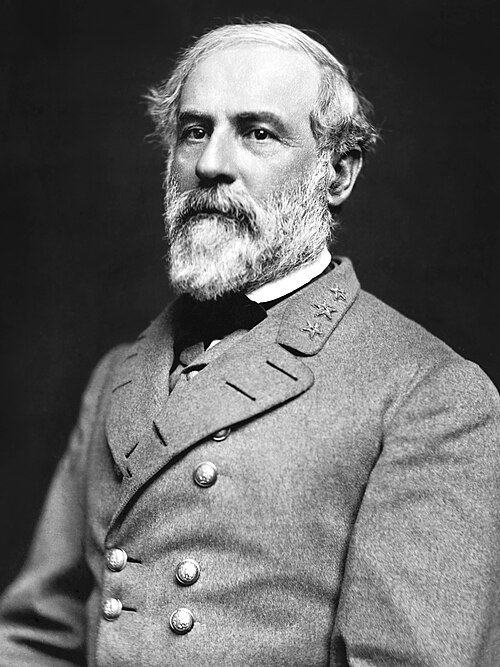
For the Confederacy it was a triumph at the height of Lee’s ascendancy. He had taken a divided army, marched half of it fifty miles into his enemy’s rear, reunited it on the battlefield, and destroyed a Union army’s campaign, and his reputation as a tactical commander was cemented. Pope (North), for his part, was finished in the East, his boastful arrival aged into a punchline. On September 12, 1862, the Army of Virginia was dissolved and its corps merged into McClellan’s Army of the Potomac, and Pope himself was relieved and exiled to fight Indians in the Department of the Northwest. The army Lincoln had built to reduce his reliance on McClellan was folded back into McClellan’s, the opposite of what the whole campaign had been meant to do.
The Man They Blamed
And then there was a scapegoat. Major General Fitz John Porter (North) was blamed for the defeat. Pope spread the blame among his corps commanders, and Major General Irvin McDowell (North), himself under a cloud, helped pin it on Porter. Porter was court-martialed (put on trial by the military), found guilty of disobedience, and dismissed from the Army in early 1863. The bitter coda: the conviction was later judged unjust and overturned, and Porter was eventually reinstated. Modern scholarship largely sees him as wrongly blamed, since Longstreet’s hidden corps had been standing exactly where Porter was ordered to attack. A career was destroyed for a defeat he very likely did not cause.
What the Victory Unleashed
The thing that makes Second Bull Run matter beyond Virginia is what the victory unleashed. Emboldened by it, his enemy reeling, Lee did not stop to consolidate. He pointed the Army of Northern Virginia north, crossed the Potomac River, and launched his first invasion of the North, the Maryland Campaign. The stakes of that invasion ran straight back to slavery. A successful Confederate invasion might win the Confederacy foreign recognition from Britain or France, might break Northern will to keep fighting, and, most consequentially, would have kept the Emancipation Proclamation locked in Lincoln’s drawer, perhaps forever. A Confederate win here was, concretely, a step toward the survival of a slaveholding republic on the North American continent.
That is why the line from this defeat runs so directly to emancipation. Because Lee invaded, the two armies collided on September 17, 1862, at a Maryland creek called Antietam, the bloodiest single day in American history. Antietam was no clean victory, but it stopped Lee and turned him back across the Potomac, and that strategic success was enough.
Eastern TheatreAntietam: the showdown this defeat set upFive days later, on September 22, 1862, Lincoln issued the Preliminary Emancipation Proclamation, announcing that enslaved people in the rebelling states would be declared free, and redefining the war, once and for all, as a war against the thing the South had seceded to defend: slavery.
Off the fieldThe Emancipation Proclamation: what the road from here led toThe proclamation came out of the drawer.
Second Bull Run was a Union disaster, and it is the disaster that set the whole sequence in motion. The defeat unleashed the invasion, the invasion forced the showdown at Antietam, Antietam gave Lincoln his moment, and that moment turned the war against slavery. The men who fell on that old, twice-bloodied ground did not know it, but the road out of their defeat ran straight to the end of slavery in America.