The numbers were against the Confederacy from the very first day: more men, more factories, more ships, more railroads, more of nearly everything that wins a long war. So the South did not try to out-produce the North. It tried to out-maneuver it. The weapon it reached for was not a rifle. It was a crop. Britain and France ran the largest textile industries on earth, those industries ran on Southern cotton, and (the reasoning went) Britain and France simply could not afford to let the Confederacy lose. Cut off the cotton, and the great powers of Europe would have no choice but to step in, recognize the South as a real country, and break the Union's naval stranglehold to get the cotton flowing again.
And here is the fact that the whole strategy was built on top of and almost never said out loud: that cotton was grown by enslaved people (roughly four million of them in the South in 1860, more than one in eight people in the entire country) whose unpaid, forced labor was the entire basis of the economy the Confederacy was now asking Europe to rescue. King Cotton was never really a bet about a plant. It was a bet that Europe's mills would feel the cotton's absence so sharply they would prop up a slave republic to get it back.
For a few weeks in the winter of 1861 it came closer to a second war with Britain than almost anything else in the whole conflict. The South wagered everything on Europe. By the end, no foreign power on earth had recognized it, and that fact is one of the reasons there is still only one country between Canada and Mexico.
"Cotton is king"
The slogan came first, three years before the shooting started.
On March 4, 1858, James Henry Hammond, a U.S. senator from South Carolina, rose on the Senate floor and delivered the boast that an entire wartime strategy would later be built on. The South's cotton, he argued, was not just an export. It was a chokehold on the whole modern world, and the North and Britain alike depended on it so completely that the South could bring them to heel without firing a shot:
"Without firing a gun, without drawing a sword, should they make war on us, we could bring the whole world to our feet. … What would happen if no cotton was furnished for three years? … England would topple headlong and carry the whole civilized world with her. No, you dare not make war on cotton. No power on earth dares to make war upon it. Cotton is king."
It was an extraordinary claim, and on the surface the numbers seemed to back it up. On the eve of the war the American South supplied the overwhelming majority of the raw cotton that fed British mills. Take that supply away, Hammond was saying, and England would fall and drag civilization down with her. "Cotton is king" became the three-word thesis of Confederate foreign policy. The trouble was that a thesis is not a fact, and this one was about to be tested against the real world.
When the war came, the South put the theory into practice, but in a strange and revealing way. There was no grand official act of the Confederate Congress declaring a cotton embargo (a government ban on exporting a particular good). Instead, in 1861, Southern planters, state legislatures, and local citizens' committees simply decided on their own to keep cotton off the docks and out of European hands. It was an unofficial, self-imposed embargo: cotton deliberately withheld, bale by bale, by the men who owned the plantations and the people forced to work them, in the confident belief that a hungry Europe would soon come begging. They were starving the British mills on purpose. They expected gratitude, or at least desperation, in return.
Why the bet went bad
The strategy failed for three reasons, and the first one was almost comic: the South had picked the worst possible moment to withhold cotton, because Europe was already drowning in it.
The crop of 1859–60 had been a record bumper harvest (a record amount of cotton picked, by the way, by the same enslaved labor force the whole strategy depended on and never credited), and by the time the war began British warehouses were glutted with the stuff. By 1860 Europe was sitting on a vast reserve of American cotton, with Britain alone holding enough to keep its mills humming for many months. When the South triumphantly stopped shipping cotton in 1861, the British textile industry barely noticed, because it was working through a mountain of cotton it had already bought. The embargo's pressure, which was supposed to be instant and unbearable, arrived far too late to matter in the war's critical first year.
The second reason was that the world simply went and found cotton somewhere else. Britain and France ramped up imports from India and Egypt, and the volumes were enormous. Within a couple of years, enough East Indian cotton was reaching British ports to keep the mills running without a single Southern bale. "Cotton is king" had assumed the South held a monopoly that could never be broken. It could be broken, and it was, by planters half a world away who were delighted to sell into a market the South had abandoned.
The third reason was the cruelest, because it turned the South's own weapon against it. Once the Union navy's blockade (a ring of warships sealing the Southern coast to choke off all trade) tightened, it, not the Confederate embargo, was what actually choked off Southern cotton. And that distinction was poison for the South. Britain could see perfectly well that the cotton was being cut off by Northern warships, not voluntarily withheld by noble Southern planters, which meant there was no leverage to be had: you cannot blackmail someone by withholding a thing that is visibly being taken from you by force. The South had given away its single greatest source of export income for nothing. Cotton rotted on Southern docks, the Confederacy lost the revenue it desperately needed to buy guns and ships abroad, and the great powers felt no obligation whatsoever.
And underneath all of it sat a fact the King Cotton theorists had never reckoned with: Britain had bigger worries than cotton. London had to weigh the cotton interest against its own strategic exposure (chiefly the vulnerability of Canada, right on the United States' northern border, to American attack) and against a different American crop it had come to depend on. Britain leaned heavily on Northern wheat and corn to feed itself, and "King Wheat" and "King Corn," it turned out, had a vote too. Faced with a choice, Britain valued food on its tables and the safety of Canada over cotton for its mills. King Cotton had a rival, and the rival lived in the North.
A hunger in Lancashire
The strangest twist in the whole story is that the cotton famine the South had dreamed of actually arrived, just too late to help, and aimed at the wrong target.
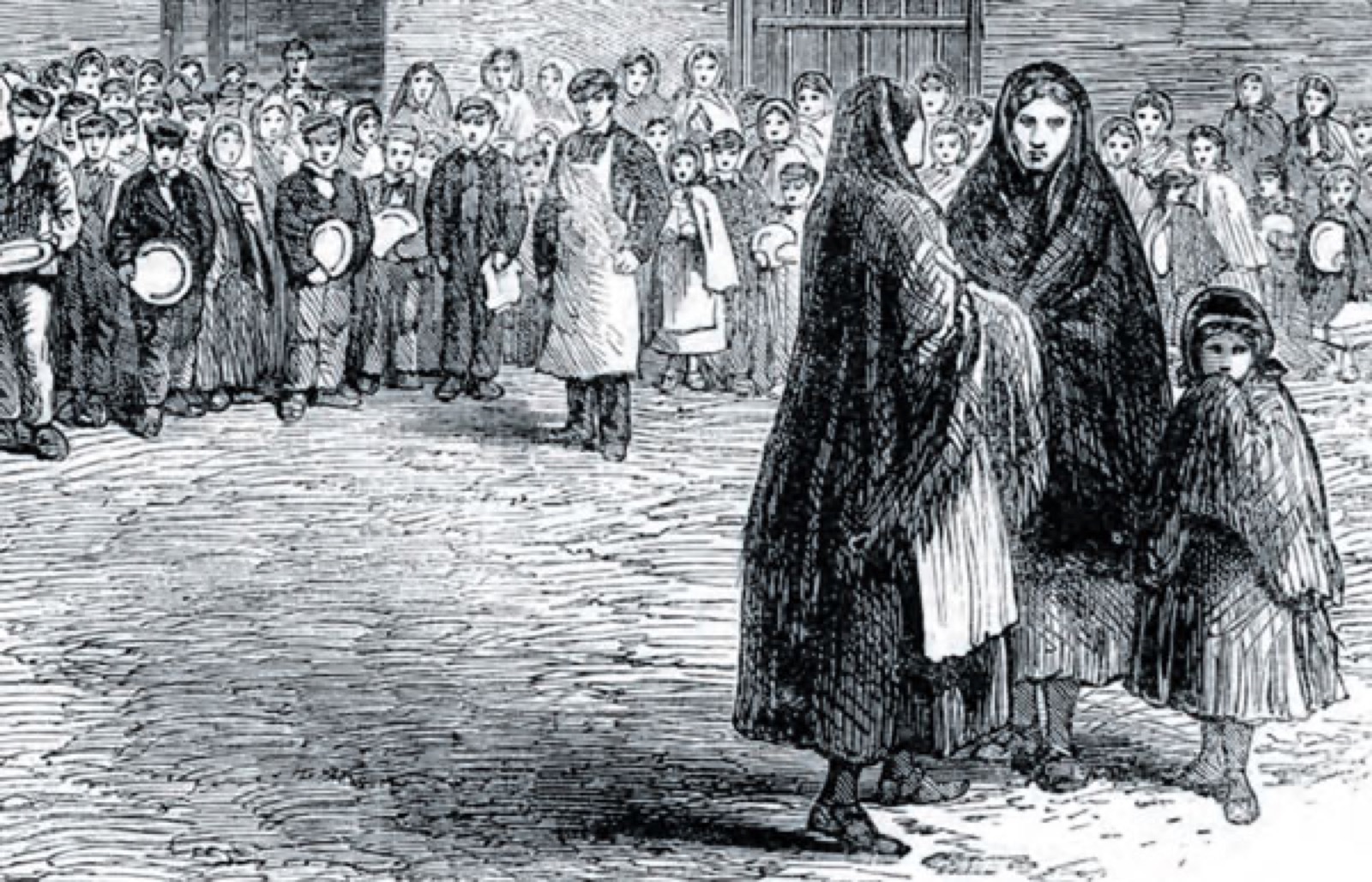
By early 1862 the cushion of stockpiled cotton was running out, and the mills of Lancashire and the wider Manchester region (the heart of British textile manufacturing) began to go quiet. This was the Lancashire Cotton Famine, the deep depression that gripped the British textile districts when the supply of raw American cotton finally dried up. It ran roughly from 1861 to 1865 and bit hardest in the winter of 1862–63. Two causes are usually named together: the over-supplied market left over from the 1859–60 boom, and, increasingly, the Union blockade choking off any new American cotton from reaching British ports.
The human cost was severe. Mills closed, and the operatives (the men and women who worked the looms and spinning machines) were thrown out of work in enormous numbers. The local snapshots are grim: the town of Stalybridge alone had around 7,000 unemployed operatives, with roughly three-quarters of its workforce dependent on some form of relief. Across the whole region, hundreds of thousands of textile workers were idled or living on charity at the depth of the famine.
Here is where the story turns from economics to something close to moral grandeur. The Confederacy had counted on simple arithmetic: starve the workers and they will demand their government rescue the cotton supply, which means rescuing the South. But the workers did the opposite. On December 31, 1862, a public meeting of Manchester working men gathered at the Free Trade Hall in Manchester, many of them unemployed precisely because the war had cut off their cotton, and resolved to support the Union and the cause of emancipation (the freeing of the enslaved). They voted to send a formal letter directly to President Abraham Lincoln. Men with no work and no wages, suffering for the South's war, chose to back the side fighting against slavery. Their letter told Lincoln they believed the end of slavery would crown his name forever:
"… the vast progress which you have made in the short space of twenty months fills us with hope that every stain on your freedom will shortly be removed, and that the erasure of that foul blot on civilisation and Christianity — chattel slavery — during your presidency, will cause the name of Abraham Lincoln to be honoured and revered by posterity."
Lincoln was moved enough to answer them personally. On January 19, 1863, in a letter addressed "To the Working-Men of Manchester, England," he acknowledged their suffering and called their stand a kind of heroism he had never seen surpassed:
"I have the honor to acknowledge the receipt of the address and resolutions which you sent to me on the eve of the new year. … I know and deeply deplore the sufferings which the working-men at Manchester and in all Europe are called to endure in this crisis. … I cannot but regard your decisive utterance upon the question as an instance of sublime Christian heroism which has not been surpassed in any age or in any country."
He closed by promising that the friendship between their two nations would, as far as it was in his power, last forever:
"I hail this interchange of sentiment, therefore, as an augury that, whatever else may happen, whatever misfortune may befall your country or my own, the peace and friendship which now exist between the two nations will be, as it shall be my desire to make them, perpetual."
The exchange became one of the most cherished episodes of the whole war for both countries. A statue of Lincoln by the sculptor George Grey Barnard stands today in Lincoln Square, on Brazenose Street in Manchester, and the base of the monument reproduces portions of both the workers' letter and Lincoln's reply. The King Cotton theory had assumed that hungry British workers would force their government to side with the slaveholding South. Instead, the hungriest of them looked their own ruin in the face and chose the other side.
The strangling coast
Cotton could not get out and recognition could not get in for one overriding reason: the Union navy had sealed the Southern coast, and that seal was as much a diplomatic instrument as a military one.
Lincoln proclaimed the blockade on April 19, 1861, declaring the entire Confederate coastline closed to trade. The task was staggering. The coast to be covered ran about 3,500 miles of Atlantic and Gulf shore and included a dozen major ports, an enormous stretch of water for any navy to patrol. And the blockade was not a tidy line of warships; it was a leaky net, especially at first.
That leakiness created a legal headache that mattered enormously in London. Under international law, specifically the Declaration of Paris of 1856 (an international treaty Britain had signed that set the rules of naval warfare), a blockade was only legally binding on neutral countries if it was effective, meaning actually enforced rather than merely announced on paper. A so-called "paper blockade," one declared on paper but not actually maintained, was something neutrals were entitled to ignore. And in 1861 and 1862 the Union blockade leaked badly: early on, only about one in ten blockade-runners (ships that tried to slip through the naval cordon to carry cargo in or out) was caught. That gave Britain a perfectly respectable legal pretext to challenge the blockade or simply sail through it. So the Union faced a hard requirement: it had to make the blockade real, ship by ship and port by port, or watch Europe stop respecting it.
There was a deeper irony buried in the blockade, and it cut against the Union. The simple rule of international law is that nations do not blockade their own ports; they close them. A blockade is something you impose on a separate, hostile power under the laws of war. So by blockading the Southern coast rather than merely closing his own country's ports, Lincoln had implicitly treated the Confederacy as a separate warring power with rights under the laws of war, which was uncomfortably close to treating it as a real and separate nation. Lincoln and his Secretary of State, William H. Seward, swallowed the legal awkwardness because an effective blockade was the more valuable weapon. But the awkwardness was about to come home, because Britain was about to seize on exactly that logic. Lincoln had built the trap and then walked into it.
Neutral, but listening
Britain's first formal move set the legal stage for everything that followed, and infuriated the North in the bargain.
On May 13, 1861, Queen Victoria issued the British Proclamation of Neutrality in the American Civil War. The wording drew a razor-thin distinction that would define the entire diplomatic war. The proclamation recognized the Confederacy as a belligerent (a party with rights under the laws of war) while pointedly refusing to recognize it as a sovereign nation. That distinction was the whole game. Belligerent status was useful to the South: it let the Confederacy legally contract for supplies, float loans, and commission warships in neutral ports. But it stopped short of the one thing the South actually wanted, which was recognition: the formal diplomatic acknowledgment by another country that the Confederacy was a legitimate, independent nation, with all the trading and treaty rights that entailed. Britain was saying, in effect: we accept that you are fighting a war, but we do not accept that you are a country.
The proclamation cut both ways. By declaring both sides "belligerents," Britain bought itself the right to trade with North and South alike and to stay out of the war entirely. But the Union government was furious anyway. To Seward and Lincoln, even belligerent recognition smelled like a first step toward legitimizing secession, and it set the angry, suspicious tone of U.S.–British relations for the rest of the war. There was an additional sting: Britain had been partly invited to declare neutrality by Lincoln's own blockade. By treating the South as a belligerent in order to blockade it, the Union had effectively handed Britain the logic to do the same.
Seward wraps the world in flames
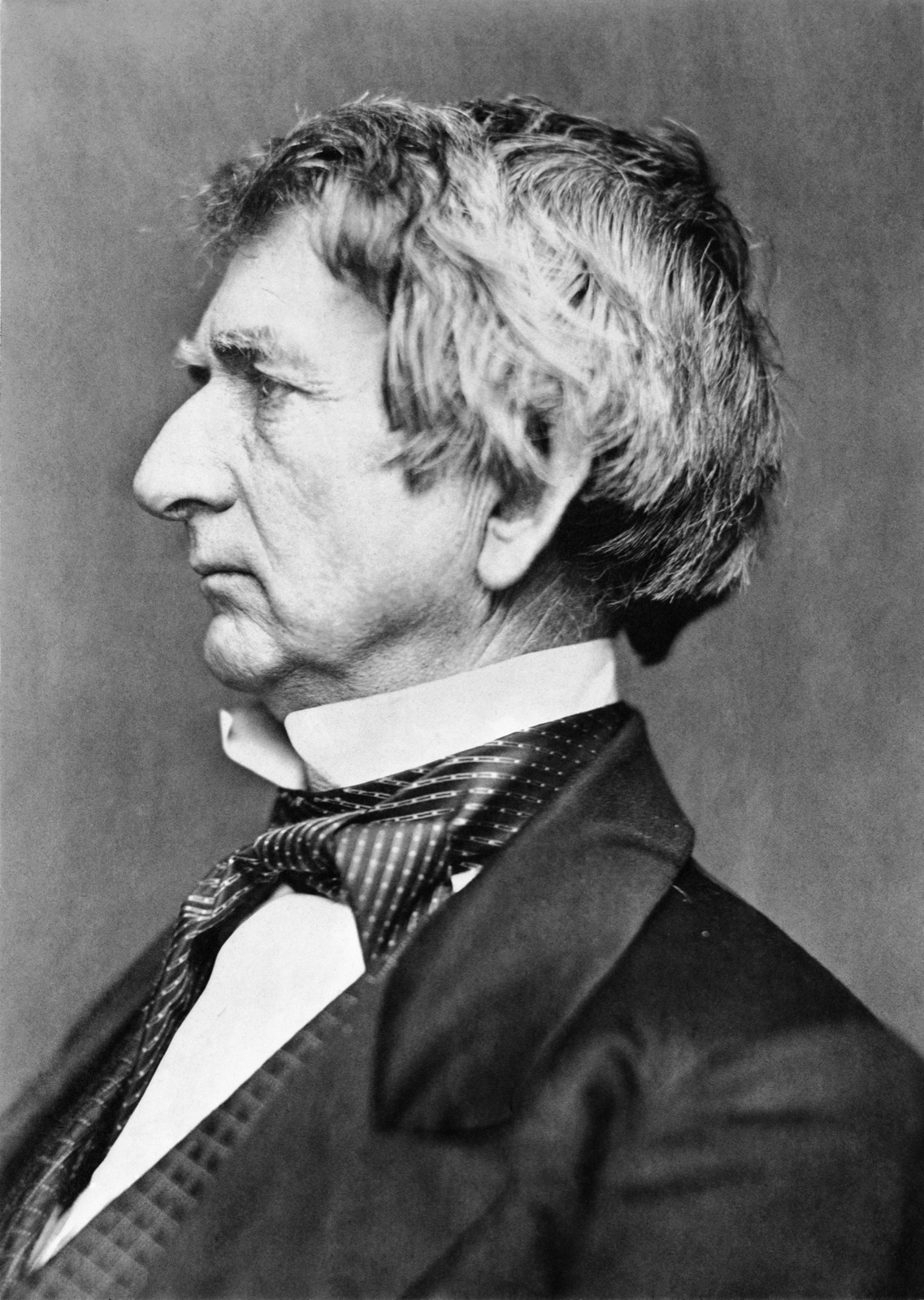
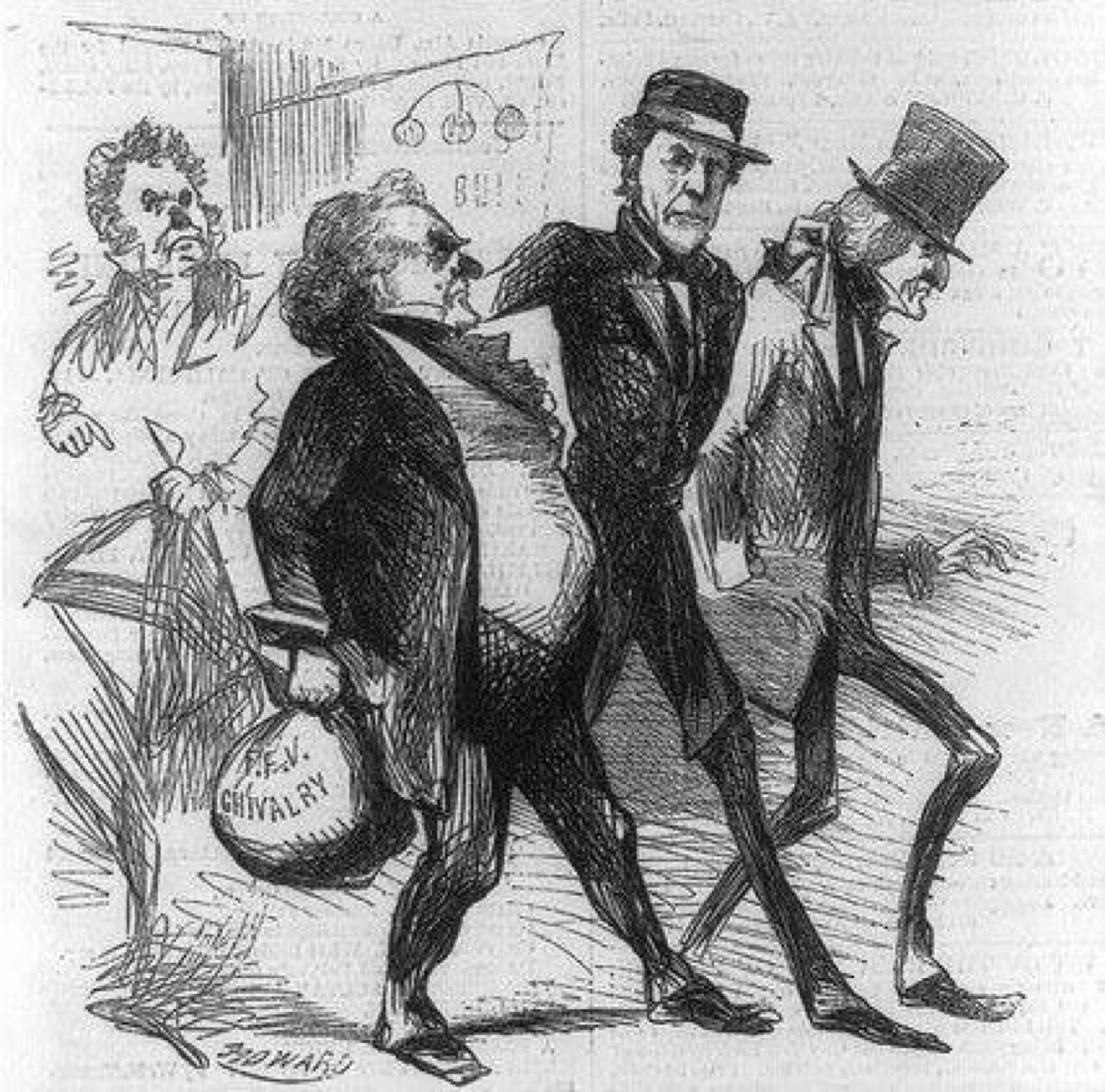
It would be easy to read what came next as Europe simply declining, politely, to get involved, as if non-recognition were a passive choice the great powers happened to make. It was nothing of the kind. The Union fought, hard and openly, to keep Europe out, and the man swinging the threats was Seward.
Within days of Britain's neutrality proclamation, Seward drafted a blistering instruction to the Union's man in London, known to history as Dispatch No. 10, dated May 21, 1861, ordering him to break off relations with the British government entirely if Britain had any further dealings with Confederate agents. The original wording was almost a declaration of war on paper; in it, Seward warned that from that hour the two nations "shall cease to be friends and become once more … enemies of Great Britain." Around the same time he was telling journalists and foreign diplomats at dinner parties that the United States would, if it came to it, "wrap the whole world in flames" rather than let Europe recognize the South.
This was reckless, and Lincoln knew it. The president personally went through the dispatch and softened its most incendiary lines, and instructed that it be used only as private guidance. The Union minister was to quote selectively from it to the British, not hand them the furious original. The calculated effect was exactly right: even in its toned-down form, the message left no doubt that recognition meant war with the United States. The Confederate push and the European pull were never the whole story. Running underneath them the entire time was a Union counter-pressure that helped keep Britain from ever going further than belligerent status.
The *Trent* and the brink of a second war
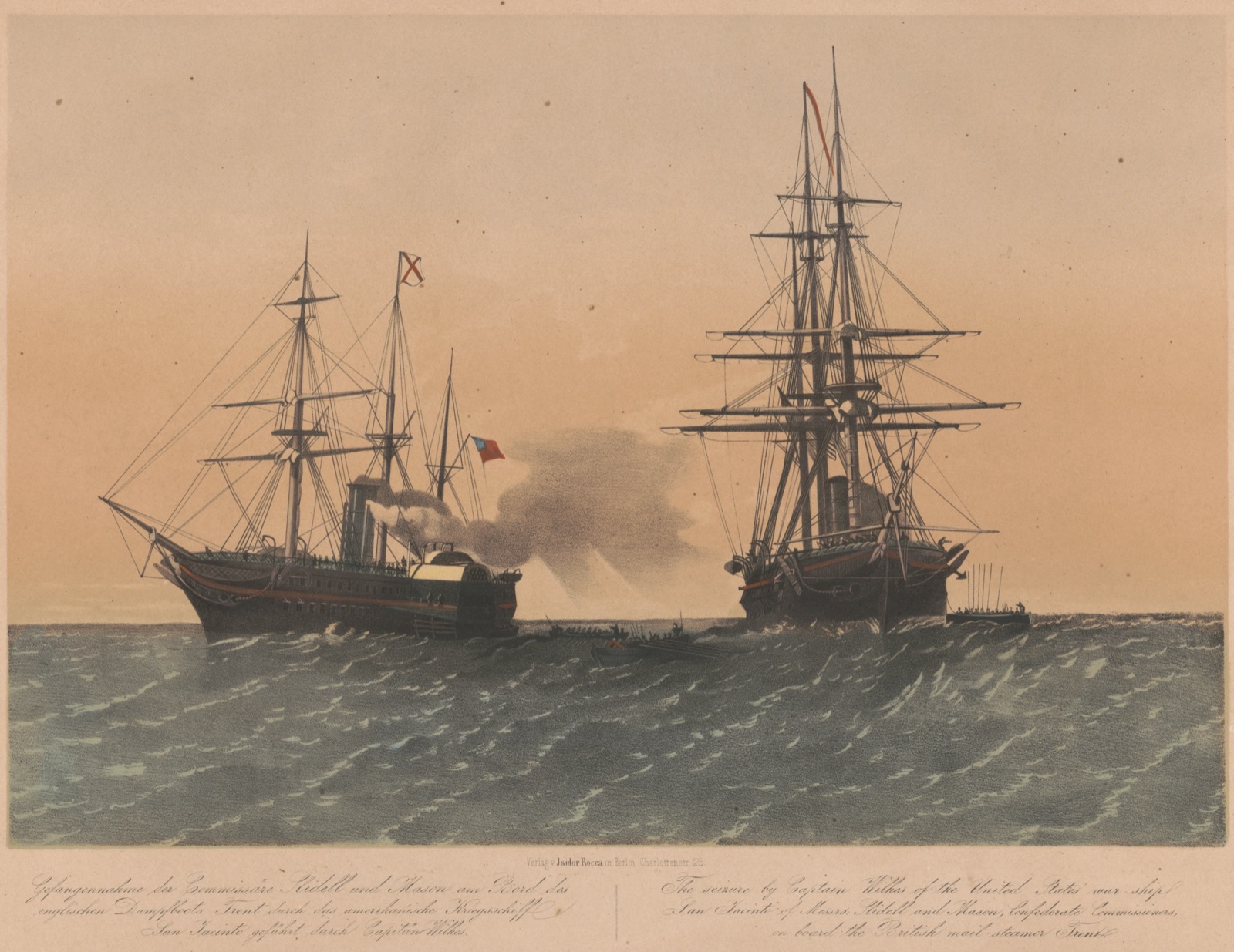
Then, in the late autumn of 1861, the whole simmering quarrel nearly boiled over into an actual war between the United States and the British Empire, and it happened because of two men on a boat.
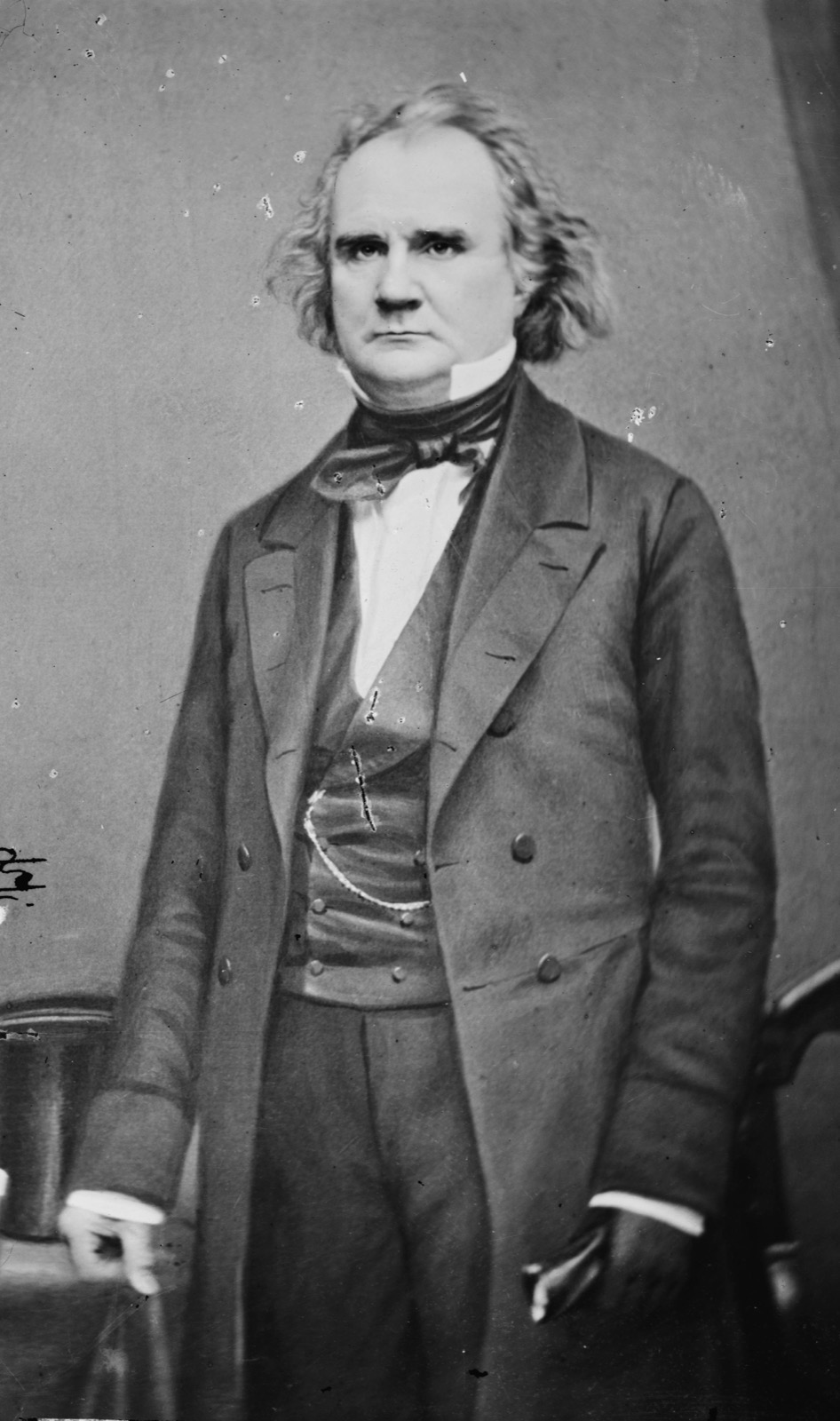
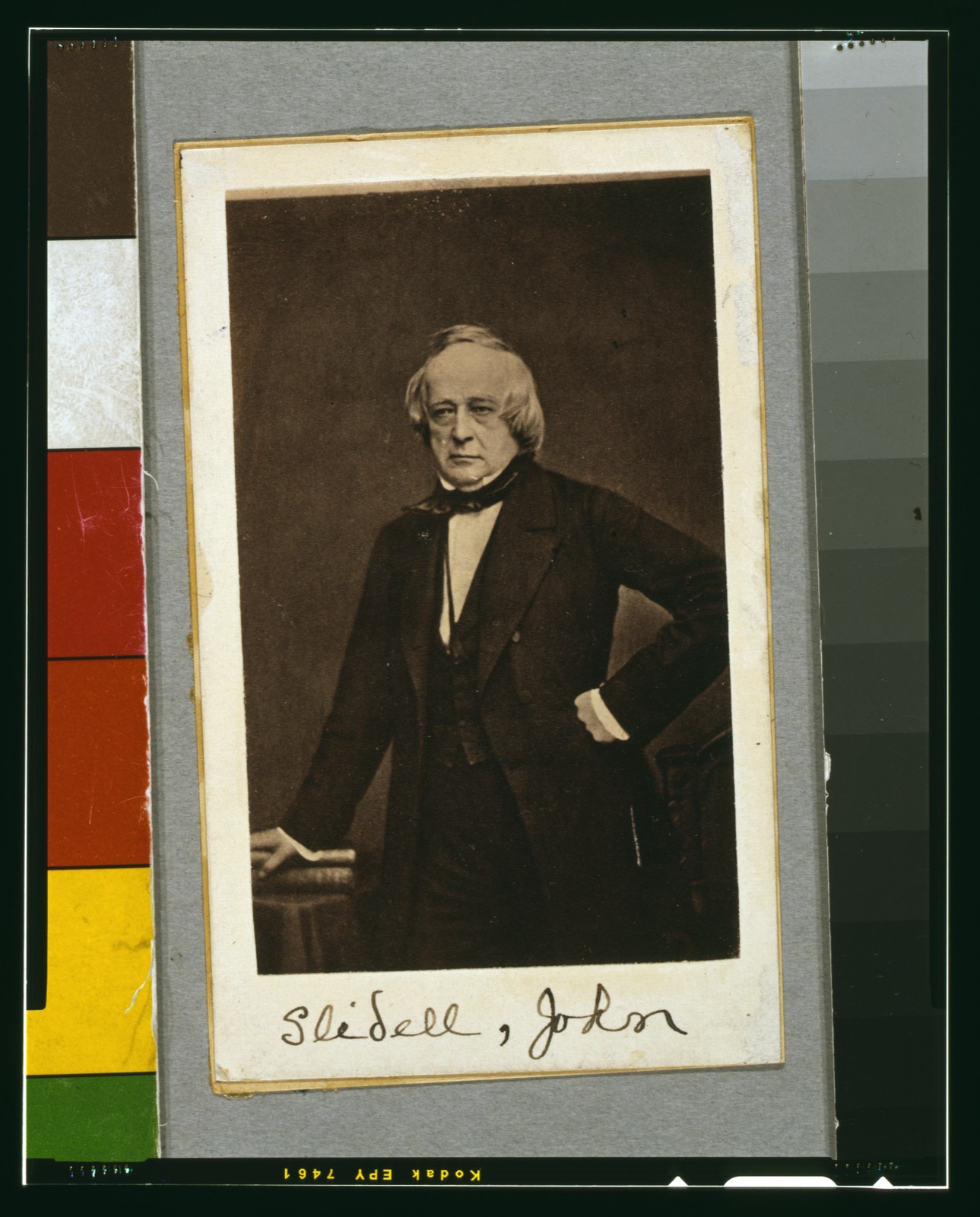
The Confederacy had decided to send commissioners (official envoys dispatched to argue the South's case to foreign governments) to Europe to press for recognition in person. Two were chosen. James Murray Mason of Virginia, a former U.S. senator who had once chaired the Senate Foreign Relations Committee, was assigned to Britain. John Slidell of Louisiana, a prominent New Orleans lawyer and politician, was assigned to France. They were the South's diplomatic A-team, dispatched to do in person what cotton had failed to do on its own. Having slipped through the Union blockade out of Charleston and reached Cuba, the two envoys, traveling with secretaries and, in Slidell's case, family, boarded the British mail packet RMS Trent at Havana on November 7, 1861, bound for Southampton, England, by way of St. Thomas. They were sailing under the British flag, on a neutral ship, through international waters. They thought they were safe.
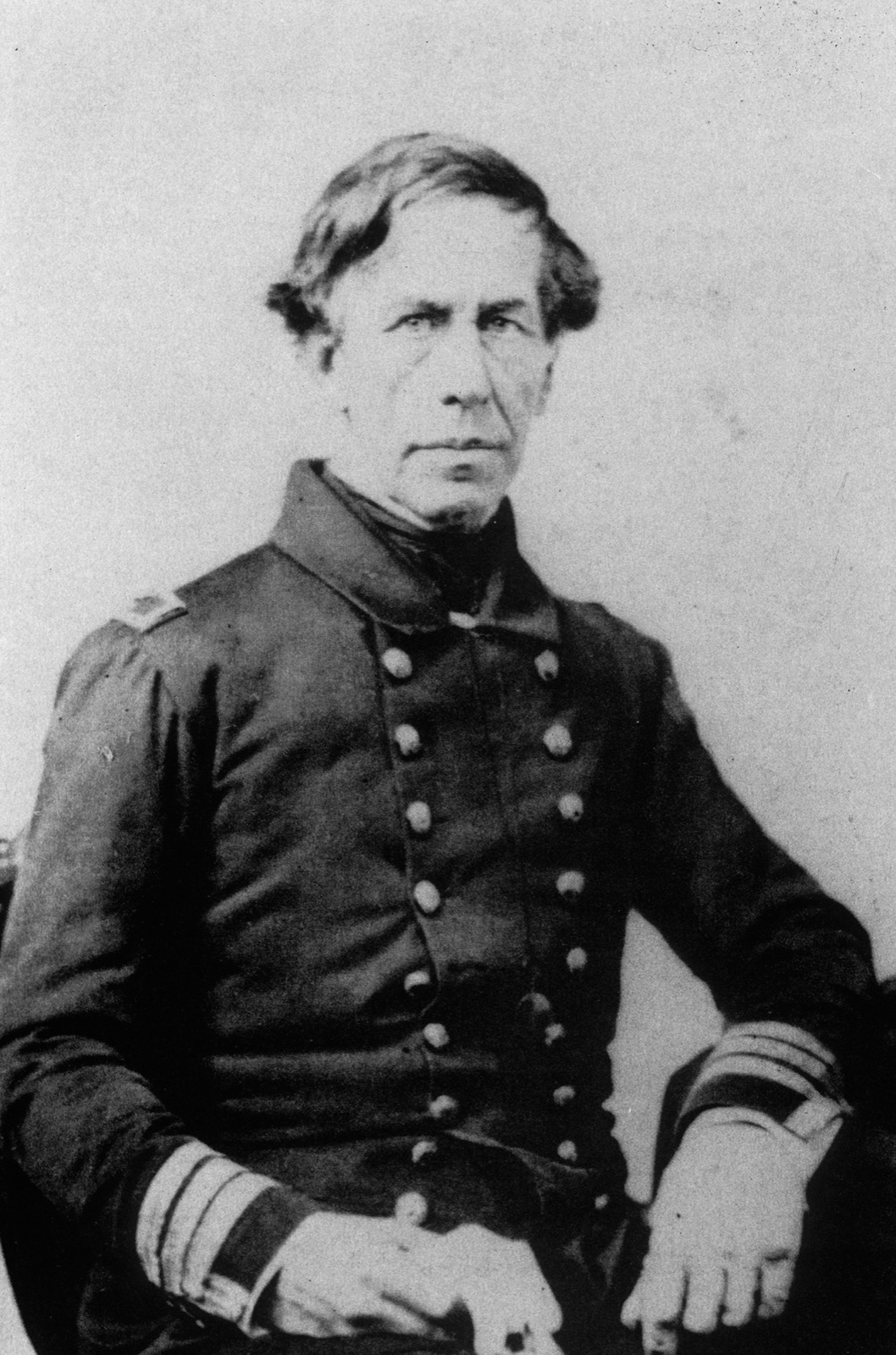
They were not. On November 8, 1861, the Union warship USS San Jacinto, commanded by Captain Charles Wilkes, intercepted the Trent in the Bahama Channel. Wilkes fired two warning shots to stop her: the first across the bow, which the Trent's captain ignored, and then a second from the forward pivot gun that landed right in front of the ship. The Trent stopped after the second shot. Lt. Donald M. Fairfax led a boarding party onto the British vessel and forcibly removed Mason and Slidell, declaring the two Confederates "contraband," as if they were smuggled cargo. The single most important detail of the entire affair is this: Wilkes had no orders. He acted entirely on his own initiative, a navy captain making foreign policy at gunpoint on the open sea. The envoys were carried off to Fort Warren, in Boston Harbor, and locked up.
The North went wild with delight. Wilkes was hailed as a hero, the bold sailor who had snatched the Confederacy's diplomats right off a British deck. The celebration was a catastrophe waiting to happen, because the view from London was the exact opposite. To Britain, an American warship had stopped a neutral British mail ship on the high seas and dragged passengers off it by force. That was not a clever capture; it was a flagrant violation of British neutrality and of the rights of neutral shipping, a national insult of the first order delivered to the most powerful empire on earth.
Britain's reaction brought the two countries to the edge of war. Lord Lyons, Britain's top diplomat in Washington (titled "Minister," the nineteenth-century equivalent of an ambassador), and Lord John Russell, the British Foreign Secretary in London, demanded that the envoys be released and that Britain receive an apology. London attached an ultimatum with a response window of roughly seven days. And to make the threat unmistakable, Britain ordered troops to Canada, about 11,000 of them, along with additional warships to the Western Atlantic. For several weeks in late 1861, a war between the United States and the British Empire, fought along the Canadian border and at sea, looked genuinely possible. The Union was already locked in a desperate fight for its own survival against the Confederacy. A simultaneous war with Britain would very likely have finished it.
There was one quiet mercy buried in the British ultimatum, and it came from a dying man. Prince Albert, Queen Victoria's husband, was gravely ill with typhoid fever (it would kill him on December 14, 1861) when the draft ultimatum reached the royal household. He judged it too belligerent, rose from his sickbed, and with a barely steady hand softened the wording, building in the face-saving possibility that Wilkes had acted without authority from his government. It was the last thing he ever did in public life, and it left Lincoln a door to walk through.
Lincoln and Seward understood the stakes with perfect clarity. A line attributed to Lincoln during the crisis, widely reported though never confirmed word-for-word in his collected writings, captures the whole calculation in four words: that the United States must fight only "one war at a time."
The country could not afford a second one, so it backed down. But it backed down cleverly. Seward composed a note, dated December 26, 1861, that threaded a fine needle: it disavowed Wilkes's act as unauthorized (which it genuinely had been, since he'd acted without orders), declined to offer a formal apology, and agreed to release the envoys. The British cabinet had voted to demand exactly that release on December 21. The face-saving stroke was Seward's framing. He argued that in letting the prisoners go, the United States was actually vindicating its own oldest principle: that neutral ships should not be stopped and searched on the high seas, the very principle Britain itself had trampled on against America back in the War of 1812. America was releasing the men not in humiliation, but to uphold the neutral-rights doctrine it had once gone to war with Britain to defend.
Mason and Slidell were released and sailed for Europe on January 1, 1862, departing Provincetown, Massachusetts, aboard HMS Rinaldo. War was averted. And here is the bleak punch line for the South: after all that, the seizure, the war scare, the ultimatum, the climbdown, the two envoys' actual missions failed completely. Mason got nothing out of Britain. Slidell got nothing out of France. The Confederacy had come within a hair's breadth of getting its second war for free, courtesy of an overeager Union captain, and had still walked away with no recognition at all.
Ships built on the Mersey
If the South could not get Europe to fight for it, it could at least get Europe to build for it. And for a while, secretly, it did.
The man behind this was James Dunwoody Bulloch, the Confederacy's naval agent in Britain and the quiet architect of its raider program, a covert plan to build warships in British yards that would hunt down and destroy Union merchant shipping. Bulloch's job was to procure those warships without quite breaking British law. The relevant law was the Foreign Enlistment Act, which barred anyone in British ports from building or arming warships for a belligerent power. Bulloch's trick was to work through intermediaries and cover stories, building ships that were technically unarmed when they left British waters and only became warships once they were safely out at sea.
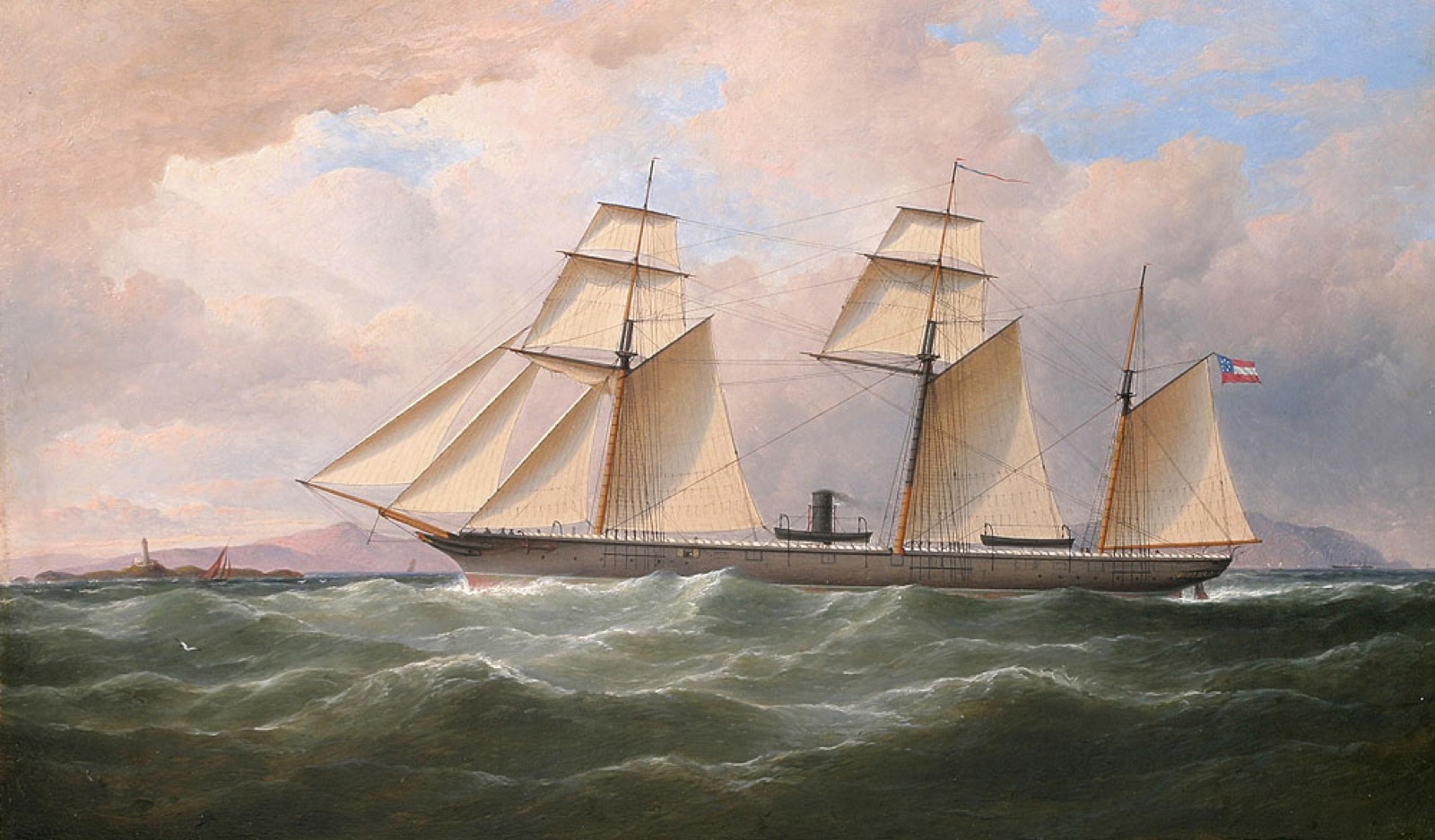
His masterpiece was the CSS Alabama. She was built by John Laird Sons and Company at Birkenhead, on the bank of the Mersey across from Liverpool, under the innocent cover name "Enrica," and launched on May 15, 1862. She slipped out of Birkenhead on July 29, 1862, was armed at sea, and was formally commissioned as the CSS Alabama on August 24, 1862, off Terceira in the Azores, under Captain Raphael Semmes. The remarkable thing about the Alabama is that she never once entered a Confederate port in her entire career. She lived her whole life on the open ocean as a commerce raider, a warship whose job was not to fight battles but to hunt down and destroy enemy merchant ships. And she was devastatingly good at it. The Alabama burned around 65 Union merchant vessels and boarded hundreds more across the Atlantic, the Caribbean, and beyond, gutting the U.S. merchant marine and forcing American shipowners to cower in port or sail under foreign flags. Her own end came on June 19, 1864, when the USS Kearsarge sank her off Cherbourg, France, after about an hour's fight.
The Alabama was not alone. Another British-built raider, the CSS Florida, was built at Liverpool under the cover name "Oreto," and British authorities failed to use what the law called "due diligence" to stop her from sailing, a specific failure that would come back to haunt Britain later.
But the commerce raiders, for all the damage they did, were a nuisance, not a war-winner. Burning merchant ships did not break the blockade or bring recognition any closer. The genuinely dangerous project came in 1863, and it nearly broke the peace all over again. Bulloch had contracted Laird's Birkenhead yard to build two oceangoing ironclad rams: armored warships roughly 225 feet long, fitted with iron-spike prows designed to ram and sink wooden ships and with guns mounted in rotating turrets. These were not commerce raiders nibbling at merchant shipping. These were warships that could potentially smash the Union blockade itself, and if the blockade broke, the entire diplomatic equation might tip. The Union's man in London, the Minister to Britain Charles Francis Adams, pressed Foreign Secretary Lord Russell hard to seize the rams before they could sail. On September 5, 1863, Adams sent Russell a note containing one of the most famous lines in the history of American diplomacy, a flat warning that letting the rams go would mean war:
"It would be superfluous in me to point out to your Lordship that this is war."
What Adams did not know as he wrote it was that the British government had already decided to detain the rams. Britain seized them in early October 1863 (they were placed under guard by HMS Majestic), and the crisis dissolved. The near-break passed.
The autumn the door nearly opened
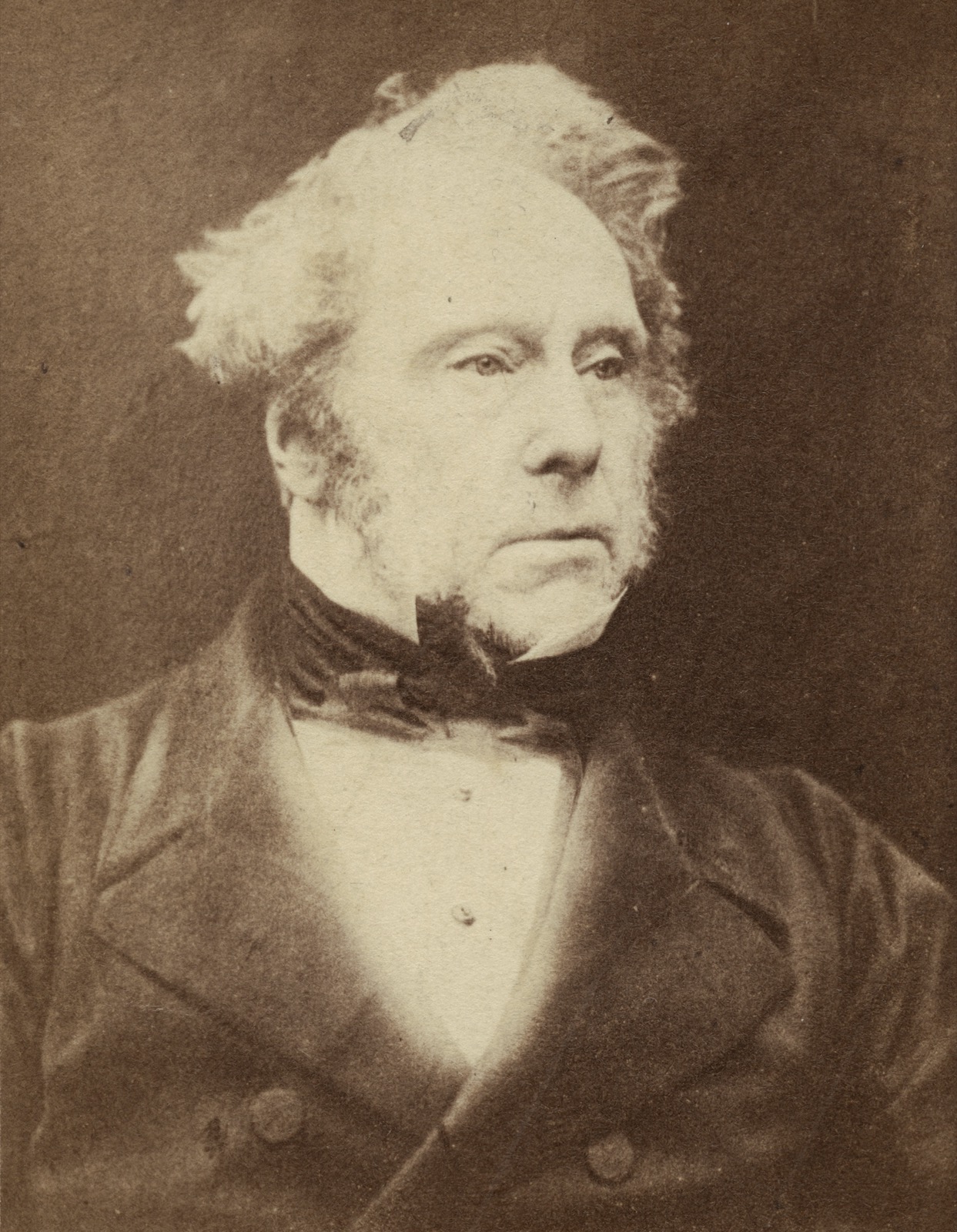
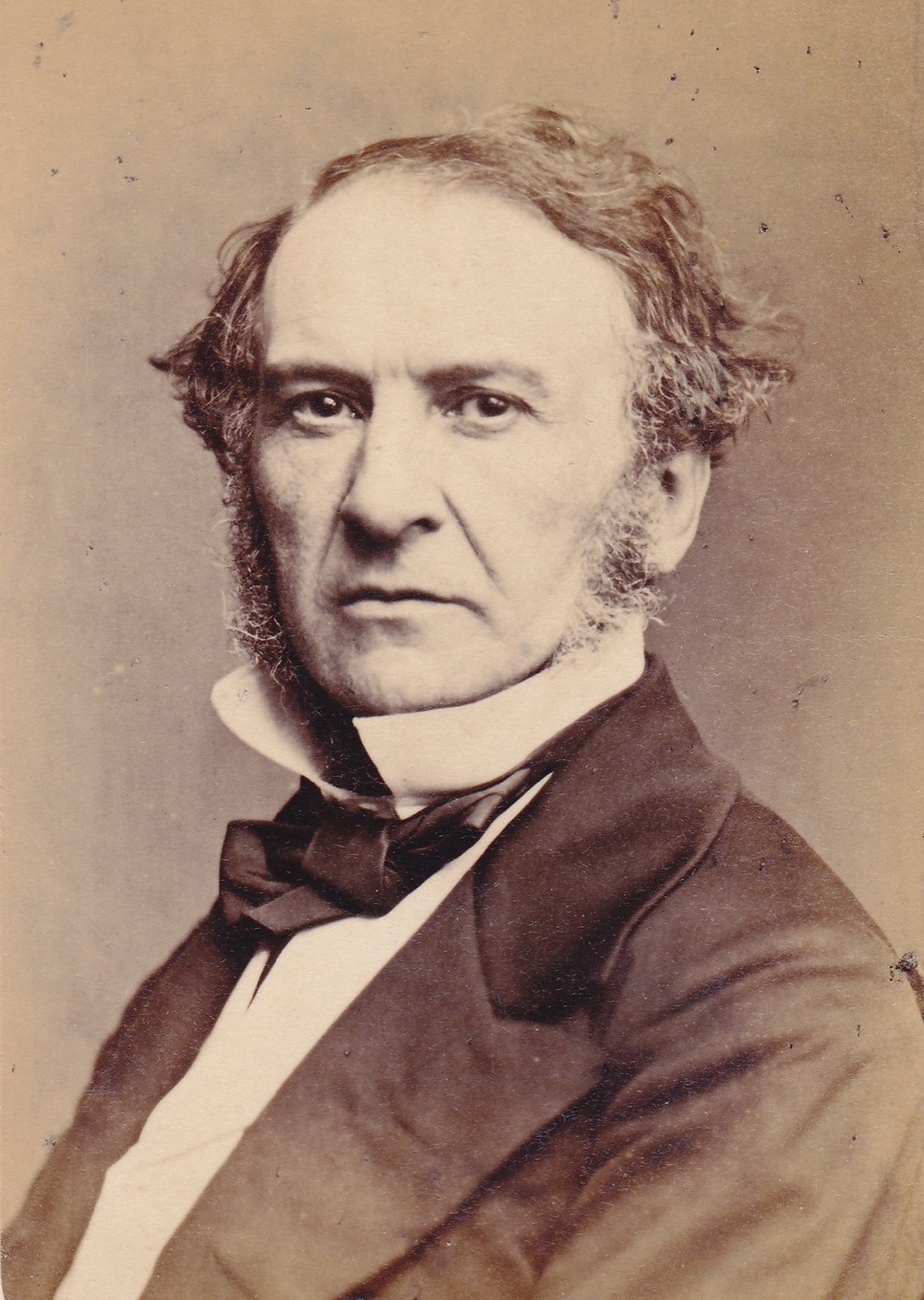
For all the cotton and all the envoys and all the raiders, the Confederacy's single best and last real chance at British intervention came down to a few weeks in the autumn of 1862, and to the news from a single battlefield in Maryland.
In those weeks the British cabinet came genuinely close to acting. With the Confederate general Robert E. Lee invading the North and Union fortunes at a low ebb, the men running British foreign policy began seriously weighing whether to offer mediation (to step between the two sides and broker a settlement, with the implied threat that if the North refused, Britain might go on to recognize the South outright). Foreign Secretary Lord Russell was eager to act. The British Prime Minister, Lord Palmerston, was interested but cautious; he wanted to wait on the battlefield news and to bring Russia in alongside Britain before making any move. That second condition mattered more than it looked: Russia was the most consistently pro-Union of the major powers and had no intention of joining any move against the North, so insisting on Russian buy-in was, in practice, a way of insisting on nothing happening at all. Even so, for those few weeks, recognition was suddenly, frighteningly, on the table.
The mood was captured, and for one minister honestly expressed, when a member of the British government spoke out of turn about what recognizing the Confederacy would actually mean. On October 7, 1862, William Ewart Gladstone, the Chancellor of the Exchequer (the British government's chief finance minister), gave a speech at Newcastle-on-Tyne in which he all but declared the Confederacy an accomplished fact:
"We may have our own opinions about slavery; we may be for or against the South; but there is no doubt that Jefferson Davis and other leaders of the South have made an army; they are making, it appears, a navy; and they have made what is more than either — they have made a nation."
It was the most openly pro-Confederate statement any serving British minister made during the entire war, and it set off a wave of speculation that British recognition of the South was imminent. This was not a slip of enthusiasm; Gladstone genuinely believed, in that moment, that Confederate independence was both accomplished and legitimate, and he had not stopped to ask himself what kind of nation he was endorsing, which was a slave state. Decades later, in 1896, he came to see the speech as a grave error, calling it a blunder of "incredible grossness." But in October 1862 it landed like the sound of a door swinging open.
What slammed the door was the news from Maryland. The Battle of Antietam, fought on September 17, 1862, had turned back Lee's invasion of the North. The entire mediation idea had rested on a single assumption: that the South had unstoppable momentum and the North was losing. When word of Antietam reached London, that assumption evaporated. The Confederate surge the British had been ready to bet on had been checked on the battlefield. By late October 1862, Palmerston concluded that the moment had passed and that Britain should wait:
"We must continue to be lookers-on till the war shall have taken a more decided turn."
And then a second blow fell, one that did not just close the door but locked it. Even as the mediation idea cooled, Lincoln was changing what the war was about. He issued the preliminary Emancipation Proclamation on September 22, 1862, and the final Emancipation Proclamation on January 1, 1863. What it did abroad was transform the meaning of the war in European eyes. Before, the war could be read as a quarrel over union and self-government, the kind of dispute a foreign power could mediate without taking a moral side. After the Proclamation, the war was openly a fight against slavery, and that changed everything in Britain. Britain had fought politically for decades to abolish slavery throughout its empire, finally succeeding in the 1830s, and that anti-slavery conviction was not a vague cultural attitude but a hard-won national commitment. After January 1863, no British government could side with the slaveholding South without enraging its own people. Recognition was no longer merely unwise. It was politically impossible.
Inside the cabinet, the case against intervention was made decisively by Sir George Cornewall Lewis, the Secretary of State for War, who in early November 1862 circulated a powerful memorandum (a formal written argument shared among the cabinet) against mediation and recognition. He stressed the Union's military resilience and Britain's lack of any real interest in the war, and his argument, combined with the deflating news of Antietam and the changed moral terms set by emancipation, swung both Palmerston and Russell away from acting. The mediation proposal was dropped. Britain never again came as close to intervening as it had in that single autumn. The door that Gladstone's speech seemed to open had, within a matter of weeks, been shut and bolted.
France: the Emperor who blew hot and cold
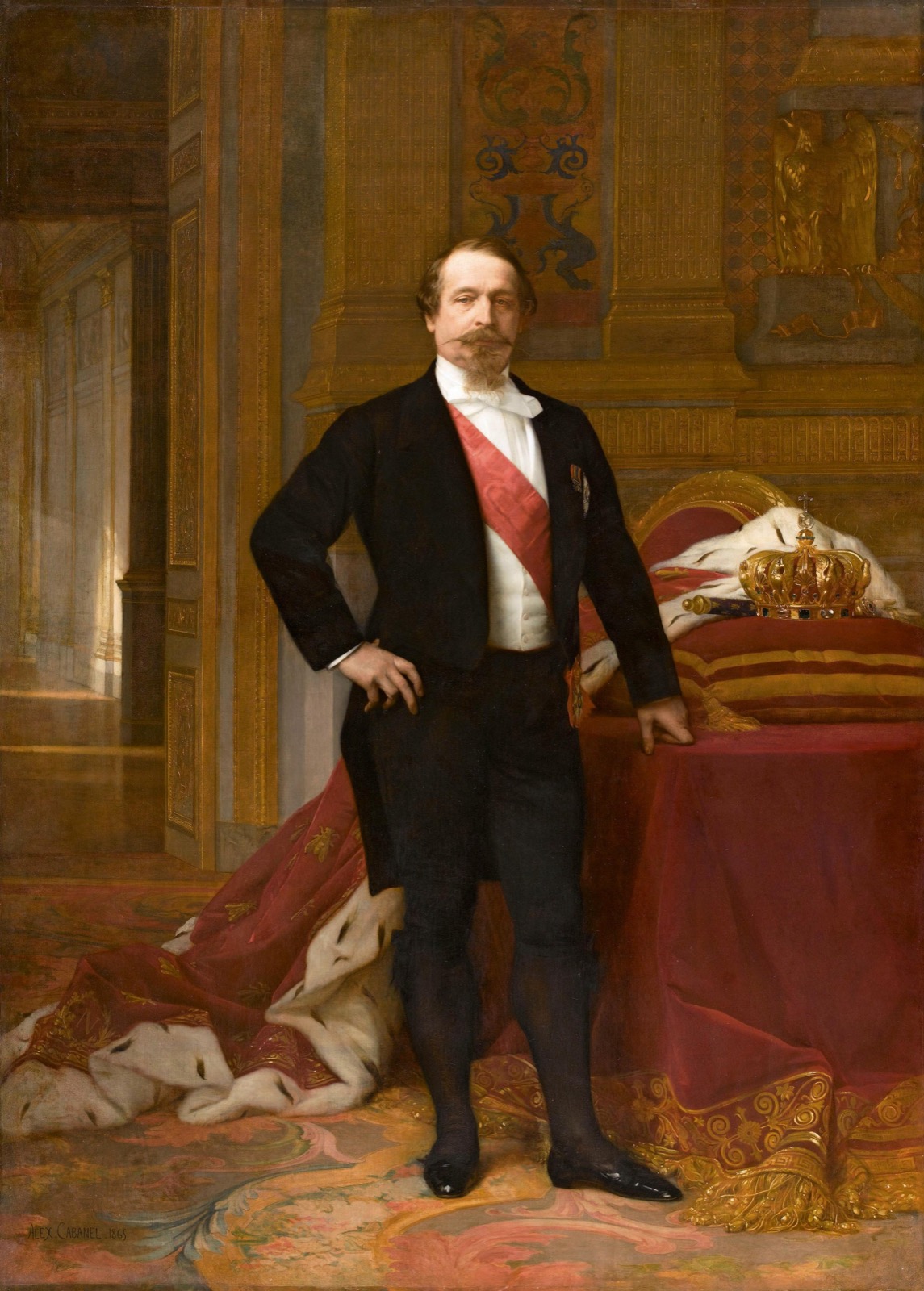
The South's other great hope was France, and on paper France was its friendliest prospect, which made the disappointment all the sharper. The reason was a single man: Napoleon III, the Emperor of France, the most pro-Confederate of all the European heads of state.
He was a maddening figure to deal with: charming, scheming, perpetually floating grand ideas he never quite committed to. John Slidell, the Confederate envoy who had survived the Trent seizure to reach Paris, lobbied him directly and at length. Napoleon received him cordially, met him at the spa town of Vichy on July 16, 1862, and again in late October, and in those interviews talked warmly about the Southern cause, dangled the prospect of recognition, and let Slidell believe the Emperor was nearly ready to act. Behind the warmth, France had hard interests of its own: its mills wanted cotton, and Slidell sweetened the pitch with an offer of guaranteed Southern cotton in exchange for French recognition and naval help breaking the blockade. Slidell even pulled off a real coup: a loan of $15 million floated through the French banker Frédéric Émile d'Erlanger, money the Confederacy used to buy ironclads and supplies. If sympathy and a fat loan had been enough, the South would have had its recognition.
But the Emperor blew hot and cold, and in the end he blew cold every time it counted, because France would not move without Britain. Napoleon III told Confederate agents again and again that France would act only in concert with Britain, that a war against the United States without allies would, in his own framing, "spell disaster" for France. He even tried to engineer the alliance he needed: in mid-November 1862 he floated a public proposal for France, Britain, and Russia to jointly mediate the American war. Britain and Russia both declined, and the scheme collapsed. So France's policy stayed chained to Britain's, and when Britain held back in the autumn of 1862, France held back too. Slidell's mission, like Mason's, simply failed.
Tangled into all of this was Mexico, and it is the knot that explains Napoleon's caution. At the very same time, the Emperor was waging the French intervention in Mexico, which began in 1862 and would install the Austrian Archduke Maximilian as a puppet Emperor of Mexico in 1864. The Mexican adventure pulled France in two directions at once. On one hand, it tempted France toward the Confederacy: a friendly, weakened South sitting next door would suit the Mexican scheme nicely, and Maximilian himself wanted Confederate recognition. Two new puppet states propping each other up across a shared border. On the other hand, the Mexican venture made France even more afraid of provoking the United States, which loathed the whole enterprise as a violation of the Monroe Doctrine (the long-standing American principle that European powers should not plant new colonies or puppet regimes in the Americas). A war over the Confederacy might bring American armies down on his Mexican empire. In the end caution won. In 1864 Napoleon III vetoed a proposed mutual recognition between the Confederacy and Maximilian's Mexico, rather than risk a war with the United States. The South's friendliest European monarch chose, when it counted, not to be its friend.
The men who failed, and the men who held the line
By the time the smoke cleared, the diplomatic war had a clear winner, and it was not the side that had bet everything on cotton.
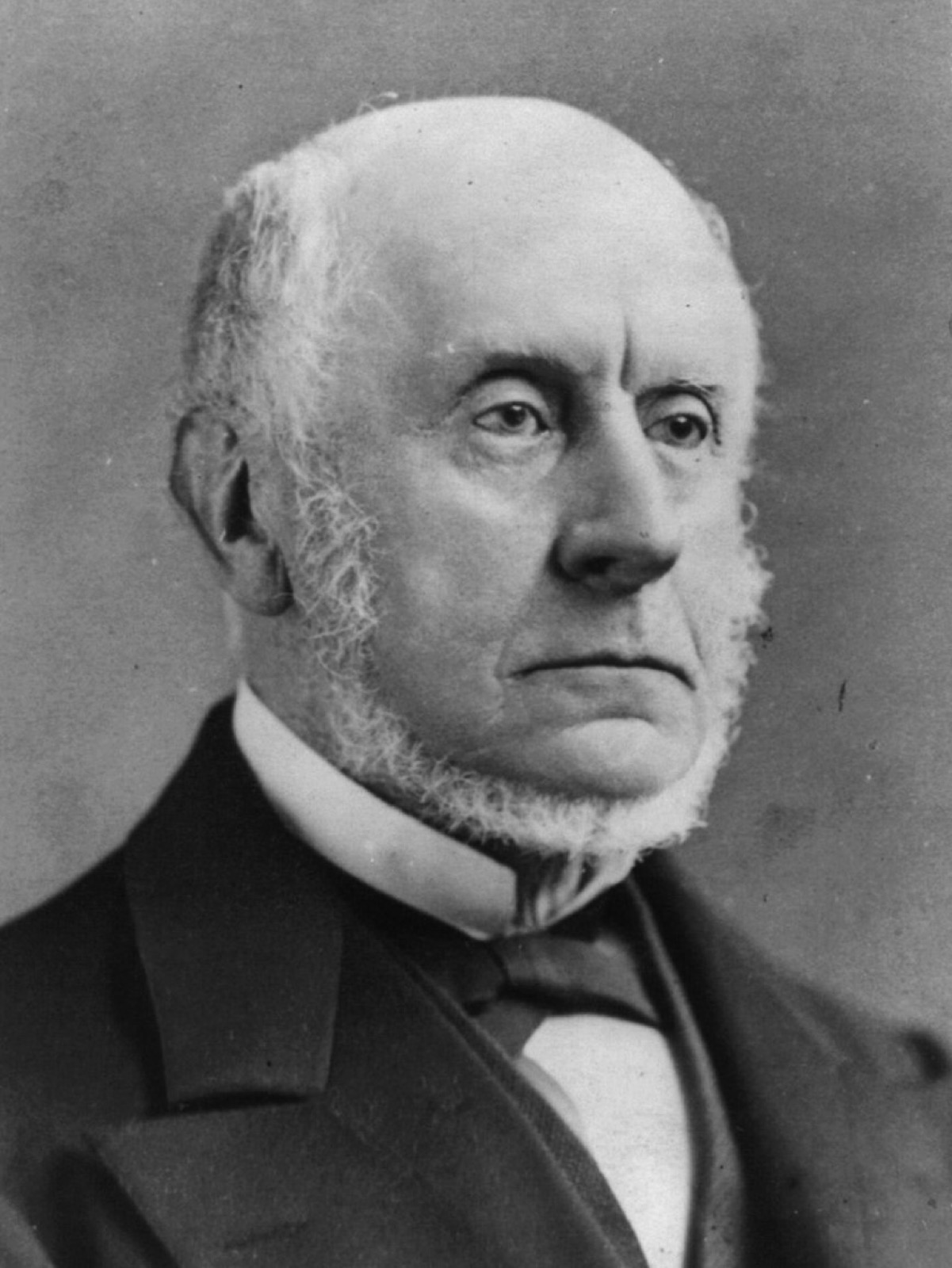
The Union's key man abroad was Charles Francis Adams Sr., nominated by Lincoln as Minister to the United Kingdom on March 20, 1861, who served until 1868. His pedigree was almost absurdly fitting: he was the son of President John Quincy Adams and the grandson of President John Adams, both of whom had themselves served as U.S. ministers to Britain. Adams's patient, firm, unflashy diplomacy through the Trent crisis, the commerce raiders, and the Laird rams is the main reason Britain stayed neutral when, more than once, it was tempted not to.
On the other side, the Confederacy fielded its own European cast, and they did everything they could in service of a slave republic. Mason worked Britain and Slidell worked France, lobbying for a recognition that never came. Bulloch ran the raider program out of British shipyards. And the South even ran its own London propaganda paper, a weekly newspaper called The Index, set up by the Confederate agent Henry Hotze and dedicated to making a slaveholding republic respectable in British opinion. It was a polished, professional operation. It changed nothing.
And here is where Britain's quiet complicity finally came with a bill. After the war, the United States demanded that Britain pay for the damage the British-built raiders had done, chiefly the Alabama, along with the Florida and others, arguing that Britain had breached its own neutrality by letting them be built. The dispute, known as the Alabama Claims, was settled by the Treaty of Washington in 1871 and referred to an international arbitration tribunal in Geneva, which on September 14, 1872, awarded the United States $15.5 million in gold. An international court had ruled, in effect, that Britain's shipyards had helped wage the Confederacy's war. Britain paid up.
Because here is the bottom line that the whole gamble came down to: the Confederacy never won diplomatic recognition from any foreign power, ever. No nation on earth recognized Confederate independence. Britain and France stayed neutral to the very end. King Cotton diplomacy failed, because Europe had a cotton surplus, found new suppliers, and valued food and Canada more than cotton. The Union fought to keep Europe out, and won that fight too. The Trent war scare flared and passed. The British-built raiders burned scores of Union ships and embarrassed Britain into paying millions afterward, but they never brought recognition any closer. And after Antietam and emancipation, recognition was off the table for good. The South had wagered its survival on the idea that Europe could not live without it. Could not live, more exactly, without the cotton that four million enslaved people were forced to grow. Europe, as it turned out, managed just fine. And the Confederacy died without a single friend among the nations of the world.