In the spring of 1861, the armies that formed up to fight the Civil War carried a way of fighting that was already old. The drillbooks, the formations, the whole idea of how you won a battle, all of it came down from the wars of Napoleon Bonaparte, the French emperor whose campaigns from 1799 to 1815 were the last great war the men in charge had studied. The Napoleonic way was simple and brave: pack your soldiers shoulder to shoulder in long lines, march them across the open ground straight at the enemy, and trust that the wall of men who reached the other side would break the wall of men waiting there. The standard weapon a foot soldier carried was a musket (a long shoulder-fired gun loaded from the front), and for a hundred years the line-and-charge had worked, because that musket could not reliably hit anything past the length of a few football fields. You closed the distance fast and settled it up close.
What nobody fully grasped as the columns stepped off was that the ground had shifted under those tactics. Quietly, in the decade before the war, three pieces of ordinary technology had changed what a battlefield could do to the men crossing it: the rifled musket and a clever little bullet called the Minié ball, the railroad, and the telegraph. The tools were new. The tactics were not. A generation of men paid for the lag between the two. And fair warning: this corner of history is thick with confident myths, and the real story is messier and more interesting than the legend that the rifle simply turned battle into automatic slaughter.
The bullet that changed the math
Start with the weapon, because everything else hangs off it.
For most of the history of gunpowder, the standard infantry weapon was the smoothbore musket, meaning the inside of the barrel was a smooth tube. You poured powder down it, rammed a round lead ball after the powder, and fired. It loaded fast, which armies loved, but a ball rattling down a smooth tube comes out spinning every which way, so the thing was wildly inaccurate past very short range, effective only to roughly 80 to 100 yards. Past that you were essentially throwing lead in the general direction of the enemy and hoping.
The fix had been known for centuries and rejected for a practical reason. If you cut spiral grooves into the inside of the barrel, called rifling, the grooves grip the ball and set it spinning around its line of flight, the same way a thrown football spirals; the spin gyroscopically holds the bullet nose-forward instead of letting it tumble, and a stabilized projectile flies straight and far. That is a true rifle. The trouble was loading it. To grip those grooves, the ball had to fit the barrel tightly, so tightly that a soldier had to hammer it down with a mallet, and gunpowder residue fouled the grooved bore after a relatively small number of shots, jamming it up and forcing frequent cleaning. So rifles stayed slow, fussy, specialist weapons. No general was going to arm a whole line of infantry with something that took that long to reload in the middle of a fight.
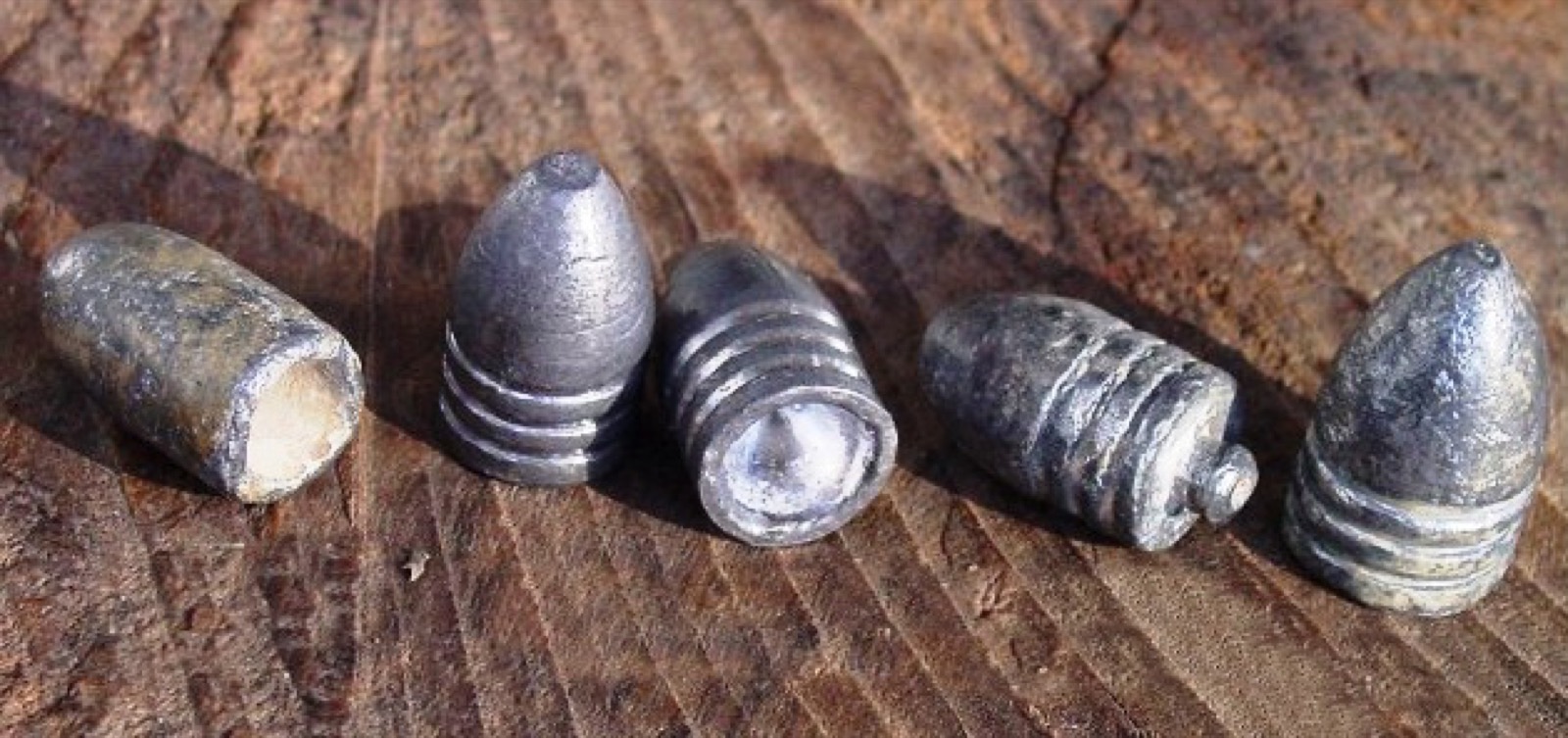
The thing that broke the deadlock was a bullet. In 1849, a French Army captain named Claude-Étienne Minié (French) designed a new projectile, building on the earlier work of his countryman Henri-Gustave Delvigne (also French), so this was an evolution rather than one man's flash of genius. The Minié ball is not a ball at all but a cone-tipped, cylindrical bullet, and the trick is hidden in its base: a hollow, cone-shaped cavity scooped out of the bottom. The bullet was cast slightly undersized, so it dropped down a rifled barrel as easily as a loose smoothbore ball, fast and clean. Then, the instant the powder fired, the expanding gas slammed into that hollow base and forced the soft lead skirt outward, swelling the bullet to bite into the rifling grooves and seal the bore on its way out. Loose going in, tight going out. You got the accuracy of a rifle at the loading speed of a smoothbore, and that single innovation, in the words of the standard reference, "brought about the widespread use of the rifle as the main battlefield weapon." The French Army adopted it in 1857.
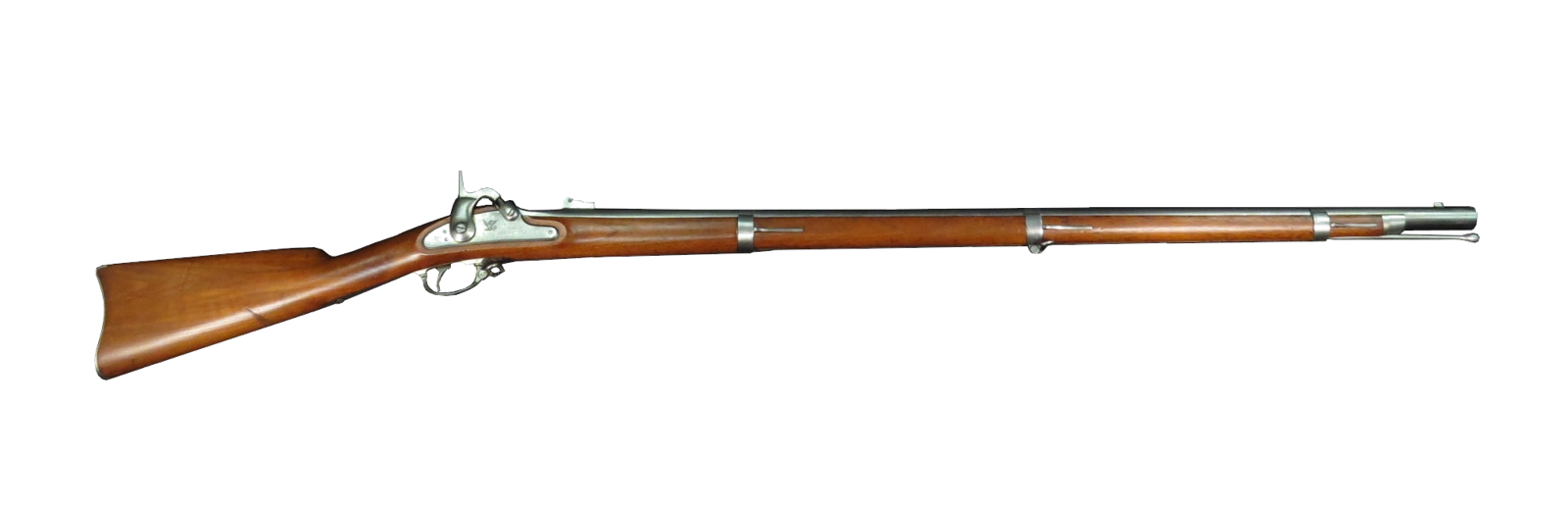
By 1861 both sides were carrying rifled muskets that fired the Minié ball. The Union's principal arm was the American-made Springfield Model 1861, a .58-caliber weapon (the number is the bore diameter, the width of the hollow channel through the barrel, in hundredths of an inch). Both sides also imported the British Pattern 1853 Enfield in huge numbers, a .577-caliber rifle that was one of the Confederacy's leading purchases and saw plenty of Union use too. On paper, the change in reach was enormous. Where the old smoothbore gave out around 80 to 100 yards, the Springfield had a general effective range of 200 to 400 yards and could reliably hit a man-sized target out to 500 yards in a good marksman's hands. Beyond about 600 yards, hits were, as one account dryly puts it, "mostly a matter of luck." The Enfield's sights were graduated all the way out to 900 yards, though in practice it shot about as accurately as the Springfield.
That is the famous story, and here is the famous conclusion drawn from it: if a defender can now hit you at 300, 400, 500 yards, then marching shoulder to shoulder across an open field toward his line is no longer brave, it is suicide. The logic is brutal once you stand in it. The defender holds still and takes careful aim; the attacker is in the open for the whole long crossing (a stretch that used to be a thirty-second sprint and was now minutes of running under fire). The rifle, the argument goes, handed a decisive advantage to whoever was standing still and shooting, drove men into trenches, made cavalry charges and close-up cannon obsolete, ran the casualty lists into the hundreds of thousands, and dragged the war out for years because attacking simply stopped working. This thesis was laid out by the historian John Mahon in a 1961 article and then popularized by historians Grady McWhiney and Perry Jamieson in their 1982 book Attack and Die. It is a clean, powerful idea. Hold onto it, but loosely, because a serious scholar has spent a whole book arguing that it is mostly wrong, and we will get to him.
What the bullet did to a body
The Minié ball was a nasty thing to be hit by, and the reason is physics, not malice.
It was a big, soft, heavy slug of low-velocity lead. It did not zip through a man the way a modern high-speed jacketed bullet does. It plowed. It "easily penetrated the human body," and when it struck bone it usually shattered it, splintering the bone into a mess of fragments rather than punching a clean hole. The wounds it left in arms and legs were so destructive that they were "usually severe enough to necessitate amputation." What followed, the saws and the chloroform and the ambulance wagons, is another story.
A sense of scale: a U.S. Department of Defense weapons study done a century later assigned the rifle-musket a "lethality index" of 154 (a numerical score for how much killing a weapon can do in combat), roughly three times that of the most lethal infantry weapon that came before it. And rifle and Minié-ball bullets accounted for something like 90 percent of all the battlefield casualties in the war. This was, by every honest count, the deadliest conflict in American history. The traditional death toll, the one carried in the records for over a century, is roughly 620,000, and modern studies have pushed that figure higher, with one 2011 census-based study estimating around 750,000 and a 2024 full-census study landing near 698,000. Take whichever number you like, the war killed more Americans than any before or since. Battle names like Fredericksburg in December 1862 and Cold Harbor in 1864 became shorthand for the particular horror of sending massed men in frontal assault against defenders who were dug in and armed with rifles.
So the casualties were brutally, undeniably real. The question, the contested question, is how much of that carnage you can lay at the feet of the rifle's long range specifically. That is where the legend needs a hard correction.
The myth gets a second look
The tidy chain, rifle to automatic slaughter to trenches, has a serious challenger. In 2008 the historian Earl J. Hess published The Rifle Musket in Civil War Combat: Reality and Myth, and his argument is that the rifled musket's battlefield impact has been badly oversold. In his reading the rifle's real effect was confined mostly to skirmishing and sniping, not to the great clashes of battle lines, and in the actual press of a line-of-battle fight it was only slightly more lethal than the old smoothbore it replaced.
His reasons are worth walking through, because each one is concrete. First, training: most soldiers were never taught long-range marksmanship at all, and many had no idea how to use the rear sight that made distant shooting possible, so the weapon's theoretical reach was wasted on men who pointed and fired. Second, habit: even when they could have shot at long range, soldiers preferred to hold fire and let the enemy come close, and most firefights happened at short range anyway. Third, terrain: much of the fighting happened in rugged, wooded country, where you simply could not see a target 400 yards off through the trees, so the long sightlines the rifle needed rarely existed. And fourth, a genuinely counterintuitive point about the flight of the bullet itself. A rifle ball does not fly flat; it travels in a looping, arcing path, rising and then falling. The reason matters: the rifled musket's heavy bullet left the barrel at a lower speed than a smoothbore ball, so instead of a flat, fast line it climbed in a high, pronounced arc and dropped back down. At mid-range that arc carried the bullet up over the head of a standing man and back down again, which meant there was a deadly zone up close, a safe gap in the middle where the bullet sailed harmlessly overhead, and a second deadly zone further out where it came back down: what Hess describes as two killing zones with a pocket of safety between them. The flatter, faster arc of a smoothbore had no such gap. A soldier had to know his range and adjust his sights to put that arc where it mattered, and most did not. (The same scrutiny, Hess notes, knocks down a companion claim in the traditional story: that the rifle drove field artillery off the battlefield by picking off its crews. It didn't; the guns adapted and stayed lethal.)
None of this means the rifle was a toy or that the slaughter was imaginary. Whatever causal weight you assign to the rifle's range, nothing in Hess's argument shrinks the body count. We are arguing about mechanism, not magnitude, and certainly not about what the war was being fought over. The casualty lists are not in dispute. What Hess disputes is the simple, single-cause story that the rifle's long range, all by itself, made the old tactics suicidal and forced the armies underground. The honest position is that the Civil War was extraordinarily lethal and did slide toward entrenched stalemate, but blaming all of that on one bullet's reach is too neat. The traditional thesis and Hess's correction are both on the table, and a careful reader should keep both in view rather than swallowing the gadget-made-the-corpses version whole.
The war the railroads decided
Now lift your eyes off the battlefield, because the second new tool didn't kill anyone directly. It moved everything.
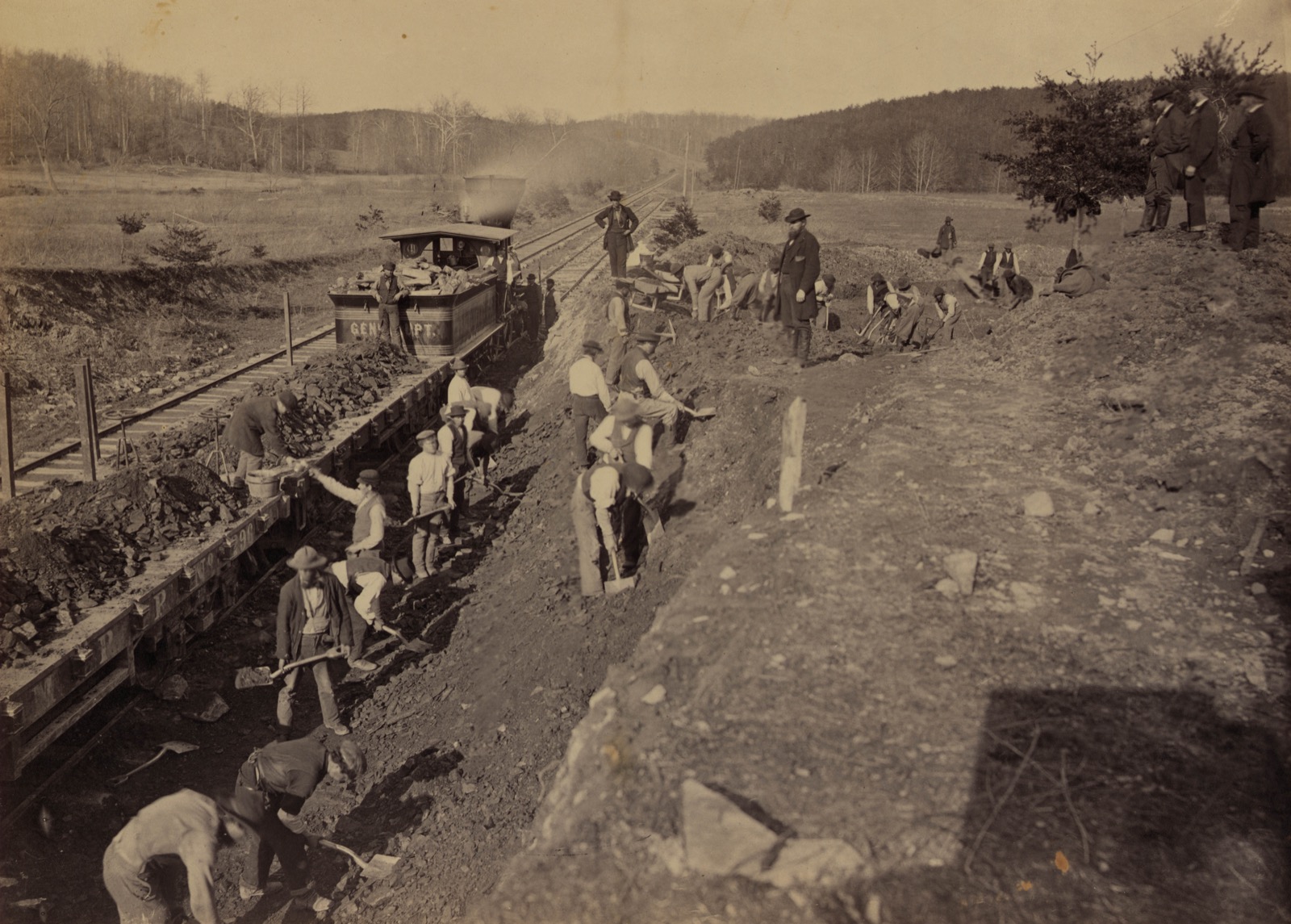
This was the first war in which the railroad shaped strategy itself, not just the dull business of supply. Both governments grasped early that a rail line was a military objective, something to be seized, defended, cut, or rebuilt, and that armies were tethered to their railheads (a railhead is the end of usable track, where the train stops and the supplies come off into wagons) the way a diver is tethered to an air hose. An army could only march so far from the end of the track before it starved. So where the rails ran, the war ran.
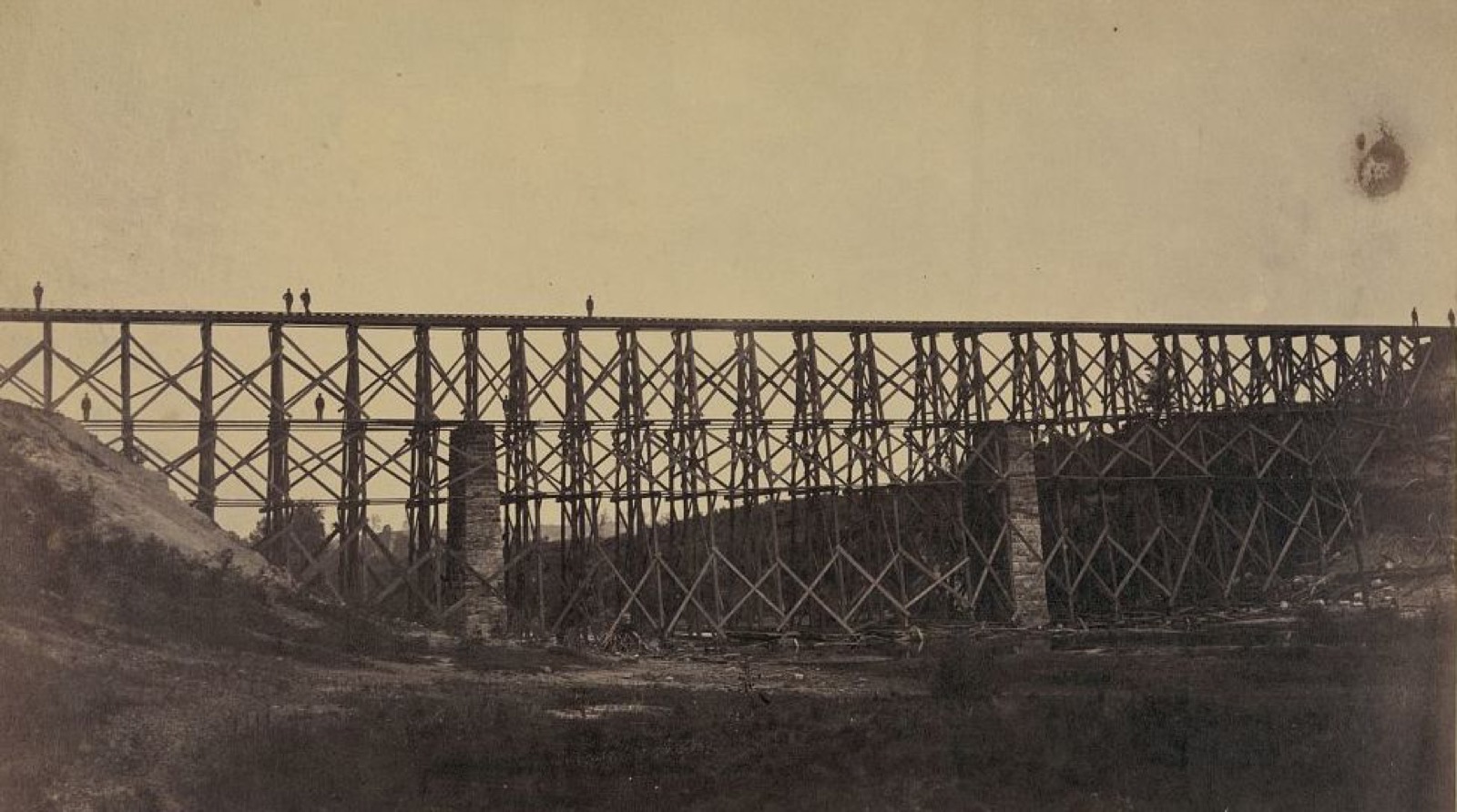
The Union built an institution to run them. An Act of Congress on January 31, 1862 authorized President Lincoln to seize railroads and telegraph lines for military use, and out of that the War Department created the United States Military Railroad, a separate agency to operate the lines the government captured or built. By the end of the war it controlled more than 2,000 miles of military railroad and captured Southern track, and it had built or acquired 419 locomotives and 6,330 cars on top of everything requisitioned from the Northern railroads. The man who made it legendary was Herman Haupt (US), formerly the general superintendent of the Pennsylvania Railroad, appointed Chief of Construction and Transportation in the Virginia theater. Haupt's specialty was rebuilding wrecked bridges and torn-up track at speeds that seemed impossible, using crews of green, untrained labor. Lincoln himself, after seeing one of Haupt's bridges over Potomac Creek (a structure thrown together so fast and from such flimsy-looking material that it hardly seemed it should stand), reportedly marveled that there was nothing in it but beanpoles and cornstalks. The exact words are folklore polished by retelling; the feat behind them was not.
The signature demonstration of what rail could do came in the fall of 1863. After the Union army was beaten at Chickamauga on September 19 and 20, 1863, it fell back besieged into Chattanooga, Tennessee, and a war council in Washington on September 23, 1863, decided on something that had never been tried at this scale: ship two entire army corps from Virginia to the western front by train. The XI and XII Corps, around 25,000 men, traveled roughly 1,200 miles over nine different railroads and arrived to help break the siege, completing the move by around October 8 to 12, 1863, in about 11 or 12 days. It is worth pausing on a small legend embedded in that fact. The plan floated in that war council was even more breathless, a seven-day timeline proposed by Secretary of War Stanton, and that seven-day figure is the one that often gets repeated. The real movement took 11 to 12 days. That is still a staggering feat, and it is the honest one.
The Confederacy could not match this, and the reason runs deeper than bad luck. The South's industrial deficit was not an accident of geography; it was baked into the economy that the war was being fought to defend. The Confederacy's wealth was plantation wealth, produced by enslaved agricultural labor, and that system poured its capital into land and people-as-property, not into the foundries, locomotive works, and free-labor factories the North had spent decades building. The North did not simply happen to be richer in iron and engines; it had built an industrial economy, and the South had built a slave economy, and the rail map was the difference made visible.
And the difference was crushing. Against the South, the North had roughly three times the freight cars and five times the locomotives, enough rolling stock that the Union could lose trains to raids and keep running while a Confederate quartermaster watched a single broken engine strand a whole shipment with no replacement in the yard. It had about eight times the iron-rail production and ten times the telegraph stations, the sinews that let a worn line be relaid and a distant one coordinated. And it could build new locomotives at about twenty-four times the Southern rate, so when an engine wore out in the North another rolled off the line, and when one wore out in the South it stayed dead. The Confederate network was not just smaller, it was breaking. Southern lines had been built by different companies to incompatible track gauges, the gauge being the distance between the two rails. Much of the Deep South used a five-foot broad gauge while much of Virginia and North Carolina used the narrower four-foot-eight-and-a-half-inch standard gauge, which meant a train from one line physically could not run onto the other. Freight had to be unloaded from one set of cars, hauled by wagon across town, and reloaded onto cars of the right gauge for the next leg, as happened at Montgomery, Alabama. With almost no industry to forge fresh rails or build new engines, the Southern system wore out under heavy use, poor maintenance, and Union raiding, until by war's end the track was in disrepair, the engines unmaintained, and the whole patchwork still fragmented.
The Confederacy did pull off one rail coup worth noting on its own terms. In September 1863, Confederate Lt. Gen. James Longstreet (CS) moved his corps of about 12,000 men roughly 800 miles in about 12 days, over a roundabout route because the direct line had been cut, to reinforce the army that won at Chickamauga. It was a real achievement. It was also promptly eclipsed by the Union's Chattanooga move, which carried nearly double the men over half again the distance. That contrast, the South straining to do once what the North could do bigger, is the whole strategic story in miniature.
The war run by wire
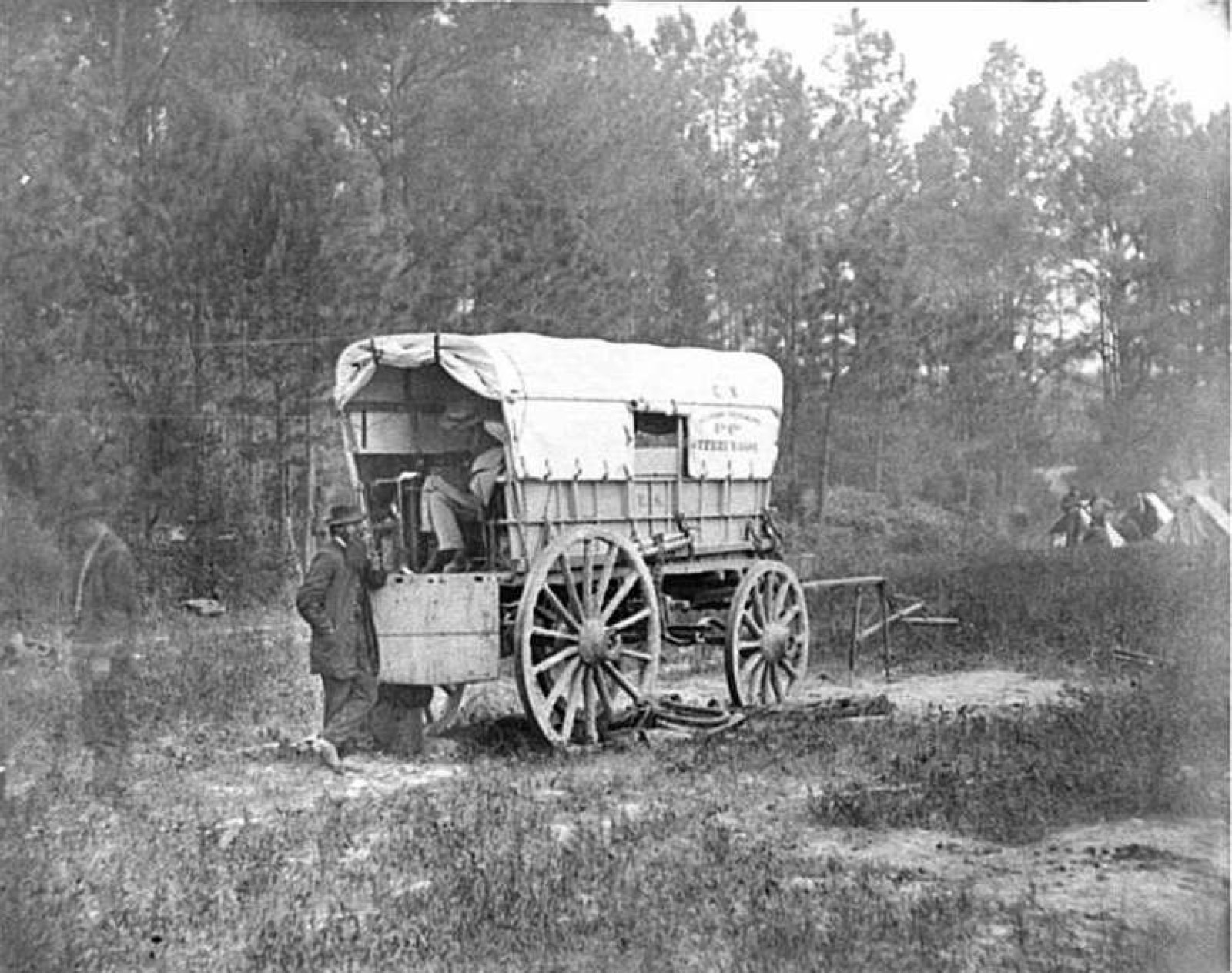
The third new tool was even less visible than the second, because it was just a thin copper wire, but it rewired how a war could be commanded.
The telegraph sent messages as electrical pulses along that wire almost instantaneously across enormous distances, which meant that for the first time a central authority could coordinate armies hundreds of miles apart in something close to real time. Before this, an order to a distant general traveled at the speed of a horse and might be days old by the time it arrived and irrelevant by the time it was read. Now it traveled at the speed of electricity. The U.S. Military Telegraph Corps strung more than 15,000 miles of wire across the battlefields and ran the dispatches into a telegraph office set up in the old library of the War Department building, right next to the White House, in March 1862. The volume that flowed through it was something no previous war had ever generated: roughly 6.5 million messages between May 1861 and June 1865, where an army a generation earlier might have sent its commander a handful of couriered notes in a day. A whole new river of information now ran straight to headquarters.
And it changed the presidency. Lincoln (Commander-in-Chief) spent more of his presidency in that War Department telegraph office than anywhere else outside the White House itself, walking over several times a day to read the incoming stack of dispatches, which he called his "lightning messages." It let him act as a genuine commander-in-chief, issuing orders and directing the movement of troops in near-real time instead of waiting on the mail. (Lincoln, it happens, was the only U.S. president ever to hold a patent, a man with a real streak of interest in how machines worked, so the wire suited him.) The same wires fed the newspapers, racing war news to a mass civilian readership far faster than ever before, and they ran out to the balloon corps too, so that an observer floating over the lines could telegraph what he saw straight down to the ground, two new technologies spliced into one.
The weapon that came too slowly

If the rifled musket is the technology that arrived on time, the repeating rifle is the one that arrived late, and the story of why is a small tragedy of stubbornness.
A muzzle-loading rifled musket (the muzzle being the open front end of the barrel), like the Springfield or the Enfield, had to be reloaded from the front after every single shot: pour the powder, seat the bullet, ram it home, prime, fire. A good soldier managed maybe two or three aimed shots a minute. The repeating rifle threw that math out the window. The Spencer rifle and carbine, designed by Christopher Spencer (US), a 30-year-old Connecticut inventor, was a lever-action weapon that held seven .52-caliber rounds in a tube in the buttstock; work the lever to chamber a fresh round, fire, work it again, and a soldier could empty all seven in well under a minute. More than 85,000 Spencers were built by war's end, and total U.S. orders reached 106,667. The Henry rifle, patented in 1860 by Benjamin Tyler Henry (US), went further still, a lever-action repeater holding sixteen .44 rimfire rounds, even more firepower than the Spencer; it was mostly a privately purchased weapon rather than standard issue, and its design line would later become the famous Winchester.
Confederate soldiers on the receiving end of these things coined the saying that stuck to them, the complaint about the Yankee gun "that they load on Sunday and shoot all week." It is one of the great lines of the war, and it should come with a small asterisk: it is folklore, not a sourced quotation from a particular soldier. It is most often pinned to the Henry, but "load on Sunday and shoot all week" was also a Spencer advertising slogan, so the phrase floated freely across both guns. Treat it as a famous saying that captures a real feeling, not as words traced to one man's mouth.
So why on earth weren't both armies carrying repeaters by 1862? The answer has a name: Brigadier General James Wolfe Ripley (US), the Union's Chief of Ordnance from 1861 to 1863 (ordnance meaning military weapons and ammunition, so this was the officer who ran weapons procurement for the whole army), and a determined opponent of the breech-loading repeater. (A breech-loader loads from the rear, the breech, instead of down the muzzle, which is what lets a repeater feed round after round so fast.) Ripley's stated objections were not crazy on their face. He argued that putting rapid-fire weapons in soldiers' hands would encourage poor fire discipline and waste ammunition, that men would simply blaze away without aiming. He worried about the cost, the extra weight, and the logistical headache of manufacturing and shipping special metallic cartridges (the self-contained brass rounds with powder and bullet pre-assembled that the repeaters needed, a whole new kind of ammunition utterly unlike the loose powder and separate ball a muzzle-loader used) and keeping multiple kinds of ammunition flowing to the front. He is widely quoted dismissing the new guns as "newfangled gimcracks," a phrase that captures his attitude even if no one has pinned it to a specific document from his own hand.
It took the president to override him. In August 1863, shortly after Gettysburg, Christopher Spencer personally demonstrated his rifle to Lincoln on the grounds near the White House, the two of them shooting at a target, and Lincoln came away impressed and pushed for adoption. Ripley was removed as Chief of Ordnance on September 15, 1863, principally for continuing to obstruct breechloaders in defiance of orders. And yet, even after all that, the repeater never became the standard infantry weapon of the war. It spread mainly to cavalry and to select units, and it arrived in real numbers too late to be everywhere. Where it was concentrated it was devastating, as when Spencer-armed Union troops chewed up a Confederate attack at Hoover's Gap in 1863. The whole episode is the textbook case of institutional caution strangling a battle-changing technology, and it leaves behind one of the war's great what-ifs, the kind historians are still happy to argue about: what if the repeater had come in 1862 instead of trickling in late?
The men who dug
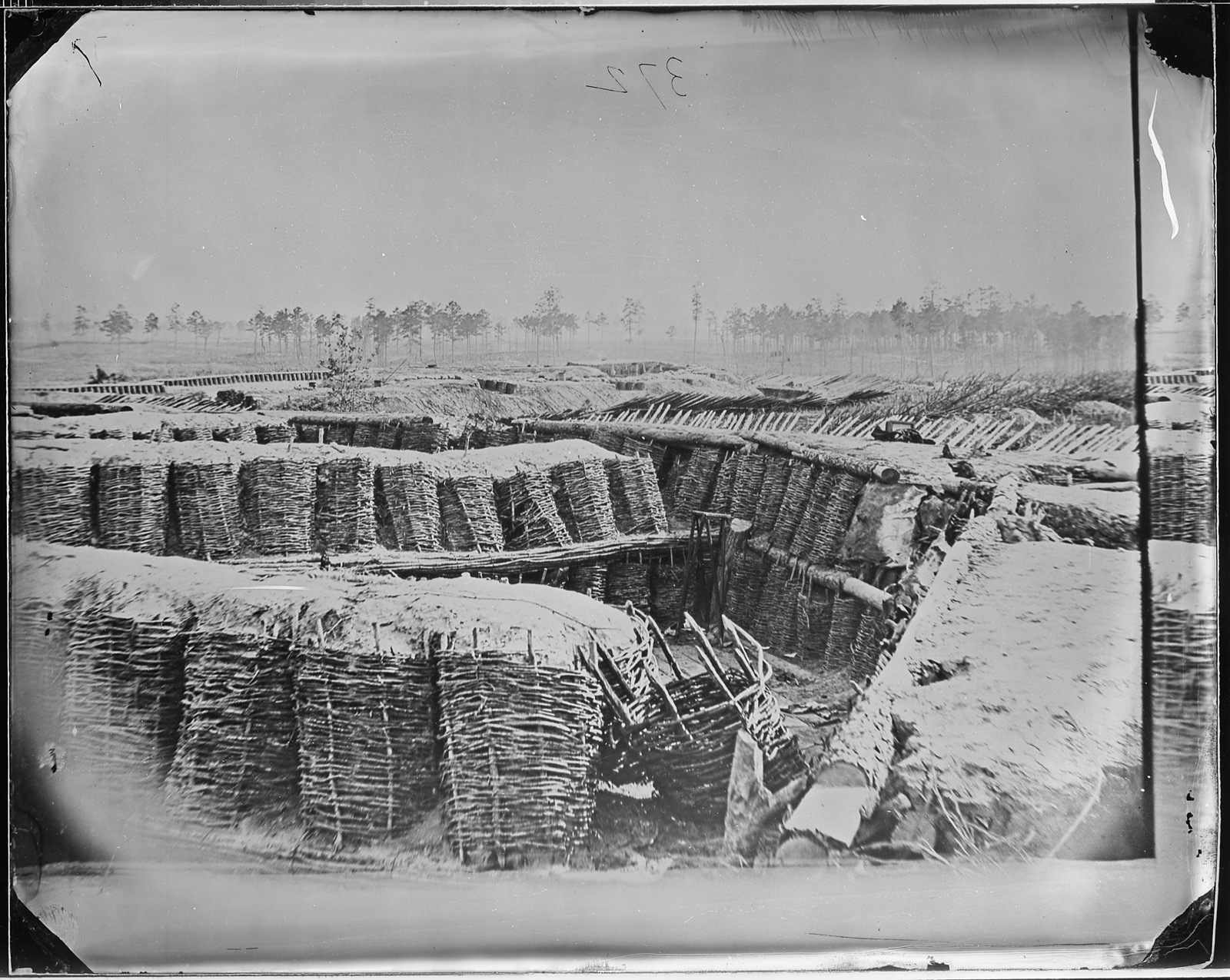
By 1864 the soldiers had figured out for themselves something their tactics manuals never told them, and they figured it out with shovels.
Picture the moment from inside it. A column halts at the edge of some Virginia woodlot, the men sweated through and bone-tired, and without an order passing down the line they reach for whatever will move dirt (a bayonet, a tin cup, a canteen half, a spade if they are lucky) and start scraping a hole deep enough to lie in. A man who a year earlier would have stood up straight in the open and trusted his courage now wants, more than anything, to get his body below the surface of the earth before the shooting starts. The logic was brutally simple: standing upright against rifle-armed defenders was a way to die, so you got below ground level and made the other man do the dying. What began as a frightened scrape hardened into doctrine. By 1864 it was reflexive: earthworks, rifle pits (shallow holes for a rifleman to crouch and shoot from), and eventually long continuous trench lines went up almost the instant an army stopped moving, the men teaching themselves a lesson the generals were slow to write down.
The grim tuition for that lesson was paid at Cold Harbor in Virginia, fought from May 31 to June 12, 1864, where Grant's frontal assaults against Lee's entrenched lines produced catastrophic Union losses for almost no ground gained, a stark, blood-soaked demonstration that the dug-in, rifle-armed defense had simply overtaken the old frontal attack. The men knew it before the generals did; some, before the assault at Cold Harbor, are said to have pinned their names to their coats so their bodies could be identified afterward, having already done the arithmetic the order ignored.
What came next looks, in hindsight, eerily like a preview of a war fifty years off. From June 15, 1864 to April 2, 1865, Grant and Lee faced each other across trench lines more than 30 miles long in the Siege of Petersburg in southern Virginia, a static, entrenched stalemate that dragged on for about nine and a half months, some 292 days of it. Living in those works was its own slow grind: men spent seasons in the ground, in mud that froze and thawed and froze, under a fire that never fully stopped, the open strip between the lines too lethal to cross and the trench too miserable to leave. The casualties of the siege ran to roughly 42,000 Union and 28,000 Confederate. Historians routinely describe Petersburg as a foreshadowing of the trench warfare of the First World War, fought from 1914 to 1918, because it was the same grim dynamic playing out: firepower from rifles and artillery turned the open ground between the lines into a killing zone, so both armies burrowed into the earth and stayed there, unable to break the other and unwilling to die in the open trying. It was the Western Front in miniature, half a century early. (Here the honest caveat from earlier still applies: how much of this you credit to the rifle's range specifically, versus to firepower and entrenchment more broadly, is exactly the point Hess and the traditionalists argue over. The trenches were real; the single tidy cause is not settled.)
Everything else that was new
The rifle, the railroad, and the telegraph were not the only things that made this war feel like the front edge of something.
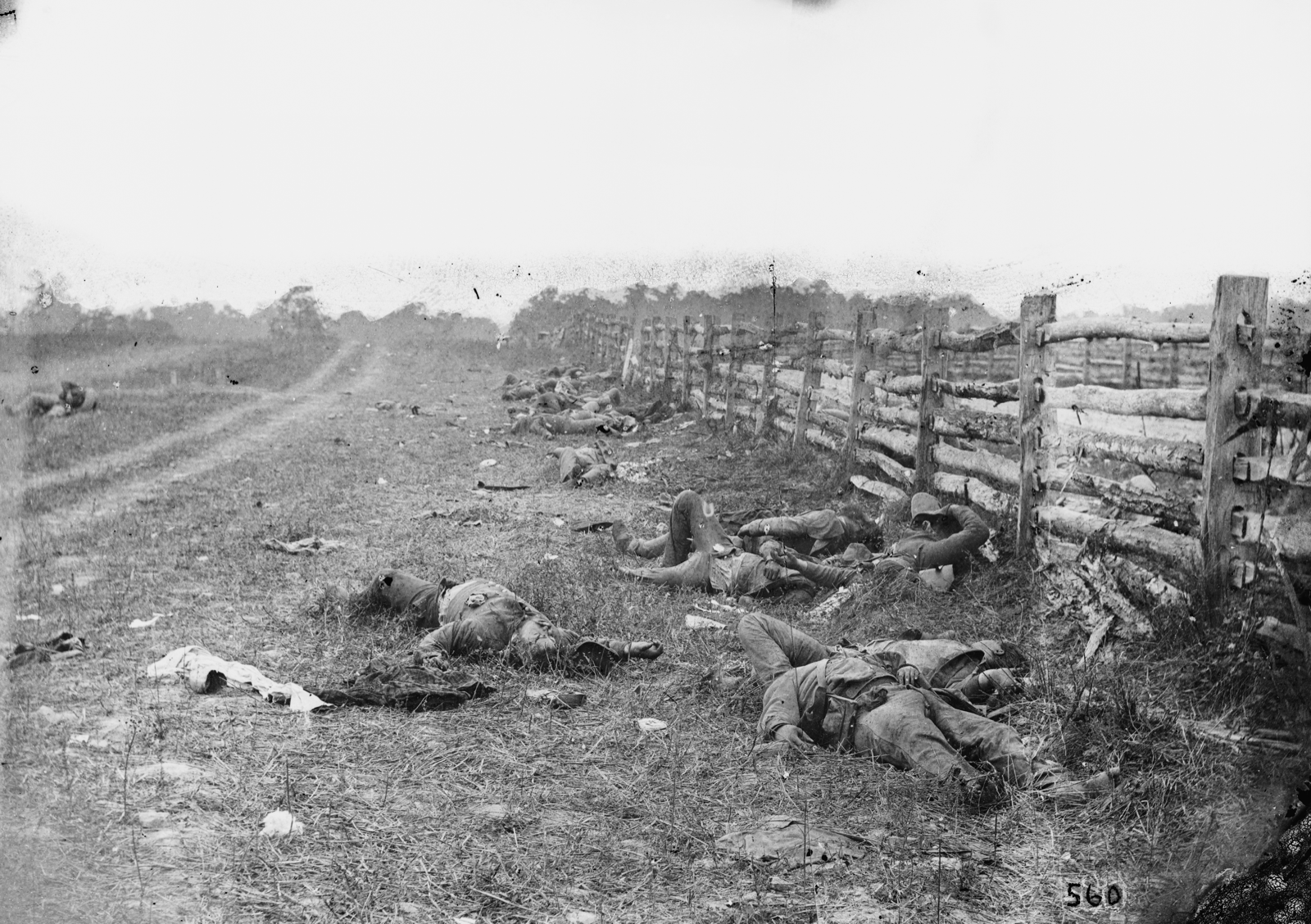
The war was photographed, and that was new. Mathew Brady (US), the era's best-known photographic entrepreneur, sent his assistant Alexander Gardner (US) to the field after the Battle of Antietam on September 17, 1862. Gardner arrived two days later and photographed the battlefield with the dead still lying on it, the first time an American battlefield had ever been recorded that way. In October 1862 Brady mounted an exhibition of the images, "The Dead of Antietam," at his Broadway gallery in New York City, and crowds lined up for weeks. Photographs could not yet be printed in newspapers, so for middle- and upper-class New Yorkers, walking into that gallery was often their first face-to-face encounter with what the war actually did to bodies; wood-engraved copies of the images later ran in Harper's Weekly, carrying the shock past the gallery doors to readers across the country. The New York Times caught the moment:
"Mr. Brady has done something to bring home to us the terrible reality and earnestness of the war. If he has not brought bodies and laid them in our dooryards and along the streets, he has done something very like it."
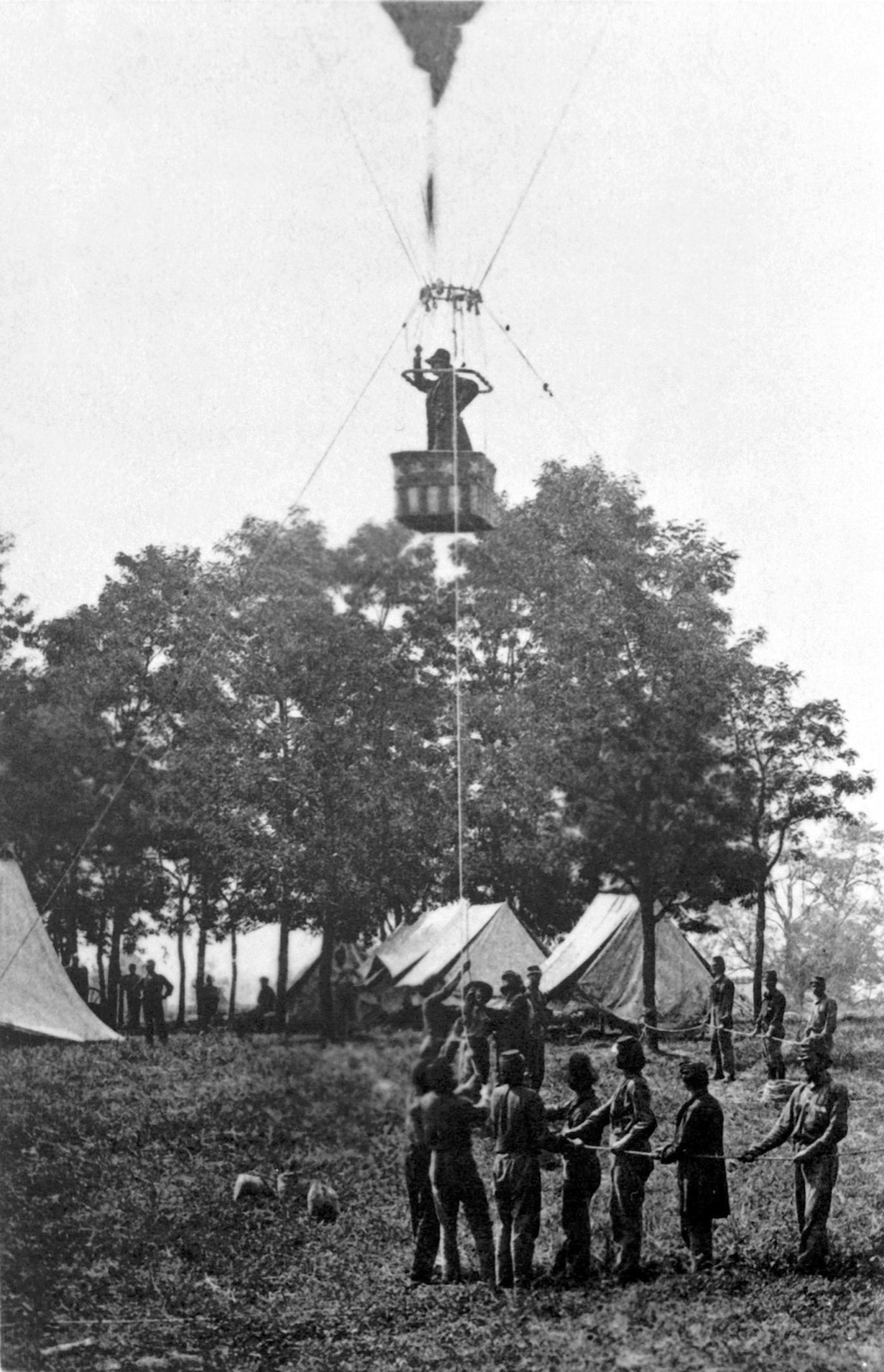
The war was watched from the air. Thaddeus S. C. Lowe (US) founded and ran the Union Army Balloon Corps, a civilian operation that from 1861 to 1863 used seven gas-filled balloons for aerial reconnaissance, spotting Confederate movements, directing artillery, and mapping the ground from above. On June 17, 1861, from Washington, Lowe went up in the balloon Enterprise and telegraphed the first message ever sent from the air to the ground, wired down to the War Department and the White House, splicing the two new technologies together in a single moment. The Corps was disbanded in 1863.
The war was mined. Confederate Brigadier General Gabriel J. Rains (CS) is often called the father of modern mine warfare. He developed the "subterra shell," a large explosive artillery shell (the kind normally fired from a cannon) instead buried in the ground and rigged to fire when stepped on, in other words a land mine, and Confederate forces first used buried mines against pursuing Union troops during the retreat from Yorktown in 1862. Rains went on to head the Confederate Torpedo Bureau, sowing mines in roads and harbors. At the time the weapon struck many as an "uncivilized" way to fight. The naval side of mine warfare ran parallel: Confederate torpedoes sown in harbors and rivers, and the famous clash of the ironclad warships USS Monitor and CSS Virginia in March 1862, which made every wooden navy in the world obsolete overnight.
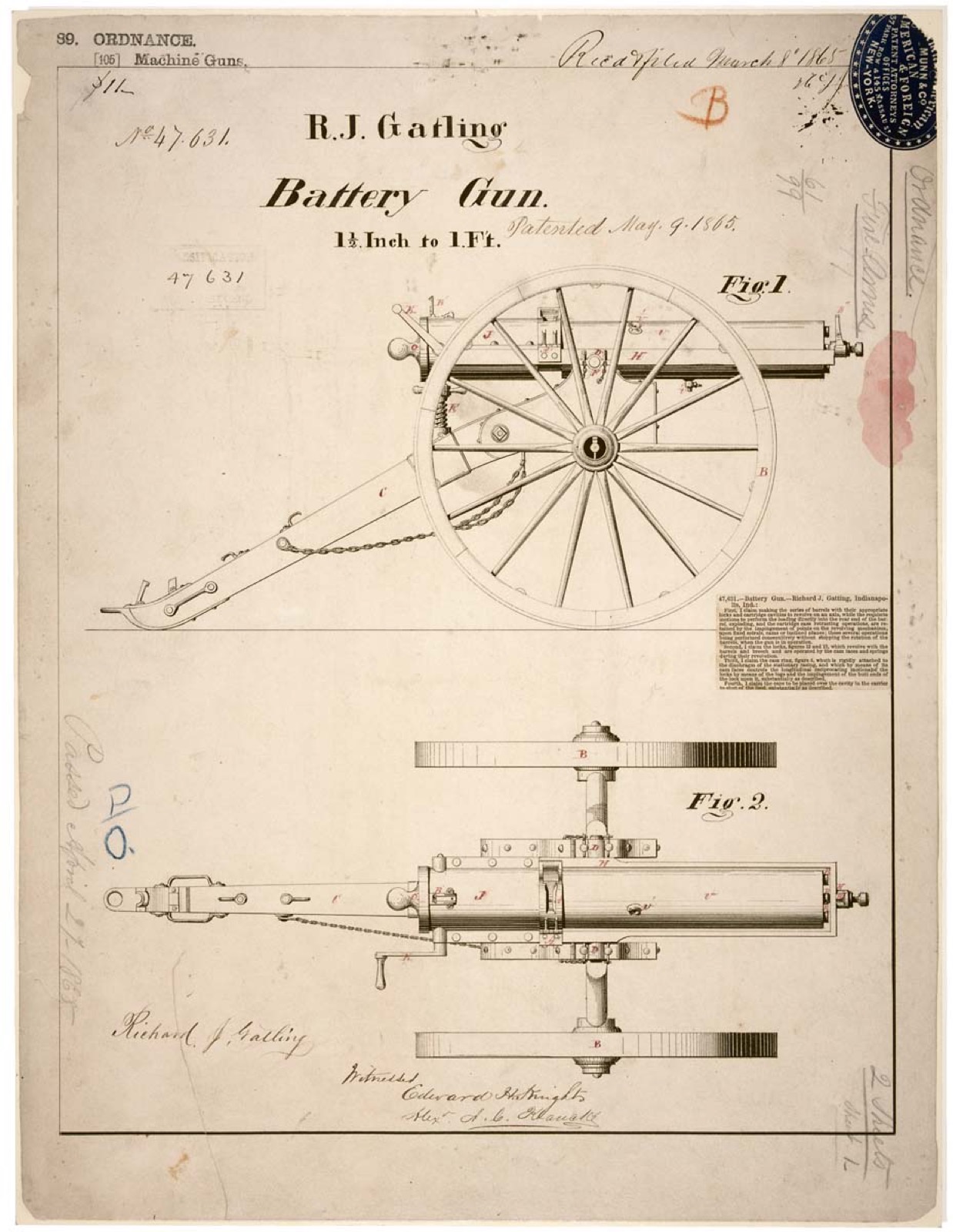
And the war got its first taste of the machine gun, though more as a rumor than a fact. Richard Gatling had patented his hand-cranked, multi-barrel gun in 1862, a weapon that could spit out hundreds of rounds a minute by turning a handle. Only one Union general bought any: Benjamin Butler (US), who paid for about a dozen Gatling guns out of his own pocket, at roughly $1,000 apiece, and is said to have used a few of them in the Petersburg lines. Whether they truly fired on the enemy is genuinely uncertain. There is no solid documentation that any Gatling saw real combat in the war, and some historians suspect Butler's guns were a different rapid-fire model entirely. The army did not formally adopt the Gatling until 1866, after the war was over. So the first real machine gun showed up at the very edge of the Civil War, half-bought and half-used, a preview of a weapon whose day would come on the Western Front Petersburg was already rehearsing.
But the deepest "modern" feature was not any single gadget. It was scale. Mass-produced weapons built from interchangeable parts, railroads and telegraphs binding home-front factories directly to the fighting front, the full mobilization of two industrial-age economies against each other, all of it adds up to something bigger than any one invention. The Union's sheer manufacturing depth, built like its rail network on free wage labor and Northern industrial capital rather than on enslaved agricultural production, was itself a weapon. If you want the strongest case that this was a genuinely new kind of war, it is not the rifle or the balloon. It is the totality, the binding of an entire industrial society to the war effort.
Was it really the first modern war?
Which brings us to the big claim, the one that gets stamped on the cover of so many books: that the Civil War was the first modern war, even the first total war. It is a powerful idea. It is also an argument, not a settled fact, and honesty requires presenting it as one.
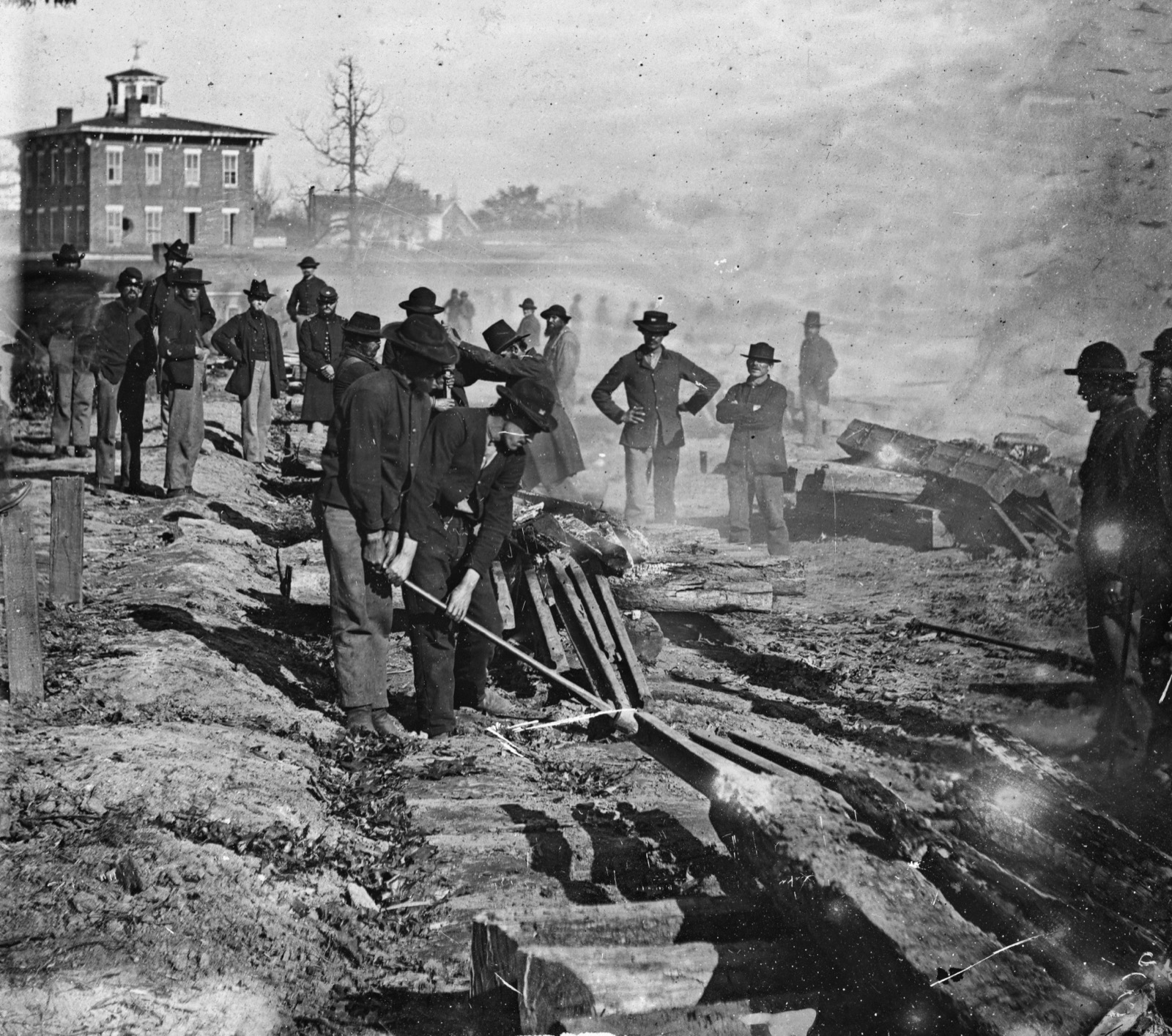
The "first total war" framing has a traceable pedigree. It was crystallized by the historian T. Harry Williams, whose 1952 book Lincoln and His Generals opens with the flat declaration that the Civil War "was the first of the modern total wars." The "total war" idea, especially as applied to General Sherman's campaigns of destruction, traces back a few years earlier, to a 1948 article by historian John B. Walters, and Williams took it up and made it famous. The case in favor is the whole catalog we have just walked through: industrial mobilization, railroads and telegraphs, rifled and repeating firearms, ironclads, trench warfare, and above all the deliberate targeting of the enemy's economic capacity. Picture Sherman's March to the Sea: soldiers prying up rail, heating the iron, and twisting it around tree trunks into useless loops the South had no mills to straighten, burning the barns and gins and warehouses that fed and clothed the Confederate armies. A war waged against a whole society's ability to make war, not just against its army in the field. That image, more than any single gadget, is what people mean when they call this a modern war.
But the qualifications are serious, and several careful scholars push back hard. For one, "total war" is arguably a twentieth-century concept, born of the World Wars, and a number of historians think it simply does not fit a pre-1900 conflict and reject applying it to the Civil War at all; the historian Mark Neely has been the most persistent of these critics, arguing that the label was a post-World-War conceptual import pasted onto a war that did not actually meet it. For another, nearly every scholar refuses to call the war an all-out assault on civilians of the kind the twentieth century would see: Sherman destroyed property and infrastructure on a large scale, but he did not wage systematic mass killing of noncombatants, and that distinction matters. Continuity-minded historians make a third objection, that earlier conflicts, the Napoleonic Wars and even ones before them, already showed "total" or "modern" features, so the Civil War looks less like a clean break and more like one stage in a long evolution. A common middle position threads these together: the war's real modernity lay in attacking the structure of a newly industrializing society, its transport and communication and production, rather than in slaughtering its people.
So where does that leave the verdict? About here. This was unmistakably a war of new tools and industrial scale, and it was a genuine bridge toward the warfare of the twentieth century, the trenches of Petersburg pointing straight at the trenches of France. But the labels are contested, the "total war" tag most of all, and any account that hands you "the first modern war" as a flat fact is skipping the argument. The technology of war outran the tactics of war, and a generation of men marched into the gap between them before anyone in charge fully understood how wide it had grown.