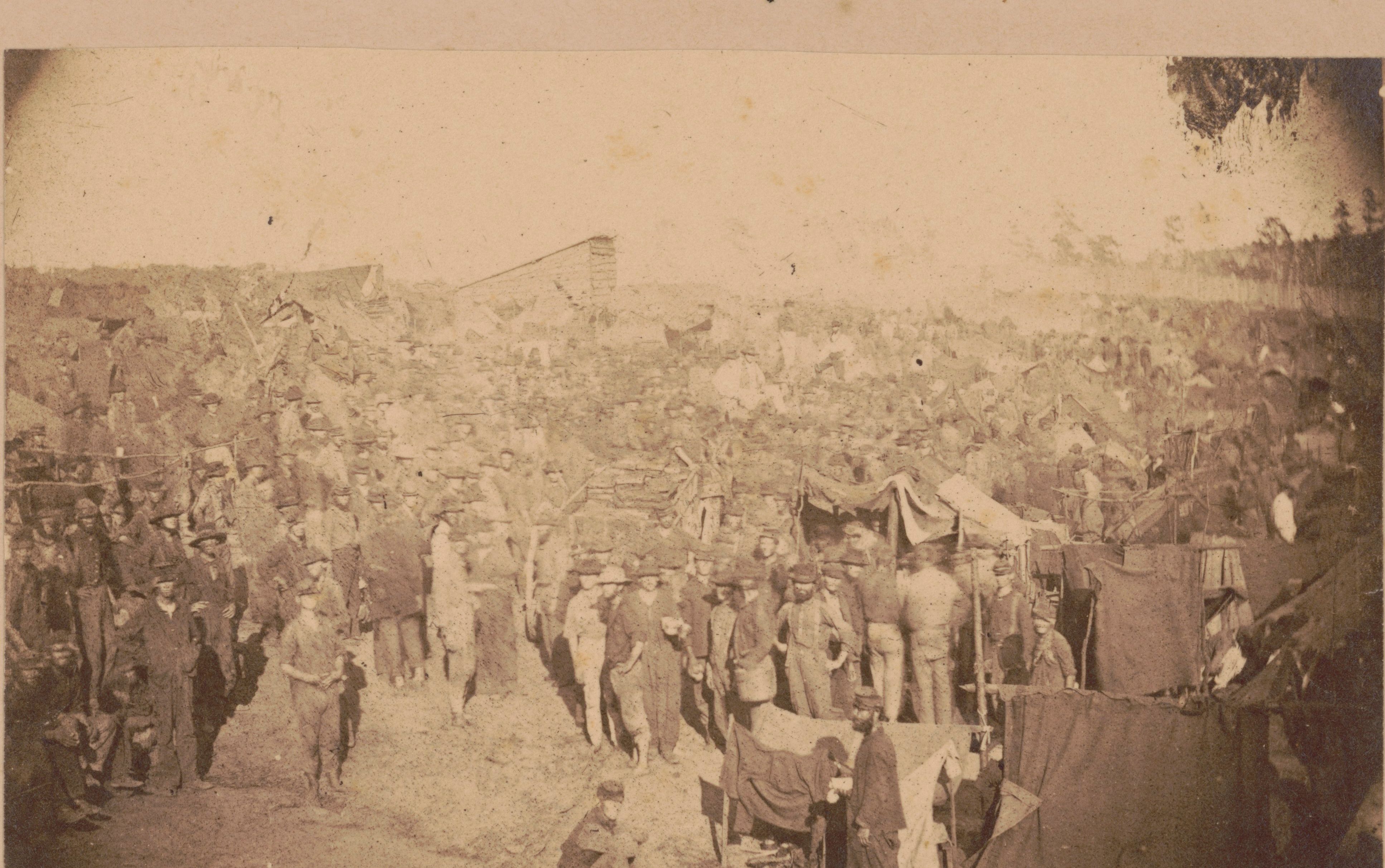
Here is a number to start with, because it reframes everything that follows. More than 400,000 men passed through captivity during the Civil War, held in stockades (a stockade is a pen ringed by a wall of upright pine logs), warehouses, and tent-camps behind enemy lines, on both sides. And an estimated 50,000 to 56,000 of them died there. That is a count nobody is fully certain of, which is why it's a range, but take the middle of it and sit with the scale: more than fifty thousand men, a mid-sized American city emptied into graves. Roughly one in ten of every death in the entire war happened not on a battlefield but in a prison camp. The American Battlefield Trust, the major preservation group that keeps the war's casualty accounting, frames it this way: the prison deaths alone exceeded American combat losses in World War I, Korea, and Vietnam combined. The men who died this way did not fall in a charge. They wasted away, slowly, of starvation and dysentery (a severe gut disease of bloody, watery diarrhea, caused by fouled food and water) and exposure and untreated disease, behind their own enemy's wire, often within earshot of an army that had simply stopped coming to get them.
The first thing to understand is that the camps did not fill up because of bad luck or bad logistics. They filled up because of a decision. For the first half of the war the two sides had a working system for trading prisoners back and forth, and it kept the camps nearly empty. Then that system broke, and it broke over a single question: whether a Black man in a Union uniform was a soldier to be exchanged like any other, or a piece of recaptured property to be sold back into slavery. The Confederacy said property. The Union said soldier. Neither side would bend, the trades stopped, and tens of thousands of men (white and Black) were left to rot in camps that should never have held them more than a few days. The camps were a consequence of that argument. The Confederacy's racial prisoner policy was a war crime against Black soldiers: captured Black men were re-enslaved or executed. Here we follow that policy down its other road: the same decision that meant murder for a captured Black soldier also meant a slow death for tens of thousands of white ones. One cause, two consequences.
It is grim material, and the suffering was real and deserves to be felt without being made into spectacle. But there are also people in this story who refused to let the dead vanish unnamed: a prisoner who secretly copied a death register he was forbidden to keep, and a woman who turned that list into the most completely identified mass grave of the nineteenth century. They deserve to be seen too.
The human exchange rate
To understand the catastrophe, you first have to understand the thing that broke.
Early in the war, neither side actually wanted a formal prisoner-exchange agreement. The hesitation came mostly from the Union, and the reason was political: to sign a binding treaty with the Confederacy would be to treat it as a legitimate government, a real country with the standing to make agreements. That was exactly the recognition the United States was fighting a war to deny. So for the first year there was no framework. Men captured in the field were sometimes released informally on the spot, but there was no system.
That changed on July 22, 1862, at a place called Haxall's Landing on the James River in Virginia, where two generals signed what became known as the Dix–Hill Cartel (a "cartel," in this old military sense, simply means a formal agreement between enemies for exchanging prisoners). It was signed for the Union by Maj. Gen. John A. Dix and for the Confederacy by Maj. Gen. Daniel Harvey "D.H." Hill, whose names the agreement took.
What the cartel set up was, when you look at it closely, a strange and revealing thing: a literal exchange rate for human beings, priced by military rank. Prisoners were traded man-for-man at equal rank, but for unequal ranks there was a sliding scale, and the scale was denominated in privates. A captured general was worth 60 privates. That single number is the one to hold onto, because both sides sat down and agreed that one general's freedom was worth sixty ordinary men's. The middle of the scale ran down from there: a major general was worth 40, a brigadier 20, a colonel or navy captain 15, a lieutenant 6, a sergeant 2. Rank had a precise market value measured in other men's bodies.
There was a second mechanic that explains how the breakdown stranded so many men. A prisoner who wasn't formally exchanged within 10 days of his capture could be released on parole, but "parole" did not mean going home free. It meant being sent to a holding depot on his own side, bound by an oath not to take up arms again until he had been formally exchanged, meaning matched against an enemy prisoner of equal value on the ledger. A paroled man was a soldier on pause: not free, just waiting in a supervised camp for the bookkeepers on both sides to cancel him out against an enemy of equal rank. So "exchange" and "parole" were two different things, and that distinction is why, when exchanges later stopped, paroled men piled up too, stuck in their own army's holding camps with no way to be cleared.
And here is the part that makes the later catastrophe so much darker: the cartel worked. For several months from the middle of 1862 into early 1863, prisoners flowed back and forth, and both sides' prison populations were largely emptied out. This is precisely why the camps of 1862 and early 1863 were small and survivable, and the camps of 1864 were death machines. Nothing about Southern weather or Northern winters had changed. What changed was that the trading stopped.
The ledger breaks over a question
The cartel didn't collapse all at once. It cracked under three blows stacked one on top of another, and the middle one (the one that really did it) was a decision about who counted as a soldier.
The first crack was friction, and it was a petty one. In December 1862, Confederate President Jefferson Davis suspended the exchange of captured Union officers. Not over any matter of principle: Davis was in a fury over Gen. Benjamin Butler, the Union commander of occupied New Orleans, who had hanged a civilian named William Mumford for tearing down a United States flag. Davis declared Butler a felon and an outlaw, fit to be hanged on sight, and in the same breath stopped trading Butler's officers. It was a quarrel dressed up as a proclamation, a sign the machinery could jam over a single executed flag-puller long before anything important broke it.
The real break came on May 1, 1863. The Confederate Congress passed a joint resolution declaring that captured Black Union soldiers would not be treated as prisoners of war at all. They would be handled as fugitive or recaptured slaves, returned to the people who claimed to own them, or dealt with under the slave laws of the individual states, which is to say re-enslaved or executed. The same resolution declared that captured white officers commanding Black troops could be tried by a military court as instigators of "servile insurrection" (the legal term for leading enslaved people in armed revolt), a charge that carried the death penalty. This was a war crime against the men themselves, and on the cold surface of the exchange ledger it was also a line item that could not be reconciled. The Union would not hand back captured Confederates while its own Black soldiers were being sold into slavery instead of exchanged. The arithmetic of the cartel required treating every captured soldier as an equivalent unit, and the Confederacy had just declared that a whole category of Union soldiers were not soldiers at all.
The third blow made the rupture official. On July 30, 1863, President Abraham Lincoln issued General Orders No. 252, suspending the cartel until the Confederacy agreed to treat Black prisoners exactly as it treated white ones, and threatening retaliation: a Confederate prisoner placed at hard labor for every Union man enslaved, a Confederate executed for every Union man killed in violation of the laws of war. The Union's position was now formal and absolute: no exchanges unless all Union soldiers, Black included, were exchanged on equal terms. By August 1863, large-scale exchanges had effectively ceased. And that is the mechanism that filled the camps: from that summer onward, every man captured went into a stockade and stayed there, with no ledger entry left to move him out, while both armies kept right on capturing more.
Notice the date, because it matters enormously for the argument that comes later: the exchanges stopped in the summer of 1863. That is months before Ulysses S. Grant took overall command of the Union armies. Keep that fact in your pocket.
When Lt. Gen. Ulysses S. Grant did take command of all the Union armies in the spring of 1864, he kept the exchanges stopped, and he did it for two reasons. The first was the same equal-treatment principle: no trades until Black soldiers were exchanged as men. The second was colder, and it is the part that would later be weaponized against him. It was simple manpower math. An exchanged Confederate went straight back into the Confederate ranks to fight again, and the Confederacy, smaller in population, desperately needed those men back. The Union, larger, could better afford to leave its own men in captivity than to hand the enemy a steady resupply of soldiers. Grant said so plainly, in a letter of August 18, 1864:
"It is hard on our men held in Southern prisons not to exchange them, but it is humanity to those left in the ranks to fight our battles. Every man we hold, when released on parole or otherwise, becomes an active soldier against us at once either directly or indirectly."
That is a hard thing to read, and it was a real calculation, made in cold ink by the man who would win the war. But here is where you have to be careful, because this quote became the foundation of a lie. The National Park Service, which runs the Andersonville site today, states the correction as plainly as it can be stated:
"It is therefore inaccurate to attribute the breakdown of the prisoner exchange and all of the sufferings of prisoners of war to a callous military directive by General Ulysses S. Grant."
Both things are true at once, and an honest account has to hold both. Grant's manpower logic was real, and he did keep the exchanges stopped. And the exchanges had already collapsed a full year before he took command, over the question of whether Black men were soldiers, a question the Confederacy answered, not Grant. Grant kept a door shut that the Confederacy's racial policy had already slammed. (Grant did finally permit exchanges to resume in January 1865, once the Confederacy, by then desperate and losing, agreed to include all prisoners. By then the worst was already done.) The broken cartel is why there was an Andersonville at all. The camps were a policy consequence, not a logistics accident.
Camp Sumter
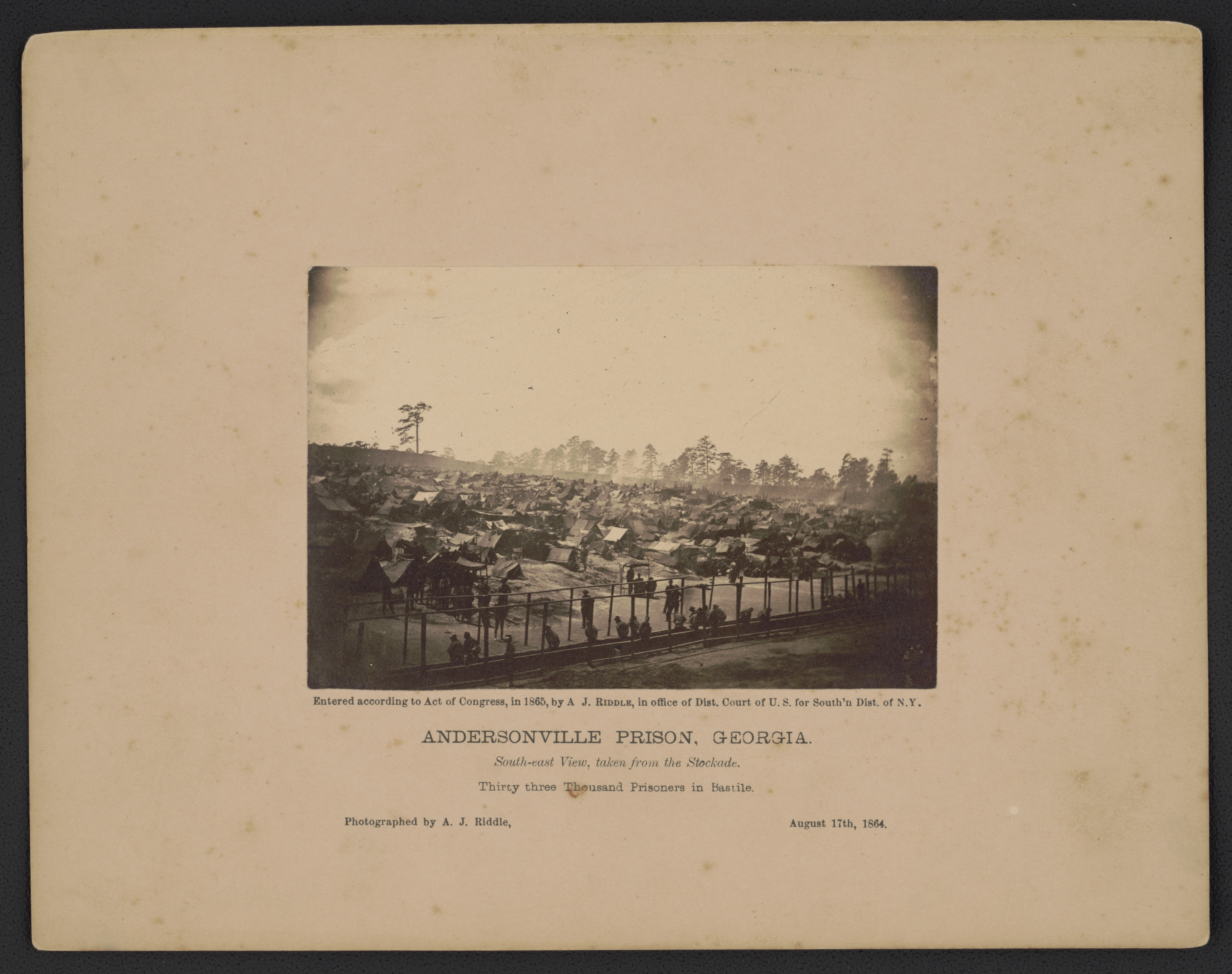
It had an official name almost nobody uses. On the army's paperwork it was Camp Sumter, but the village it sat beside was called Andersonville, in the pine flatlands of southwest Georgia, and that is the name that became a synonym for the worst the war could do to a man without shooting him.
The location was chosen on purpose. The Confederacy put the camp deep in the interior of Georgia, far from the coast and far from the rail lines that fed Union raids, precisely so that no Union army could reach in and free the prisoners. It opened in February 1864 and operated for about fourteen months, until the war ended in the spring of 1865. In that short time it became the single deadliest site of the entire war.
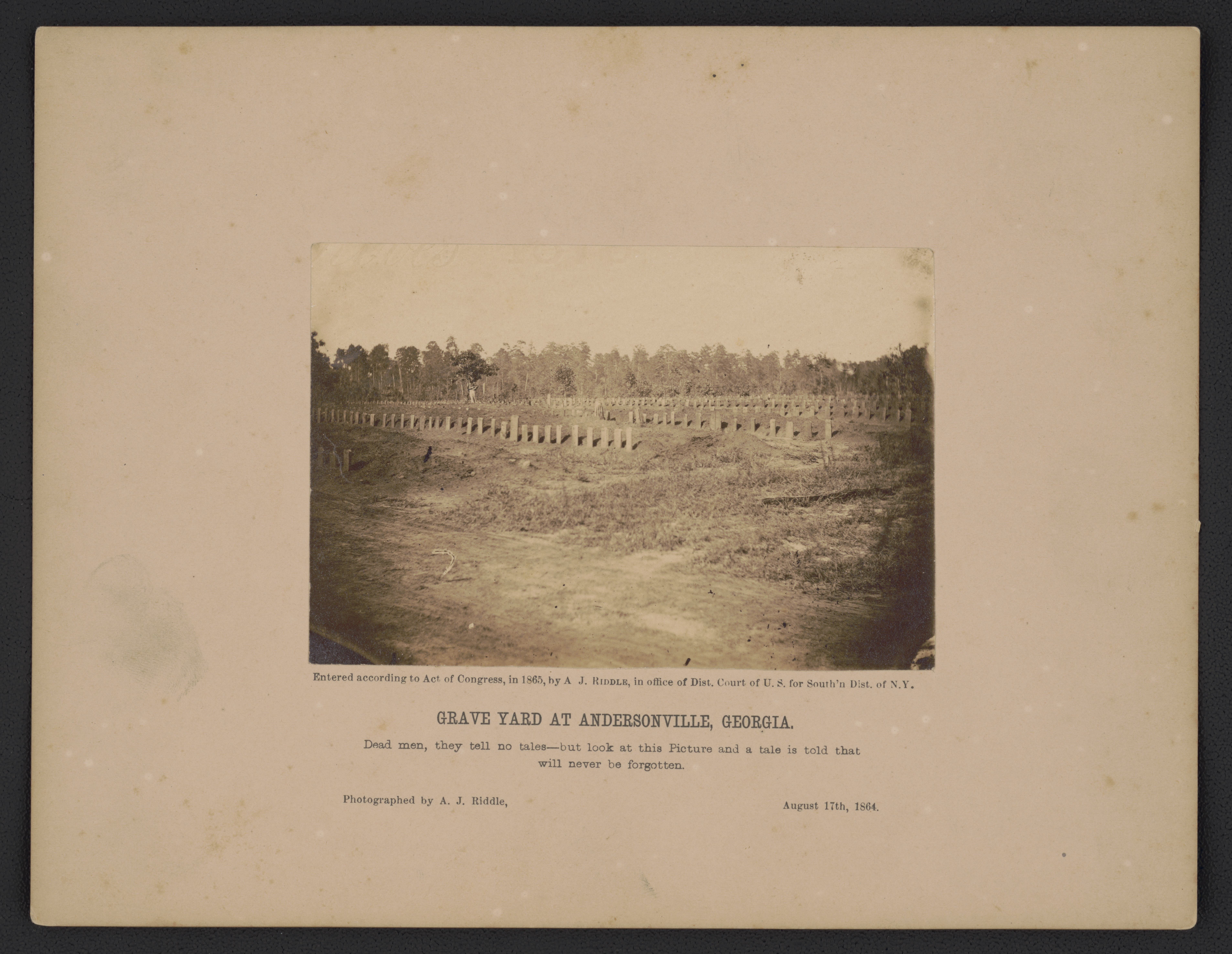
The bare dimensions tell the story before any diary entry does. The stockade (a wall of pine logs fifteen feet high, set upright in a trench) originally enclosed 16.5 acres, a rectangle of about 1,620 by 779 feet. It was built to hold around 10,000 men. They enlarged it to 26.5 acres in late June of 1864 because it had already overflowed catastrophically. At its peak, around August 9, 1864, it held roughly 33,000 prisoners: the most precise count put it at 33,006, and the captions on the only photographs of the place say "thirty-three thousand." Whatever the exact figure, the arithmetic of space worked out to roughly 5 by 6 feet per man, a patch of bare Georgia dirt the size of a single bed, per human being, with no shelter on it. Over its fourteen months something on the order of 45,000 Union prisoners passed through (the often-cited register count is 49,485). Nearly 13,000 of them died there, commonly given as 12,920, somewhere around 28 to 29 percent of every man held.
There were no barracks. The Confederacy never built any, and this is one of the cruelties that supply shortages cannot explain away: there was timber on the land, and it went into the wall instead of into shelter. So the men lived in what they called "shebangs" (crude lean-tos: a hole scraped in the dirt, a scrap of blanket stretched over sticks, whatever a man could improvise against the Georgia sun and the winter rain). They lived in the open, in their own filth, on a starvation diet, drinking poison. Each of those killed in its own way.
The line you died for crossing
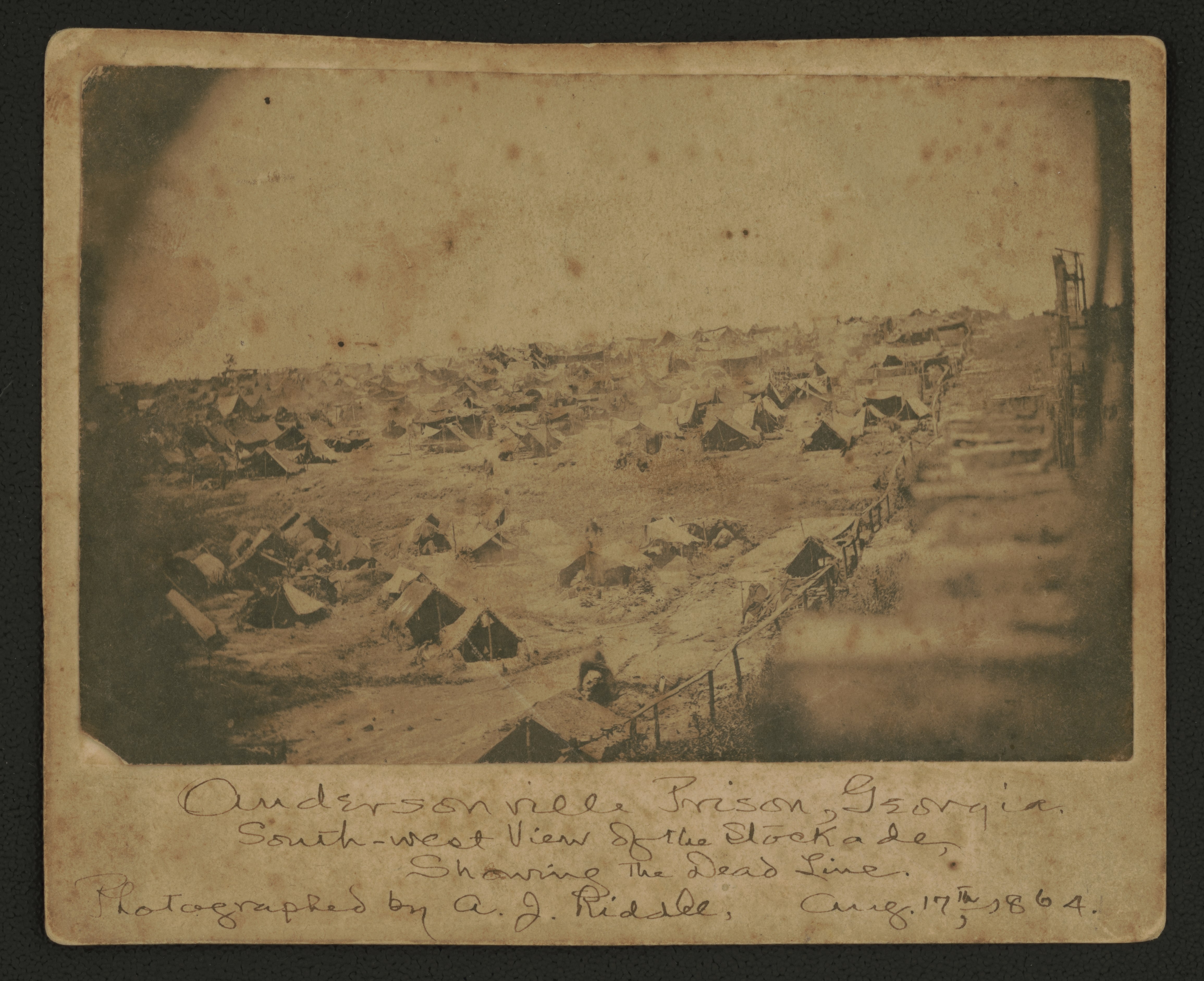
Run a low railing on short posts, three or four feet high, around the inside of the stockade wall, about nineteen feet in from it. That railing was called the deadline, and the name was not a metaphor. A prisoner who crossed it, or even reached across it, was shot without warning by the guards posted in elevated sentry boxes the prisoners called the "pigeon roosts." The strip of ground between the railing and the wall was simply forbidden, on pain of instant death. John L. Ransom, a Union sergeant whose Andersonville diary became one of the war's essential prison records, wrote it down within weeks of his arrival in the plainest possible terms: a dead line of board slats ran around inside the wall, and the men "are not allowed to go near it on pain of being shot." Every man in the pen learned to read that railing as the edge of his world.
The word is documented in a Confederate inspection report by Lt. Col. D.T. Chandler in August 1864, written by an officer of the Confederacy's own side who came to look at the place and was appalled by it:
"A railing around the inside of the stockade and about 20 feet from it constitutes the 'dead-line,' beyond which the prisoners are not allowed to pass."
That line in the Georgia dirt is often cited as the origin of the modern word deadline: the term every office worker now uses for a due date is widely credited to a railing that got you killed for crossing it. (Some word historians find the term in earlier print, so the Andersonville origin is the leading story rather than a settled fact.)
Drinking the camp's filth
The single creek that ran through the stockade was the only water the prisoners had, and the way the camp used it is the clearest example of how these places actually killed.
The creek was called Stockade Branch, and it did three jobs at once. It was the drinking water. It was also the camp's sink (the period word for the latrine): the men relieved themselves into the same stream they drank from. And worst of all, before the creek even entered the stockade, it had already run past the Confederate guards' camp and cookhouse upstream, which fouled it before the prisoners ever saw it. So a man at Andersonville drank water that was sewage going in and sewage coming out. You can watch it happen in real time in Ransom's diary, kept by a man feeling it in his own body: by early April he is recording that you "can see a dozen most any morning laying around dead," that "a great many are terribly afflicted with diarrhea and scurvy begins to take hold of some." Within weeks he is one of the afflicted, his own legs swelling and his own gums going, writing the symptoms down as they climbed through him. Dysentery and chronic diarrhea followed the fouled water directly and inevitably.
And here the deeper machinery has to be named, because it is the same engine that ran through the whole war's medicine. Nobody understood why this killed. Germ theory (the understanding that invisible living microbes in fouled water and filth are what transmit disease) had not yet been accepted by the medicine of the day. The men who ran the camp, and the doctors in it, did not grasp that drinking water full of human waste was lethal in a specific, mechanical way. Sanitation was a matter of smell and decency, not understood as the difference between life and death. So the cycle ran unchecked: waste into the water, water into the men, disease out of the men, back into the waste. The great killers at Andersonville were not the guards. They were scurvy (the disease of a diet with no vitamin C, which at Andersonville meant endless cornmeal and beans), dysentery and diarrhea from the fouled water, outright starvation, exposure with no shelter, and contagious disease tearing through 30,000 weakened bodies pressed together. Later analysis even flags hookworm, a parasite nobody at the time could have named, as a major hidden contributor. The men died of things that no one in 1864 fully understood, which is exactly why no one stopped it in time.
The one mercy
There is one bright thread in the Andersonville story, and the prisoners themselves called it providential. During heavy rains in the middle of August 1864, a spring of clean, cold, fresh water suddenly broke out of the hillside inside the stockade, near the north gate. To men drinking sewage, it was a miracle, and many of them believed lightning had struck the ground open to give it to them. The Park Service rangers explain it less dramatically and probably more accurately: it was a natural spring whose outlet had been buried when the stockade trench was dug, and the heavy rains simply re-opened what the digging had sealed. Either way, it gave clean water where there had been none. John L. Ransom, the same man whose diary tracked the dying creek and his own decline, wrote of it with almost unbearable plainness:
"A nice spring of cold water has broken out in camp."
The prisoners named it Providence Spring, and in 1901 a women's veterans' organization, the Woman's Relief Corps, built a stone springhouse over it that still stands. It is the rare thing in this story that is simply good.
When the suffering came from inside
It would be easier to tell this story if all the cruelty came from the guards. It did not. Inside the stockade, a gang of Union prisoners who called themselves the Raiders preyed on their fellow prisoners, robbing and beating and murdering other starving men for their food, their blankets, their valuables, anything worth taking. The decent majority finally organized against them, a group calling itself the Regulators, and they put the gang on trial inside the camp, with a jury drawn from newly arrived prisoners so no one with a grudge sat in judgment. On July 11, 1864, with the commandant's permission, the Regulators marched the six convicted ringleaders to a gallows the prisoners had built that same morning, and hanged them in front of the assembled camp. One rope broke and a condemned man fell through and had to be hauled back up and hanged a second time. The point is hard but necessary: the suffering at Andersonville was not only inflicted from the outside. Thirty thousand men starving in a pen will, some of them, turn on each other, and the dead included men killed by their own.
The man they hanged for it
When the war ended and the country looked for someone to answer for Andersonville, it found a Swiss immigrant with a crippled arm, and it hanged him. He was the only man executed for the way prisoners were treated in the entire war. Whether that was justice or a scapegoating is a question historians have argued about ever since, and the honest answer is uncomfortable, because both things are partly true.
His name was Henry Wirz, born Hartmann Heinrich Wirz in Zurich, Switzerland, in 1823, a Swiss immigrant who had ended up in the South. He had a wounded right arm, and from the spring of 1864 to the end of the war he commanded the interior of the Andersonville stockade: the day-to-day running of the pen itself. He was not the architect of the prison system; that was Brig. Gen. John H. Winder, who oversaw the whole Confederate prison apparatus and who died in February 1865, conveniently leaving Wirz as the surviving face of the thing. When the reckoning came, Winder was dead, and Wirz was alive.
The trial was a military commission: a court run by army officers under military authority, with no civilian judge and no jury, which meant the legal protections of an ordinary criminal trial did not apply. That distinction is exactly what Wirz's defenders would hammer for the next century and a half: a hostile panel of the victors' own officers, in the victors' capital, with none of the safeguards a civilian court would have given him. The commission sat in Washington, D.C., from August 23 to October 18, 1865, presided over by Maj. Gen. Lew Wallace, an officer who would later write the novel Ben-Hur. The charges were two: a sweeping count of conspiracy to ruin the health and destroy the lives of Union prisoners, and thirteen specific counts of personal cruelty and murder: shooting prisoners himself, ordering guards to fire, putting men in the stocks, setting dogs on them. One hundred and sixty witnesses testified, in a courtroom and a capital still raw with grief and hungry for someone to punish. The court found Wirz guilty of the conspiracy and of ten of the thirteen specific acts, and sentenced him to death.
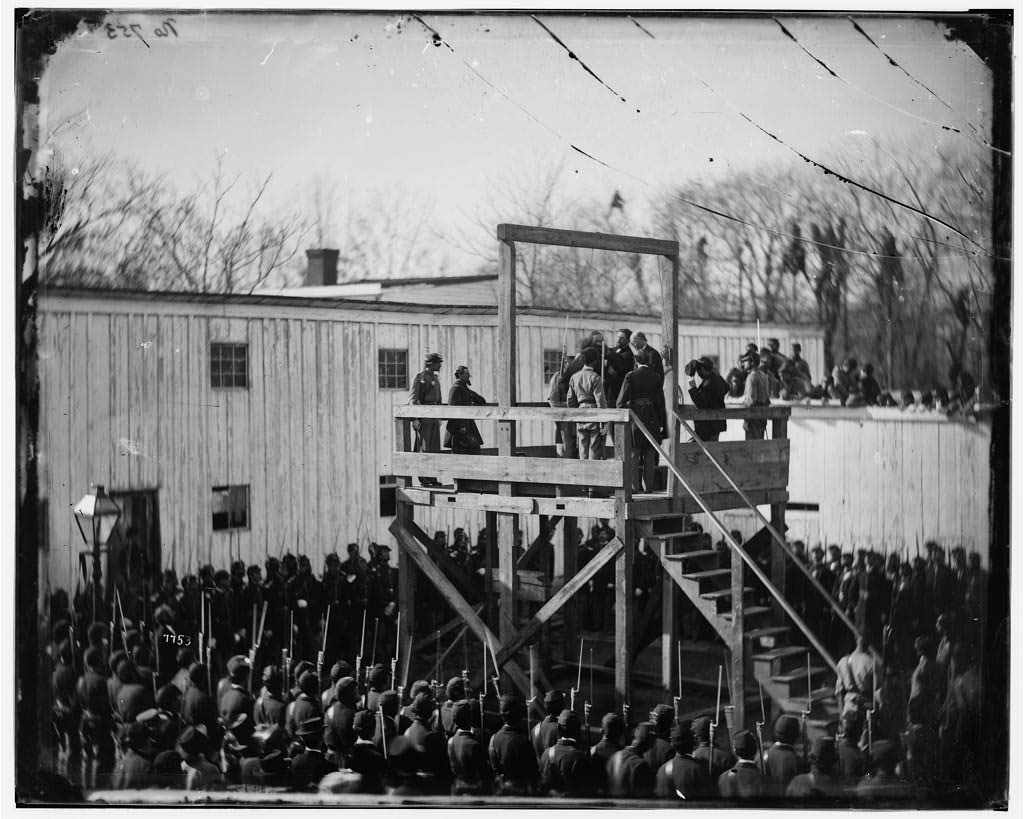
He was hanged on November 10, 1865, at about 10:32 in the morning, in the courtyard of the Old Capitol Prison in Washington, before a crowd of perhaps 250 spectators and soldiers, some of whom chanted "Wirz! Remember Andersonville!" as he stood on the scaffold. His neck did not break in the drop; he strangled. He was the only Confederate official executed specifically for the treatment of prisoners. (Two Confederate guerrillas, Champ Ferguson and Henry Magruder, were also executed after the war, for crimes in the irregular war; Wirz was the one tried specifically for what was done to captives.)
His last words are genuinely uncertain, and the famous version is too good to take at face value. The line most often quoted has him telling the officer in charge of the execution: "I know what orders are, Major. I am being hanged for obeying them." It is a perfect line for the argument that Wirz was a small man punished for a system's crimes, which is exactly why it should be treated as the popular, undocumented version rather than verified fact. A competing account has him saying only that he was innocent and would die like a man. We don't actually know which, if either, he said.
And that uncertainty sits at the center of the real controversy, which an honest account cannot dodge in either direction. Was Wirz a scapegoat, a mid-level officer hanged for a catastrophe built by Winder, worsened by a collapsing Confederate supply system, and shaped by conditions no single captain controlled? Or was he a man who personally chose cruelties he could have eased? The defensible answer is that both are true. The trial had genuine problems, and the sharpest of them is rarely told: the original conspiracy charge named Jefferson Davis and Robert E. Lee themselves, along with Winder and others, as Wirz's co-conspirators. Then the War Department struck Lee's name before the final indictment and never brought Davis to trial for it at all, leaving the one captain at the bottom of the chart to hang for a conspiracy the government had just decided not to prosecute at the top. That, plus a furious post-war climate and a conspiracy count that swept in dead and absent men Wirz could not confront, is real, and the Lost Cause (the postwar movement to recast the Confederacy's defeat as noble and its conduct as blameless, the campaign that filled a century of textbooks, statues, and popular histories with the lie that the South had fought for honor and states' rights rather than slavery) would later seize on those problems to make Wirz an innocent martyr. He was not innocent. The fouled water, the refusal to build barracks from available timber, the deadline, the specific shootings: those were real, and some were his. The trial was not clean, and the conditions were not someone else's fault alone. Hold both, and refuse both myths.
The North's own dead
The North won the war, wrote its histories, built the immaculate national cemetery, and hanged the commandant. Its own prison camps also killed men by the thousands, sometimes on purpose. Andersonville was the worst single place. It was not the whole truth, and a reader who walks away thinking only Southerners let prisoners die has been misled.
The aggregate numbers do cut one way, and they shouldn't be waved off: across the whole war, the death rate in Confederate camps ran higher overall, somewhere around 14 to 15 percent, than in Union camps, which sat near 12 percent. That gap is real. But the aggregate hides the camps where it isn't true at all, because the worst Union camps were every bit as lethal as the worst Confederate ones.
The clearest case is Elmira, in upstate New York, which its prisoners bitterly nicknamed "Hellmira." It opened in July 1864 and was designed for about 4,000 men; within a month it held more than 12,100. Of those roughly 12,100 prisoners, about 2,970 died, a death rate near 24.5 percent, essentially Andersonville-class. And they died of the same things, in a place that had every resource Andersonville lacked. There was a stagnant pond, Foster's Pond, used as both water supply and latrine: the Stockade Branch problem transplanted to New York. There was no winter shelter: more than 2,000 men were still living in tents in late November as the temperature dropped to 18 below zero. There was smallpox. And there were deliberately reduced rations, ordered in retaliation by William Hoffman, the Union officer in charge of running all of the North's prisoner-of-war camps, the Commissary-General of Prisoners. A civilian businessman even put up an observation tower outside the fence and charged spectators 15 cents to climb up and gawk at the starving prisoners. The one piece of grace at Elmira came from a formerly enslaved man named John W. Jones, the sexton (the cemetery official in charge of burials and grounds) who buried the dead and recorded each one so carefully that of nearly 3,000 graves, only seven are unidentified.
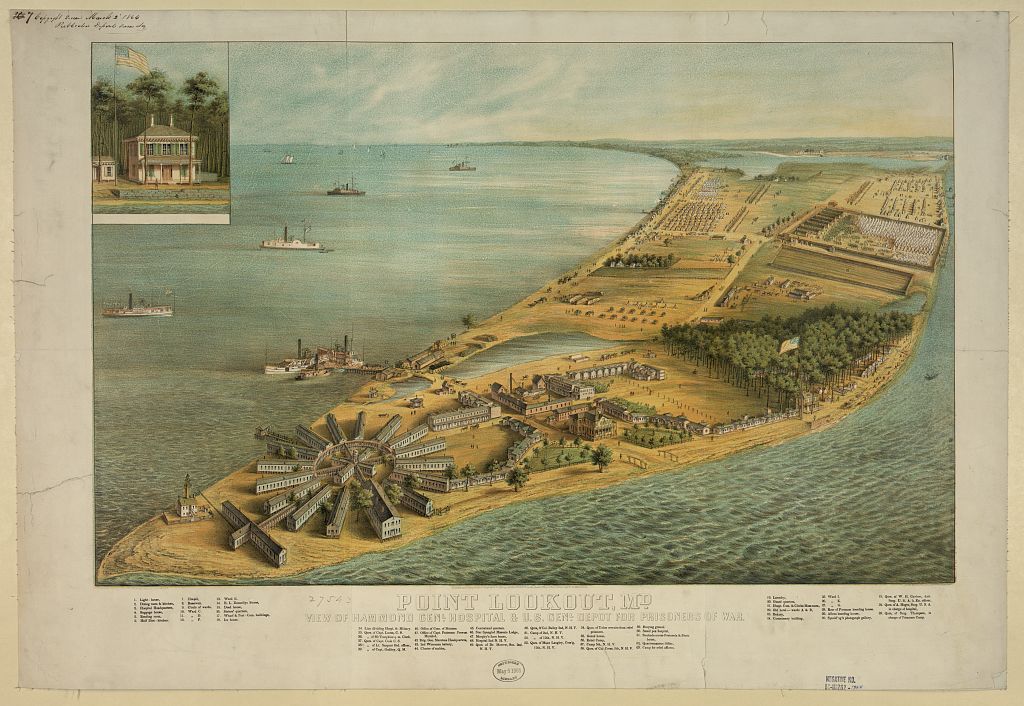
And Elmira was not alone, though the other Union camps tend to collapse into the same grim ledger: Point Lookout in tidewater Maryland (a wind-blasted spit of low coastal land where the tide flats meet the Chesapeake) was the largest Union camp of all, with some 52,000 men passing through and three to four thousand dying of exposure and bad water on ground that offered only tents; Camp Douglas in Chicago, sometimes called "the North's Andersonville," took in roughly 26,000 prisoners and buried about 4,200 (one in seven) to brutal winters, smallpox, and punishing discipline; and Rock Island, in Illinois, lost about 1,964 men in twenty months, most of them to a single smallpox epidemic its first winter. The pattern repeats: a camp built for thousands, swollen past its limits by the exchange collapse, then the death spiral of bad water, no shelter, and disease.
The counterexample is the most damning evidence of all, because it proves the deaths were a choice. Johnson's Island, on Lake Erie near Sandusky, Ohio, was comparatively well run (barracks, adequate food, decent restraint), and of the more than 15,000 men who passed through it, only about 200 died. There is one honest caveat: Johnson's Island held Confederate officers, and officers fared somewhat better than enlisted men at every camp, North and South, so it isn't a perfectly matched experiment. But it doesn't need to be. It shows what was possible when a camp had resources and chose to use them. The North had food, blankets, lumber, and medicine; at its worst camps (Elmira, Point Lookout, Camp Douglas) it withheld them. The thousands of deaths there were not inevitable.
That last fact is the one the triumphant version cannot absorb. After Northern newspapers and returning skeletal prisoners exposed Andersonville to a horrified public in mid-1864, the War Department under Secretary Edwin Stanton and Commissary-General Hoffman deliberately cut the rations of Confederate prisoners in retaliation, punishing captured men in New York and Maryland for what other men were doing in Georgia. The Confederate camps can at least point to a genuine, war-ending collapse of supply; the Northern camps were the best-fed prisons in the country choosing to feed their prisoners less. Both sides let men die. One of them did it with a full pantry.
The other Southern camps
Andersonville is the name everyone knows, but it was the deadliest of a whole archipelago of Confederate prisons. Every one of them tells the same story: a camp that was survivable while the cartel ran, then catastrophic the moment exchanges stopped and the bodies stopped flowing out. Same cause, same collapse, different ground.
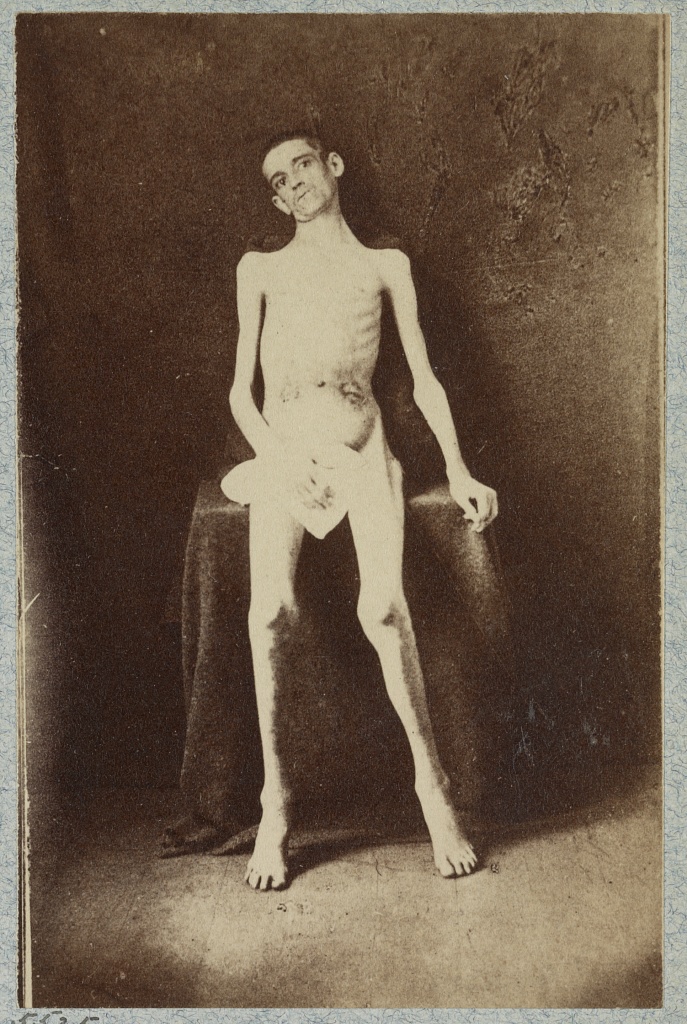
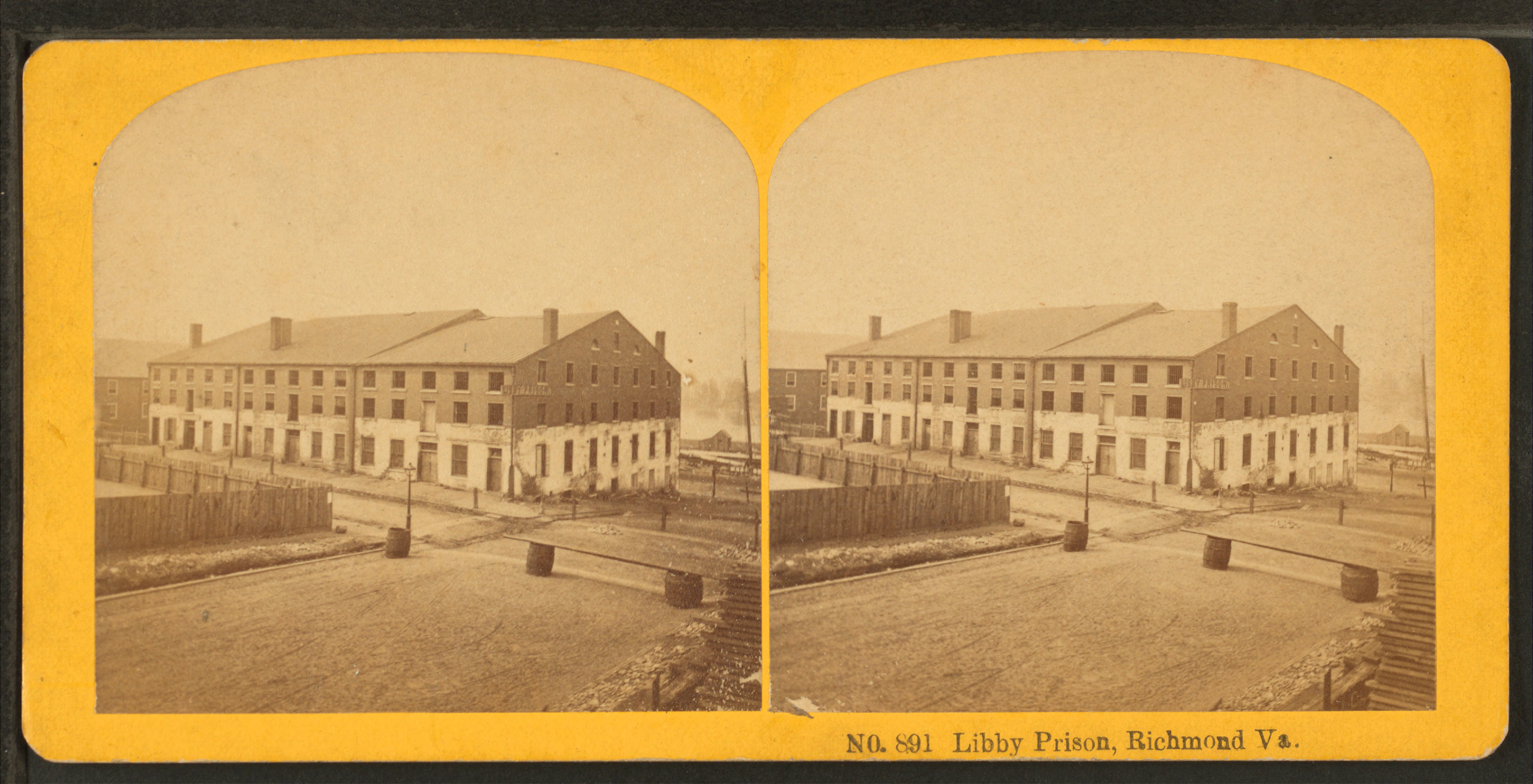
In Richmond, the Confederate capital itself, two prisons split the load by rank. Libby Prison was a converted warehouse (once a tobacco and ship-chandlery building, a riverfront store of nautical supplies) that held captured Union officers from 1862 on, notorious for overcrowding and vermin and famous for a remarkable tunnel escape in February 1864, when 109 officers dug their way out and 59 of them got clean away. Its enlisted-men counterpart was Belle Isle, an island in the James River that held Union privates and sergeants, around 20,000 of them over about eighteen months, with nearly 1,000 dying, mostly in the open on tent-ground and bare earth. And Belle Isle is the camp that ties this whole subject together, because it was emaciated survivors from Belle Isle, shipped north in prisoner releases in early 1864, who sat for some of the war's most shocking photographs: living skeletons, ribs and joints and hollow eyes, that ran in the Northern papers and horrified the public. Those very images are what hardened Northern opinion and helped drive the deliberate retaliation rations Hoffman ordered at Elmira and Point Lookout: the starved bodies of Richmond produced the starved bodies of New York.
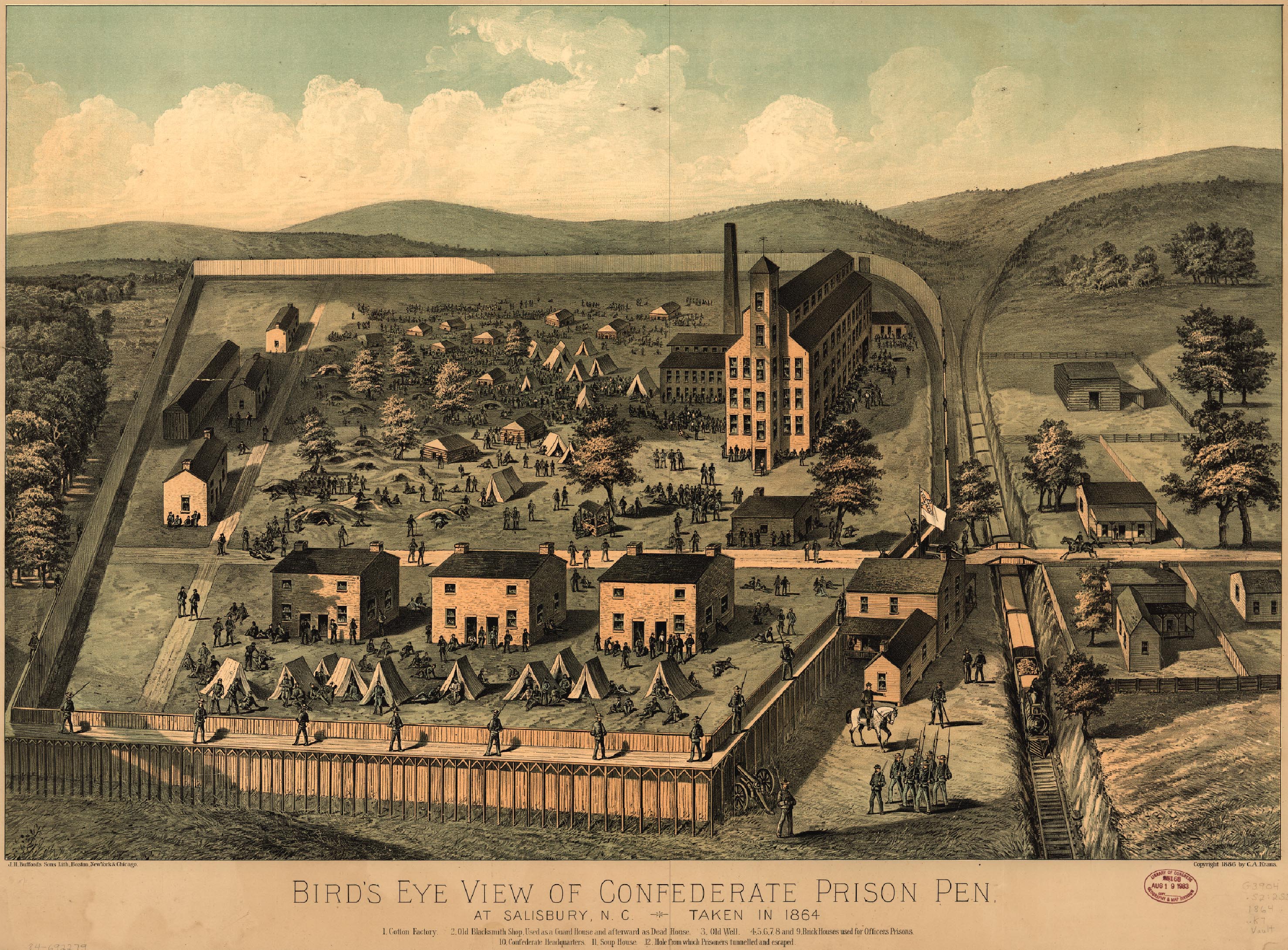
The pattern's two starkest cases were inland. In North Carolina, the prison at Salisbury is the one that most exactly mirrors Andersonville, and the second-worst Confederate camp of the war: opened in 1861 for about 2,500 men, survivable for years; then the exchange collapse and the overcrowding of late 1864 crammed 8,740 men into it by early November, climbing toward 10,000. The death rate exploded from around 2 percent to roughly 28 percent; somewhere between 3,500 and 4,000 men died and were buried in eighteen long trench graves dug across a former cornfield. And Florence Stockade in South Carolina, thrown up as an Andersonville overflow camp in late 1864, killed roughly one in three of the 15,000 to 18,000 men held there: Andersonville-class mortality, almost entirely forgotten.
There was a Southern counterexample too, and it matters for the same reason Johnson's Island does. Cahaba, in Alabama (the prisoners called it Castle Morgan), held about 5,000 men and lost only around 147 (under 3 percent), credited largely to a relatively humane commandant. It is proof, on the Confederate side, that a camp could be run without killing its prisoners wholesale. And it carries the most bitter coda in the whole subject. Many of Cahaba's paroled survivors, finally going home when the war ended, were loaded onto a Mississippi River steamboat called the Sultana. On April 27, 1865, the Sultana's boilers exploded, killing something like 1,200 men (the modern accounting puts it near 1,164; older books say 1,700 to 1,800, but recent scholarship has revised it sharply downward) in the worst maritime disaster in American history. Men who had survived the camps, who had walked out alive past the deadline and the fouled water and the trench graves, drowned and burned within sight of home, on the river that was carrying them back to it.
The clerk, the angel, and the war over the war
The last movement of this story is about names: the refusal to let nearly 13,000 men become an anonymous number, and the long, ugly fight afterward over what the number meant.
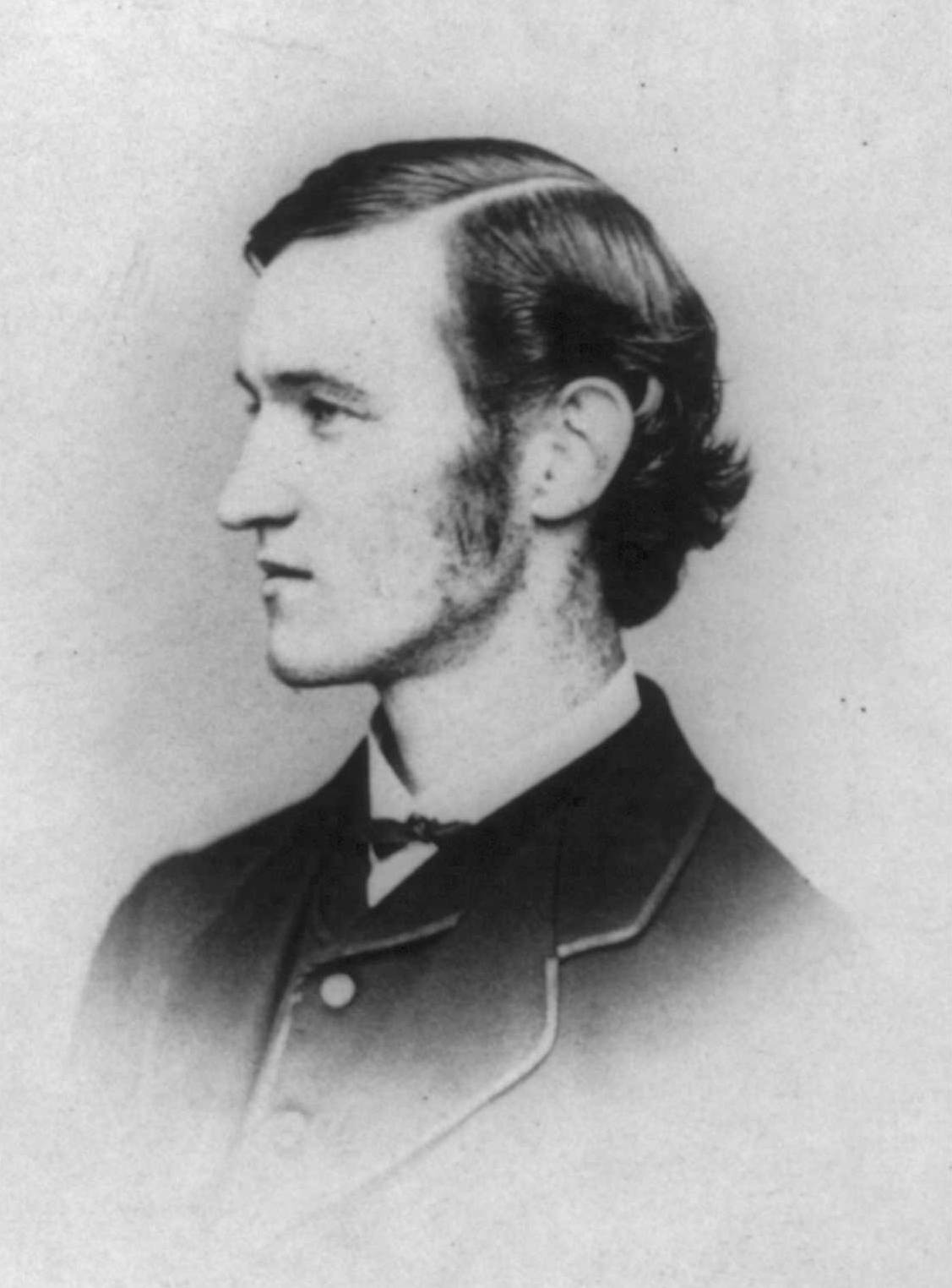
It begins with a single prisoner who broke the rules. Dorence Atwater was a young Union soldier captured and held at Andersonville, paroled to work as a clerk recording the camp's deaths. As he copied the official death register day after day, he became convinced the Confederacy would bury or destroy the toll once the war ended, so he secretly kept a second copy of his own: the names and units and dates of the dead, smuggled out under the noses of the men who would have stopped him. After the war he carried that list to the government, and to one particular person who knew exactly what to do with it.
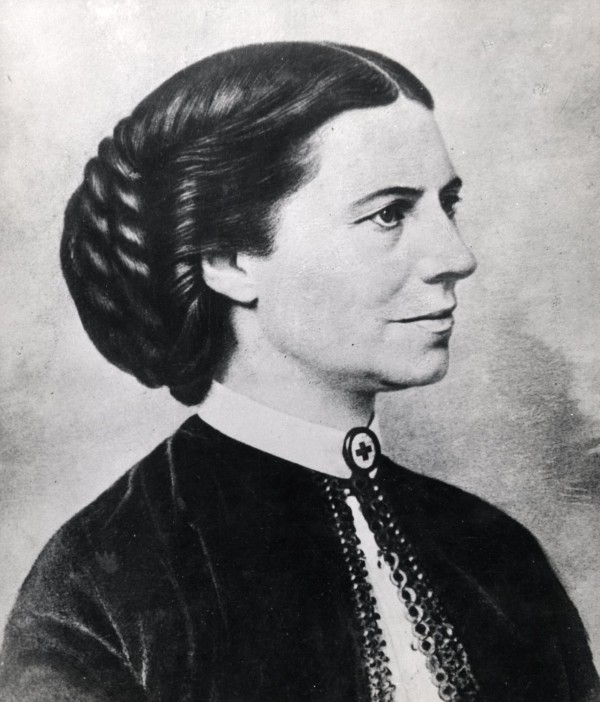
That person was Clara Barton, already famous from the battlefields as the "Angel of the Battlefield," and by war's end running a Missing Soldiers Office to answer the flood of letters from families desperate to know what had become of their men. With Atwater's secret list and the camp's captured hospital records, Barton got the approval of War Secretary Edwin Stanton to join an Army expedition to Andersonville in the summer of 1865. There, working from the names Atwater had risked his life to preserve, the team marked the graves: 12,461 of them with the dead soldier's name, rank, unit, and date of death. Only 451 had to be left "unknown." On August 17, 1865, at the dedication of the new Andersonville National Cemetery, Barton was given the honor of raising the United States flag over the dead. It became one of the most completely identified mass-death sites of the entire nineteenth century, and it was so only because one prisoner refused to let the names be lost.
And then the government turned on that prisoner. When the Army demanded Atwater surrender his own copy of the death list, he refused. It was his, written in his own hand at the risk of his life. For that he was court-martialed for larceny, sentenced to eighteen months, and shipped to a New York state prison. He served about two months at hard labor before Clara Barton's lobbying helped win him a pardon from President Andrew Johnson at the end of 1865. The man who had saved twelve thousand names from oblivion did time as a thief for keeping the very list that did it. By the time Barton's Missing Soldiers Office closed in 1867, it had received more than 63,000 inquiries from anxious families, answered roughly 41,855 of them, and identified more than 22,000 missing men, the Andersonville dead among them.
But naming the dead did not end the fight over them. It started a new one, over whose fault they were.
The Northern frame was straightforward: Andersonville was a deliberate Confederate atrocity, and Wirz's body on the scaffold and the immaculate rows of the national cemetery were the proof of it, monuments to Confederate guilt. The Lost Cause built the opposite story. Its writers recast Wirz as an innocent martyr and shifted the blame north, arguing that it was Grant's refusal to exchange prisoners that had starved the camps, and that the South had simply lacked the supplies to do better. The National Park Service labels that a myth: the exchanges collapsed in 1863 over the Confederacy's own refusal to treat Black soldiers as men, a full year before Grant's directive. The Lost Cause took Grant's cold but honest manpower letter and used it to launder a policy that the Confederacy itself had chosen.
That fight was literally set in stone. In 1909, the United Daughters of the Confederacy erected a granite obelisk to Henry Wirz right in the town of Andersonville, dedicated on May 12 of that year, built, in the words of its own inscription, to "rescue his name from the stigma attached to it by embittered prejudice." Its panels quote Grant's exchange letter, deploying the general's own words to pin the camp's dead on the Union. Union veterans were enraged when it went up. The monument still stands, and it is still contested: a granite argument that the war over the war's memory outlasted the war itself by decades, and in some sense has never quite ended.