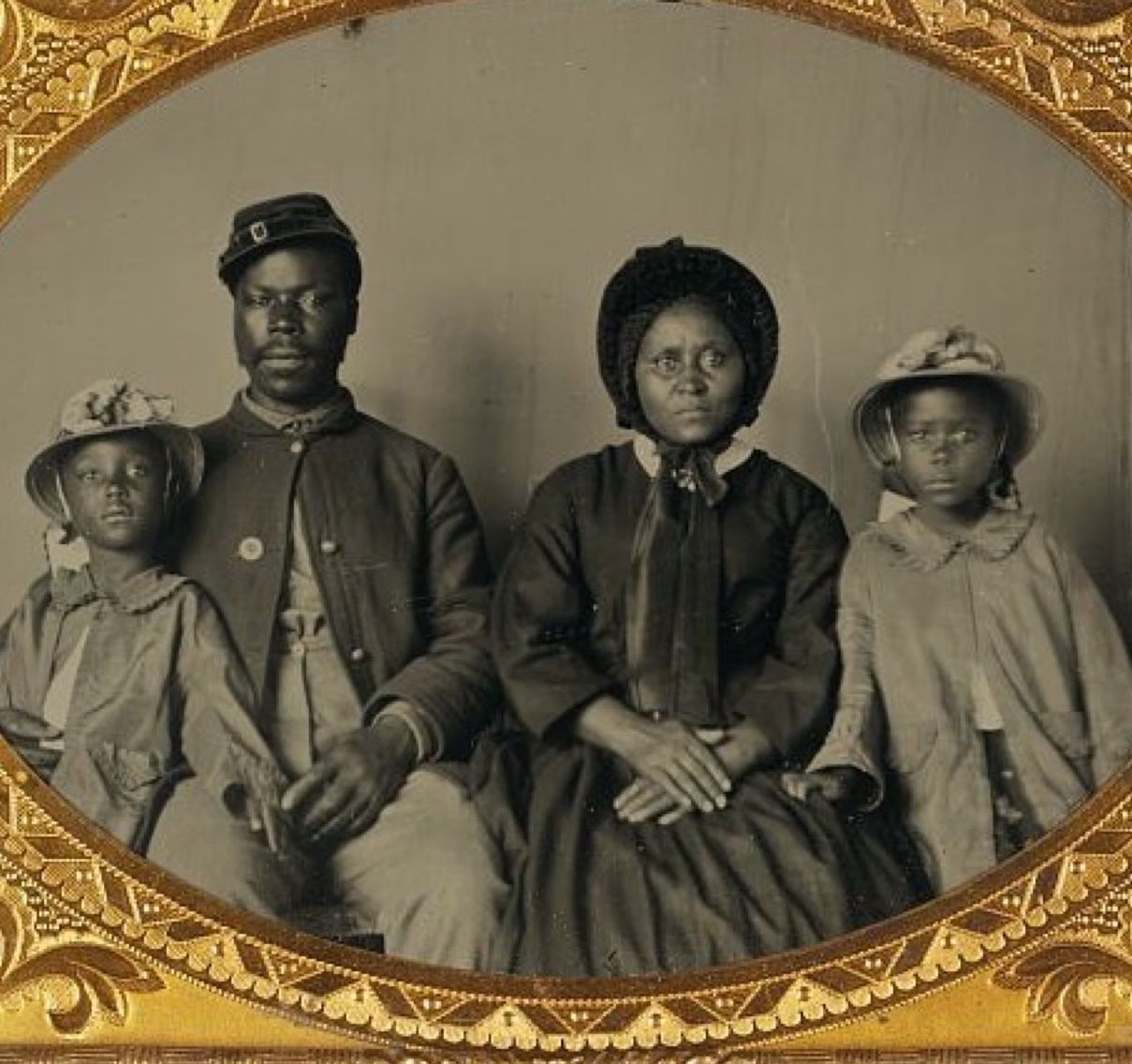
There is a version of this story that gets told a lot, and it is wrong. In that version, the Civil War rolls along, Abraham Lincoln signs the Emancipation Proclamation, and four million enslaved people are set free, handed their liberty from the top down by a kindly government in Washington. It is a comfortable story because it makes white men the heroes and Black people the lucky beneficiaries who waited patiently to be rescued.
That is not what happened. From the war's very first weeks, before any proclamation, before Congress had passed a single law on the subject, enslaved people across the South began freeing themselves, voting with their feet, walking and running and rowing toward the nearest Union army, by the dozens and then the hundreds and then the tens of thousands. Historians have a name for this, and it is the name to hold onto: self-emancipation (the enslaved making their own freedom a fact on the ground, an accomplished reality the government in Washington then had to figure out what to do with). They did not wait. They acted first, and the law came stumbling after them. And once the door to enlistment finally cracked open, roughly 180,000 Black men picked up muskets and went to war for their own freedom, and, at places like Port Hudson and Fort Wagner, died for it. These were people acting as the agents of their own liberation, not the recipients of someone else's charity.
They didn't wait to be freed
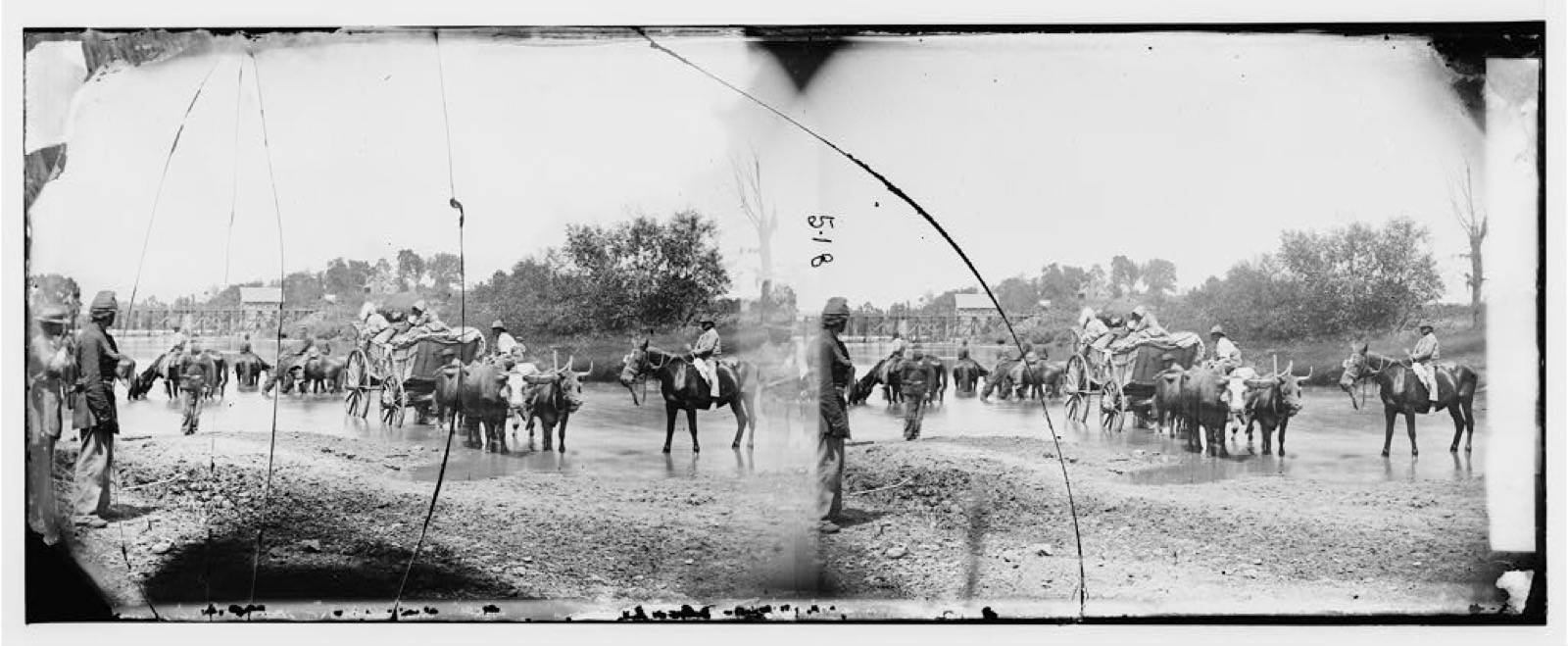
What the enslaved actually did is the foundation of everything that follows.
When the war began in the spring of 1861, the United States government insisted, loudly and repeatedly, that it was fighting only to preserve the Union (to put the rebellious Southern states back in their place) and not to end slavery. Lincoln said so. The army said so. Slavery, officially, was none of the war's business. The enslaved people of the South had other ideas. They could see the U.S. Army moving into their world, and they understood, faster than the politicians did, what its presence meant: a line you could cross. So they crossed it. They slipped away from plantations at night, hid in swamps and woods, followed the sound of the guns, and turned up at Union camps and forts asking to be let in.
The numbers are staggering once you stop and picture them as individual human decisions. Over the four years of the war, an estimated half a million enslaved people (hundreds of thousands of men, women, and children) fled bondage and made their way toward Union lines. Every one of those was a person choosing to run, often with no map, no money, and no guarantee of welcome, frequently risking death to do it. As one history of the period puts it, this mass of runaways "belies the outdated and racist notion that enslaved African Americans simply waited for emancipation"; rather, "they seized almost every chance to pursue their freedom, often risking death."
And here is the thing that makes self-emancipation more than a moving human story: it is what forced the issue. A government that claimed slavery was none of its concern suddenly had thousands of formerly enslaved people standing inside its army camps. What were they? Free? Still property? Whose problem? The army could not ignore them, could not feed them without deciding their status, could not send them back without becoming slave-catchers in a war against slaveholders. The enslaved, simply by showing up, turned slavery from a thing the Union was trying not to talk about into an operational and political problem it could not avoid. They put the question on the table. The rest of the war's leaders spent four years answering it.
Contraband of war
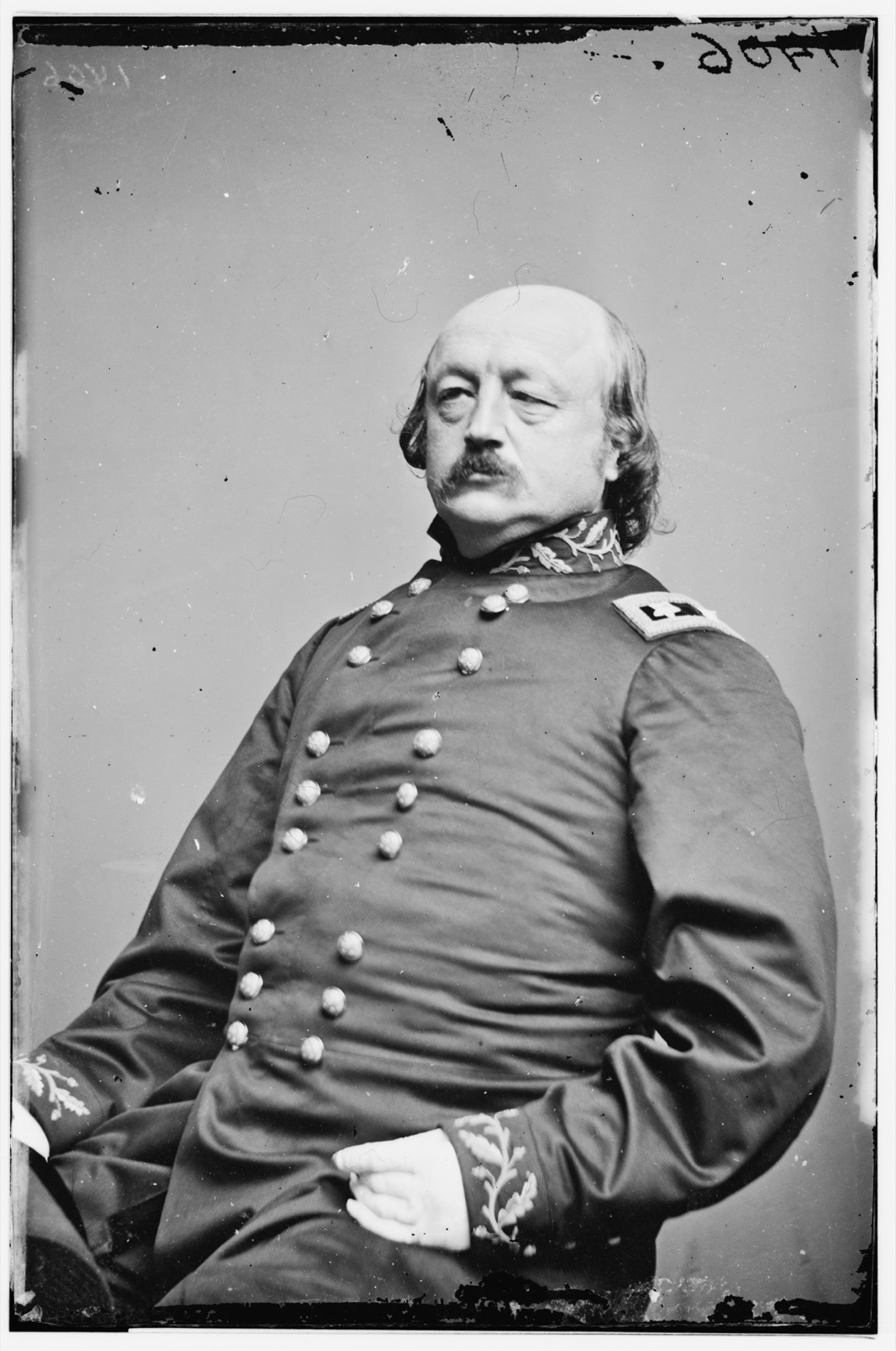
The moment it all crystallized came on a single night in Virginia, and it turned on a sharp lawyer's clever, cold-blooded argument.
On the night of May 23, 1861, three enslaved men, Frank Baker, Shepard Mallory, and James Townsend, climbed into a boat and rowed across Hampton Roads (the wide harbor where the James and Elizabeth rivers empty into Chesapeake Bay) to Fort Monroe, a U.S. Army fort on the Virginia coast that the Union still held. They had good reason to run. Their enslaver, a Confederate militia colonel named Charles King Mallory, had been forcing them to build a Confederate artillery battery (a fortified gun position) at nearby Sewell's Point, and those guns were aimed straight at Fort Monroe. The three men were, quite literally, being made to construct weapons pointed at the very fort they fled to.
The Union commander at Fort Monroe was Maj. Gen. Benjamin F. Butler, and the detail that makes what happened next so striking is that Butler was no abolitionist (that is, he was not one of the reformers who campaigned to abolish, to end, slavery entirely). He was a Massachusetts Democrat and a lawyer by trade, a man with no particular moral objection to slavery, which is exactly why his ruling carried weight. The next day, May 24, 1861, a Confederate officer, Major John Baytop Cary, rode up to the fort under a flag of truce and demanded the three men back, citing the Fugitive Slave Act (the federal law that required escaped enslaved people to be returned to their enslavers, even from free states).
Butler, the lawyer, had an answer ready, and it was beautiful in its nerve. Virginia, he pointed out, claimed to have left the United States and was now waging war against it. Fine: then Virginia was a foreign enemy, and the United States had no obligation to return fugitive slaves to a foreign power. And if Virginia insisted that enslaved people were property, well, this was war, and property used by the enemy to wage that war could be seized like any other enemy war material. Butler declared the three men "contraband of war" (contraband being the legal term for enemy goods a military is entitled to confiscate) and put them to work for the Union instead.
The phrase stuck, and it spread to cover all of them. From that day on, the self-emancipated people who reached Union lines were called "contrabands."
It is worth pausing on how strange and telling that word is, because it cuts both ways. On one hand, "contraband" worked: it freed Baker, Mallory, and Townsend from their enslaver in practice, and it gave thousands of others a status the army could accept. On the other hand, it defined them as captured property, seized goods rather than people, let alone citizens. It was a halfway place: out of slavery, but not into freedom or rights, a legal limbo dressed up in a customs-house term. That a human being's first taste of liberty came labeled as enemy contraband is one of the more uncomfortable facts of the war.
Whatever its problems, the word opened a floodgate. Word of Butler's ruling raced through the enslaved community faster than any telegraph. Within days a dozen more escapees had come in from Sewell's Point, and then, as Butler himself put it, "negroes came pouring in day by day." By that summer, several hundred (figures of more than five hundred at Fort Monroe by June and July 1861) had reached his lines. The trickle had become a stream.
A ship sailed to freedom
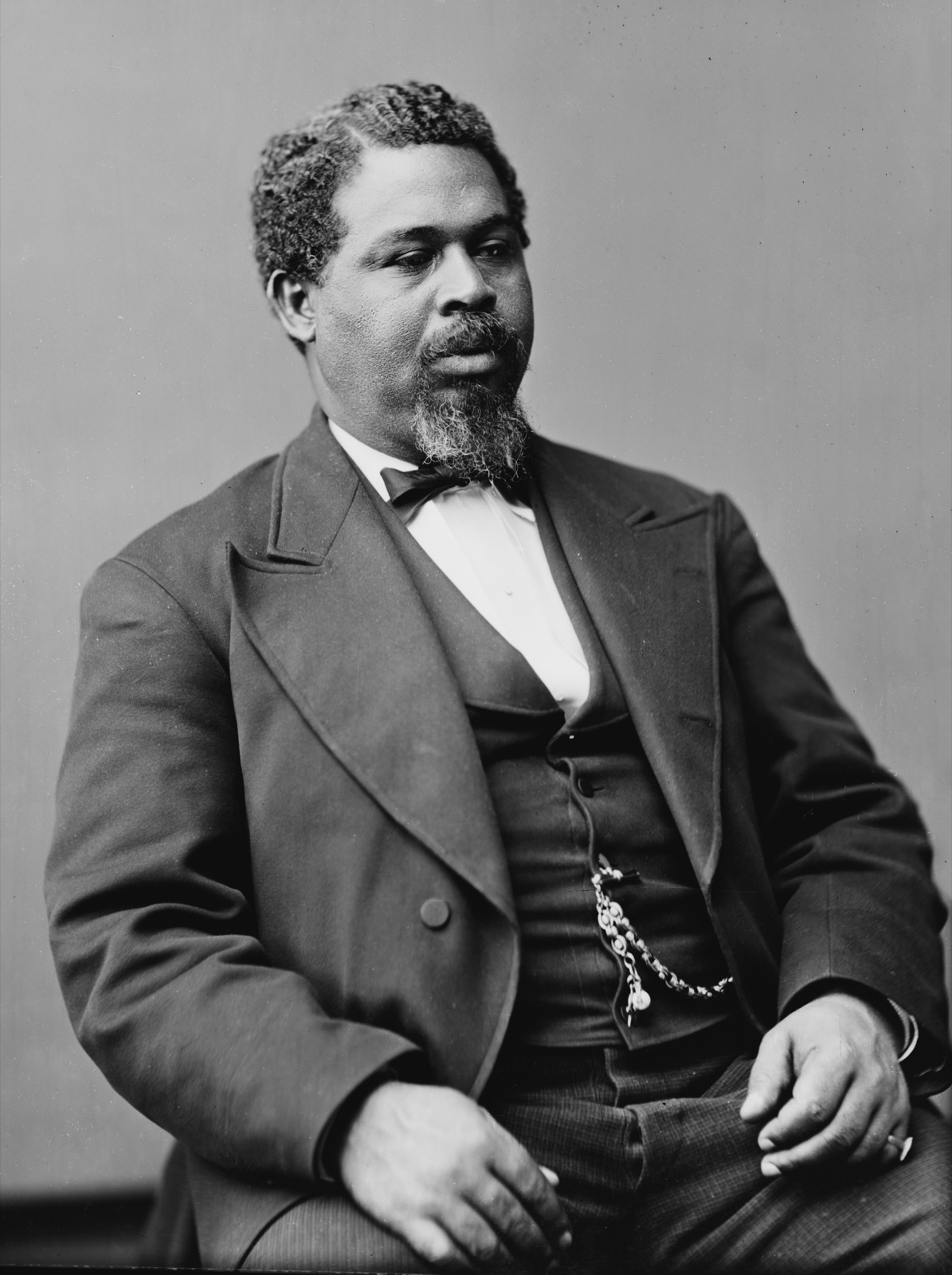
The most daring act of self-emancipation in the whole war happened not on a back road at night but in broad daylight, on the water, under the guns of a Confederate fort. It was pulled off by an enslaved harbor pilot who simply stole a warship and sailed it to freedom.
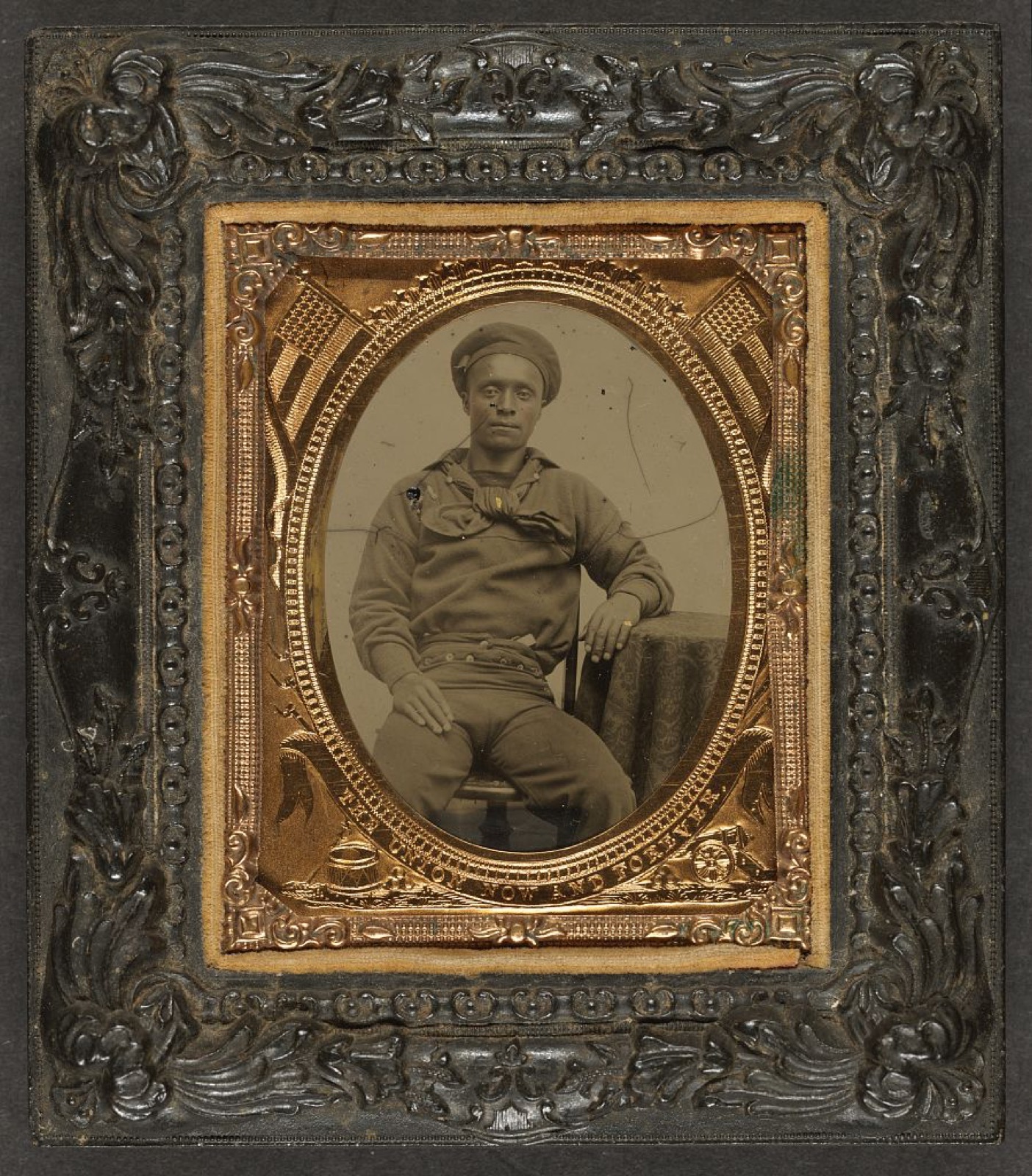
His name was Robert Smalls, and in the spring of 1862 he was an enslaved wheelman aboard the Planter, a Confederate army transport steamer working Charleston harbor in South Carolina. Smalls knew that harbor the way a man knows his own street: every channel, every sandbar, every Confederate signal. Before dawn on May 13, 1862, with the ship's white officers asleep ashore, Smalls and a small enslaved crew quietly took the Planter, stopped to pick up their wives and children at a rendezvous, and steamed her straight out through Charleston harbor. Smalls put on the captain's wide straw hat to hide his face and gave the correct coded signals as the ship passed Confederate checkpoint after checkpoint, including, with breathtaking nerve, the guns of Fort Sumter itself. Once past the last fort, he raised a white bedsheet and surrendered the Planter, her cargo of artillery, and a sheaf of Confederate documents to the U.S. Navy ships blockading the coast (the line of warships the Union used to seal off Southern ports). In under four hours, an enslaved man had freed himself, his family, and his crew, and handed the United States a Confederate gunboat in the bargain. Smalls went on to pilot for the Union Navy, and after the war won a seat in Congress.
Smalls's run is the single most famous individual act of Black self-emancipation in the war, and it points to a part of the story that is easy to miss: the Navy. The U.S. Navy, unlike the Army, had never barred Black sailors, and over the course of the war Black men came to make up roughly 16 to 20 percent of its crews, a proportionally larger share than they ever held in the Army. The men who freed themselves did it on the water as well as on land, and once free, tens of thousands of them served the country from its decks.
The law chases the runaways
Notice the order of events here, because it is the whole thesis in miniature. The people acted first, and then Congress wrote the rules to catch up with what the people had already done.
The first law arrived fast. On August 6, 1861, Lincoln signed the First Confiscation Act, which authorized the seizure of any property (explicitly including enslaved people) that was being used to directly aid the Confederate war effort. In effect, Congress had just taken Butler's "contraband" improvisation and written it into federal law. But it was narrow and cautious. It covered only enslaved people who had been put to work for the Confederate military, and tellingly, it did not clearly declare those people free. It stripped the enslaver's legal claim without quite saying what the person now was. The halfway status again.
A year later, the law took two bigger steps in a single day. On July 17, 1862, Congress passed the Militia Act, which authorized the President to employ "persons of African descent" for any war service (including as soldiers) and freed any such men (along with their families) if they had been owned by disloyal masters. This was the first crack in the door to Black men actually carrying weapons for the Union, written into federal statute months before the Emancipation Proclamation. That same day, Congress also passed the Second Confiscation Act, a far broader law than the first. It permitted the seizure of all property belonging to those in rebellion, and it declared that enslaved people of disloyal owners who came into Union control "shall be forever free." This was the first time federal law plainly said the magic word, free, about the people crossing the lines. Enforcement, in practice, was loose and uneven. But the principle was now on the books.
So here is the through-line: the runaways acted in 1861; Congress scrambled to write the rules across 1861 and 1862; and then the Emancipation Proclamation of January 1, 1863 turned that patchwork of policy into a war aim, and explicitly authorized Black men to enlist in the armed forces. (The Proclamation's own story, why Lincoln issued it, what it did and didn't free, belongs elsewhere; what matters here is that one line in it threw open the door.) The law had spent two years running to catch the people. Now it had.
Misery and the first taste of free life
The places the runaways actually landed are where freedom first became something you could live in, and where, for tens of thousands, it also became something that killed you.
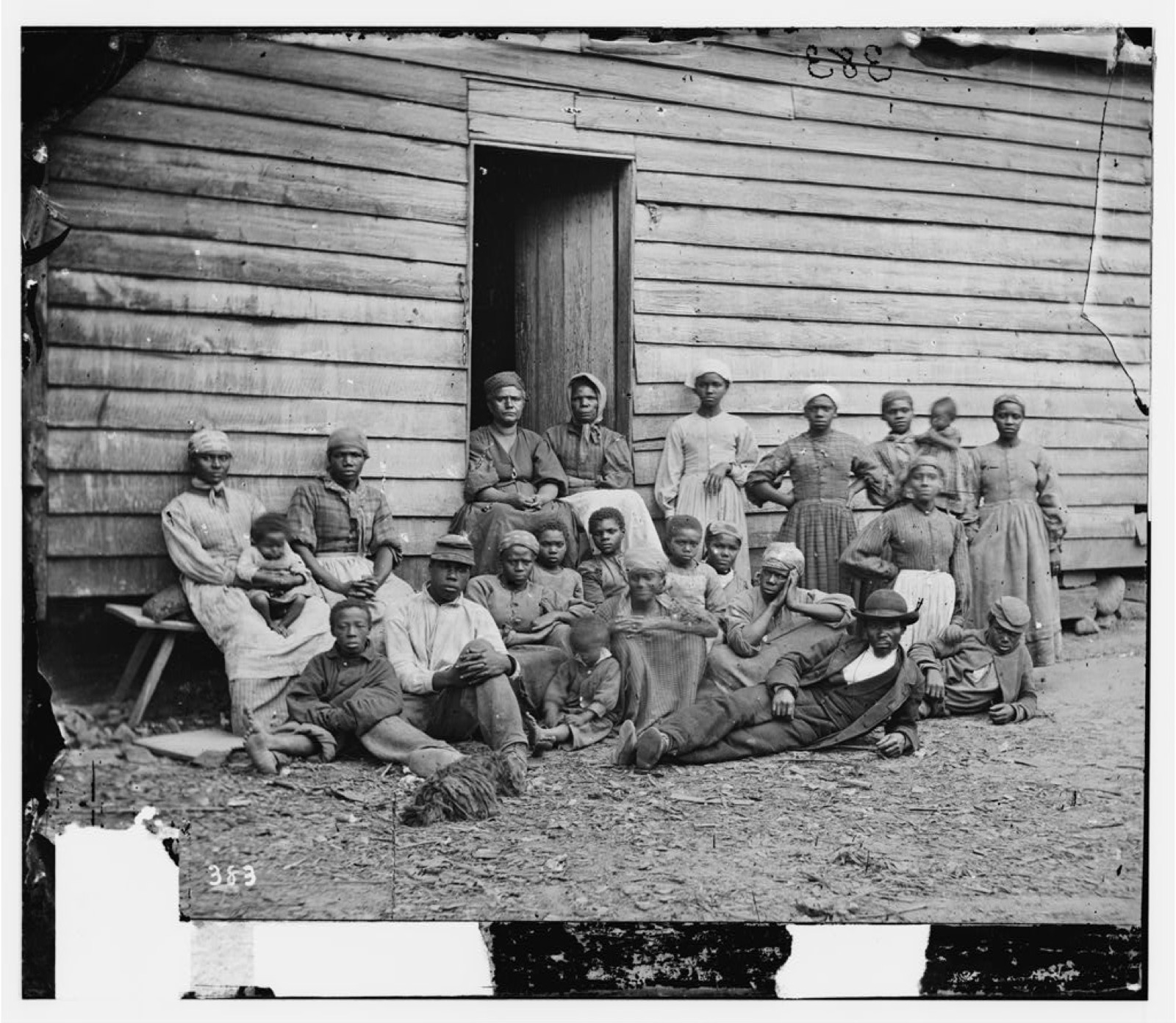
As self-emancipated people poured into Union-held territory, makeshift settlements sprang up around the forts and army camps across the occupied South. These were the contraband camps: improvised towns of formerly enslaved people, thrown together out of necessity, holding tens of thousands over the course of the war. Some became famous. At Hampton, Virginia, near Fort Monroe where it had all started, a settlement grew up that is often called the first self-contained community of freedpeople in the country. It rose, fittingly, out of ruins: the town of Hampton had been burned in August 1861, and the formerly enslaved built their homes directly on the foundations of the destroyed buildings, nicknaming the place "Slabtown." Picture one of those new arrivals: a woman who a year earlier could have been whipped for holding a book, sitting in the shade of a live oak near Fort Monroe, sounding out letters for the first time in her life. That oak was real, and so was her teacher: a free Black woman named Mary Peake, who gathered freedpeople, adults and children alike, under the wide branches of what came to be called the Emancipation Oak and taught them to read. With help from Army engineers and Northern missionaries, the community rebuilt the old county courthouse into a school. This was the cradle: a place where, for the first time, a Black person could be caught reading and the only consequence was that they learned.
The most ambitious camp was a model village the Army built on land it had seized from a particular Confederate general. Freedman's Village, in Arlington, Virginia, was established on the confiscated estate of Robert E. Lee, the Confederacy's top general. There is a hard poetry in that. The site was selected on May 5, 1863, and the village opened on December 4, 1863. It was, by the standards of the camps, almost utopian on paper: roughly fifty duplex houses, a school, a chapel, a hospital, workshops, even a home for the aged. Residents were given food and clothing and paid $10 a month for their labor, though $5 of that was deducted to support the community, the men doing military and farm work, the women sewing.
But do not let the model village stand in for the reality, because the reality was a humanitarian catastrophe. The camps were overcrowded, underfed, and ravaged by disease. Smallpox, measles, dysentery, scarlet fever, and whooping cough tore through them, and children died in appalling numbers. At Camp Barker in Washington, D.C., the death rate between June 1862 and June 1864 "approached one in seven," one in every seven people dead. People who had risked death to reach freedom arrived to find death waiting for them anyway, in a different form.
And yet, this is the other half of the truth, and it matters just as much: the camps were also where formerly enslaved people first lived as free people. For the first time in their lives, they earned wages they could keep. They learned to read in freedmen's schools, many of them adults bent over primers for the first time, the way Mary Peake's students were. They built churches and worshipped openly. They searched for and reunited with family members who had been sold away: a husband walking camp to camp reading names aloud, a mother scanning every new face for a child taken from her years before. They began, in the mud and the sickness, to act as a free community making its own decisions. The contraband camps were two things at once, and both have to be held together: a graveyard and a cradle, both a disaster that killed thousands and the seedbed of free Black life in the postwar South.
From a trickle to an army
The path from the first improvised Black regiment to a force of 180,000 ran through a tangle of "firsts," each one true in its own way. It happened in three separate places at almost the same time, and each one was a "first" in a different sense, so it is worth keeping them apart.
Out in Kansas, the 1st Kansas Colored Volunteers was organized in 1862 with no federal authorization at all. Local commanders raised it daring Washington to stop them. On October 29, 1862, at a skirmish at Island Mound, Missouri, it became the first Black regiment to see combat in the Civil War. (A "regiment" is the basic large unit of an army, typically around a thousand men when full; to be "mustered" is to be formally sworn into federal service.) The 1st Kansas wasn't officially mustered into U.S. service until January 1863. It fought before the government had even fully claimed it.
Down in occupied New Orleans, Butler (the same Butler from Fort Monroe) raised the 1st Louisiana Native Guard, which was mustered on September 27, 1862, making it the first Black regiment officially mustered into U.S. service. It was notable for something else, too: it had Black officers, men of color commanding men of color, which the army would soon work hard to prevent. Many of its members were free men of color from New Orleans's old Creole community (a mixed-race community of French and Spanish descent, often free and propertied, with deep roots in the city); many others were escaped slaves enrolled while officials looked the other way at the "free men only" rule.
And on the Sea Islands off South Carolina, the 1st South Carolina Volunteers became the first Union regiment organized from former slaves, not free Northern Black men, but freedpeople straight out of bondage. Its soldiers were Gullah-Geechee freedpeople (a Sea Island community with their own distinct, West African–rooted language and culture) from the coastal islands of South Carolina, Georgia, and Florida. Its commander, Col. Thomas Wentworth Higginson, was a Massachusetts abolitionist and minister who had been one of the secret backers of John Brown's raid; he took command in November 1862, and the regiment was mustered in by the end of January 1863. (It was later renumbered the 33rd USCT, and Higginson wrote a famous memoir about it, Army Life in a Black Regiment.)
These three "firsts" are genuinely different and shouldn't be blurred together: Kansas was first to fight, Louisiana first to be officially mustered, South Carolina first organized from the formerly enslaved. Each was a door pried open a little wider.
Then the Emancipation Proclamation of January 1, 1863 swung the door fully open. Its plain statement that freed Black men "will be received into the armed service of the United States" turned all this improvisation into national policy overnight. The War Department made it official on May 22, 1863, issuing General Order No. 143, which created the Bureau of Colored Troops to organize and oversee Black regiments. From that point on, the regiments were standardized under a single name with federal numbering: the United States Colored Troops (USCT). The scattered state units were folded in and renumbered as USCT regiments.
One famous regiment never carried a USCT number, because a state raised it first. The 54th Massachusetts was authorized in early 1863 by the state's governor, John Andrew, and recruited free Black men from across the North, Frederick Douglass among those who recruited for it. It was commanded by a young white officer from a prominent abolitionist family, Col. Robert Gould Shaw. Shaw was white, and that was not incidental: the army's hardening hostility to Black officers meant the 54th, like nearly every USCT regiment, would be led by a white man. The rare Black officers of the Louisiana Native Guard were exactly the exception the army was moving to close. Keep that name, Shaw. The 54th is about to become the most famous Black regiment of the war, for the most terrible reason.
One in ten
Before the battles, the scale. The raw arithmetic of Black participation in this war is itself an argument, and it is bigger than most people imagine.
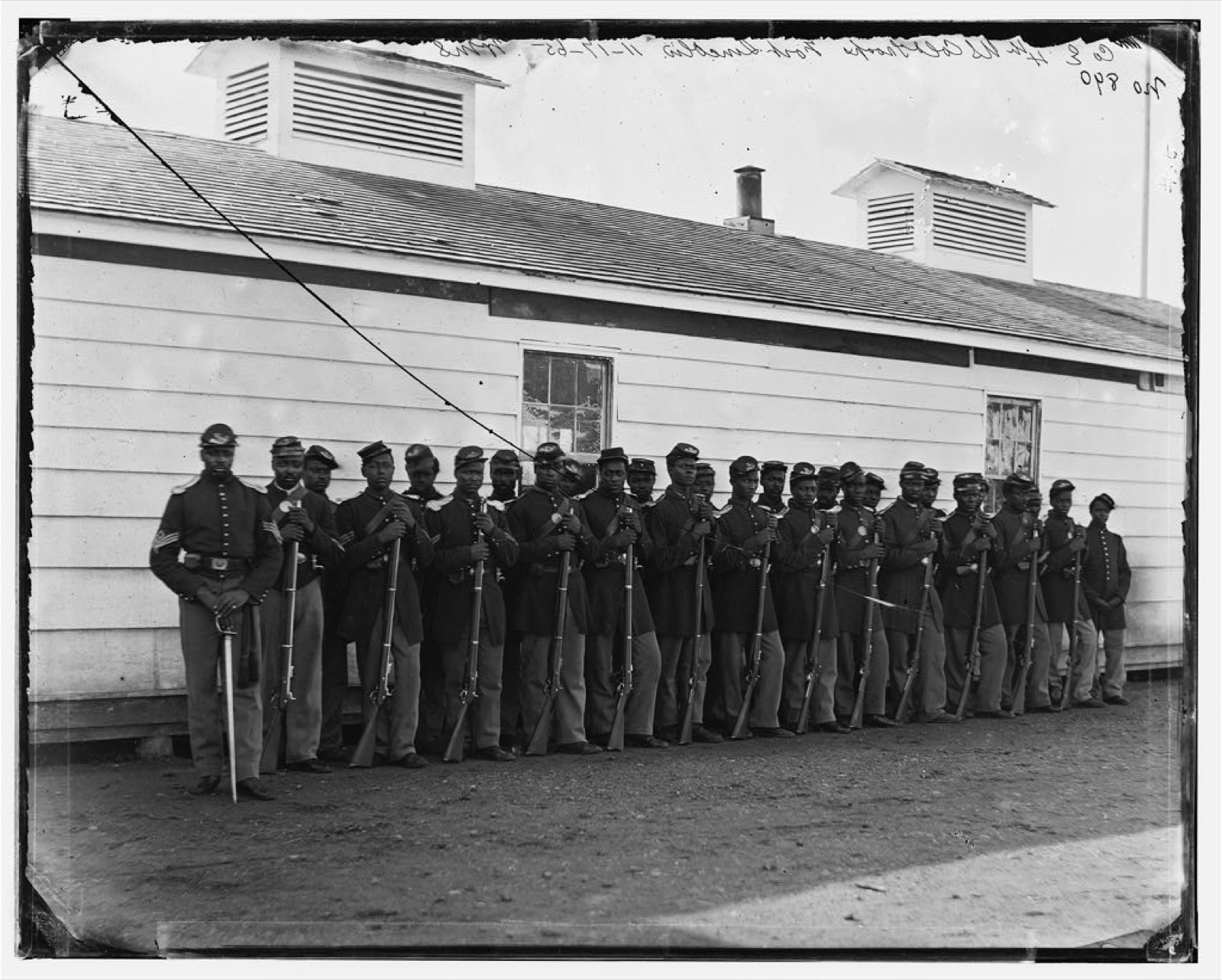
Roughly 180,000 Black men served in the U.S. Army over the course of the war. That is not a footnote-sized contribution. It was roughly one in ten of every soldier in the entire Union army, fully ten percent of the force that won the war was Black. By the end in 1865, they were organized into 175 regiments. Another 18,000 to 19,000 Black men served in the Union Navy.
But put a face on the headline number, because the arithmetic only means something through the men inside it. Picture one of them: a man who eighteen months earlier had been someone's legal property in Mississippi, who ran to Union lines, spent a winter in a contraband camp, and then put on a blue uniform and marched south again, back toward the country that had owned him, this time with a rifle. He was not the exception. He was the rule. The majority of Black Union soldiers were not free Northerners; they were Southern men, formerly enslaved, who turned around and went back into the war to make their own freedom stick. The documented enlistment count shows more than 90,000 men coming from the Southern states, against roughly 79,000 from the North. The self-emancipated didn't just run to freedom. Tens of thousands of them picked up a rifle and marched back into the war to defend it. Sit with what that took.
The cost was brutal, and it fell hardest in a way that says everything about the conditions Black soldiers endured. Roughly 40,000 Black soldiers died during the war. But the great majority of them did not die in battle. They died of disease, in the same overcrowded, under-supplied, badly-doctored conditions that killed people in the contraband camps. Black troops died at a rate roughly a third higher than white Union troops, and the reason is its own quiet indictment: they were worked harder, camped worse, and doctored worse, and they paid for it with their lives off the battlefield as much as on it.
For valor on the battlefield, 16 USCT soldiers earned the Medal of Honor, the nation's highest award for combat bravery (some tallies put the number at 18, and counting Black sailors pushes the war's total higher still). Remarkably, 14 of those medals came from a single battle, a fact worth returning to because it's one of the most extraordinary in the whole war.
Soldiers, not shovels
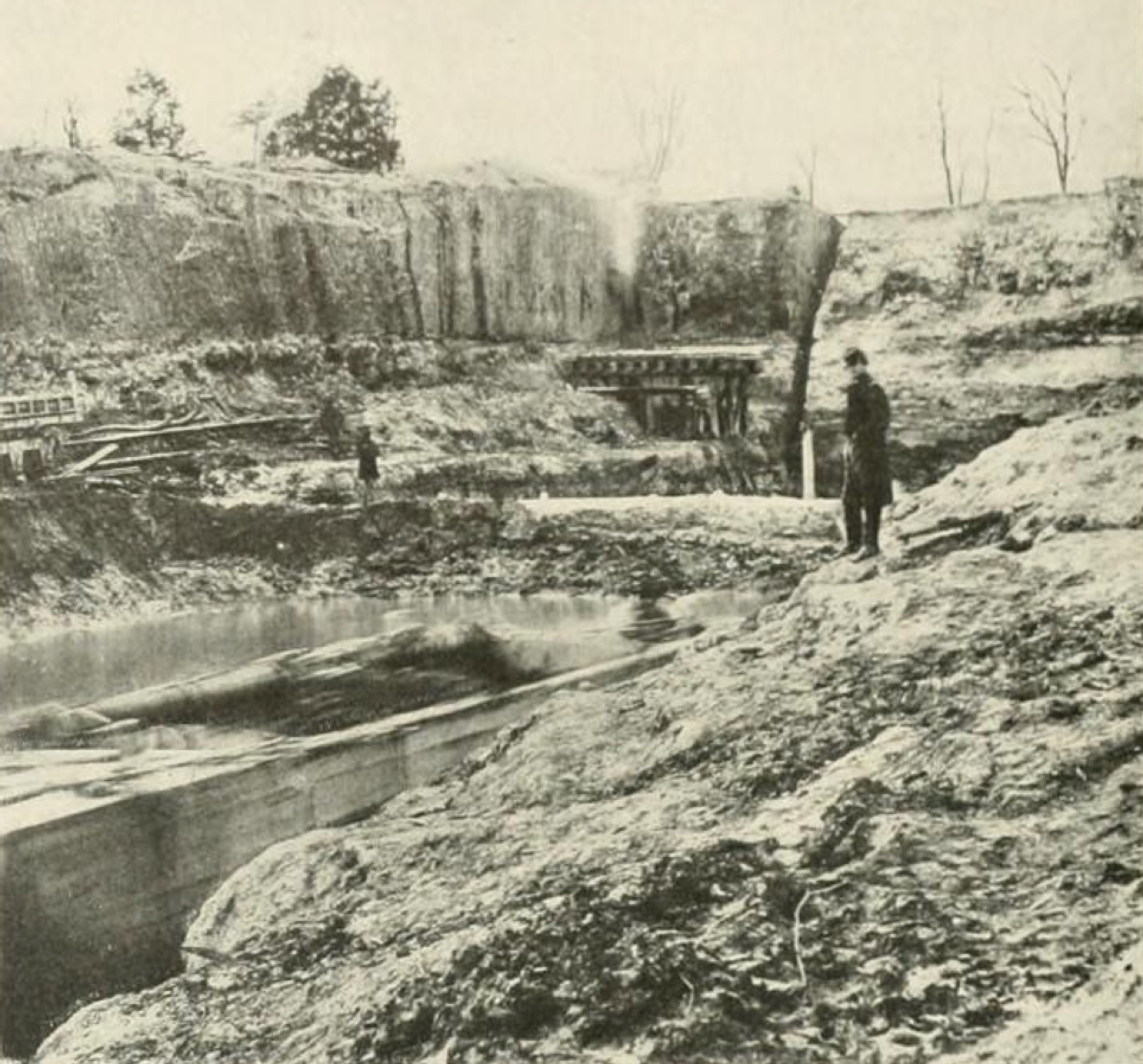
There was a particular insult built into Black army life, and it has a name the army used every day: fatigue duty. In military usage "fatigue" does not mean tiredness. It means the non-combat labor details that keep an army running: digging fortifications, hauling supplies, felling timber, building roads and camps. Every soldier does some of it. Black soldiers did roughly twice as much of it as white soldiers, and for a long stretch of the war some commanders used USCT regiments as little more than uniformed labor gangs, the very thing the men had enlisted to stop being.
The grimmest monument to this is a ditch. In August 1864, near Richmond, Butler (Butler again) set Union troops to digging the Dutch Gap Canal, a channel meant to let Union gunboats bypass Confederate batteries on the James River. The white soldiers first assigned to it were falling sick at an alarming rate, so the work was handed largely to USCT regiments, who dug for hours every day under the Virginia sun and under live Confederate sniper and artillery fire from the bluffs above. Men who had fought their way out of slavery and into the United States Army found themselves, rifles stacked, standing waist-deep in a muddy trench while shells dropped around them, not because the battle needed them there, but because the army still half-saw them as laborers first and soldiers second. Some officers, to their credit, pushed to curb the abuse; the broader pattern outlasted the war. The fatigue-duty injustice is the bridge between two fights that run together through this story: the pay law that called these men laborers, and the battlefields where they had to prove, over and over, that they were soldiers.
Are we soldiers, or are we laborers?
Here is the part of the story that should make your blood run hot: the same army that asked these men to die for it tried to pay them less for the privilege, and the men fought a second war, against their own government, to stop it.
The disparity was uglier than a simple pay gap. A white Union soldier received $13 a month, plus a clothing allowance on top. A Black soldier received $10 a month, minus a $3 deduction for clothing, netting $7. So the real comparison was not $13 against $10. It was $13-and-clothing against $7-after-clothing: a white private took home most of his pay free and clear, while a Black private, doing the same dangerous work, took home roughly half as much. The law that set this up was the Militia Act of 1862, which had imagined Black men as laborers digging trenches, not soldiers charging entrenchments. Now that they were charging entrenchments, the army kept paying them the laborer's wage.
The men noticed, and they refused to accept it. The soldiers of the 54th Massachusetts and its sister regiment, the 55th, did something extraordinary: they refused to take any pay at all rather than accept unequal pay, and they kept refusing for roughly eighteen months. They served, they fought, they died, and they would not pocket a single insulting dollar. When the Massachusetts legislature, embarrassed, voted in November 1863 to use state money to make up the difference, the regiments refused even that. They didn't want a state handout to paper over a federal insult. They wanted equal pay from the United States government, as a matter of principle, of equal standing as soldiers, or nothing.
One of them put the principle into words that cut to the bone. Cpl. James Henry Gooding of the 54th, a New Bedford whaler, wrote a letter directly to President Lincoln on September 28, 1863, from Morris Island, South Carolina, laying the grievance before the head of the nation. The heart of it was a single, devastating question:
"Now the main question is. Are we Soldiers, or are we LABOURERS?"
That is the whole fight in nine words. Gooding never lived to see it answered. He was later captured, sent to the Confederate prison at Andersonville (the most notorious death camp of the war), and died there on July 19, 1864, before he could collect the equal pay Congress would finally grant.
For another man, the pay fight cost his life directly, and his story is the starkest in this telling. Sgt. William Walker of the 3rd South Carolina Volunteers, a formerly enslaved man now wearing sergeant's stripes, led the men of his company to stack their arms (set down their weapons, the soldier's gesture of refusing duty) in protest of the unequal pay, in November 1863 at Jacksonville, Florida. His declaration was as plain as Gooding's: "We will not do duty any longer for seven dollars per month." For that, the army court-martialed him (put him on trial in a military court), convicted him of mutiny (the military crime of refusing orders or leading soldiers to refuse duty) in January 1864, and executed him by firing squad on February 29, 1864. A man who had freed himself from slavery and put on the Union uniform was shot by the Union army for insisting it pay him what it paid white men. Hold that next to the comforting idea of the army that freed the slaves.
The men won. In June and July 1864, Congress finally passed equal-pay legislation, and made it retroactive (meaning it reached backward to cover time already served, so the men could collect back pay from an earlier date). But even the fix carried a final insult: it granted full back pay from the date of enlistment only to men who could prove they had been free before the war; for the formerly enslaved (the majority) it reached back only to January 1, 1864. The government found a way, even in the act of doing justice, to draw one more line between the free-born and the formerly enslaved. (That galling distinction was later largely smoothed over by further legislation.) The 54th Massachusetts finally accepted its full back pay in the fall of 1864, eighteen months after it had started refusing to be cheated.
The battles that proved them
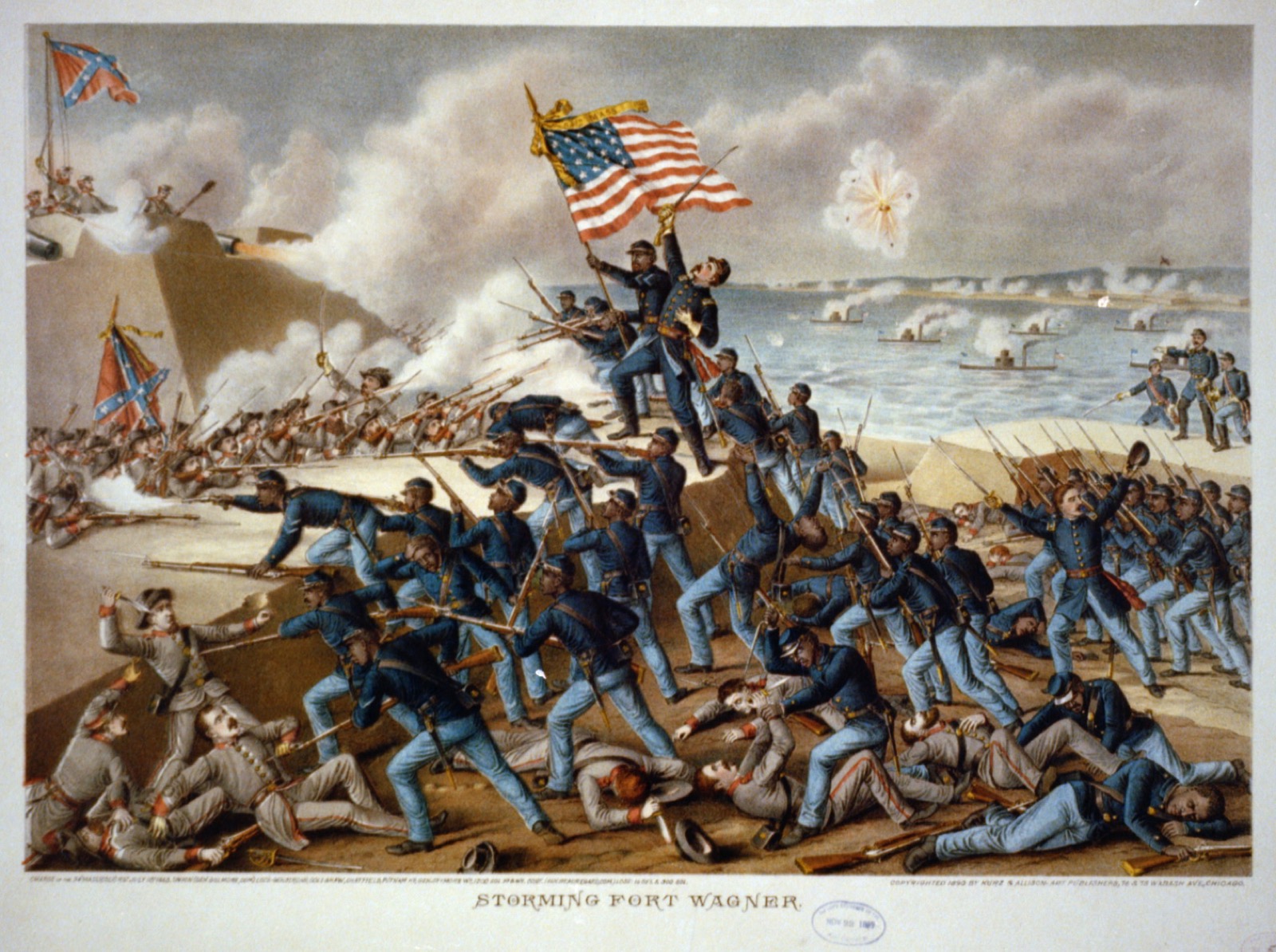
Twilight on a strip of South Carolina sand, July 1863: six hundred Black men stand in a column on the beach, the Atlantic at their backs, and ahead of them a Confederate fort spitting fire. They have been told to take it. For all the talk, all the doubt about whether Black men would or could fight, the answer was about to be written, here and at a string of places like it, the only way it could not be argued with: under fire, in front of witnesses, in blood. They wrote it again and again across 1863 and 1864.
It started in Louisiana. On May 27, 1863, the 1st and 3rd Louisiana Native Guard charged the Confederate fortifications at Port Hudson, a stronghold on the Mississippi River. It was the first time Black troops led a major, front-line assault in the war, and the assault was a nightmare. They charged repeatedly into murderous fire, took heavy losses, and failed to break the works. But the failure didn't matter to the question being asked. The question was whether Black men would fight, and the answer, written in blood at Port Hudson, was yes.
Eleven days later came the fight that changed minds overnight. On June 7, 1863, at Milliken's Bend, Louisiana (part of the campaign to take the Confederate fortress of Vicksburg), about 1,250 men of the African Brigade held off a Confederate attack. These were not seasoned veterans. They were the 9th, 11th, and 13th Louisiana and the 1st Mississippi regiments, most of them men who had been enslaved days or weeks earlier and barely knew which end of a musket to point. When the Confederates came over the works, the fighting collapsed into some of the most savage hand-to-hand combat of the entire war: bayonets, fists, muskets swung like clubs. The ex-slaves held. The effect on Union opinion was immediate. A War Department official, Charles Dana, relayed the verdict to the Secretary of War, attributing it to one of the generals on the scene:
"It is impossible for men to show greater gallantry than the negro troops in this fight."
But the battle that burned the USCT into the national memory came six weeks later, at twilight on July 18, 1863, on that strip of sand called Battery Wagner (also called Fort Wagner), a Confederate fort guarding Charleston harbor. The 54th Massachusetts was given the lead in the assault, the place of greatest honor and greatest danger. They went forward across open beach in the failing light, the fort ahead of them erupting in a solid wall of musketry and canister, men falling in rows, the survivors closing up and pressing on without breaking. They reached the fort, clawed their way up onto the parapet (the protective earthen wall), planted themselves on top of it in hand-to-hand fighting, and could not hold it.
Out of that carnage came the image that outlived the battle. The man carrying the national flag (the regiment's colors, the thing a Civil War unit would rather die than lose) was cut down near the top of the wall. Before the flag could touch the ground, Sgt. William Harvey Carney seized it. Shot in the legs, the chest, the arm, he carried the colors up to the parapet and then, when the assault collapsed, back down across that same killing field, dragging himself through the sand and the bodies, and he would not let go. When he finally reached the Union rear and collapsed, bleeding from his wounds, he is remembered for gasping out:
"Boys, the old flag never touched the ground."
Carney's deed at Fort Wagner is recognized as the earliest action for which a Black soldier earned the Medal of Honor. But (and this distinction matters, because the war's racism reached even into its honors) the medal itself was not actually placed in Carney's hands until May 23, 1900, thirty-seven years later. Other Black soldiers received their medals before him; his deed was the earliest, his recognition among the latest. The flag never touched the ground in 1863; the country took until 1900 to admit it.
The 54th was wrecked. The regiment lost nearly half the men it sent into the assault, on the order of 270 to 280 killed, wounded, or captured out of roughly 600 engaged. Among the wounded was the regiment's sergeant major, Lewis Henry Douglass, Frederick Douglass's own son. The regiment's young colonel, Robert Gould Shaw, was killed at the top of the parapet, shouting "Forward, 54th!" The Confederates buried Shaw afterward in a mass grave with his Black soldiers, meant as a calculated insult to a white officer who had stooped to lead them. The North took it as exactly the opposite, and made "buried with his men" into an epitaph of honor. But the honor of that day belonged first to the men in the column: to Carney and the flag, to the dead piled at the foot of the wall, to a regiment that proved its point in the only currency the doubters would accept.
There was a battle that proved the point a different way, by showing what the Union itself did to these men. On July 30, 1864, at the Battle of the Crater outside Petersburg, Virginia, a division (a large military unit, several regiments combined) of USCT under Brig. Gen. Edward Ferrero had been specially trained for weeks to lead an assault through a hole that Union engineers planned to blow in the Confederate line. The day before the attack, the high command lost its nerve. Fearing the political blame if Black troops were slaughtered leading the charge, Gen. George Meade overruled the plan and pulled the USCT out of the lead, sending in an untrained white division instead. That division bungled it, pouring down into the crater the explosion had made instead of around it, and piling up in a death trap. The USCT were finally fed into the chaos later. When the Confederate counterattack overran the crater, Black soldiers trying to surrender were singled out and murdered, bayoneted after capture (this was the Confederacy's announced policy toward Black troops, covered in the next section), while some of their own white officers tore off their USCT insignia to avoid being killed alongside them. The lesson of the Crater is double: these men were trusted enough to be trained for the hardest job in the battle, and then thrown away. And the enemy they faced would not let them surrender.
And then, the redemption, and the most extraordinary single statistic of Black soldiering in the war. On September 29, 1864, at New Market Heights near Richmond, Virginia (also called Chaffin's Farm), USCT regiments in the Army of the James (the command of, of all people, Benjamin Butler, the man who had coined "contraband" three years and a world earlier) stormed a line of strong Confederate fortifications guarding the rebel capital. Two brigades of Black troops carried the heights at horrific cost, well over 800 casualties with more than 130 killed. And for that single battle, fourteen Black soldiers earned the Medal of Honor, the largest number of Black Medal of Honor recipients from any one engagement in the entire war. Among them were Sgt. Maj. Christian Fleetwood, 1st Sgt. Powhatan Beaty, Sgt. Maj. Milton Holland, and 1st Sgt. Edward Ratcliff. Stand Butler at the parapet at Richmond's door in 1864 and let the circle close: the same general who in 1861 had called three escaped men "enemy contraband" now watched those same self-emancipated people, and their sons, carry the works in front of the Confederate capital, as soldiers of the United States, winning the nation's highest honor by the fistful.
Remember Fort Pillow
*)
The men knew, every time they advanced, that surrender might not be an option. The Confederacy had announced, as a matter of policy, that it would offer them no quarter (the old military term for refusing to let a beaten enemy surrender and live, killing the men who lay down their arms instead of taking them prisoner).
In 1862 and 1863, the Confederate government declared that captured Black soldiers would not be handled as ordinary prisoners of war (captured enemy soldiers kept alive under rules both sides were supposed to honor). They would be treated instead as insurrectionist slaves, to be re-enslaved or executed, and their white officers could be punished, even put to death, for the crime of "inciting servile insurrection," meaning the crime of leading enslaved people in armed revolt against their enslavers. That policy is the context that made surrender a potentially lethal act for a USCT soldier in a way it never was for a white one.
The policy turned into a massacre at Fort Pillow, Tennessee, on the Mississippi River, on April 12, 1864. Confederate cavalry (soldiers who fight on horseback) under Maj. Gen. Nathan Bedford Forrest overran the Union garrison (the roughly 600 soldiers stationed there to defend the fort), about half of them Black USCT soldiers and the rest white Tennessee Unionists. After the fort fell, surrendering and captured soldiers were killed, Black soldiers especially. The numbers tell the racial story plainly: of around 300 Union dead, close to 200 were African American, and the survival rates split sharply along the color line, roughly 70 percent of the white soldiers survived, against only about 35 percent of the Black ones. Confederate losses were around 14. What matters here is what it meant to the men in the USCT.
What it meant was a battle cry. "Remember Fort Pillow!" became a rallying shout for USCT regiments for the rest of the war, a vow to give no quarter to an enemy that had given none. The massacre did not break the resolve of Black soldiers. It hardened it.
There was one thin shield over them, and it had come the year before. On July 30, 1863, Lincoln issued the Order of Retaliation (General Order No. 252), which threatened the Confederacy directly:
"For every soldier of the United States killed in violation of the laws of war, a rebel soldier shall be executed; and for every one enslaved by the enemy or sold into slavery, a rebel soldier shall be placed at hard labor on the public works, and continued at such labor until the other shall be released and receive the treatment due to a prisoner of war."
It was a grim, eye-for-an-eye threat, and it worked imperfectly. It seems to have tacitly restrained the Confederacy into treating most captured Black soldiers somewhat more like prisoners of war for much of the rest of the war, but the order was rarely actually carried out, Black captives were still treated worse than white ones throughout, and Fort Pillow in April 1864 shows just how loosely the protection held. The United States had finally, formally said it would protect Black soldiers as its own. It could not always make the promise good.
An eagle on his button
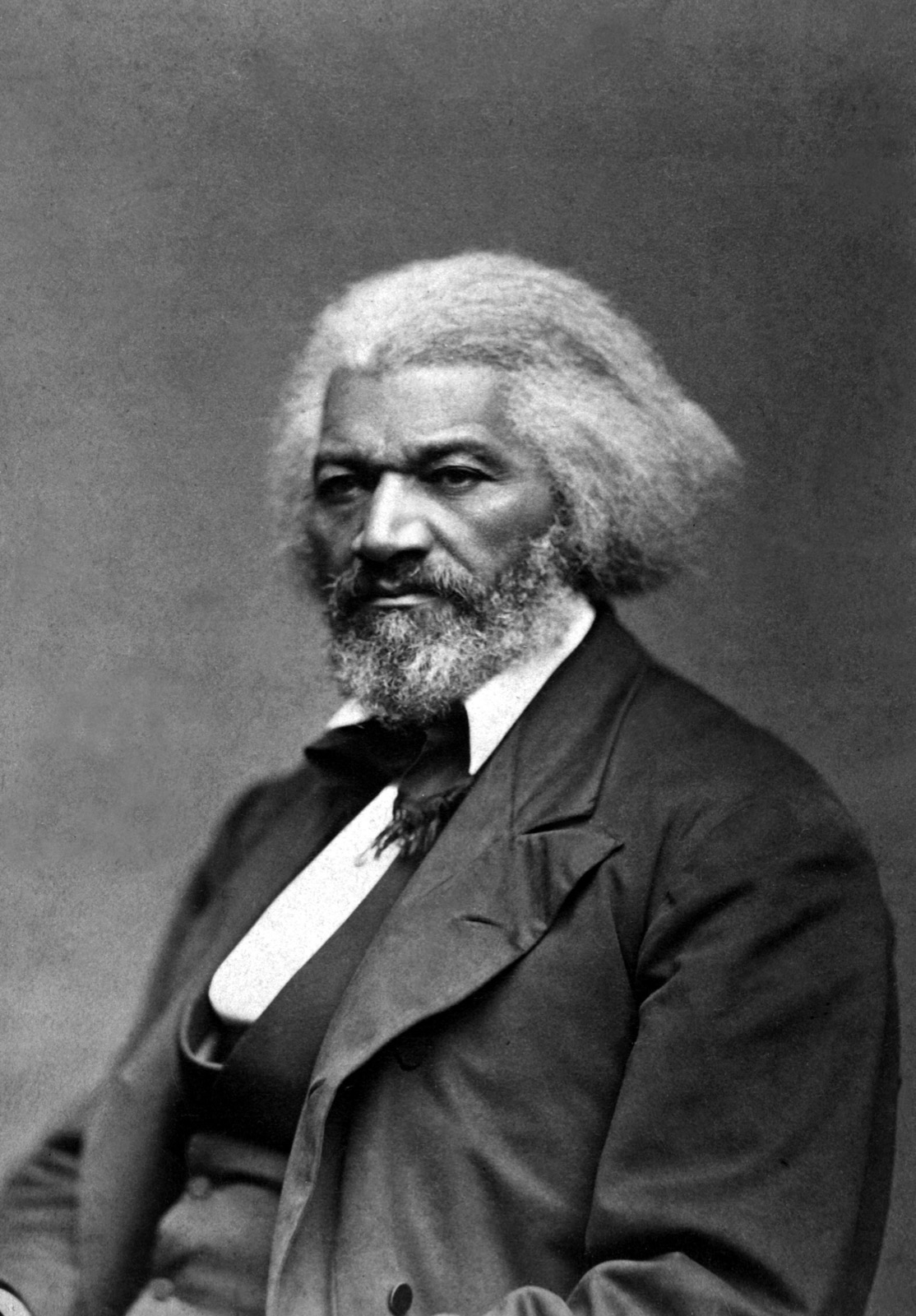
This is where the whole arc lands, on an argument made by a man who had once been enslaved himself: the argument that turned a musket into a claim on the nation.
Once the Proclamation opened enlistment, the great abolitionist Frederick Douglass (the most famous Black man in America, formerly enslaved, now the leading voice of his people) threw himself into recruiting Black soldiers, especially for the 54th Massachusetts. His most famous recruiting broadside (a large printed sheet posted publicly, the era's equivalent of a poster or flyer), "Men of Color, To Arms!", ran on March 21, 1863, and its appeal was a thunderclap:
"By every consideration which binds you to your enslaved fellow-countrymen, and the peace and welfare of your country; by every aspiration which you cherish for the freedom and equality of yourselves and your children; by all the ties of blood and identity which make us one with the brave black men now fighting our battles in Louisiana and in South Carolina, I urge you to fly to arms, and smite with death the power that would bury the government and your liberty in the same hopeless grave."
Douglass did not ask other men's sons to do what he would not ask of his own. Two of his sons enlisted in the 54th Massachusetts in the spring of 1863. Lewis Henry Douglass became the regiment's sergeant major (the highest rank then open to a Black man) and was wounded in the assault on Fort Wagner. Charles Remond Douglass also enlisted in the 54th, though illness kept him out of combat, and he later transferred to a cavalry regiment. Douglass, in other words, put his own children exactly where his argument was.
And the argument, the intellectual climax of this entire story, was about citizenship. Douglass's case was that a Black man who soldiered for the Republic earned a claim on that Republic that no power on earth could deny. He made it most memorably in a speech in Philadelphia on July 6, 1863 (it's worth being careful here: this famous line comes from that Philadelphia speech, not from the "Men of Color" broadside, though the two are often run together):
"Once let the black man get upon his person the brass letters, U.S., let him get an eagle on his button, and a musket on his shoulder and bullets in his pocket, and there is no power on earth or under the earth which can deny that he has earned the right of citizenship in the United States."
That is the consequence the war's freedom seekers won. They had started as people the government insisted were not even slavery's business, then freed themselves by the hundreds of thousands, forced the law to chase them, lived and died in the camps, put on the uniform, fought a second war for equal pay, and bled at Port Hudson and Milliken's Bend and Fort Wagner and Richmond's door. By the end, a Black man with the letters U.S. on his belt, an eagle on his button, and a musket on his shoulder had made a claim that could not be unmade. The men who freed themselves had armed themselves, and in arming themselves, they staked an undeniable claim to the country. The war that began as a fight to preserve the Union had become, because they made it so, a fight that put Black Americans inside the nation as soldiers and citizens. In April 1865, when the rebel capital at Richmond fell, it was Black troops of the United States Colored Troops who were among the first to march in through its streets, the freedom seekers walking as armed soldiers into the heart of the country that had tried to own them.