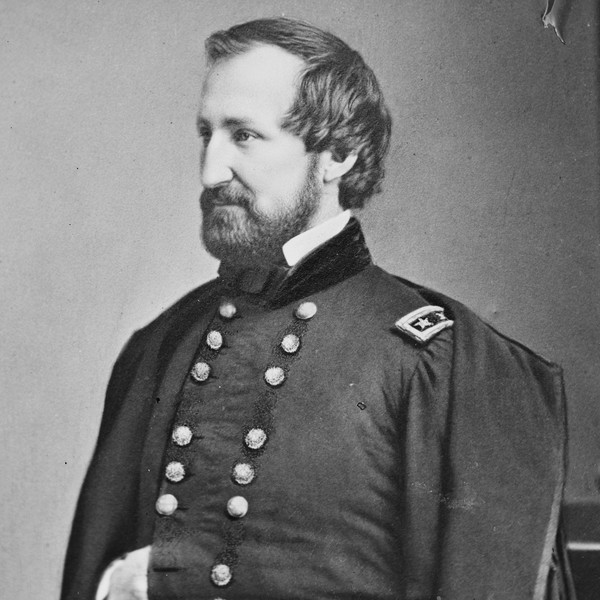
It was a Union victory. The Federals held the crossroads of the Confederacy. Major General William S. Rosecrans’s (North) garrison repulsed Major General Earl Van Dorn’s (South) assault at roughly two-to-one cost to the attackers, the junction stayed in Union hands for the rest of the war, and the last serious Confederate bid to retake the western rail line collapsed.
The strategic payoff was large and quiet. Holding Corinth secured West Tennessee, denied the Confederacy the one rail crossing that knit the western theater together, and wrecked Van Dorn’s army as an offensive force. Iuka and Corinth together turned out to be the last real Confederate offensives along the upper Mississippi in this theater. With his rear secure, Grant was free to turn south toward the campaign that would matter most, Vicksburg, the fortress city whose fall the next summer would split the Confederacy in two. From the Confederate retreat out of Corinth to the surrender of Vicksburg on July 4, 1863, the initiative on the Mississippi belonged to Grant and the Union. The little town with the railroad crossing was a hinge, and it turned the right way.
Western TheatreVicksburg: the campaign Corinth set freeThe deepest meaning of Corinth was not on the railroad. It was on the edge of town.
One Man Walking
Sometime in 1862, while the soldiers fought over the depot, an enslaved man somewhere in northern Mississippi got up, left the farm that claimed to own him, and walked toward the Union guns at Corinth, toward an army, because on the far side of that line nobody could send him back. He was not alone. Thousands did it, enslaved people freeing themselves by walking into Union-held Corinth, one decision at a time. They came to be called “contrabands,” a clumsy wartime term for enslaved people who crossed into Union lines and would not be returned. The Union, instead of turning them away, helped them build a town.
The Corinth Contraband Camp, established in 1862 under Brigadier General Grenville Dodge (North), was not a holding pen. It was a working community the freedom-seekers ran themselves, with numerous homes, a church, a school, and a hospital. Its residents worked cooperative farms, raised and sold cotton and vegetables, and made the camp pay: by May 1863 it was turning a clear profit of four to five thousand dollars from its own enterprises. That August, over a thousand Black children and adults at the camp had learned to read, taught through the work of benevolent organizations. Across its life, from 1862 until it was relocated to Memphis in December 1863, roughly 6,000 formerly enslaved people passed through it.
The Circle Closes
Then the camp did the thing that closes the circle. Nearly 2,000 of the men there enlisted, and from them was raised the 1st Alabama Infantry Regiment of African Descent, later re-designated the 55th United States Colored Troops. People who had been somebody’s legal property a year earlier put on Union blue and took up arms, in sight of the battlefield where Van Dorn’s army had just tried and failed to win the war for the other side. The railroad was the object, slavery was the reason, and the proof of the reason was a camp full of free people on the town’s edge, sending soldiers of their own back into the fight.
The site is preserved today as part of Shiloh National Military Park, a walkway lined with six groupings of life-size bronze statues of the camp’s residents, the freedom-seekers who turned an occupied railroad town into one of the war’s first proofs of what victory was for.