The Confederate generals met one more time, late on the night of February 15, and this council had the air of a sinking ship. Smith's troops were dug into the outer works (the same earthen walls and trenches) on the left; Brigadier General Simon Bolivar Buckner (South) reckoned that if they attacked in the morning from that newly won position, the defenders could lose three of every four men. The options were the short list of a beaten army: keep fighting, try another breakout, or surrender. The two senior men in charge settled on a fourth course: they would not be there for it.
The generals who left
Brigadier General John B. Floyd (South) went first, and he had a personal reason to run. Before the war he had been U.S. Secretary of War under President Buchanan, and he feared that if the North captured him he would be prosecuted for treason or corruption. So he handed command to Pillow and got out, taking the only available steamboat and his two Virginia infantry regiments with him, slipping away early on the morning of February 16. Brigadier General Gideon J. Pillow (South), who twelve hours earlier had opened the road home and then ordered it closed, took the command Floyd passed him, and he did not hold it long either. Reportedly fearing Northern reprisals just as much, he passed command down again, to Buckner, and chose a small boat and a dark crossing of the Cumberland over a handshake with Grant. Two generals, one after the other, took charge of a surrendering army for just long enough to hand it to the next man and disappear into the dark.
Forrest rides through the water
Not everyone was willing to surrender, and one man flatly refused. Colonel Nathan Bedford Forrest (South), the cavalry commander, said as much out loud: "I did not come here to surrender my command." Instead of waiting for terms, he led around 700 of his cavalrymen out of the trap the hard way, through the icy, waist-deep backwater of Lick Creek (a flooded side channel beside the river), skirting the Union left flank in the cold and the dark. They rode out through water up to their waists, found no enemy anywhere on the way, and were gone. The road home had been right there all night.
Forrest's escape is the measure of what the night cost the rest of the garrison. Many more men could have walked out alongside him, if Pillow had not ordered the breakout back into the trenches the day before, and if Buckner had not since posted guards to stop further escape attempts. Most of the army was made to stay and surrender on a road that was still open.
The ride is real, and so is the rest of the man. Before the war, Forrest ran one of the largest slave-trading businesses in Memphis, selling thousands of enslaved people out of his slave yard there from 1854 to 1860, one of the "big four" traders in the South's busiest market. After the war, in 1867, he became the first Grand Wizard of the Ku Klux Klan.
An old friend asks for terms
That left Buckner, the ranking officer now by default, to do the job the other two had fled. He sent a note across to Grant asking for an armistice (a temporary cease-fire while they negotiated) and a meeting to discuss surrender terms. And here the war turned personal, because Buckner and Grant were old friends. They had been at West Point together in the 1840s and served side by side under General Winfield Scott in the Mexican War (the 1846–48 U.S. war with Mexico, the conflict that made the reputations of half the men who would later run the Civil War), including a climb up the volcano Popocatépetl. More than that, Buckner had once rescued Grant: in 1854, when Grant had resigned from the army and ended up broke and stranded at the Astor House hotel in New York City, it was Buckner who vouched for him and covered his hotel bill until his money came through. Now the broke ex-soldier Buckner had bailed out was the general holding his army by the throat.
Grant did not let the friendship soften the terms by an inch:
"No terms except an unconditional and immediate surrender can be accepted. I propose to move immediately upon your works."
An unconditional surrender means exactly that, no negotiation, no concessions, no agreement to let the defenders march away with their weapons or their pride: give up everything, or be attacked at once. Buckner, who had every reason to expect generosity from an old friend, got none. He called the terms "ungenerous and unchivalrous," but he acknowledged the "overwhelming force" arrayed against him, made a bitter nod to "the brilliant success of the Confederate arms yesterday" (Pillow's morning that had won the escape and then lost it), and accepted. The initials lined up too well for the Northern press to resist: U.S. Grant became "Unconditional Surrender Grant," and the nickname stuck.
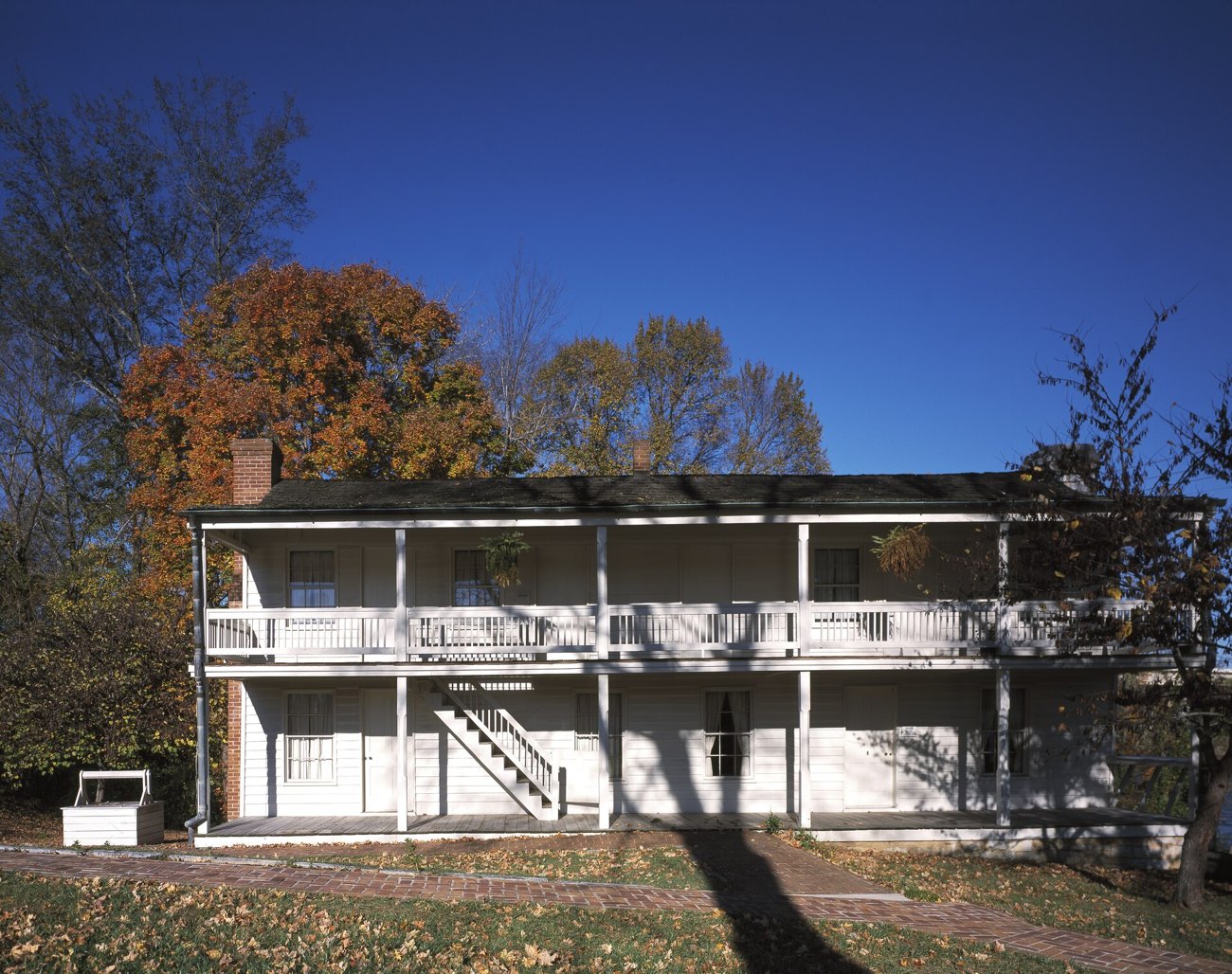
When the two men met at the Dover Tavern, the old friendship resurfaced. Grant offered Buckner the use of his own purse, knowing he was headed for a prison camp; accounts differ on whether Buckner took the money. Grant refused to stage any formal surrender ceremony, asking, in the words attributed to him, "We have the fort, the men, the guns. Why should we go through vain forms?" (The friendship outlasted the war by a long way: Buckner would serve as a pallbearer at Grant's funeral in 1885.)
What it bought
The scale of what he'd just taken was staggering. Somewhere between roughly 12,000 and 13,500 Confederate soldiers surrendered at Fort Donelson (sources run as high as 15,000; the most precisely sourced count is about 12,400 captured or missing), along with some 20,000 small arms (rifles and pistols), 48 field guns, 17 heavy guns, and around 3,000 horses. It was the largest mass surrender on the North American continent up to that point in the war. The victory was not free: the North paid for it with roughly 2,700 casualties of its own, about 507 men killed and another 1,976 wounded, many of them on McClernand's broken right and in Smith's charge against the earthworks.
And it broke the South's whole western position in days. The Columbus to Bowling Green line of General Albert Sidney Johnston (South) had hinged on these forts, and with the hinge gone the line collapsed. Nashville, the capital of Tennessee and the South's second-largest industrial city, a rail hub and a major source of iron and munitions, was abandoned almost at once and formally surrendered on February 25, the first Confederate state capital to fall in the war. Columbus was given up by early March, and the entire western cordon was gone, the rivers now open highways carrying Union armies deep into the South. Out of it all rose Grant, lifted from obscurity to national fame in a week, promoted to major general of volunteers and second in seniority in the West only to Halleck. The North had been starving for a real victory, and Fort Donelson, the first major Union win of the war, finally gave it one.
"No terms except an unconditional and immediate surrender can be accepted."