In two days of fighting at Shiloh, the two armies suffered around 23,700 casualties, killed, wounded, and missing, combined. Roughly 13,000 on the Union side and 10,700 on the Confederate. Some historians put the true toll higher still, perhaps 14,500 and 12,000, once you count the men who died of their wounds in the weeks after. Whatever the exact figure, it was a scale of loss the country had simply never imagined.
A Country That Couldn't Believe It
The biggest battles of the war up to that point, First Bull Run (the first major clash of the war, mid-1861), Wilson's Creek, Fort Donelson, and Pea Ridge, had together produced something like 12,000 casualties. Shiloh, in two days, nearly doubled that. It was, by a wide margin, the bloodiest battle in American history up to that moment, worse than all the war's earlier battles combined.
Eastern TheatreFirst Bull Run: the war's first big battleYou will sometimes hear the claim that Shiloh produced more casualties than all of America's previous wars combined. That is a famous line, but it is false: the Revolutionary War alone killed far more Americans in battle. The honest, still-staggering version is the one above: Shiloh outdid every battle of the Civil War that had come before it, all of them put together.
The loss reached into the most famous household in the country. Among the dead at Shiloh was Samuel Todd, a brother of Mary Todd Lincoln, the First Lady. The Lincolns, like thousands of less famous families North and South, learned in the spring of 1862 what this war was going to cost.
Nearly Relieved
The man who had to answer for the casualties was Major General Ulysses S. Grant. When the country absorbed the near-disaster of the first day, an army surprised in its camps and driven to the riverbank, the long-circulating rumors about his drinking came roaring back, and newspapers and politicians called loudly for his removal. Major General Henry W. Halleck (North) arrived, took personal command of the combined armies in the field, and effectively shelved Grant, leaving him for weeks as a hollow "second in command" with nothing to do. The man who had taken Henry, Donelson, and now held the field at Shiloh was very nearly discarded.
He survived, in part, because the president stood by him. As the story is told, when the clamor to fire Grant reached its peak, Abraham Lincoln cut it off with a line that he could not spare this man, because he fights.
"I can't spare this man; he fights."
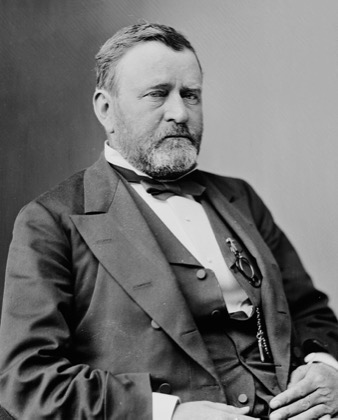
That line is almost certainly too good to be true, or at least too clean. It was first recorded thirty years later, in 1892, by a journalist named Alexander McClure who claimed Lincoln said it to him personally, and no contemporary record of it exists. Historians treat it as likely apocryphal. But whether or not Lincoln ever spoke those exact words, he did keep Grant, and keeping Grant was one of the most consequential decisions of the war.
What Shiloh Meant
For a year, North and South had told themselves the same comforting story: that the war would be settled quickly, in a battle or two, that one good thrashing would bring the other side to its senses. Shiloh killed that story. You can watch it die in Grant's own words. Before the battle, he wrote, he had believed the rebellion would collapse suddenly and soon if a decisive victory could be gained over any of its armies. After Shiloh, walking a field carpeted with the dead of an army he had nearly lost and then narrowly redeemed, he gave up all idea of saving the Union except by complete conquest.
"I gave up all idea of saving the Union except by complete conquest."
That sentence is the meaning of Shiloh. It marks the moment a general, and behind him a nation, understood that this would not be a war of a single grand battle but a long, total, grinding war of armies destroyed and territory conquered. The road from Shiloh ran south down the rivers, through Corinth and on to Vicksburg (a fortress city on the Mississippi River), where Grant would later split the Confederacy in two for good. And it ran toward an ending no one in 1861 had been willing to imagine: the South beaten to the ground and slavery destroyed with it. It was a longer, harder, bloodier road than anyone had wanted to believe existed. Shiloh was where the country found out it was there.
Western TheatreVicksburg: where Grant split the Confederacy for good