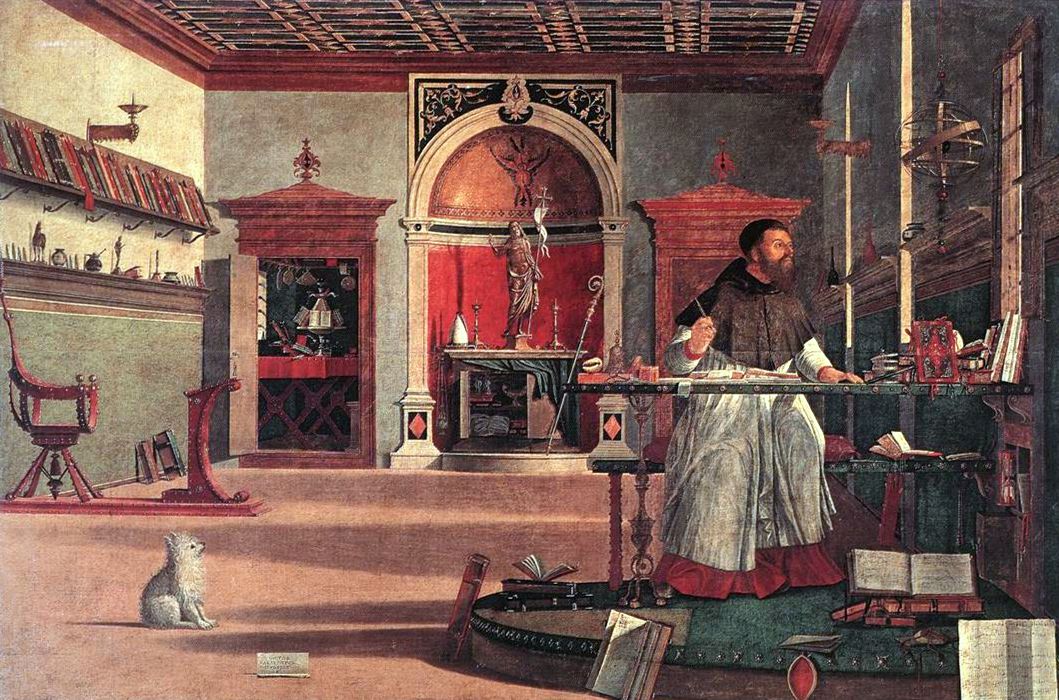
Thinker · Platonism
Augustine
354 – 430 · Platonism · Faith meets reason · 2 works
The rhetorician who turned philosophy inward. Every ancient school before him had gone looking for the good life out there: in the cosmos, in the city, in the changeless Forms the mind could climb toward. Augustine made the strangest move in the history of the subject: he went looking in himself. In the restlessness of his own heart, the divisions of his own will, the bottomless strangeness of his own memory, he found a new kind of thing the ancient world had never described (an interior self, a first person with depths) and he handed it to the next thousand years.
What changed
Before
Truth is something to go out and find: in the cosmos, the city, the changeless Forms above
After
Truth dwells in the inner man; it is found by going in, not out
Inside the walk-through
The restless heart
The garden
Where evil comes from
Time, memory, and the self inside
Grace, the will, and Pelagius
The two cities, and what came after
The works