Western PhilosophyStuff Happened · Philosophy
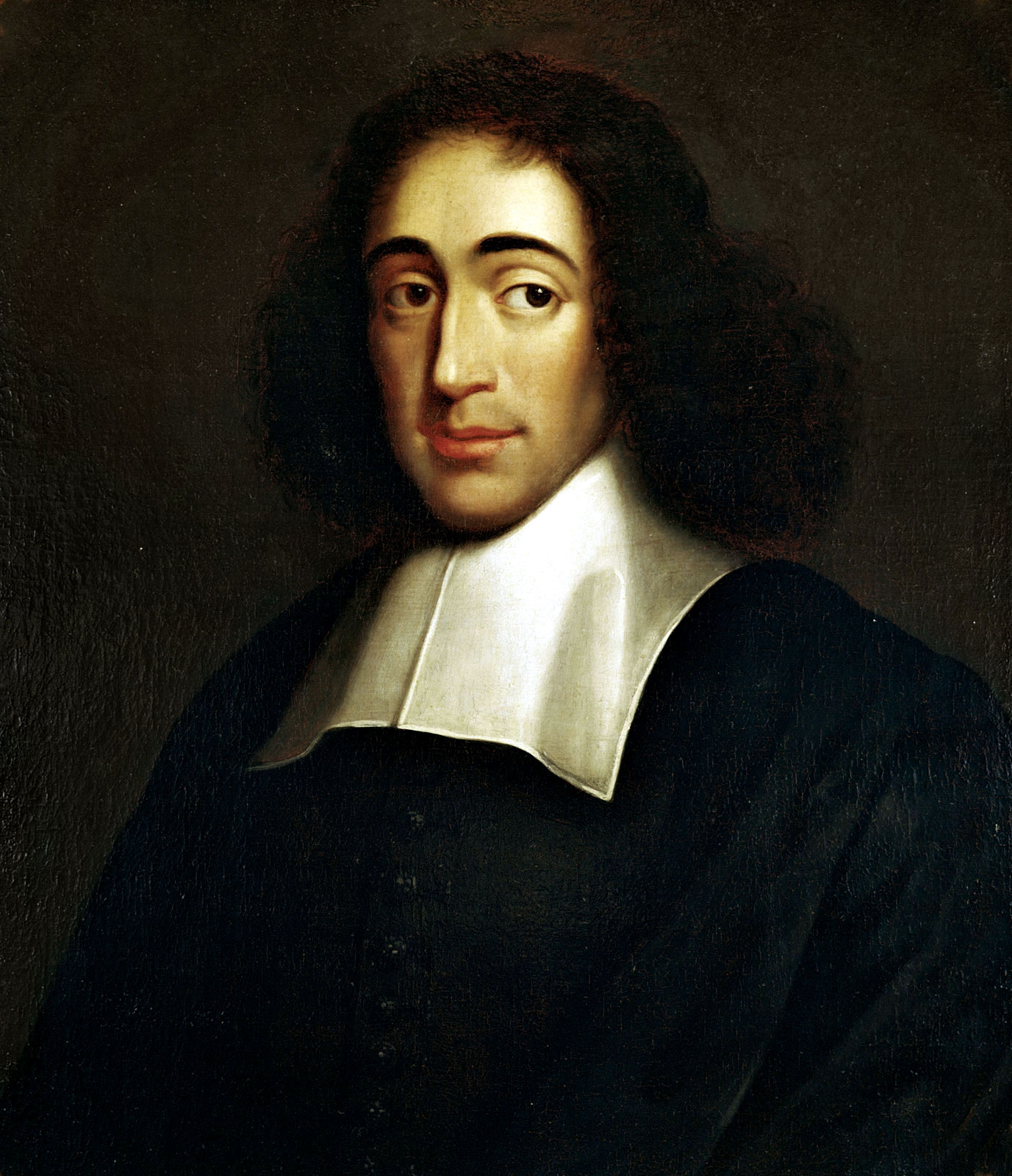
Oil portrait of a young dark-haired man with large eyes in dark seventeenth-century clothing against a plain ground
Thinker · Rationalists

Spinoza

1632 – 1677 · Rationalists · The rationalists & empiricists · 1 works

Descartes had split the universe into two kinds of stuff (minds and matter) and a God standing outside both. Spinoza looked at that picture and decided the splits were the mistake. There are not two substances and a maker on top of them. There is one thing, infinite, that depends on nothing else to exist, and everything in existence is a passing wrinkle in it. He called that one thing God, or Nature, and he meant the same thing by both words. From that single claim he derived, in the cold steps of geometry, a world with no free will, no personal God listening to prayers, no soul that survives the body, and a kind of blessedness available to a person right now, in this life, by understanding. It got him cast out of his own community at twenty-three and his masterwork banned. It also produced one of the few philosophies that has been called, by serious people, a way to live.

What changed
Before
Reality is two kinds of stuff (minds and matter), made and watched over by a God who stands outside the world he created
After
Reality is ONE infinite thing, God-or-Nature, of which minds and matter are two aspects and every particular thing is a passing mode; nothing stands outside it, because there is no outside
Walk Spinoza’s whole systemThe ideas in order, start to finish, as one long read
Inside the walk-through
The ban
One substance
Nothing could have been otherwise
Bondage and the affects
The intellectual love of God
The afterlife of one substance
The works
Ethics
1677 · Geometric proofs
God-or-Nature, proved like Euclid: definitions, axioms, and propositions, all the way to blessedness.
Read
Read Spinoza in context: The rationalists & empiricists