The Confederacy did not lose the Civil War in one battle. It lost it the way a body fails when too many organs quit at once. By the winter of 1864–65 the South was running out of the things an army needs to stay an army: men, food, working railroads, even shoes. The Union strategy that finished it was not a single knockout. It was coordinated, simultaneous pressure on every front, designed so the South could no longer shuffle its dwindling troops from one threatened point to plug another. Grant held Lee in place at Petersburg in Virginia while Sherman marched up through the Carolinas and George Thomas finished off the last Confederate army in the West. When the end came, in the spring of 1865, it came everywhere more or less at once.
And the thing the victory finally secured was the freedom of four million people.
A republic running out of everything
By the winter of 1864–65 the Confederacy was losing the war it could measure long before it lost the one fought on a battlefield. Start with the men. The Western Confederate army, the Army of Tennessee, had already destroyed itself. Late in 1864 its commander, Gen. John Bell Hood, threw it at a Union line in two catastrophic battles. At Franklin, Tennessee, on November 30, a frontal assault across open ground cost the Confederates over 6,000 casualties, including around 1,750 killed, and stripped the army of fourteen generals in a single afternoon.
Western TheatreFranklinTwo weeks later, outside Nashville on December 15 and 16, Thomas finished the job, breaking Hood's army outright and inflicting some 6,000 more losses, many of them men who simply surrendered. After Nashville the Army of Tennessee had effectively ceased to exist as a fighting force. Hood retreated into Mississippi with fewer than 20,000 men, bleeding deserters the whole way, and resigned. The Confederacy had two main armies, and one of them was now gone.
Western TheatreNashvilleThe food was going too. The Union blockade, the years-long naval strangulation of Southern ports, was by 1864 intercepting the majority of the blockade runners that had kept goods trickling in, choking off imports of food, medicine, and supplies. The last great open port was Wilmington, North Carolina, and it depended on a single fort guarding its approach. In January 1865 a combined Army-Navy assault captured Fort Fisher, closing the South's last major Atlantic port.
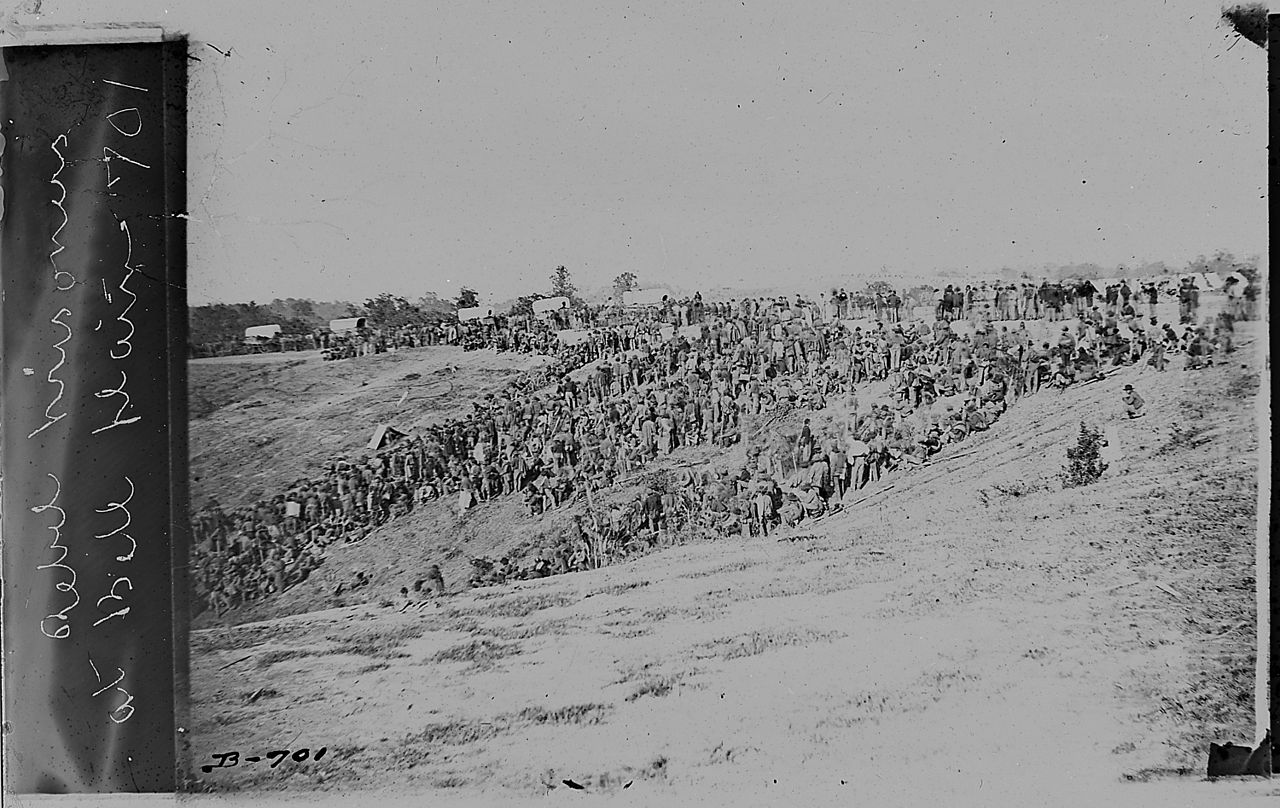
Naval & CoastalSecond Fort FisherWith its last port shut, the South was sealed. Inside that ring, Confederate money had collapsed. A Confederate dollar worth roughly ninety-five cents against the U.S. dollar in 1861 had by now fallen so far that the exact rate is hard to pin down, but the direction was catastrophic: runaway inflation, food no longer affordable, soldiers' families going hungry. Richmond had already seen a bread riot in 1863, and by the winter of 1864–65 the hunger had reached the army itself. That hunger drove the manpower crisis from the other end. Desertions climbed as men worried about starving families at home, and by early 1865 desertion had become a crisis in its own right, soldiers voting with their feet. And the railroads that were supposed to move and feed what was left of the armies were disintegrating: lesser lines torn up to provide rails for more important ones, rolling stock dwindling, the patchwork of mismatched gauges that had hampered the South all war finally falling apart. This was Grant's 1864 strategy paying off below the surface. Apply pressure everywhere at once, and a country with fewer men, less food, and a failing rail net cannot keep an army in the field. By the start of 1865 the structure was already hollow. The rest of the year is the sound of it falling in.
The contradiction that broke the cause
There is a moment in early 1865 when the Confederacy says out loud, by what it cannot bring itself to do, exactly what the war was about.
Facing collapse and short of soldiers, the Confederate government began to debate arming enslaved men. A slaveholding republic, a country that had seceded to keep human beings as property, now considered putting muskets in the hands of the very people it was fighting to keep enslaved. The Confederacy had gone to war to keep enslaved people in chains; now it was prepared to free some of them to keep fighting. The idea was not new. A year earlier Gen. Patrick Cleburne had proposed it, and his proposal had been suppressed as unthinkable. Now necessity forced it back.
Robert E. Lee endorsed it, and his reasons matter. In a January 1865 letter he argued, in effect, that the choice was simple: either the enemy would free the enslaved and use them against the South, or the South would use them itself, and he urged that those who enlisted be given their freedom. But Lee's support rested on military necessity, not on any change of heart. In the same breath he described the relationship of master and slave as the best that could exist between the races. He wanted Black soldiers because he was losing, not because he had stopped believing in slavery.
The bill went to the Confederate Congress. Ethelbert Barksdale, a Mississippi congressman, introduced it in February with President Jefferson Davis's backing. The House passed it; the Senate approved it in mid-March by the narrowest of margins, a 9–8 vote; and Davis signed it into law on March 13, 1865. General Orders No. 14 followed ten days later to put it into effect. But the law that passed had been gutted of the one thing Lee had insisted on: it did not promise freedom to the men who would serve. A government with its armies starving had debated freeing and arming the people it had gone to war to keep enslaved, and even then could not bring itself to make the promise.
It came to nothing. A few companies drilled in the streets of Richmond in the war's last weeks. At most several thousand were ever enlisted, and they never fought before the surrender came. Against them stand the nearly 200,000 Black men who fought for the Union, many of them formerly enslaved, fighting to end slavery itself. The contradiction is the whole war in miniature. A nation founded to defend human bondage could find no way out of its crisis that did not begin by admitting what the bondage had cost it.
Off the fieldThe ReckoningBack in the trenches at Petersburg, that ending was already underway.
The line breaks at Petersburg
For ten months the war in Virginia had been a siege. Around Petersburg, the rail hub south of Richmond, Grant and Lee faced each other across miles of trenches while Grant slowly extended his lines west, reaching for the railroads that were Lee's last supply lines and his only escape route. This was attrition made visible: not a battle but a slow squeeze, and Lee's starving, shrinking army had no way to break the grip. It could expect no rescue either. Sherman's army was driving up through the Carolinas at the same time, which meant the troops that might have reinforced Lee were busy failing to stop Sherman instead.
Lee tried anyway. Before dawn on March 25, 1865, he gambled on one last offensive, a surprise assault on the Union's Fort Stedman meant to crack the siege line and open a road out. It failed within hours, with heavy losses Lee could not replace. The gamble left him weaker than before.
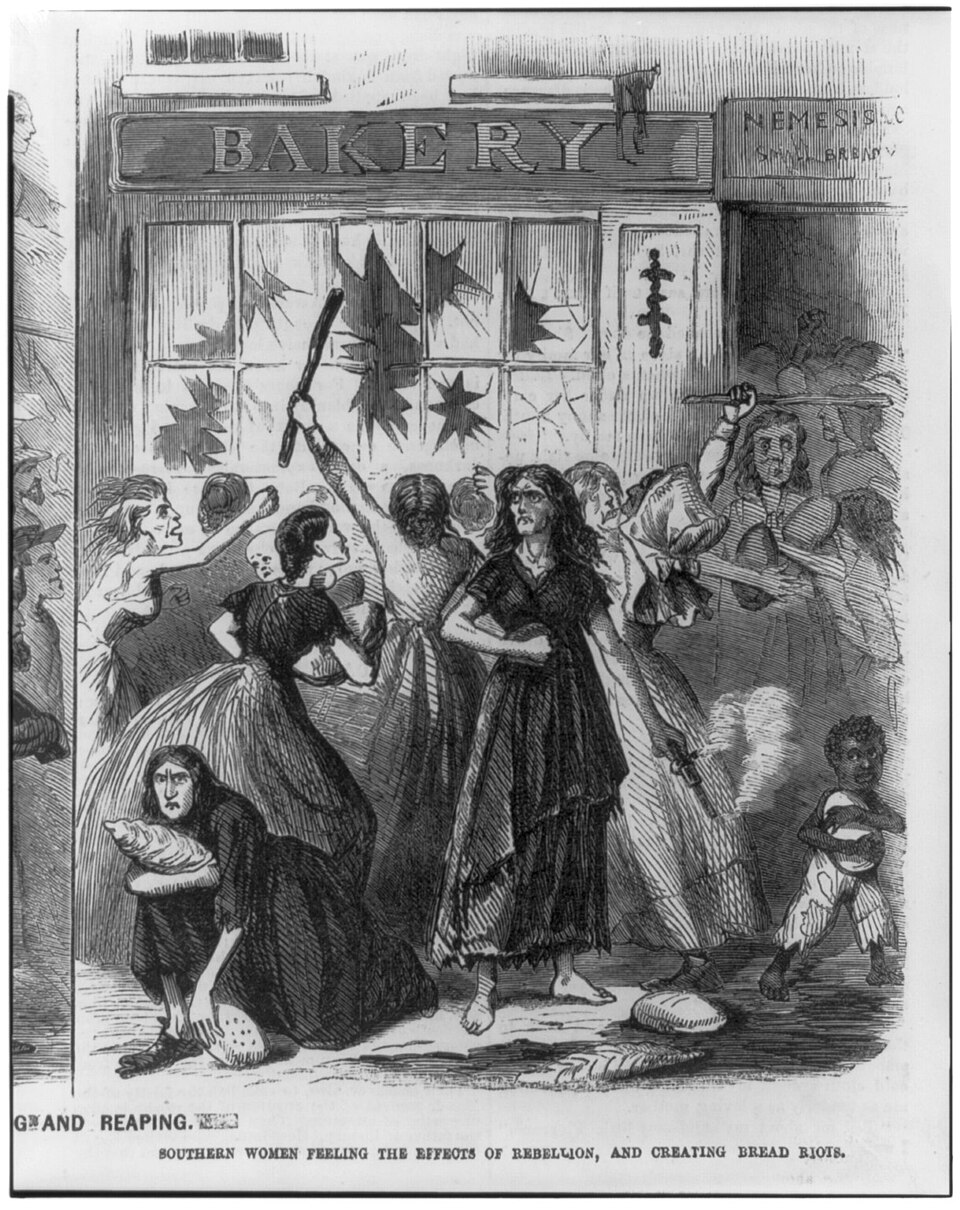
Eastern TheatreFort StedmanA week later the squeeze became a break. Grant sent Major General Philip Sheridan with a strong force west around Lee's right flank to seize a road junction called Five Forks, the key to the South Side Railroad, Lee's last open supply line. On April 1 Sheridan, with the Fifth Corps at his disposal, shattered the Confederate force defending the junction under Maj. Gen. George Pickett. (Sheridan sacked the Fifth Corps' commander, Maj. Gen. Gouverneur Warren, mid-battle, a decision disputed for decades.) Confederate losses ran somewhere between 2,400 and 2,950, the great majority of them men taken prisoner rather than killed. The body count is not the point. The point is the railroad. With Five Forks lost, the last iron road into Petersburg was cut, and an army that cannot be supplied cannot stay in the field.
Eastern TheatreFive ForksGrant did not wait. At dawn on April 2 he ordered a general assault all along the Petersburg lines, and the lines broke. Lt. Gen. A.P. Hill, one of Lee's senior corps commanders, was killed that morning. By the end of the day Lee had telegraphed Davis that Petersburg and Richmond could no longer be held and must be abandoned that night. The siege of attrition had finally done what no single charge could. It had cracked the Army of Northern Virginia.
Eastern TheatreThird PetersburgThe capital falls
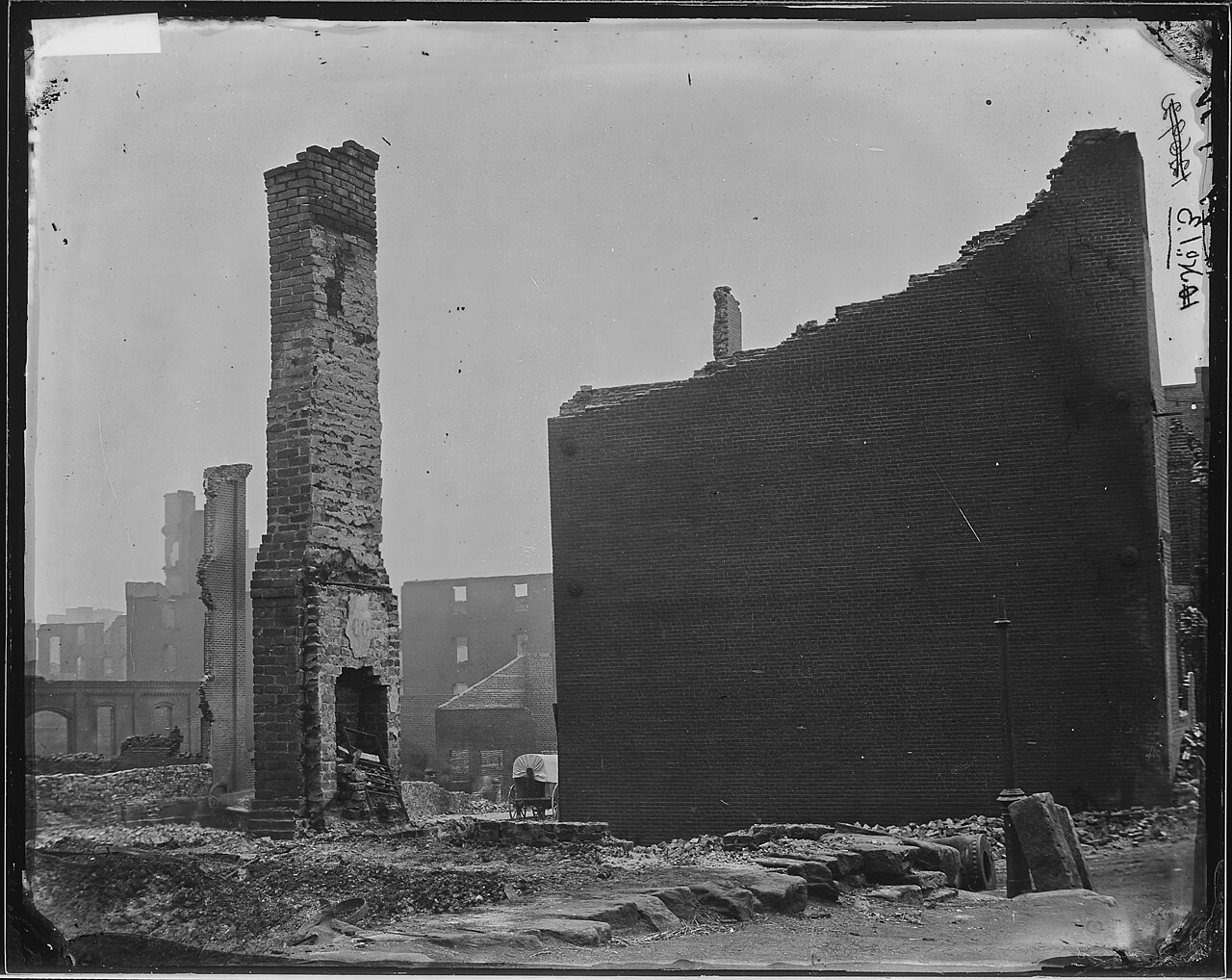
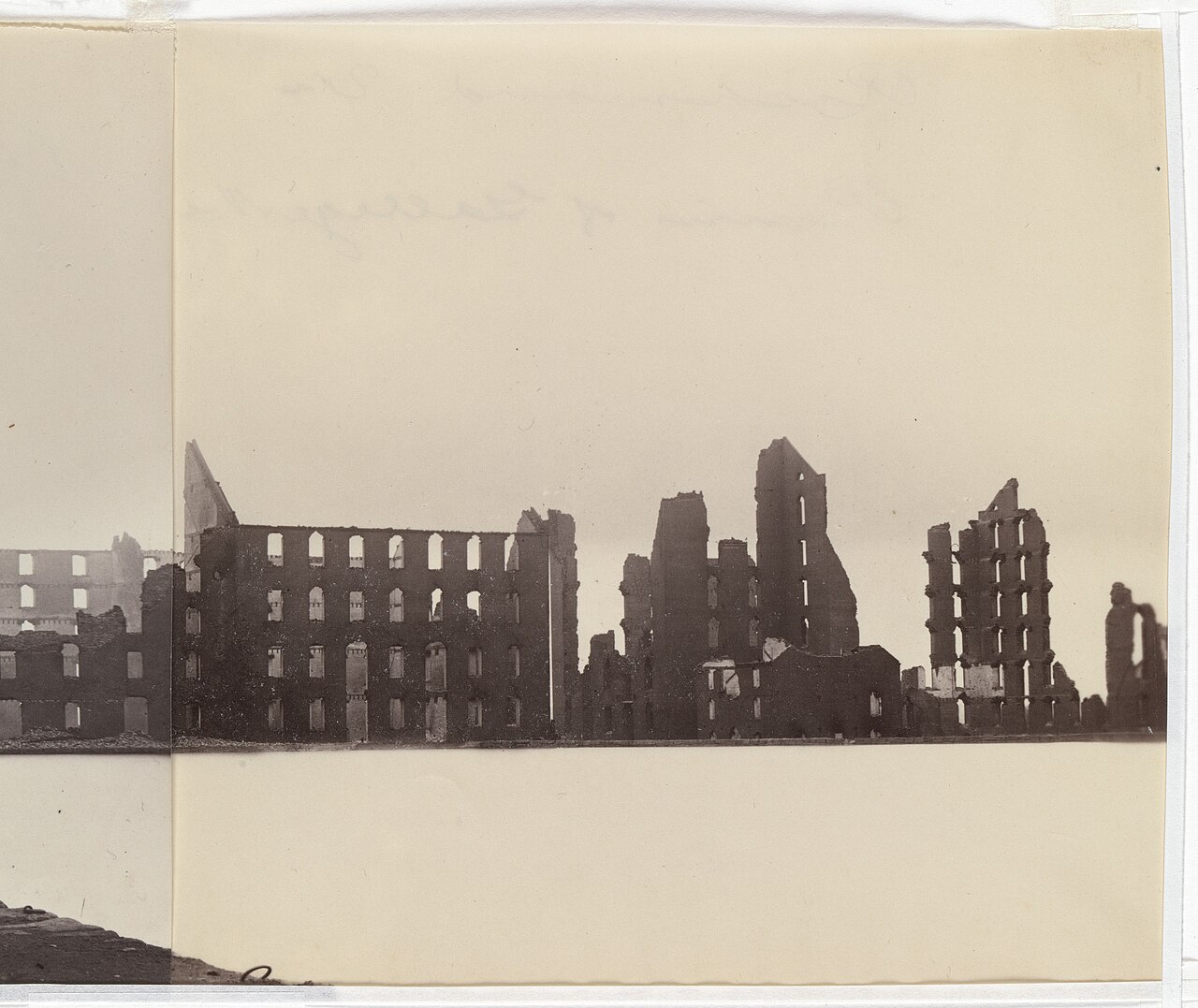
As Lee's lines broke, the Confederate government fled its capital. On the night of April 2 Davis and his cabinet left Richmond. Retreating Confederate troops set fire to military stores, tobacco warehouses, and bridges so the Union could not use them, and the fires spread out of control, burning as much as a thousand buildings across the business district. Union soldiers entered the next morning, April 3, to find the capital of the Confederacy evacuated and in flames.
Among the first Union regiments into the city were U.S. Colored Troops of the XXV Corps (the Union's all-Black 25th Corps), Black soldiers, many of them only recently enslaved themselves. (The exact honor of who entered first was disputed even at the time.) They marched into the capital of the slaveholders' republic as liberators, and the city's enslaved population came into the streets to meet them. A Black war correspondent, Thomas Morris Chester, sat at the desk of the Confederate Congress and wrote his dispatch from inside the fallen capitol.
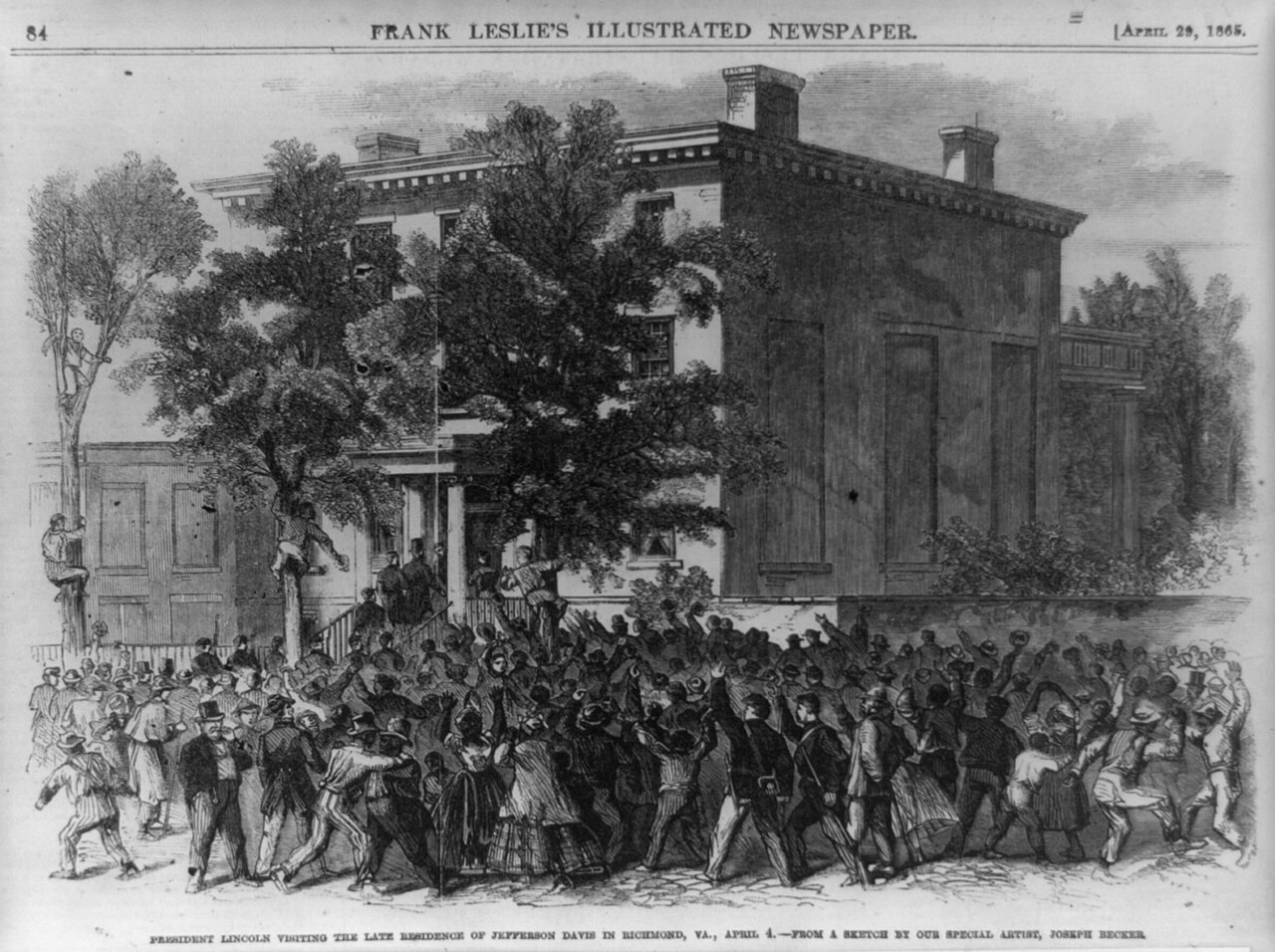
The next day, April 4, Abraham Lincoln walked through the captured city. He moved through Richmond's streets on foot, surrounded by crowds of freed Black residents, and at one point sat in the executive office Davis had abandoned. To the Union general now in charge of the occupation, Maj. Gen. Godfrey Weitzel, Lincoln gave his guidance for how to treat the defeated South, telling him in effect to let them up easy. The whole scene was the argument the war had been about, made visible in a single morning: a Black army and a freed people filling the streets of the capital that had seceded to keep them in chains, with the President of the United States walking among them.
Appomattox
Richmond was gone, but Lee's army, what was left of it, was still loose, and Lee meant to keep it alive. His plan was to march west, link up with the other surviving Confederate army under Gen. Joseph Johnston in North Carolina, and fight on. Grant gave him no chance. The Union army pursued and paralleled the Confederate column, marching to cut it off before it could turn south.
On April 6 the pursuit caught Lee's strung-out, exhausted column at Sailor's Creek. The Union forces fell on the rear and destroyed roughly a quarter of what remained of the army, around 7,700 Confederates killed or captured, several generals among the prisoners. Watching the disaster unfold, Lee is said to have cried out, "My God, has the army been dissolved?" The words come down to us by tradition rather than from his own pen, but they catch the moment exactly. The army was coming apart on the march.
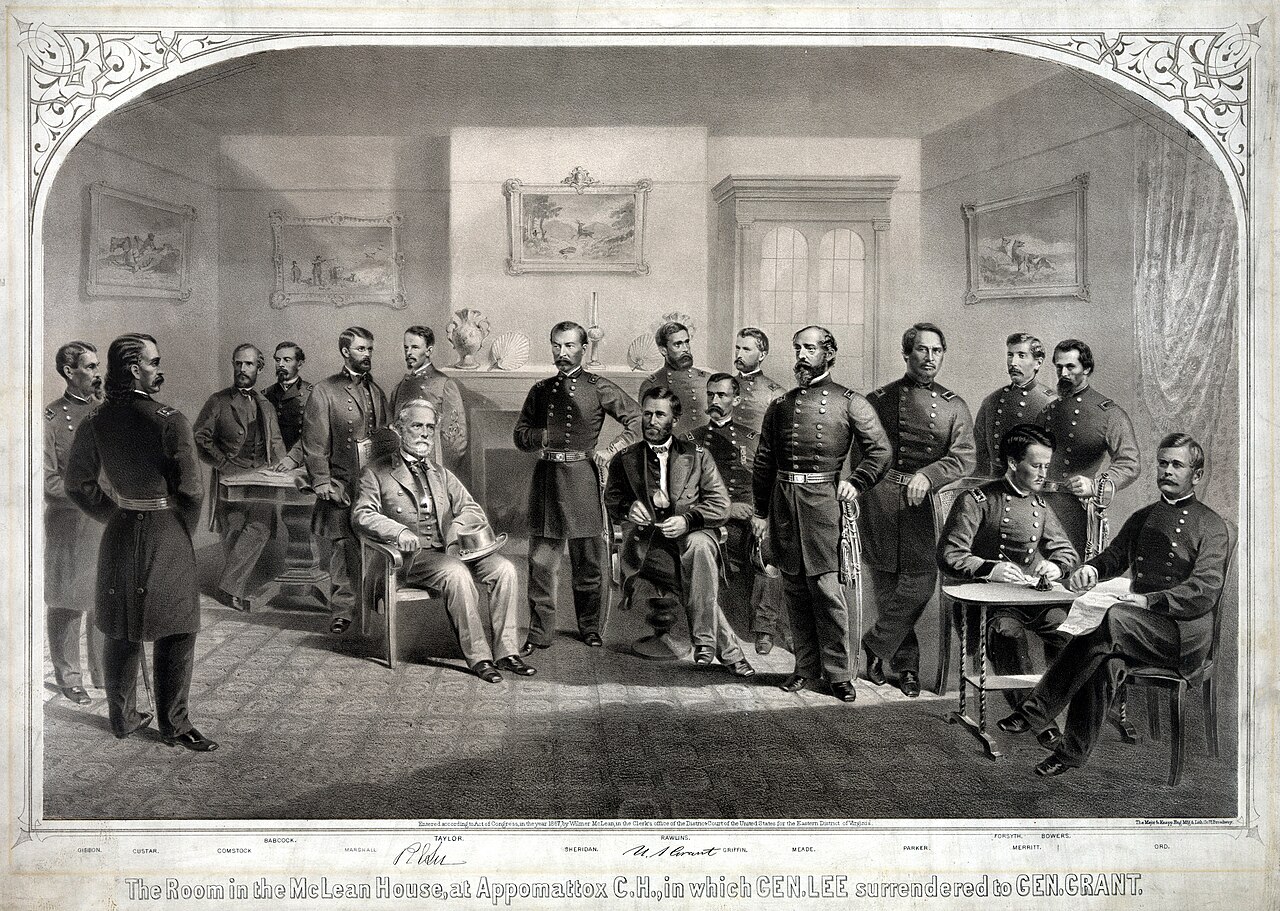
Three days later it was over. Cornered near Appomattox Court House, Virginia, out of food and nearly out of men, his line of retreat finally closed, Lee asked for terms. On April 9, 1865, he met Grant in the parlor of a private home, the McLean house, and surrendered the Army of Northern Virginia, about 28,000 men. (The house belonged to Wilmer McLean, who had fled the First Bull Run battlefield in 1861 for the quiet of Appomattox. The war had begun near his door and ended in his parlor.)
Grant's terms were deliberately generous, and the generosity was strategy. He paroled the entire army (released the men on their word of honor not to take up arms again until they were formally exchanged) and sent them home. Officers kept their sidearms; soldiers who owned horses kept them for the spring plowing; all of them could go home undisturbed so long as they honored their parole and did not take up arms again. Learning the Confederates were starving, Grant issued 25,000 rations to feed the men he had just defeated, much of it from Confederate stores Sheridan had captured. The terms were a conscious political act. A soft peace meant no mass treason trials, no incentive for the beaten army to scatter into the hills and fight on as guerrillas, and the beginnings of reconciliation. How you end a war shapes the peace that follows, and the magnanimity at Appomattox was an instrument, not just a sentiment. It became the template for every Confederate surrender that came after.
The rest of the armies lay down
Appomattox ended Lee's army, not the war. The Confederacy was a system, not a single force, and it surrendered the way it had collapsed: piece by piece, over the spring of 1865.
In North Carolina, Johnston had already made the last real stand. As Sherman's army marched up from Georgia through the Carolinas, Johnston gathered what troops he could and struck at Bentonville on March 19 through 21, the largest battle ever fought in North Carolina and the last Confederate offensive of the war. He was driven off. With Lee pinned at Petersburg and unable to send help, and Sherman's army intact and bearing down, Johnston had almost nothing left to fight with. He signed an armistice with Sherman on April 18 (three days after Lincoln's death), and after Washington rejected Sherman's first, over-generous terms, he formally surrendered on purely military terms on April 26, giving up not just his own army but all Confederate forces across the Carolinas, Georgia, and Florida.
Western TheatreBentonvilleThe war's outer edges took longer to go quiet. Down on the Gulf, a combined Union assault overran the defenses of Mobile, Alabama, at Fort Blakeley on April 9, the same day Lee surrendered in Virginia, in one of the war's last major actions in the West.
Western TheatreFort BlakeleyOut west of the Mississippi, the surrenders trailed on into summer. Gen. Edmund Kirby Smith, commanding the vast Trans-Mississippi Department (the Confederate command west of the Mississippi River), surrendered on May 26, his men already melting away in mass desertion before the paper was signed. The very last Confederate general to surrender was Brig. Gen. Stand Watie, a Cherokee leader and the only Native American to reach that rank in the Confederate army, who laid down arms on June 23, 1865. There was no single Appomattox that ended the war, because there was no single army to beat. The Confederacy ended the way it had been failing for months: everywhere, by running out of the means to go on.
Lincoln is killed
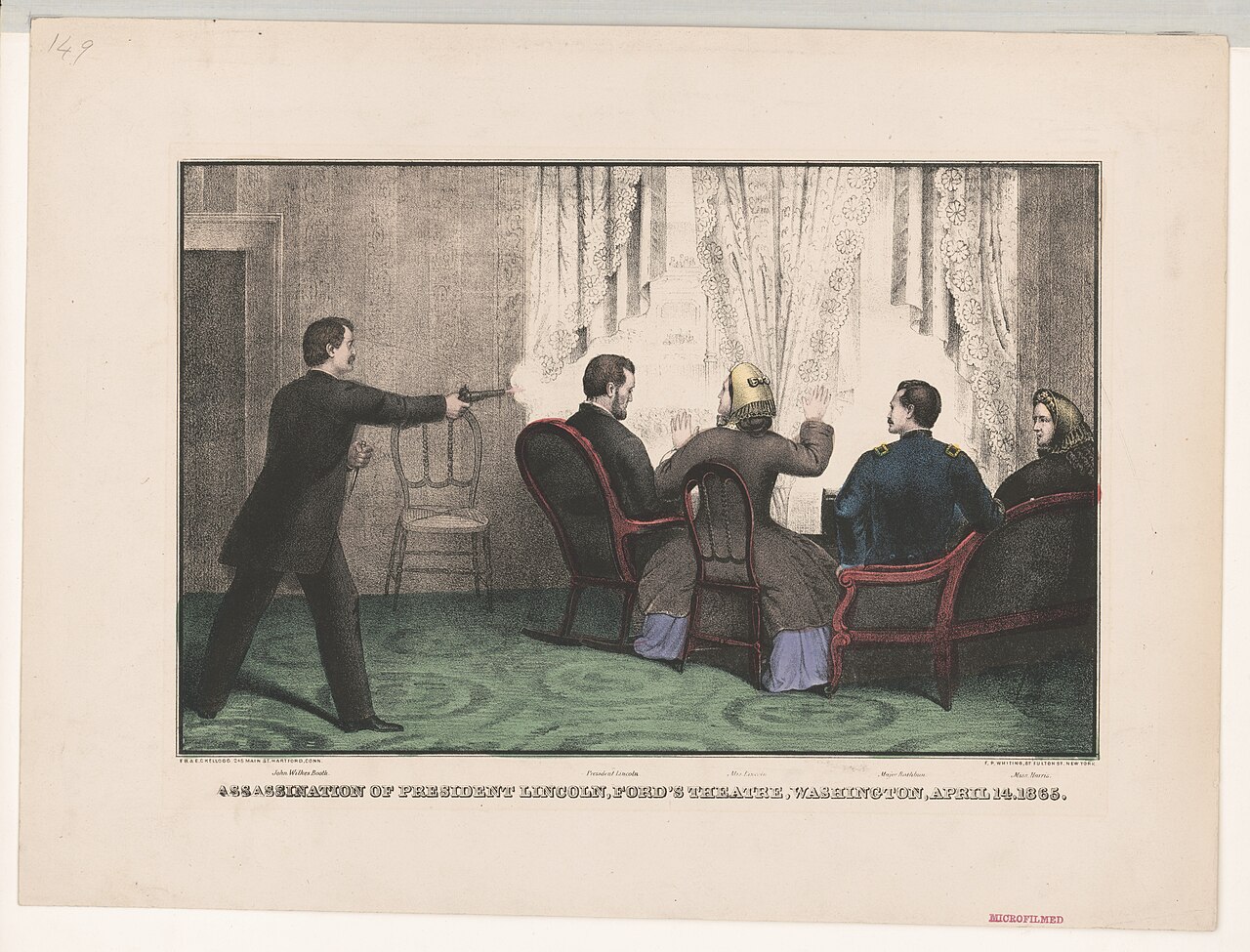
The man who had set the tone for a soft, reconciling peace did not live to see it built. On the night of April 14, 1865, five days after Appomattox, John Wilkes Booth, an actor and Confederate partisan, shot Lincoln at Ford's Theatre in Washington. Lincoln died the next morning. Booth was hunted down and killed twelve days later.
The timing is the cruelty of it. The war's victorious commander-in-chief was murdered at the very instant of victory, and the bullet removed the one man most committed to letting the South up easy. The peace that followed would be shaped by other, harder hands.
What it cost, and what it secured
Set down what the war cost, and the first thing to admit is that we do not know the number for certain. For more than a century the accepted figure was about 620,000 dead on both sides. A 2011 study by the demographer J. David Hacker, working from census survival rates, revised that sharply upward to around 750,000, with a plausible range of roughly 650,000 to 850,000; more recent full-count census work lands near 700,000. The honest statement is that the war killed at least 620,000 Americans and very likely far more, something close to three-quarters of a million people. Hundreds of thousands more came home maimed. The South's farms, cities, and railroads were wrecked, and an entire social and economic order, the one built on slavery, was gone.
Against that cost stands what the dying bought. The war freed roughly four million enslaved people, and unlike the Emancipation Proclamation of 1863, which had been a wartime measure of limited legal reach, this freedom was made permanent. Permanence required a change to the Constitution itself. The House of Representatives passed the Thirteenth Amendment on January 31, 1865, by 119 votes to 56, just clearing the two-thirds bar, and it was ratified that December. The South's military collapse is what made ratification unblockable: the seceded states could no longer prevent it, and accepting it was made a condition of their readmission to the Union, so the surrender that ended the fighting also locked in the freedom it had been fought over. Its words are plain: neither slavery nor involuntary servitude, except as punishment for a crime, shall exist within the United States.
Off the fieldEmancipationThat is the strategic and the moral meaning of the victory, and they are the same thing. The Confederacy went to war to keep four million people in slavery. It ran out of men, food, railroads, and will, and it lost. And the price of its defeat was written into the supreme law of the land: slavery, the thing the whole war had been fought over, abolished, permanently. That is what the South's collapse was a collapse against.