The thing that beat Fort Fisher was not the charge. It was the bombardment that came first, and the difference between this attack and December’s was the difference between a man swinging wildly and a man taking careful aim. In December the fleet had thrown thousands of shells at the fort almost at random, much of it splashing harmlessly into the river and the marshes beyond. This time Rear Admiral David D. Porter (North) gave his gunners specific targets and told them to hit them.
For most of three days, from January 13 to 15, the 58 ships stood off the beach and pounded the fort with a methodical, grinding fire aimed at the guns on the walls. The goal was not to flatten the sand, which could not be flattened, but to dismount the cannon one by one and kill the men who worked them, so that when the assault came the fort could not shoot back. It worked. Shell by shell, the fleet smashed the heavy guns along the land face until, by the morning of January 15, almost every one of them had been knocked out of action. Inside, the garrison crouched in bombproofs and behind the traverses while the world came apart above them, unable to do much but wait and bleed.
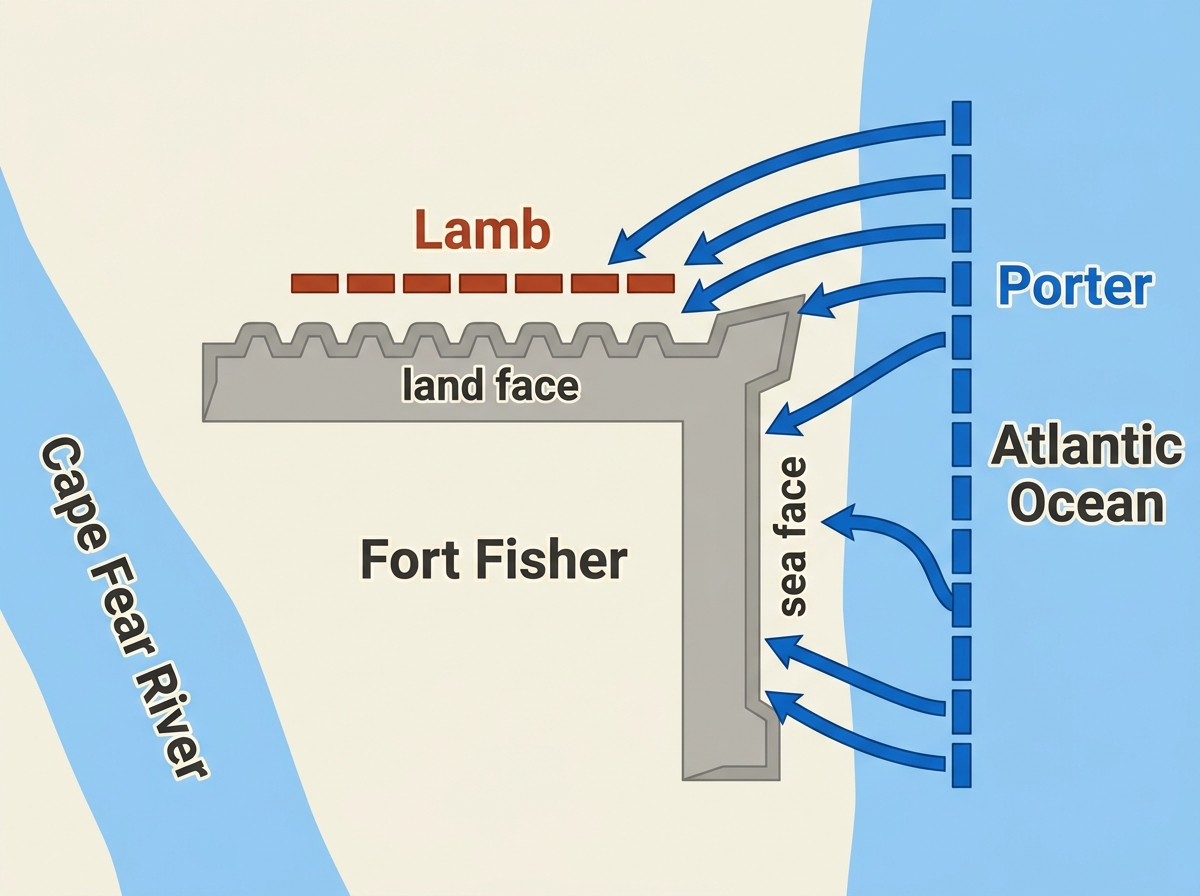
By the time the bombardment lifted on the afternoon of the fifteenth, the land face that was supposed to stop an assault had almost no working artillery left, and the garrison that was supposed to man the walls had been ground down to roughly 1,200 fit men. Colonel William Lamb (South) had built a fort that could shrug off any single cannonball, and watched it beaten not by one great blow but by three days of patient, accurate, unanswerable fire. Then the guns went quiet, which on a battlefield is never a mercy. It meant the men were coming.