It went into legend almost immediately as “the miracle on Missionary Ridge,” the result so improbable that nobody quite knew how to explain it. A feint meant only to pull pressure off a stalled flank had, against the plan and without orders, stormed a fortified ridge and routed a veteran army off the top of it. The generals’ design had failed at both ends; it was the men’s revenge and their refusal to die pinned at the bottom that won the day. Grant himself never fully claimed it. He had ordered the base. His army took the mountain.
For the Confederacy, the cost was not just bodies but cohesion. Gen. Braxton Bragg (South), who had besieged this army at the edge of victory in September, had now lost it the chance and lost his command with it: within days he asked to be relieved, and in early December his resignation of command was accepted. His Army of Tennessee, the South’s main force in the West, was wrecked as an offensive weapon and driven clean out of the state. The siege of Chattanooga, the slow strangulation that had begun after Chickamauga, was lifted for good. The Union now held the city and all of eastern Tennessee, permanently.
The Door to the Slave South
And that is where slavery and the railroad come back into the story, because they are the reason the battle mattered beyond Tennessee. Chattanooga was the rail gateway into the Deep South, and the charge up Missionary Ridge cracked that gateway open. The city became the supply and logistics base for the campaign that came next: Maj. Gen. William T. Sherman’s drive on Atlanta in 1864, and from Atlanta his march through Georgia, the campaign that broke slavery across the Deep South by sheer force, freeing the enslaved as the army passed. That march begins logistically here, at Chattanooga, on the ridge. The men who cried “Chickamauga!” going up the slope were avenging a defeat in a war whose purpose, by late 1863, was the destruction of slavery itself. The ridge was the last barrier between the United States Army and the plantation interior. They went over it.
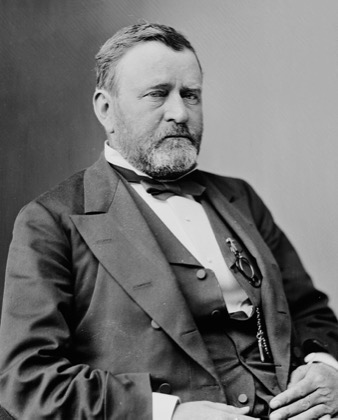
There was one more consequence, and it shaped the rest of the war. Missionary Ridge was Grant’s last battle in the West. A few months later, in March 1864, he was promoted to lieutenant general (a rank above any he had held, the new top of the army) and given command of all the Union armies, general-in-chief. The man who had taken Vicksburg and now broken the siege of Chattanooga went east to finish the war against Lee. The road that ended at Appomattox ran through this ridge.