The fleet that came in the spring of 1758 was enormous, the largest force Britain had ever sent against a single point in North America. Major General Jeffery Amherst (British) held overall command on land. The sea belonged to Admiral Edward Boscawen (British) and the Royal Navy, some forty warships and a hundred and fifty transports carrying around fourteen thousand soldiers. Boscawen held joint command of the fleet and the transports, and it was his ships that would seal the harbor and, in the end, send a boarding party into it in the dark. Among Amherst’s brigadiers was a thin, red-haired, restless young officer named James Wolfe (British), thirty-one years old, who would be given the hardest job of the campaign. The defenders, under the French governor, Drucour (French), numbered something like six to seven thousand counting the marines and sailors off the warships in the harbor. The French had the walls. The British had to get ashore first, and getting ashore was the part that nearly did not happen.
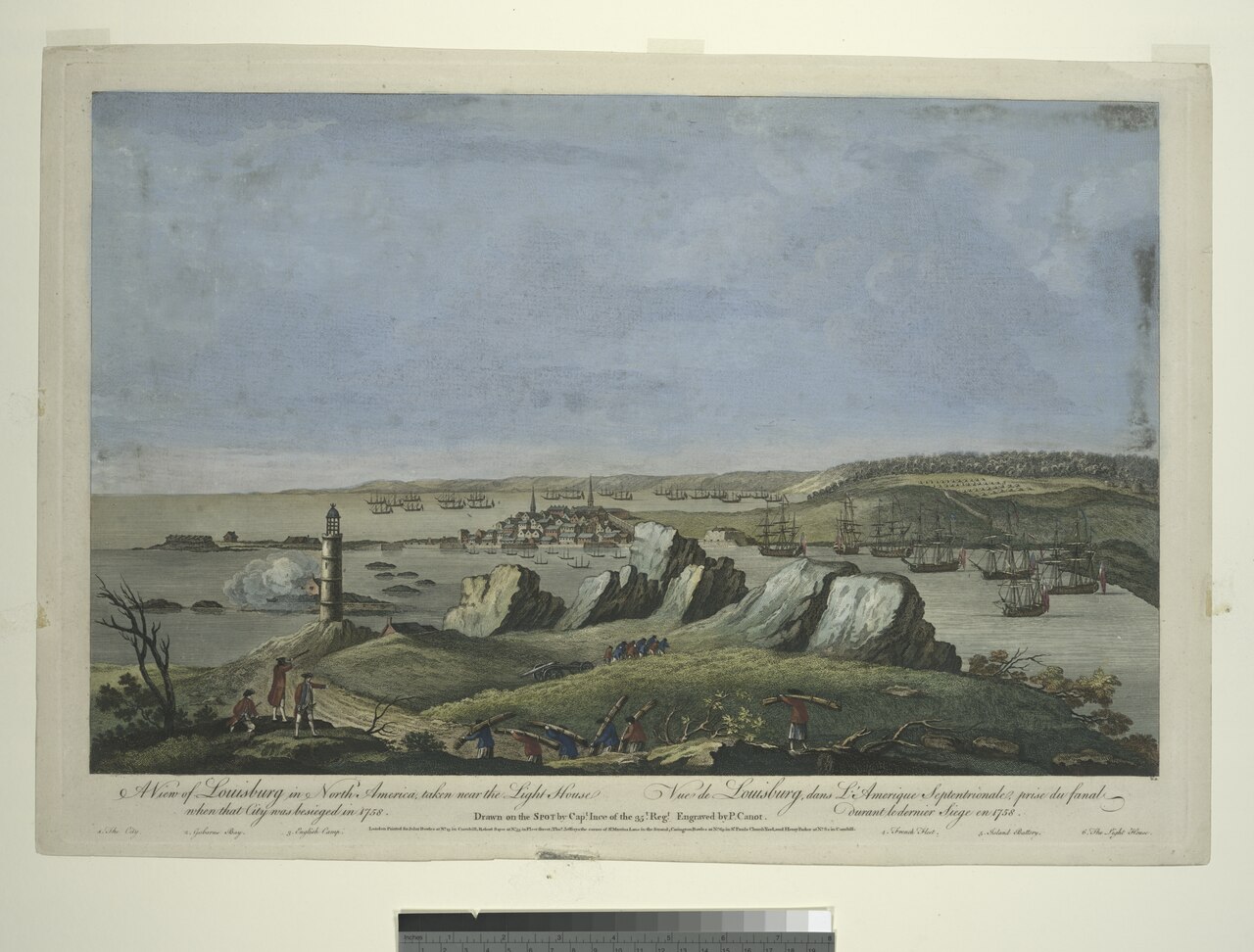
The chosen landing place was Freshwater Cove (the French called it the Anse de la Cormorandière), a few miles down the coast from the fortress. The French knew it was a likely spot and had prepared for it, digging entrenchments along the shore and planting cannon to sweep the beach. On the morning of June 8, 1758, Wolfe led the assault division in toward the rocks: the grenadiers (the army’s biggest, hardest assault troops), the light infantry (picked marksmen trained to move fast and loose), rangers, and Highlanders, all packed into open boats and rowing through a heavy Atlantic surf. As they came into range the French opened up with grapeshot (clustered iron balls that turned a cannon into a giant shotgun) and musket fire, sweeping the boats. Men were hit. Boats were swamped in the breakers. The fire was murderous, and the landing was going nowhere.
Wolfe saw it failing. He raised his hand and signaled the boats to sheer off, to pull back from the slaughter before the whole division was wrecked in the surf. That should have been the end of it for the day.
It was not, because of a few boats on the far edge of the line. Three boatloads of light infantry, either not seeing the recall signal in the chaos or choosing not to, kept going. They drove their boats toward a craggy little point of rocks where a jut of land happened to shelter the water from the French guns, a slot of dead ground the defenders’ cannon could not reach. They came in through the breakers, scrambled out onto the rocks, and got a foothold ashore, out of the killing fire. Wolfe saw what they had found. Instead of calling everyone back, he flipped the whole plan and funneled the rest of his division toward that sheltered patch of rock. More men got ashore. Then more. Once the British had a solid body of troops on land and working along the shore, the French entrenchments were outflanked, hit from a direction they could not hold, and the defenders fell back to the fortress. A landing that had been one signal away from collapse had instead won the beach. The young brigadier who had read the slot of rock and turned a failing assault into a foothold would, a year later, die taking Quebec. The siege could begin.