With the army ashore, the work became methodical and grinding, the textbook business of an eighteenth-century siege. You did not storm a fortress like Louisbourg head-on if you could help it; you strangled it. The British dug trenches and zigzag approaches, hauled their heavy guns forward, and built batteries (clusters of heavy cannon) closer and closer to the walls, tightening the ring week by week. Boscawen’s fleet sealed the sea, so no help and no escape could come by water. Inside, Drucour mounted a far stiffer defense than the fortress had managed in 1745, sending out sorties (armed raids out from the walls) and trading fire, but the math of a siege is patient and cruel, and it ran against him.
One of Wolfe’s first moves set the pattern. On June 12 he took a detachment around to Lighthouse Point, the high ground across the mouth of the harbor, and planted batteries there. From that perch the British could fire down not only on the fortress defenses but on the French warships moored in the harbor below. Those ships were Louisbourg’s other shield. Drucour had ordered them to stay put in the harbor, over the objections of their own captains, on the theory that their guns would help hold off the British. Instead, penned in and unable to maneuver, they became targets.
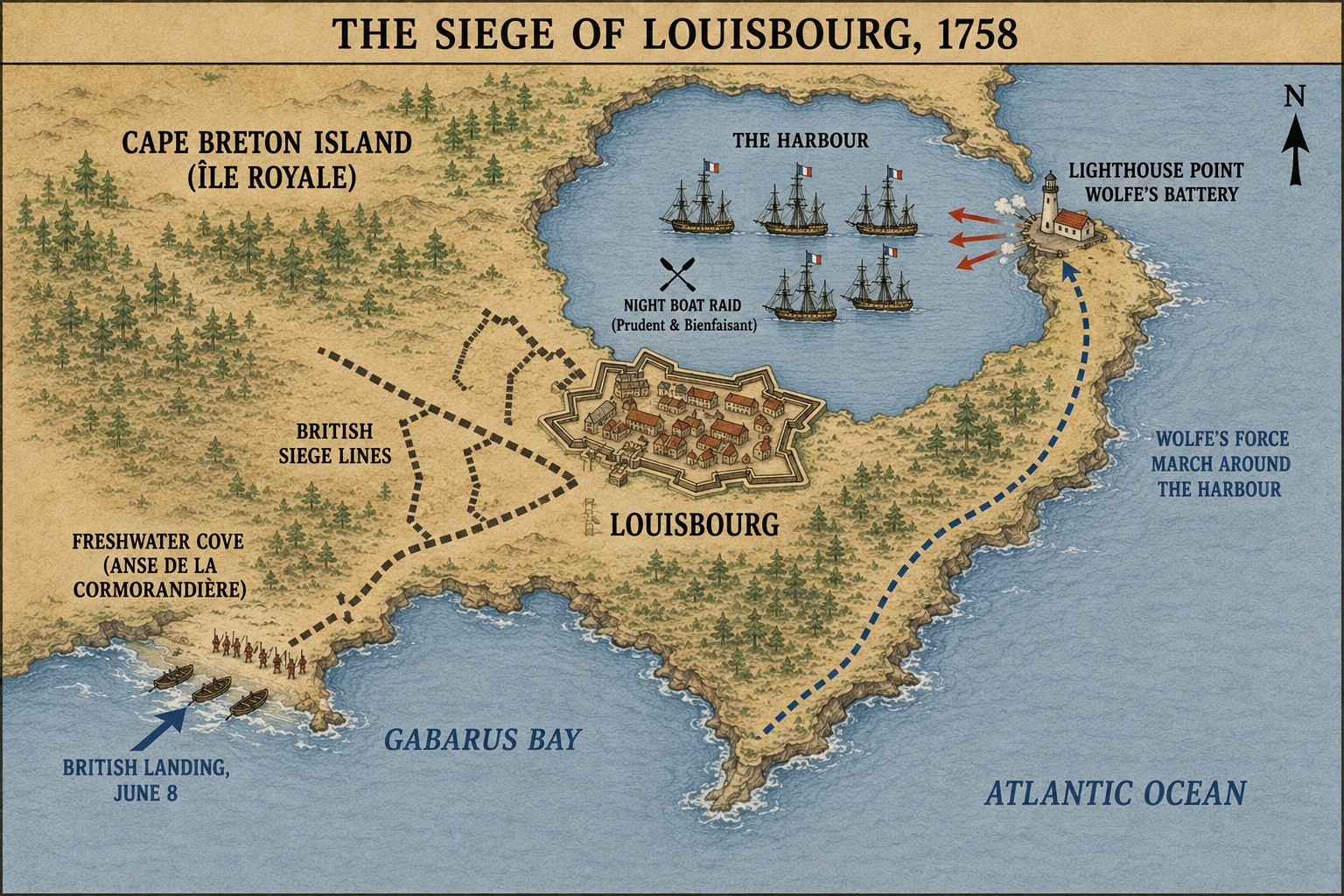
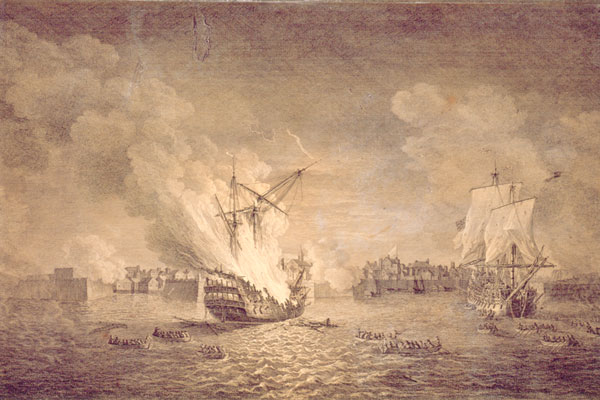
The harbor squadron died over a few days in late July, and it died by fire. On July 21 a British mortar shell arced down from Lighthouse Point and set the sixty-four-gun Célèbre ablaze. The flames jumped from ship to ship in the crowded anchorage, catching the Entreprenant, a seventy-four-gun ship of the line, and the Capricieux. By the time the fires burned out, three French ships of the line were gone. Two days later, on July 23, British heated shot (cannonballs deliberately fired red-hot to start fires) ignited the King’s Bastion, the great barracks block at the center of the fortress that served as its headquarters. It was the heart of the place, and it burned in full view of the defenders and the town, the headquarters of the strongest fortress in French North America going up in flame while the British guns kept firing. Then, on the night of July 25, Boscawen sent a Royal Navy cutting-out party rowing quietly into the harbor in the dark, to board the two remaining major warships. They captured the Bienfaisant and set the Prudent on fire. The French fleet at Louisbourg had ceased to exist, and with it went the harbor’s last defense and any hope of relief by sea. (A young sailing master named James Cook, years before his Pacific voyages made him famous, was on hand and noted the night’s work in his log.)
Inside the walls, the defense became a matter of stubbornness against the inevitable. The French governor’s wife, Madame Drucour, took her own part in it: by the account of her husband’s biographer, each day throughout the siege she fired three guns from the ramparts to hearten the troops. But the British batteries were now hammering the town from the land and from across the harbor, the walls were breaking up under sustained fire, and there was no relief coming. With the harbor squadron destroyed, Louisbourg had no fleet to defend its waterfront and no chance of rescue by sea, and that, as much as the breaking walls, is what ended the siege. Drucour had run out of fortress to defend.