Quebec, the capital of New France, fell to the British in September 1759. After the British army climbed the cliffs above the St. Lawrence River and beat the French on a farm field called the Plains of Abraham, the city surrendered, and both opposing generals, James Wolfe (British) and the Marquis de Montcalm (French), were dead of their wounds within a day of each other the following morning. The British had the prize. What they did not have was a way to keep it through a Canadian winter.
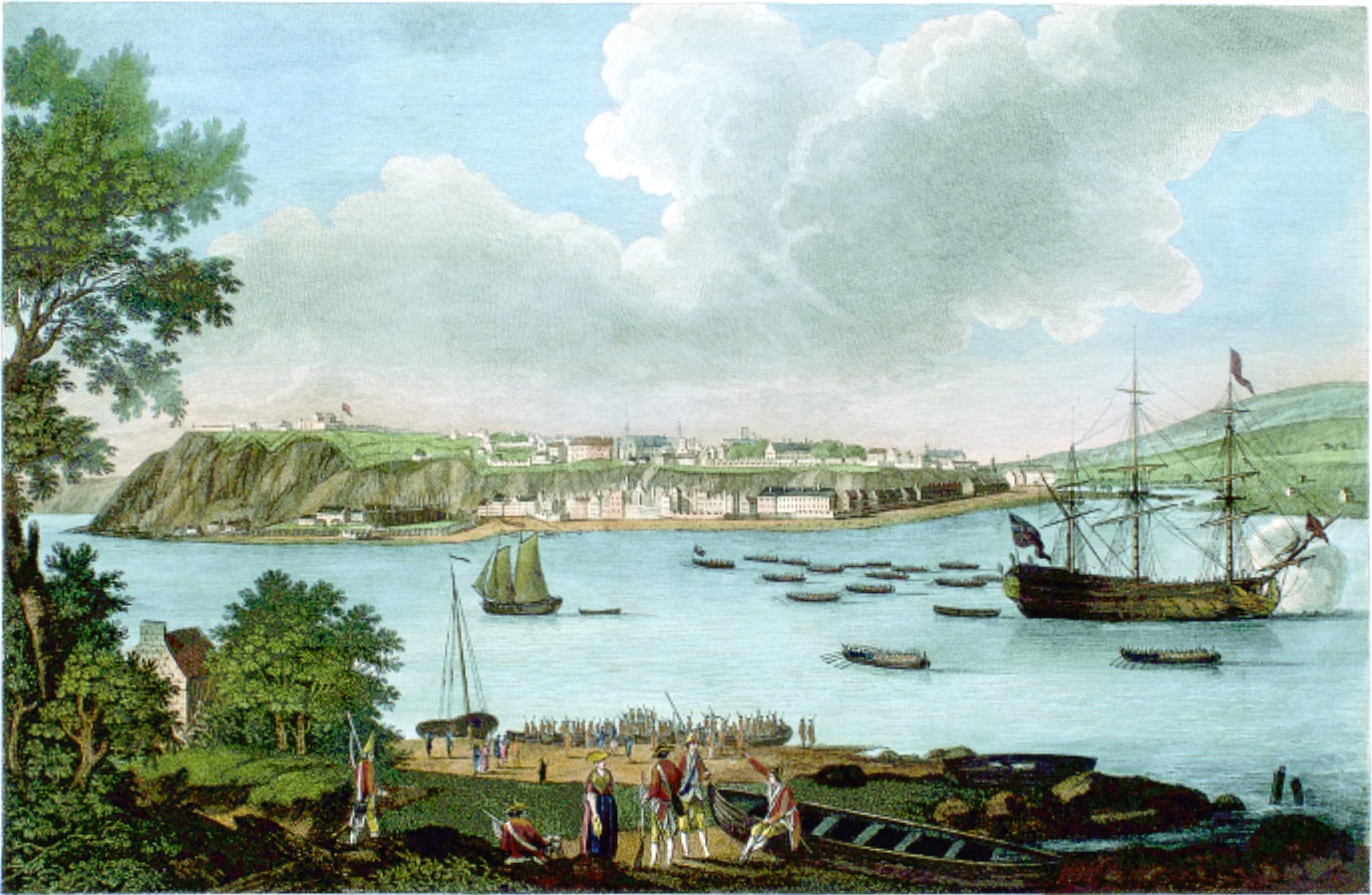
The man left holding it was Brigadier General James Murray (British), and the army he held it with came apart in his hands. He had started the winter with something like six to seven thousand men. The city he had just helped capture was a wreck, smashed by the British bombardment that took it, so there was little intact housing, and his men spent the deep cold in makeshift, exposed shelters. There was not enough firewood. Worse, there was no fresh food. The garrison (the body of soldiers stationed in a place to hold it) lived almost entirely on salt provisions (meat preserved in barrels of brine, which keeps for months but carries none of the nutrition fresh food does), and on that diet the soldiers came down with scurvy, the wasting disease that sets in when the body is starved of what we now call vitamin C. It spread until there was barely a man in the ranks, even among those still counted fit for duty, who was wholly free of it.
The toll was staggering, and no enemy fired a shot to cause it. Over the winter about a thousand of Murray’s men died. Two thousand more were sick. By the time the snow began to go in the spring of 1760, the garrison that had taken Quebec had been cut roughly in half: Murray had perhaps four thousand men in any condition to fight, and many of those were weak. He was also broke, reduced to raising money on the personal promissory notes of two of his senior officers, and his soldiers, cold and idle and miserable, fell into drunkenness and theft that he had to put down with special measures. He was holding the most important fortress in New France with a sick, shrinking, half-mutinous army.
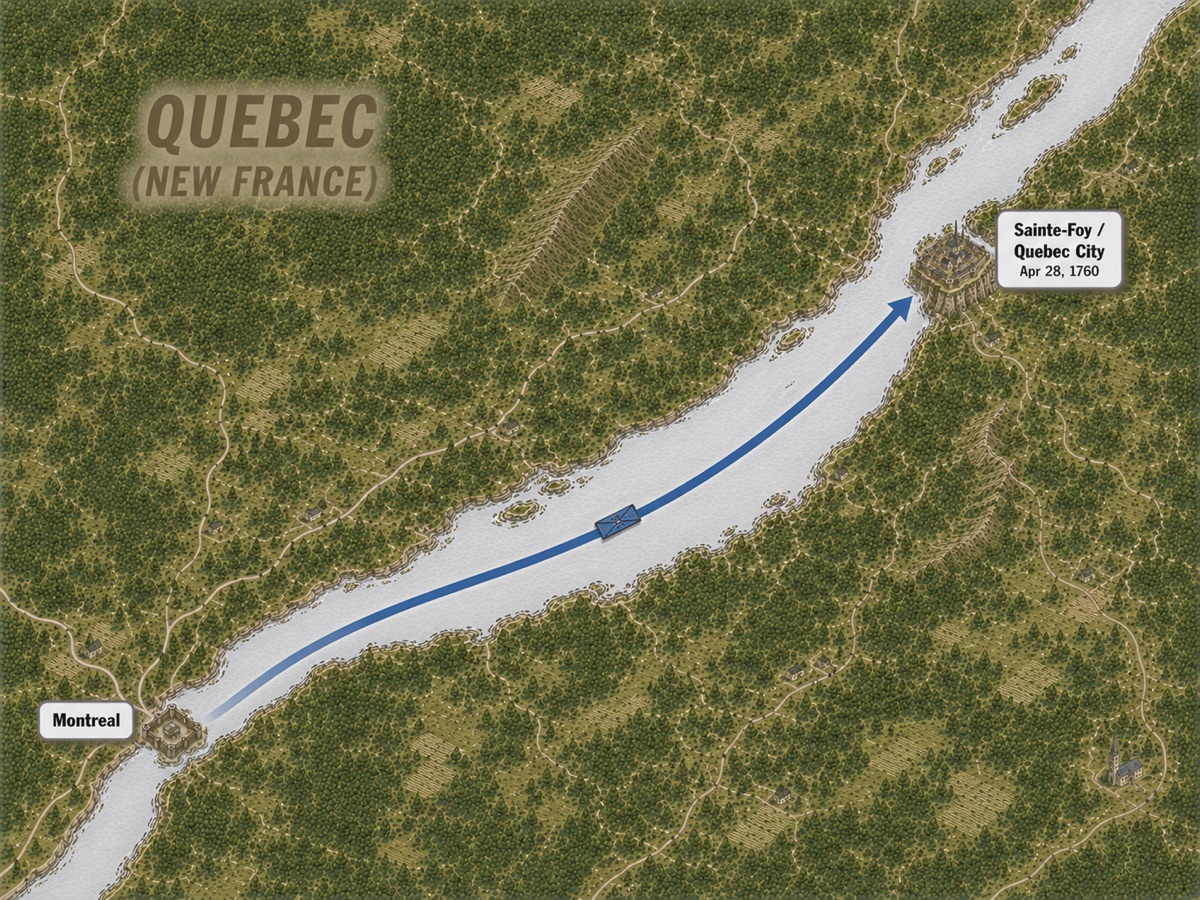
Two hundred miles up the river, the French were not finished. Quebec had fallen, but the French field army had not been destroyed; it had pulled back to Montreal under Montcalm’s successor, the Chevalier de Lévis (French), and through the same brutal winter that was killing Murray’s men, Lévis rebuilt it. He tightened discipline, got uniforms and equipment distributed, and arranged provisions so the army could move the moment the season allowed. The plan was simple and dangerous: march down the river before Murray could be reinforced, and take Quebec back. New France was not yet lost. If the French could retake the capital and hold it until their own ships came up the thawing river with siege guns and reinforcements, the conquest of 1759 could be undone.
On April 20, 1760, before the St. Lawrence had even fully thawed, Lévis marched out of Montreal at the head of about seven thousand men. More than half were French regulars (the king’s professional, full-time soldiers), the rest were Canadian militia, plus a contingent of about three hundred Indigenous allies. The Indigenous contingent was small against the whole, and by contemporary accounts its men were present at the campaign but took little or no part in the main battle that followed. The Dictionary of Canadian Biography calls what came next "a terrible march through slush and mud." Eight days later his army stood outside Quebec, on the western approaches to the city, on the same heights where Montcalm had lost it.
The BattlesThe 1759 conquest the French were trying to reverse