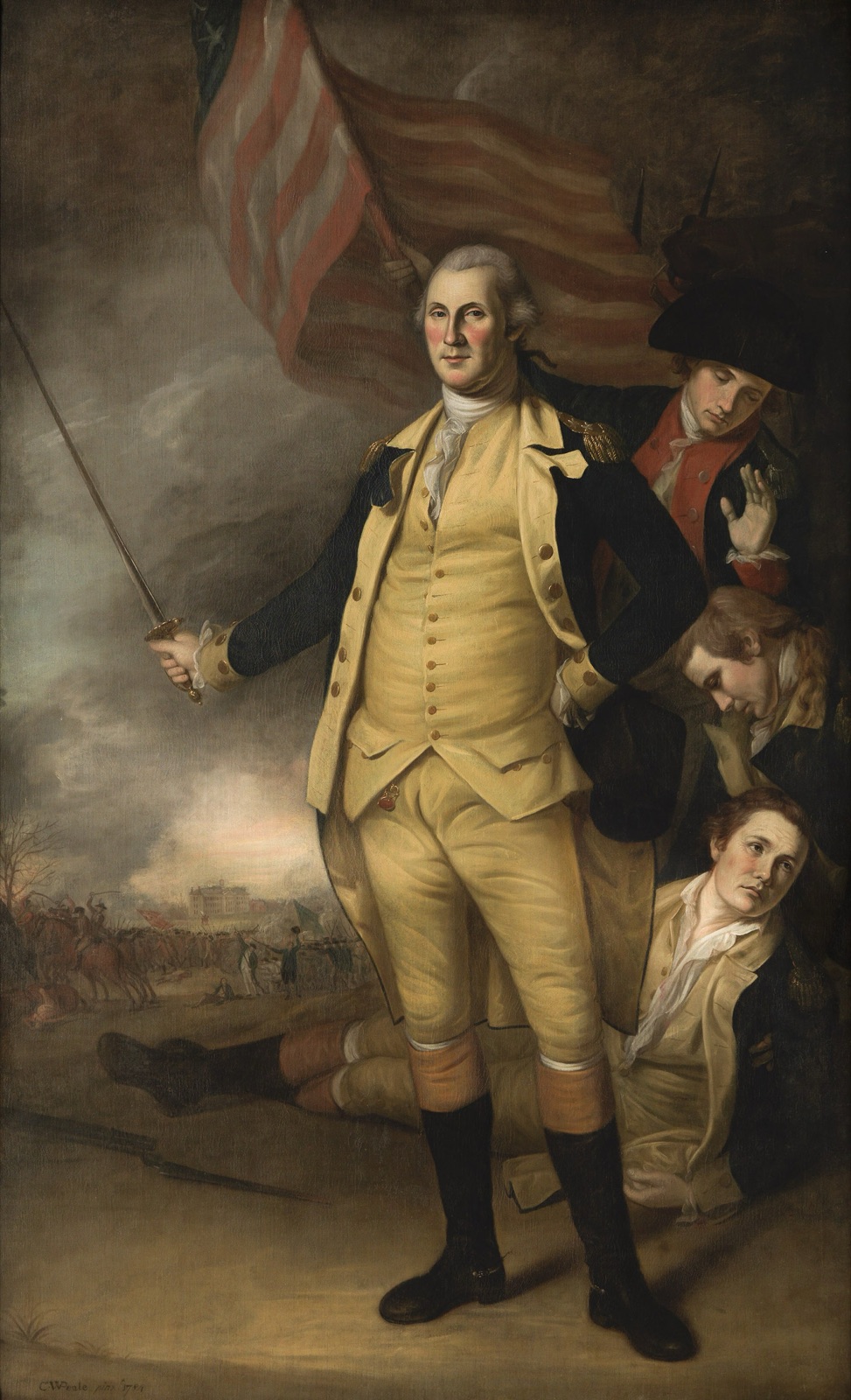
By mid-morning on January 3, 1777, the Battle of Princeton was over, and the American army that had won it could barely stand up. In ten days, from the night crossing of the icy Delaware on December 25 to the cannon outside Nassau Hall, George Washington's Continental Army (the rebels' regular army) had fought three actions: the destruction of the Hessian garrison at Trenton, the stand at Assunpink Creek, and now Princeton. The men had been marching or fighting for roughly forty hours without rest. The great prize beyond Princeton, the British army's £70,000 pay chest sitting up the road at New Brunswick, had to be let go; Henry Knox (the artillery chief) and Major General Nathanael Greene (one of Washington's senior generals) helped talk Washington out of reaching for it with an army asleep on its feet. Instead the column marched north, three days through Somerset Courthouse and Pluckemin, into the hills behind the Watchung Mountains, and on January 6 it went into winter quarters (the fixed camp where an eighteenth-century army sat out the cold months, when marching and supply were nearly impossible) at Morristown, perched where it could threaten the flank of any British move across New Jersey.
The bill for the morning's work was lopsided, but exactly how lopsided depends on whose arithmetic one trusts. The American loss was about 70 to 100 men: Washington reported "about twenty five or thirty privates" killed, with several officers and roughly 40 wounded, and the officers lost were some of the army's best. The British figures genuinely conflict, and the conflict is part of the story. The official return (casualty report) of General William Howe, the British commander in chief in America, admitted 18 killed, 58 wounded, and around 200 missing; Washington claimed about 100 British killed and a total loss near 500. Modern accounts settle somewhere between 270 and 450 in all, and the firmest single number is the prisoners: about 230 to 300 captured, including the 194 who surrendered in Nassau Hall. The fog reached even Washington's own report. His letter to Congress mourned "Cols. Hazlet and Potter" among the dead, but Colonel Potter had not died; in the chaos of a one-hour battle and a forced march, the commander in chief listed a living man among his fallen, and the error sat in the official record. On the field itself the two sides were buried together: the common grave on the battlefield holds 15 Americans and 21 British. One of the British dead got particular care. Captain William Leslie of the 17th Foot, son of the Earl of Leven, died of his wounds, and Washington ordered him buried with military honors at Pluckemin, at the request of Dr. Benjamin Rush (a Philadelphia physician, a signer of the Declaration of Independence, and a friend of Leslie's family).
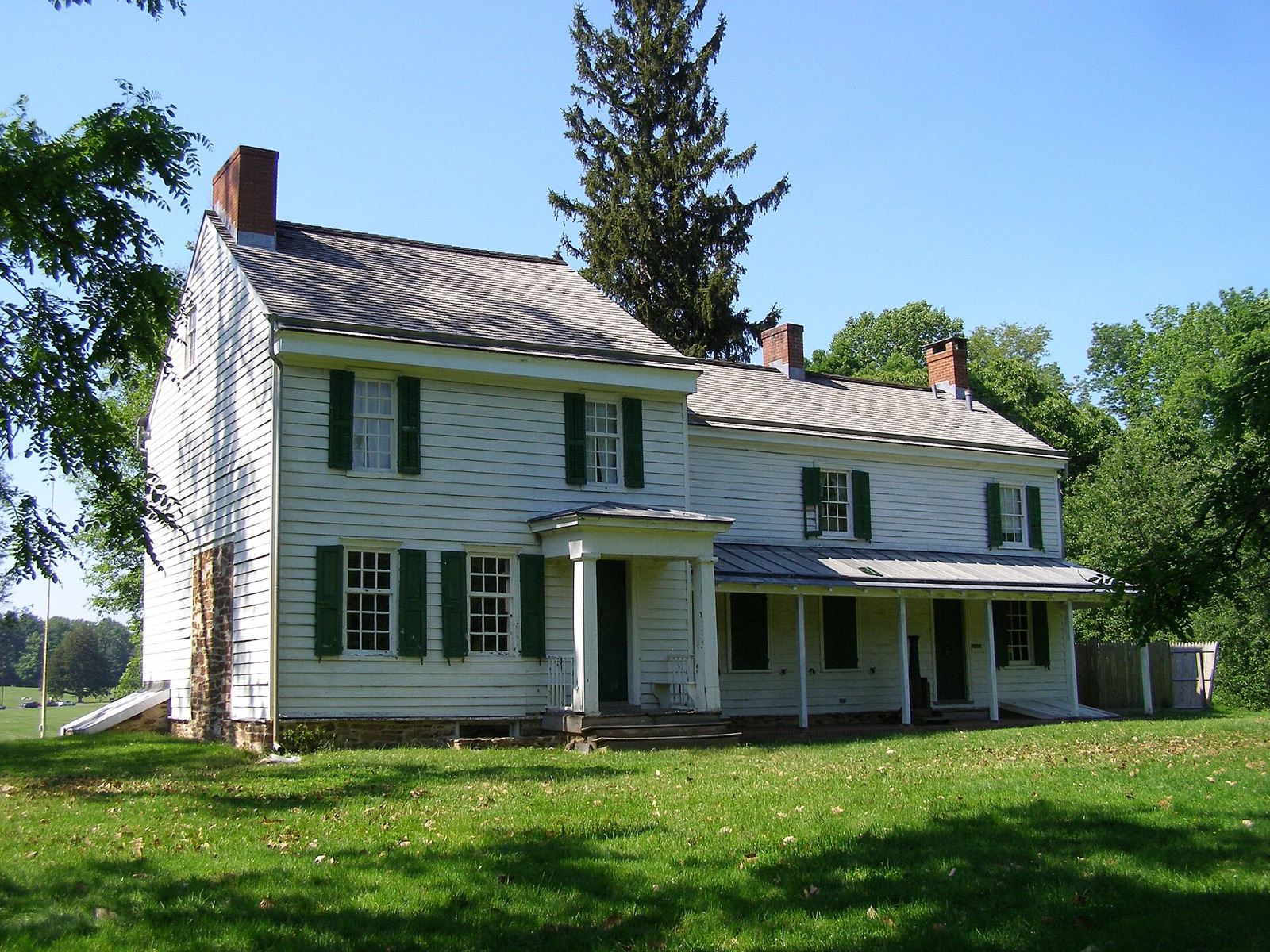
Rush had a worse vigil to keep. Brigadier General Hugh Mercer, bayoneted in the orchard after refusing to surrender, had been carried to the Thomas Clarke farmhouse at the edge of the battlefield, and there, with Rush attending him, the Scottish doctor-turned-general fought his wounds for nine days. He died on January 12, 1777. Philadelphia buried him, and the crowd at the funeral procession was reported at thirty thousand, a number that says less about head counts than about what the ten days had come to mean.
Because the meaning, by then, was unmistakable. Howe pulled the British outpost line all the way back from the Delaware (after Trenton and Princeton, any post strung out alone across New Jersey was a meal Washington could eat before help arrived) to a cramped corridor around New Brunswick and Perth Amboy, abandoning nearly all of New Jersey for the winter; the province that had been conquered in November was given up in January. Through the rest of the winter the Forage War ground on, militia and Continental detachments ambushing British foraging parties (detachments sent out to gather food and hay) in dozens of small fights, bleeding the garrison and penning it near its supply depots. The aura of British invincibility, intact since the summer, was punctured. Recruiting for the new 1777 army, hopeless in December, became possible. Washington saw it within days, writing that "The Militia are taking spirit and I am told, are coming in fast from this State." Knox, writing to his wife, looked up from the same facts to a larger claim: "I look up to heaven and most devoutly thank the great Governor of the Universe for producing this turn in our affairs." Even observers with no love for the cause registered the swing. Nicholas Cresswell, an English diarist in Virginia, wrote it down that same January.
The minds of the people are much altered. A few days ago they had given up the cause for lost. Their late successes have turned the scale and now they are all liberty mad again.
On December 24, the Continental Army was a dissolving force of a few thousand men on the wrong bank of a frozen river, its enlistments expiring in a week, its commander privately writing that the game was pretty near up. By January 6 that same army had destroyed a garrison at Trenton, held a riverbank against Cornwallis, marched around a British army in the night, broken a British brigade in open fields at Princeton, and settled into hill country winter quarters it would hold while the British clung to a sliver of the state. The British historian Trevelyan later delivered the famous judgment that hardly ever have so few men, in so short a time, produced greater and more lasting effects on the history of the world, and for once the grand Victorian sentence is roughly fair. There is even a tradition, reported through later accounts, that Cornwallis himself, at the dinner after he surrendered his army to Washington at Yorktown, Virginia, in 1781 (the British defeat on the Chesapeake Bay that effectively ended the war), told Washington that his brightest laurels would come from the banks of the Delaware rather than the Chesapeake. Whether or not the toast was ever spoken, the judgment in it holds. The army that should have died in December was still in the field in January.