The humanity of our brave Soldiery who scorned to take the lives of a vanquished foe, calling for mercy reflects the highest honor on them and accounts for the few of the enemy Killed on the occasion.
That was Anthony Wayne (American), making the restraint the headline of his own report to Washington the day after Stony Point fell. The men of the Corps of Light Infantry had stormed a defended work in the dark, with Paoli and Old Tappan to avenge, and had given the surrendering garrison quarter, and both sides remarked on it and said so in writing.
One British voice said the same, from the other side of it. Commodore Sir George Collier (British), who had commanded the naval side of Clinton's operation that spring, wrote in his private journal that the rebels "had made the attack with a bravery they never before exhibited, and they showed at this moment a generosity and clemency which during the course of the Rebellion had no parallel." That is the meaning of the night, and it is worth being precise about. There was no massacre; the garrison asked for mercy and received it; the official British dead came to about twenty, not the heaps a storming was expected to leave, even though American accounts at the time claimed three times that number. The low number is the one the record supports, and the low number is exactly what makes the story true. An army that had been bayoneted in the dark, handed the chance to do the bayoneting, chose discipline.
The credit fell hardest on a Frenchman. Lieutenant Colonel François-Louis de Fleury (American), the volunteer engineer who had led the south column's van and been judged first into the works, was voted a silver medal by Congress. It was the first of the war's medals actually struck, made in Paris, and the only one given to a foreign junior officer. Major John Stewart of Maryland (American), who had led the north column's van, got the war's other silver medal for Stony Point. And Wayne got a gold one. In all, Congress voted thanks to Wayne and the corps and three medals out of only about a dozen it awarded in the entire war, the only single battle that produced three. It ordered the captured stores and ordnance, appraised at more than $150,000 in the inflated paper money of the day, divided among the troops as prize money. Across the states the storming was celebrated as proof of something the army had needed to prove: that the Continental line drilled to Steuben's standard could carry out the hardest mission in the manual, a silent night escalade (an assault that goes over a fortification's walls instead of through them), and carry it out better, and more humanely, than the British had managed at Paoli.
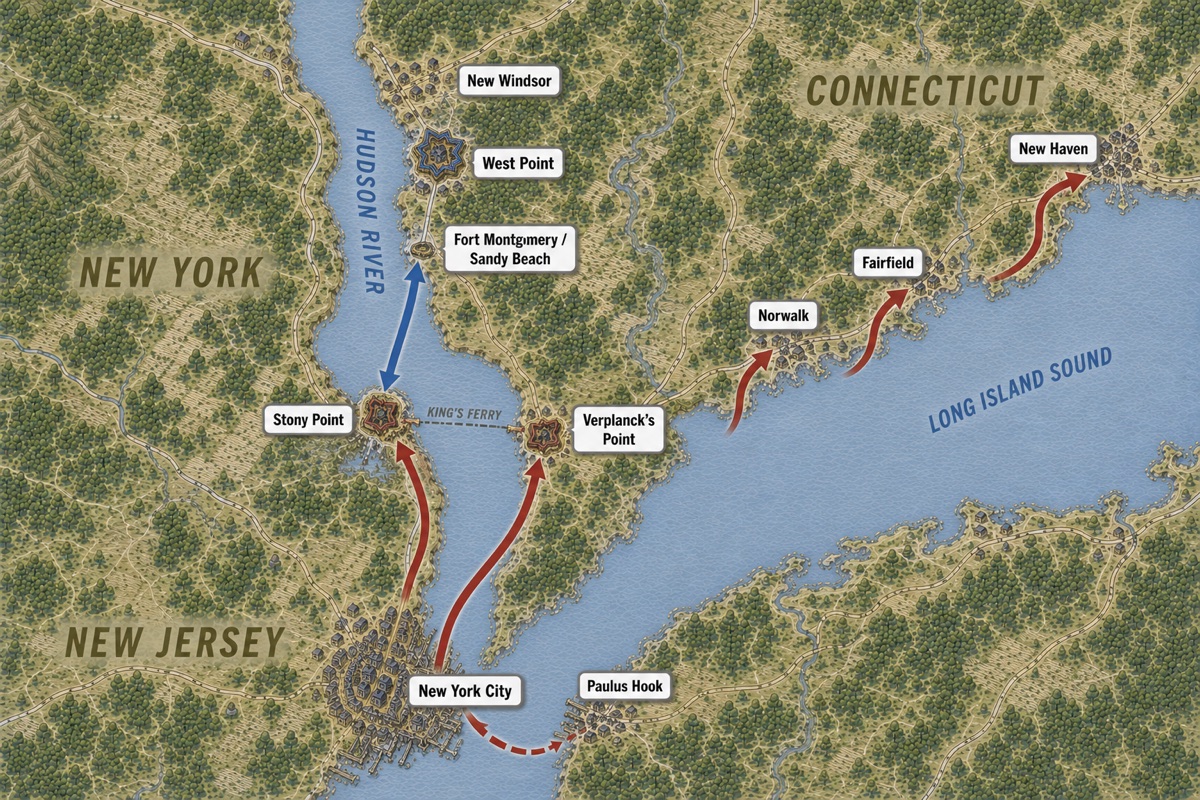
Off the fieldThe army that learned to do this, told wholeThen Washington gave the place away. He rode down to look at the captured works on July 17 and decided what he had suspected before he ever ordered the attack: that holding Stony Point would tie down more than fifteen hundred men under the guns of the Royal Navy, sitting exposed on the same rock where Johnson had just been taken. It was not worth a garrison. So the army hauled off the captured artillery and stores, razed the works, and withdrew on July 18. The British, under Brigadier General Thomas Stirling (British), walked back in and reoccupied the point on the 19th, three days after losing it. The raid's logic held all the same: take the trophy, keep nothing the enemy could besiege. And the rest of it unwound the way Washington had bet. Clinton's whole Hudson thrust had bought him nothing. Washington never offered the open battle Clinton had hoped to bait, West Point was untouched and stronger every month, the Connecticut raids were broken off, and in October Clinton pulled his men out of both Stony Point and Verplanck's Point and gave up King's Ferry for good. The year in the north closed as it had opened: stalemate, with the war's momentum draining away to the south.
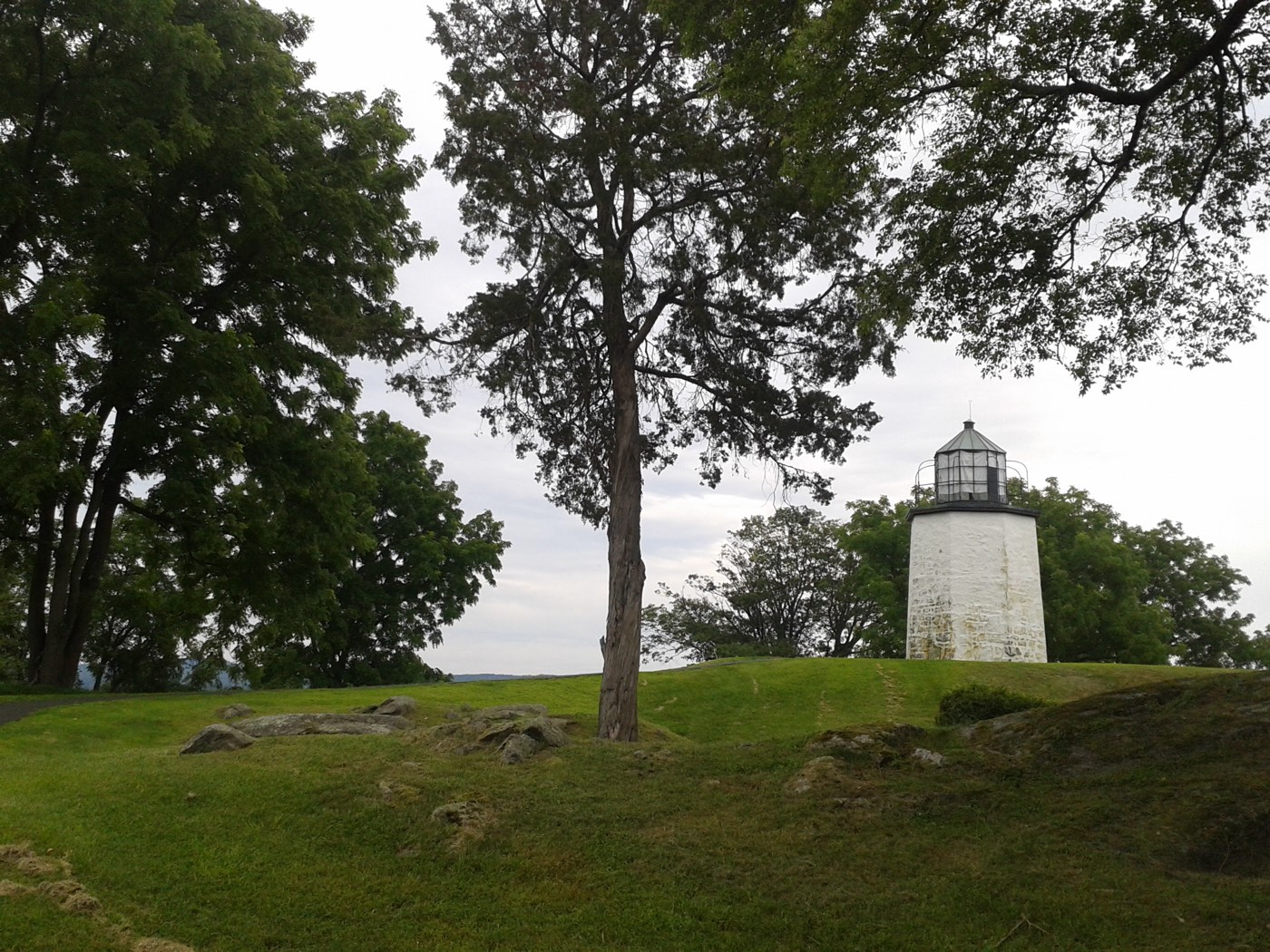
The clearest measure of what the night meant was that other officers copied it. One month later, on August 19, 1779, Major Henry Lee (American) ran a similar midnight bayonet raid against the British post at Paulus Hook, in New Jersey, in the open pattern Stony Point had set: pick your men, go in silent, take the works with the bayonet. Stony Point had become a model. And the place itself is still there. The point that the light corps stormed in the dark is a state historic site now, with the Stony Point Lighthouse standing on it, built in 1826 and the oldest lighthouse on the Hudson, looking down from the rock that the British once called impregnable and held for three days.