The job color was hired to do
For about four hundred years, color in a European painting was a servant, and everybody knew its duties. Its first job was to tell you what things were: this fabric is blue, this apple red, this cheek pink. Painters even had a word for that, local color, meaning the actual settled color a thing is when you name it, the green of grass, the brown of a table, before any trick of light gets to it. Color’s second job was to fake roundness. By easing a hue from light into shadow, a painter could make a flat smear of paint swell into an apple you feel you could pick up. Color described, and color modeled. That was the whole of the assignment, and for four centuries it never came up for review.
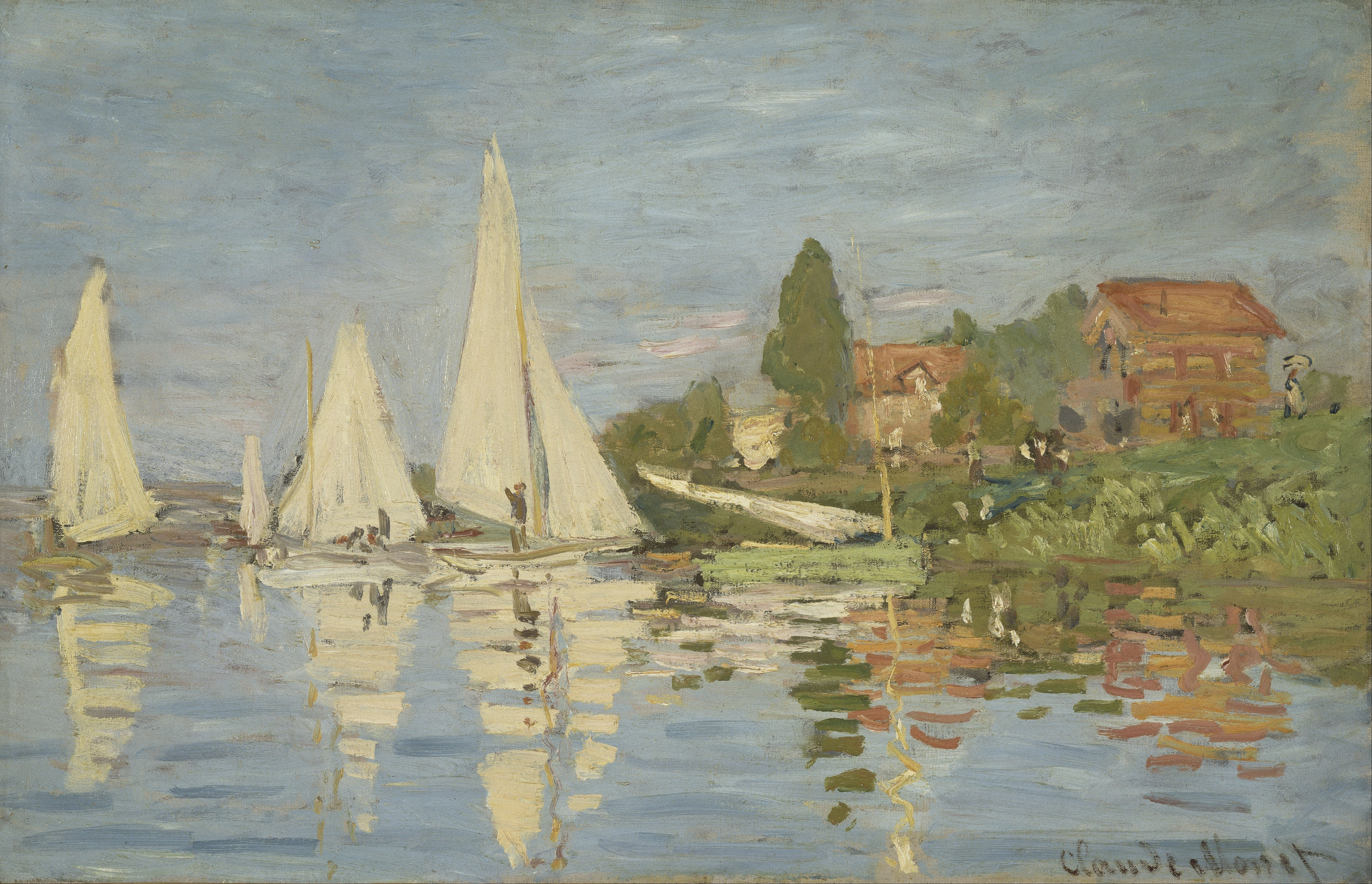
Even the great rule-breakers of the generation just before our story were still loyal to it. The Impressionists, working in France from the 1870s, had done something that looked radical at the time: instead of mixing a tidy brown on the palette, they shattered a scene into thousands of small bright separate touches of pure color and let your eye blend them at a distance. It feels like a revolution, and in handling it was. But look at what those touches are for. They are chasing real light, the exact glitter of sun on a river at eleven in the morning, the specific blue a shadow turns on snow. The Impressionists broke color into pieces in order to describe light more truthfully than anyone ever had. They sped color up; they never let it off the leash.
A face was never, ever green
So here is the rule, stated plainly, because the whole movement is one move against it: a painter could be as bold, as bright, as broken-up as the Impressionists, and color still answered to the world. You did not get to paint a thing a color it was not. A face was some shade of flesh. A tree trunk was some shade of brown. The sky was not, under any circumstances, pink because you felt like it.
And then, over a few weeks in the summer of 1905, in a fishing port most people had never heard of, two painters decided otherwise. A face could carry a green stripe. The stripe was allowed to mean nothing but itself. Everything that follows in this story, the studios, the scandal, the wild band, the fast death, turns on that single hinge.
