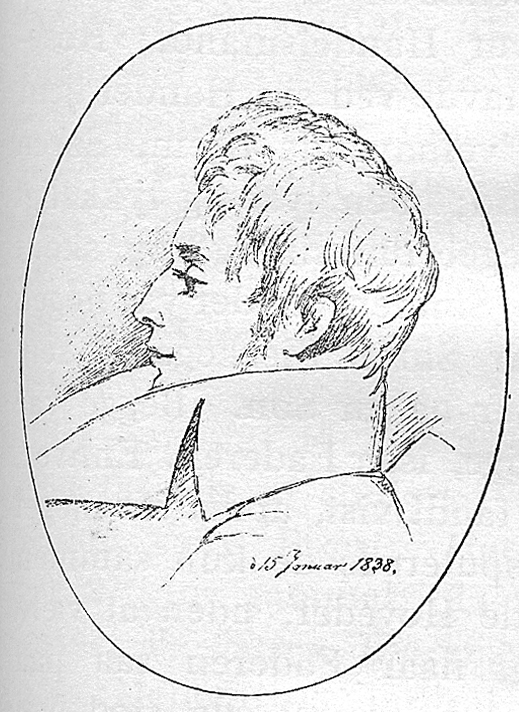
Kierkegaard
Hegel had built the grandest machine in modern thought, a single rational System that swallowed everything (nature, art, religion, the whole career of the human race) and showed it all to be one Spirit coming to know itself, with the individual person a passing moment in the universal. Kierkegaard looked at that and asked the one question the System could not answer: what about the man building it, who still has to get out of bed, choose a life, lose the woman he loves, and die? No one can live inside a system. A person can only exist, as this single individual, here, with these choices and no one able to make them on his behalf. From that complaint he wrote a strange, doubled body of work, half of it under invented names who argue positions he refuses to simply endorse, and mapped existence into three ways of living (the aesthetic, the ethical, the religious) that a person crosses not by learning but by leaping. He retold the story of Abraham raising the knife over Isaac as the scandal at the heart of faith, where the single individual is asked to suspend the moral law itself for something higher that reason cannot underwrite. He named the vertigo that comes with being free, the dizziness of freedom, and the quiet despair of a self that will not be itself. He died at forty-two in the middle of a furious public attack on the comfortable official Church. Almost no one read him in his lifetime. Then the twentieth century opened its eyes and found that the father of existentialism had been waiting.