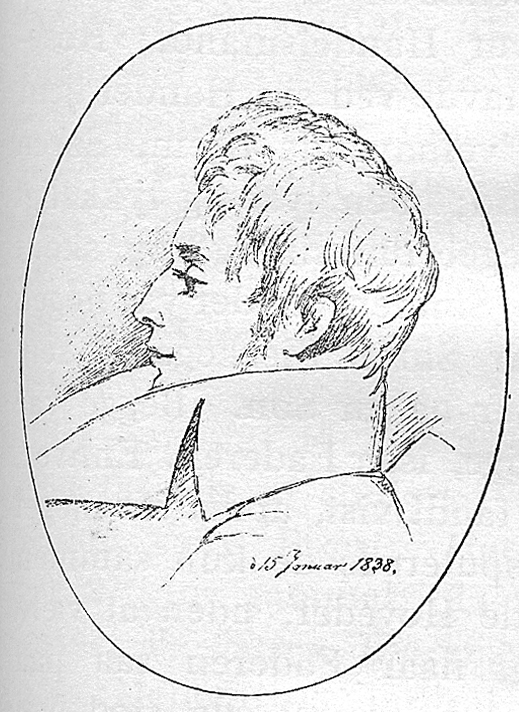
In the autumn of 1855 a thin, stooped man in his early forties, known to every street-corner in Copenhagen as a figure of fun, collapsed on the pavement and was carried to a hospital. He had spent his last strength on a one-man war against the Danish State Church, firing off pamphlet after pamphlet at the well-fed bishops who, he charged, had quietly turned the terrifying demand of the New Testament into a respectable Sunday comfort. He refused communion from a pastor of the official Church on his deathbed, on the ground that a state functionary in robes was not the apostle the gospel required. He died in November, aged forty-two, with the next issue of his attack still unprinted. The funeral nearly became a riot.
He had inherited a small fortune and spent almost all of it on himself, on coffee and carriages and the printing of his own books, books that mostly did not sell. He had been engaged, once, to a girl named Regine Olsen whom by every account he loved, and he had broken it off, and the breaking off ran like a wound through everything he wrote afterward. He published the strangest authorship of the century: enormous, brilliant, contradictory volumes signed not with his own name but with a parade of invented authors (a hermit, a silent knight, a man who climbs, a bookbinder), each arguing a way of seeing the world that the next one overturned. A reader could not simply take a doctrine from his hand. He had to choose for himself.
What he was fighting, underneath the bishops and the pseudonyms and the ruined engagement, was the most confident philosophy ever written. Across the water in Berlin, Hegel had constructed a System that claimed to comprehend the whole of reality as one rational process, history included, God included, every contradiction reconciled in a higher unity. The educated young men of Copenhagen were drunk on it. Kierkegaard thought it was a magnificent evasion. A System can explain everything except the one thing that matters most, which is what it is to be a particular person who exists, who cannot postpone the question of how to live until the philosophy is finished, who has to choose now, in the dark, with his whole life riding on it.
This is the story of that protest and the world it opened: the haunted Copenhagen childhood and the father's curse, the engagement he destroyed and never got over, the method of writing under masks, the three ways of being alive that a person leaps between, the claim that for the questions that count the most, truth is a matter of how a person holds a belief and not just what he holds, the retelling of Abraham and Isaac as the deepest puzzle in religion, the dizziness of freedom, and the despair of a self that cannot bear to be itself. Hardly anyone listened while he lived. He turned out to be the first existentialist, and one of the few thinkers who can still frighten a reader.
The break
Hegel's achievement has to stand at full height before the break from it lands. He had answered Kant's claim that reality-in-itself lies forever beyond knowledge by denying there is any sealed beyond at all: reality just is Geist, Spirit, a single mind-like process developing through the whole of history toward complete self-knowledge (the Hegel read). Every apparent contradiction is taken up and reconciled in a higher stage by the motion Hegel called Aufhebung. The particular (this person, that event) is a real but vanishing moment, true only as a part of the developing whole. World history is the slow growth of the consciousness of freedom, and philosophy's task is to comprehend the rational necessity running through all of it. It is the most totalizing vision in modern thought, and to the clever students of the 1830s it felt like the final word: from the standpoint of the System, everything is understood.
Kierkegaard's objection is almost embarrassingly simple, and it is aimed at a blind spot the System cannot see precisely because it is so grand. The philosopher who claims to survey the whole of reality from the standpoint of the Absolute is himself a particular man. He has a body, a lifespan, debts, a marriage he made or failed to make; he has to choose what to do tomorrow and he is going to die. None of that is contained in the System, because existence (actually being this finite person, in time, facing decisions) is not a thought to be comprehended but a condition to be lived. The pseudonym Johannes Climacus put the charge as a wicked image (rendered here in paraphrase): the system-builder erects a vast palace of thought and then lives, himself, in a shack beside it, because no one can actually move into a logical system and call it home.
So the move is a reversal of altitude. Hegel goes up, to the universal, the whole, world history, where the single person disappears into the process. Kierkegaard drives down, to den Enkelte, the single individual, the one who cannot be reasoned into the crowd or summed into a stage of Spirit. For the questions that decide a life (how shall I live, what do I love, do I believe) there is no surveying it from above and no doing it on someone's behalf. The objective thinker can approximate forever and stay perfectly safe. The existing individual has to commit his whole self with infinite passion to something he can never objectively secure, and that committing is a leap, an act of freedom that reason can prepare but never perform for him.
That is the break. Where Hegel mediates every opposition into a higher unity, Kierkegaard insists some things stay as either/or, a fork that goes one way or the other and cannot have both. Where Hegel makes the individual a moment of the universal, Kierkegaard makes the single individual, before God, capable of standing higher than the universal. Where Hegel makes faith a primitive picture of truths that philosophy later states clearly and absorbs, Kierkegaard makes faith a scandal that no philosophy can absorb, a relation reason cannot underwrite and the System cannot digest. After Hegel, philosophy looked like a finished cathedral. Kierkegaard walked back out into the street, alone, where a person still has to decide.
Chapter 1
The earthquake, the engagement, and the masks
Existence is not a problem to be solved by a system but a task each single person must live through, one choice at a time.
Søren Aabye Kierkegaard was born on 5 May 1813 in Copenhagen, the youngest of seven children, into a household ruled by his father. Michael Pedersen Kierkegaard had begun life as a poor shepherd boy on the bleak heaths of Jutland and had risen, through the wool trade, to wealth and early retirement, a stern, brilliant, intensely religious man who steeped his children in a severe Lutheran Christianity and in his own deep gloom. The family lived comfortably. It did not live happily. By the time Søren reached adulthood, five of the seven children and their mother were dead, and the father carried a conviction that the deaths were a punishment aimed at him.
The reason for that conviction is the episode Kierkegaard later called, in Danish, det store Jordskælv, the great earthquake. By the family's own account, which is how it must be told rather than as established fact, Søren discovered that his father, as a freezing, starving boy alone on the heath, had once stood up and cursed God for the misery of his life, and that the old man had carried the dread of that blasphemy ever since, certain that a curse lay over the house and that he would outlive and bury his own children as the price. To learn this as a young man, to be told that the family piety sat on top of a secret act of defiance against God and a father's lifelong guilt, shook Kierkegaard to the root. The inheritance he received from his father was money, a vast religious seriousness, and a melancholy he never escaped.
The second wound he gave himself. In 1837 he met Regine Olsen, then fourteen, and three years later, on 8 September 1840, he proposed and was accepted. By every sign he loved her. Within weeks he was convinced he had made a terrible mistake, not because his feeling had cooled but because of what he was: too melancholy, too inward, too marked by his father's guilt and by a vocation he could not yet name to be any woman's ordinary husband. On 11 August 1841 he broke the engagement, returned the ring, and (to spare her the worse pain of pitying him) deliberately played the part of a cold scoundrel so that she would despise rather than mourn him. She married someone else. He never married anyone. Regine moves like a hidden figure through the whole authorship, and Kierkegaard knew it, though the books are never simply a coded diary and do not decode that cleanly.
Out of that double inheritance came the strangest authorship of the century, and its strangeness was a method. Beginning with Either/Or in 1843, Kierkegaard published book after book not under his own name but under a gallery of invented authors: Victor Eremita (the victorious hermit) editing Either/Or, Johannes de silentio (John of the Silence) writing Fear and Trembling, Vigilius Haufniensis (the watchman of Copenhagen) writing The Concept of Anxiety, Johannes Climacus (John the Climber) writing the great philosophical works, and his mirror-opposite Anti-Climacus writing the most demanding Christian ones. These were not disguises to hide a shy man. Each pseudonym is a full character who lives out a particular way of seeing the world and argues it from the inside, and Kierkegaard refuses to step forward and tell the reader which one is right.
He called this indirect communication, and it follows directly from his quarrel with the System. A truth about how to live cannot simply be handed over like a fact about chemistry, because the reader has to take it up himself, choose it, stake his existence on it. To hand a person the answer is to rob him of the one thing that would make it his. So Kierkegaard stages the options as living human voices, lets each make its strongest case, and forces the reader into the position of having to decide between them with no author standing by to settle it. The aesthete in Either/Or is genuinely seductive; the ethical Judge who answers him is genuinely weighty; the book ends without a verdict from above, because the verdict is the reader's to pronounce by how he chooses to live.
His own life kept handing him the material. In 1845 a feud with a satirical Copenhagen weekly called The Corsair (which he had, through a pseudonym, half invited) turned into months of public mockery: the paper ran caricatures of his thin legs, his stooped back, his mismatched trouser-legs, until he could not walk the streets he loved without being jeered at by strangers and schoolboys. The man who had written about the single individual against the crowd was made, by the crowd, into its clown. And at the very end, in 1854 and 1855, he spent himself on the attack upon Christendom, a barrage of newspaper pieces and a pamphlet he wrote and funded himself, Øjeblikket (The Moment), charging that the cozy official Church had betrayed the New Testament by making faith easy and respectable. He wrote ten issues. He collapsed in the street before the tenth was printed, and died in hospital on 11 November 1855, forty-two years old, his fortune spent, his fight unfinished, and almost no one yet aware of what he had built.
Chapter 2
Three ways to be alive
A person does not drift from pleasure to duty to faith; at each border he must choose, and the choosing is the whole of it.
Kierkegaard maps human existence into three ways of living, which he calls spheres or stages: the aesthetic, the ethical, and the religious. The word stages is slightly misleading, because they are not rungs a person climbs automatically by getting older or wiser. They are whole orientations of a life, ways of organizing what a person lives for, and a person can be stuck in one forever. The later spheres take up and contain the earlier ones rather than simply leaving them behind, but to move from one to the next is not to learn more. It is to choose differently, to leap, to become a different kind of self. The three are the architecture under almost everything he wrote.
The aesthetic life is lived for the interesting. The aesthete (the unnamed young man who writes the first half of Either/Or) organizes his existence around immediacy, mood, beauty, pleasure, the avoidance of boredom, the savoring of experience for its own sake. At the crude end this is simple appetite, the pursuit of one enjoyment after another. At the refined end, which Kierkegaard found far more dangerous, it is the cultivated connoisseur of sensation, the seducer who treats even other people as occasions for an interesting experience and arranges his loves like a man arranging a wine cellar. The strongest case for the aesthetic life is real: it is vivid, free, unencumbered, alive to everything the world can offer, and it refuses the grey deadening of routine. Its hidden ruin is that it never adds up to a self. The aesthete is dispersed across his moods, owned by whatever currently grips him, and underneath the variety lies boredom and, deeper than boredom, a despair he works hard never to look at.
The ethical life is the answer the figure of Judge William presses on the aesthete in the second half of Either/Or. The ethical person stops sampling existence and commits to it. He binds himself: he marries rather than seduces, takes up a vocation rather than drifting between enthusiasms, accepts duties and keeps them, and in doing so he gathers the scattered moments of an aesthetic life into a continuous self that endures over time and can be held responsible. A worked contrast makes it plain. Where the aesthete falls in love with falling in love and is finished when the thrill fades, the ethical man chooses marriage, the daily unglamorous keeping of a promise to one person, and discovers that fidelity over years builds something the thrill never could: an actual self, a life that is his and that he answers for. The ethical sphere is the realm of the universal, the shared moral law that holds for everyone alike, and its strength is that it makes a coherent, dutiful, responsible person where the aesthete made only a sequence of moods.
If the story stopped there it would be a tidy moral fable, pleasure giving way to duty. Kierkegaard does not stop there, and the third sphere is where he becomes himself. The religious life begins exactly where the ethical reaches its limit and breaks. The ethical sphere is the universal, the law that holds for all; but a person can come to a place where his absolute relation to God requires something the universal law cannot license, where being faithful to the highest means standing alone, as a single individual, against the very morality that the ethical sphere made supreme. At that border duty is not enough and may even be the thing that has to be surrendered. The religious individual is no longer safely inside the universal; he is den Enkelte, the single one, alone before God, holding by faith to something he cannot justify to anyone else and cannot prove even to himself.
The decisive thing about the three spheres is that there is no smooth bridge between them, no argument that carries a person across. Reason can lay out the aesthetic life and show where it empties into despair; it can lay out the ethical life and show its dignity; but no chain of reasoning can lift a person from one sphere into the next, because the move is a change in what the whole self is staked on, and that can only be done, not deduced. A person leaps, or he stays where he is. This is why Kierkegaard wrote in masks instead of arguments. He could not prove anyone into the religious sphere. He could only set the lives side by side, in their full force, and leave the reader standing at the fork with the choice that no one can make for him. The leap, and the abyss it crosses, is the next chapter.
Chapter 3
Truth is how it is held
For the questions on which a life turns, what decides the matter is not the proof one assembles but the passion with which one commits.
The most easily mangled idea in Kierkegaard is the one Johannes Climacus states in the Concluding Unscientific Postscript of 1846: that subjectivity is truth, that truth is subjectivity. Pulled out of context it sounds like the lazy modern slogan that everyone has their own truth and nothing is really true. That is the opposite of what he means, and he would have despised it. He is not talking about facts. He grants entirely that for objective questions (the boiling point of water, the date of a battle, the steps of a proof) truth is exactly what it has always been, agreement with how things are, and the more disinterested and impersonal the inquiry the better. The point is narrower and sharper: there is a different class of questions for which that whole objective approach quietly misses everything that matters.
Those are the questions a person cannot ask from a safe distance because his own existence is the thing at stake: how shall I live, what is worth loving, is there a God and do I stake my life on it. For these, Climacus argues, a person can pile up objective considerations forever and never reach what is actually needed, because what is needed is not a proven conclusion but a committed life. Truth here is a matter of the how, not only the what. It lives in the manner of holding (the inwardness, the passion, the willingness to risk everything on it) and not merely in the proposition held. A person can have all the correct doctrines about God laid out in his head like furniture and be, in the way that counts, completely outside the truth, because he holds them at arm's length, idly, as facts that cost him nothing.
Climacus sharpens it to a deliberate scandal with two contrasting figures. One prays to the true God but in a flat, habitual, half-believing way, his whole self uninvolved, reciting the right name out of custom. The other lives in a culture of idols and prays to a false image, but does so with the whole infinite passion of a person who has staked his entire existence on the relation. Which of the two, Climacus asks, is more in the truth? His unsettling answer is the second. The first has the right object and the wrong relation; the second has the wrong object and the true relation. Since the relation, the passionate inwardness of an existing person, is what these questions are actually about, the idol-worshipper with his whole soul engaged is nearer the truth than the believer going through the motions. The example is meant to sting, and it makes the abstract claim land: in the matters that decide a life, how a person holds a belief can matter more than precisely what he holds.
This is the dagger aimed straight at Hegel. The System claims to comprehend everything from the standpoint of the universal, to absorb even God and faith into a rational whole that the philosopher surveys from above. Climacus says the standpoint of the System is precisely the standpoint of someone who has forgotten that he exists, that he is a particular finite man in time who cannot actually occupy the viewpoint of the eternal whole because he has to live and choose and die as this one person. Objective speculation lets a thinker discuss everything while risking nothing, and on the questions that matter most, risking nothing is the one fatal mistake. The System is a way of being everywhere in thought so as to be nowhere in existence.
And it sets up the move that is the center of Kierkegaard's whole enterprise. If the deepest truths cannot be reached by objective proof, then faith is not a weak form of knowledge that better arguments would someday upgrade into certainty. Faith lives in a region where objective certainty is not available even in principle, where a person must commit his entire existence to what he cannot secure. The greater the objective uncertainty, the more the holding becomes a matter of pure passionate inwardness, of risk. Faith is gripping, with infinite personal concern, what cannot be proven, and holding fast to it over the abyss of not knowing. That gripping has a name, and it is a leap.
Chapter 4
Abraham on the mountain
Faith is the paradox that the single individual can stand higher than the universal moral law, answerable to God alone.
In 1843 Kierkegaard published Fear and Trembling under the pseudonym Johannes de silentio, and built the whole book on the most disturbing story in the Hebrew Bible. God commands Abraham to take his son Isaac, the long-awaited child of the promise, to the region of Moriah, and there, on a mountain, to kill him as a burnt offering. Abraham says nothing to anyone. He saddles the donkey, takes the boy and the wood and the fire and the knife, walks three days, builds the altar, binds his son, and raises the blade. Only then does the angel stop his hand, and a ram is found in the thicket to die in Isaac's place. The tradition praises Abraham as the father of faith. Johannes de silentio refuses to let the praise be cheap, and spends the book staring at what the story actually asks (the full work treats this at length; here is its hinge).
What it asks is monstrous. Before the angel and the ram, with the happy ending he did not know was coming bracketed out, what stands on the mountain is a father with a knife over his bound child, intending to kill him. By every standard of (the universal moral law that holds for everyone, the law that says above all do not murder one's son) Abraham is about to commit the worst act a father can commit. There is no ethical category in which raising that knife is good. If the ethical, the universal, is the highest court there is (as it was for Hegel, and largely for Kant before him), then Abraham is simply a would-be murderer and the story is a horror. Johannes de silentio will not soften this. He insists on the full scandal: as an ethical matter, what Abraham means to do is indefensible.
And yet the faith of Abraham is honored, not condemned. So either the tradition is celebrating attempted murder, or there is something higher than the universal ethical law, a point at which the single individual, in his absolute relation to God, is asked to suspend the ethical for the sake of that relation. This is the idea the book exists to name: the teleological suspension of the ethical. Teleological means for the sake of an end, a telos; the ethical is suspended (set aside, held in abeyance) for the sake of something higher, the individual's bond with God. In that moment Abraham as a single individual stands above the universal moral law rather than under it, answerable to God alone, in a way he can explain to no one, which is why de silentio, John of the Silence, cannot speak Abraham's justification: there is none that the universal would accept. Faith here is precisely the paradox that the single individual is higher than the universal.
To measure what faith is, de silentio sets beside Abraham a lesser figure he can fully understand: the knight of infinite resignation. The figure is a man who loves something with his whole soul (a person, a hope, a child) and learns he cannot have it. The knight of resignation rises to a hard nobility: he gives it up, completely and forever, makes the infinite movement of renouncing the finite, and carries the loss with a calm, sorrowing grandeur. He resigns Isaac. He accepts that the boy is gone, makes his peace with the eternal, and grieves with dignity. This is already a height most people never reach; it is the most that reason and strength of soul can do, and de silentio admits he can understand it, can even imagine performing it himself. It is renunciation raised to greatness.
The knight of faith does something that, beside this, looks impossible. He makes the very same movement of total resignation: he gives Isaac up entirely, holds nothing back, expects nothing. And then, in the same instant, on the strength of the absurd, he believes he will get Isaac back, here, in this life. He believes the impossible, not by failing to grasp that it is impossible (the knight of resignation already grasped that perfectly) but by believing it anyway, against the understanding, by virtue of the absurd. He grieves nothing and grasps everything. He has performed the infinite renunciation and then received the finite back as a gift, and the receiving is sheer faith, because nothing in reason or in the world warranted expecting it. Abraham raised the knife genuinely resigned to losing his son, and genuinely confident he would not lose him, both at once, which is why de silentio says he can understand the knight of resignation completely and the knight of faith not at all.
The last twist is the one most readers miss, and it is the deepest. The knight of faith, having made both movements, does not look extraordinary. He looks exactly like everyone else. De silentio imagines watching such a man and seeing only a comfortable burgher strolling home, a tax-collector, a tradesman, a man who whistles and looks forward to his dinner, indistinguishable on the outside from the most ordinary citizen of the town, with no trace of the infinite about him. The whole drama is inward. He has renounced the entire world and received it back, and he walks through it enjoying every finite thing in it as if he had never had a doubt, wholly at home in existence precisely because he holds all of it on the strength of the absurd. The strongest version of the idea is this: faith, for Kierkegaard, is not a serene certainty floating above ordinary life or a doctrine one signs. It is the hardest movement a human being can make, a leap that holds resignation and joy together in one impossible act, and it leaves no visible mark at all. That is why reason cannot underwrite it, and why he called the book Fear and Trembling.
Chapter 5
The leap, the dizziness, and the despair
Freedom looks down into its own possibility and grows dizzy; that vertigo is anxiety.
Everything in Kierkegaard converges on a single act he names with a single Danish word, Spring, a leap. The transition into the religious life, the grasp of faith, the move that no argument can perform, is a leap because it is precisely not the conclusion of an argument. Reason can carry a person to the edge. It can lay out the options, expose the despair of the aesthetic life, show the limits of the ethical, even establish that objective proof is unavailable for the things that matter most. What reason cannot do is take the last step, because the last step is a free act of the whole self committing itself across a gap that proof will never close. A person who waits to be certain before he leaps will wait forever, because certainty is exactly what is not on offer. Faith is leaping anyway, with infinite passion, onto what cannot be secured. The familiar phrase leap of faith is a later coinage, but it names his Spring exactly: the commitment is the leap, and the leap is over an abyss.
Standing at the edge of that abyss produces a feeling Kierkegaard analyzed more precisely than anyone before him, in The Concept of Anxiety of 1844, under the watchman's name Vigilius Haufniensis. He draws a sharp line between fear and anxiety (in Danish, Angest). Fear always has a definite object: a person fears the dog, the cliff, the illness, some specific thing out there in the world. Anxiety has no object. It is not fear of any particular thing; it is the response of a free being to possibility itself, to the open and undetermined fact that it could do or become almost anything. A child too young to have real possibilities before it does not feel it. Anxiety arrives with freedom, as its shadow.
He gives the image that fixed the idea permanently: a man standing at the edge of a high cliff or the top of a tower. He feels the ordinary fear of falling, of the ground giving way, an object-fear with a clear cause. But layered over it is something stranger and worse, and it is not fear of falling at all. It is the awareness that he is free to throw himself off, that nothing whatever compels him to keep standing safely back, that the leap is an open possibility belonging to him at every instant. That swimming, sickening awareness of his own freedom to do the unthinkable is the dizziness of freedom, and it is anxiety. Freedom looks down into the bottomless field of its own possibility and reels. Kierkegaard does not treat this as a disorder to be cured. It is the mark of a creature that is genuinely free, the price and the proof of the self, and it is bound up with how a person comes to stand before the choices that make or unmake him.
Choosing wrongly, or refusing to choose at all, has its own name in the work Kierkegaard published in 1849 under his most exacting pseudonym, Anti-Climacus: The Sickness unto Death. The sickness is despair, and his account of it is far stranger than the everyday sense of the word. The self, he says, is not a simple thing but a relation that relates itself to itself: a being aware of itself, having to take a stance on itself, and (when it is whole) resting transparently in the power that established it, which is God. Despair is a misrelation in that structure, the self out of true with itself, and the disturbing claim is that a person can be in despair without feeling the least bit unhappy. Despair is not a mood. It is a condition of the self, and most of it is hidden from the person who has it.
Anti-Climacus sorts it into three forms, in rising order of consciousness. The first and most common is the despair of not even knowing one has a self at all: the person absorbed entirely in the immediate, in pleasures and busyness and what the neighbors think, who never once confronts the fact that he is a self with an eternal weight to it. He is in despair and serenely unaware of it, which makes it the lowest and the most widespread form. The second is the despair of weakness, of not willing to be oneself: the person who has glimpsed what he is, finds it unbearable, and wants to be rid of himself, to be someone else, to escape the self he has been given. The third, the most intense and the most lucid, is the despair of defiance, of willing to be oneself, but on one's own terms alone: the person who knows he is a self, and insists on being its sole author, refusing the power that grounds him, building an identity in proud rebellion against the God who established it. Each form is a deeper failure of the same act, the act of becoming, transparently and willingly, the self one actually is, resting in the power that made it. The cure for despair, and the answer to anxiety, is faith, which is the same leap by another name: the self at last willing to be itself before God.
Chapter 6
The single individual against the age
Once I am dead, the single individual will be the one category through which an age that levels everyone may yet be saved.
Kierkegaard died convinced he had failed in the world and certain he had not failed in what mattered. The whole authorship had circled one category he prized above the rest, den Enkelte, the single individual, and the late attack on the official Church was its last expression. His charge against Christendom was that it had performed a quiet swindle: it had taken the New Testament, which asks of each person a terrifying, costly, individual following of Christ, and had turned it into a comfortable social arrangement in which everyone was a Christian automatically, by being born in Denmark and baptized as an infant and showing up now and then to hear a salaried official in robes confirm that all was well. Made into the religion of everyone, Christianity had become the genuine religion of no one. To be a Christian in the New Testament sense, he insisted, is to be a single individual under an infinite demand, and a state Church that hands out the title to a whole population by routine has abolished exactly that.
Beneath the quarrel with the bishops lay his quarrel with the age itself, and it is the part of him that reads as if it were written about the present. He saw his century as the age of leveling, of the public and the press and abstract opinion, in which the individual dissolves into the crowd, no one is anyone in particular, and everyone hides from the weight of his own existence inside the anonymous mass that thinks and feels on his behalf. The crowd, he wrote, is untruth, not because the many are always wrong about facts but because the form of the crowd lets each person escape being a single responsible self answerable for his own life. His entire body of work was an instrument aimed at the one reader, at a time, to break him out of the crowd and back into the unbearable, indispensable position of being himself, alone, having to choose.
That is the discovery the twentieth century made when it finally turned to him, decades after his death and largely in translation he never lived to see. The thinkers who came to be called existentialists found in Kierkegaard the whole vocabulary already minted: existence as a task rather than a fact, the priority of the concrete individual over the system, the centrality of choice and commitment, anxiety as the disclosure of freedom, despair as the self's failure to become itself, authenticity against the leveling crowd. Heidegger built on his anxiety, Jaspers on his limit-situations, Sartre and Camus on his individual flung into the freedom of having to choose without a railing to hold. They drew different and often godless conclusions from his premises, but the premises were his. He is, by common consent, the father of existentialism, the man who shifted philosophy's deepest question from what can be known to how one must exist.
His position between the two giants of the century is the clearest way to fix him. Behind him stands Hegel, the System that comprehends everything and reduces the individual to a moment of the universal; Kierkegaard's whole life is the revolt of the single existing person against being comprehended, the insistence that there is something in a human life no system can absorb. Beside him, unknown to him and unknowing of him (they never read a line of each other), stands Nietzsche, who would diagnose the same modern collapse of inherited meaning and reach the opposite verdict. Both saw that the comfortable Christianity of the age was hollow and that the ground had gone soft under modern life. Kierkegaard's response was to leap toward God, into a faith made harder and more naked than the churches had ever asked. Nietzsche's was to pronounce that God is dead and to demand that humanity create new values without him. The same wound, two opposite cures, and between them nearly the whole of what came after.
What he left is not a system, which is the one thing he was determined never to leave. He left a way of reading a human life from the inside, a set of distinctions (the three spheres, the leap, anxiety, the forms of despair, the single individual) that turn out to fit the experience of being a person with uncanny precision, and a body of writing that refuses to let a reader stay a spectator. The masks were so that no one could take a doctrine and remain unchanged; the indirectness was so that the reader would have to do the one thing Kierkegaard cared about, which is choose. He spent his fortune and his health and his happiness making the case that existence cannot be solved from the outside, only lived from the inside, one single individual at a time. Almost no one heard him while he lived. He is now impossible to get around, which is exactly the fate the owl of philosophy tends to grant the people it ignored while they were alive.