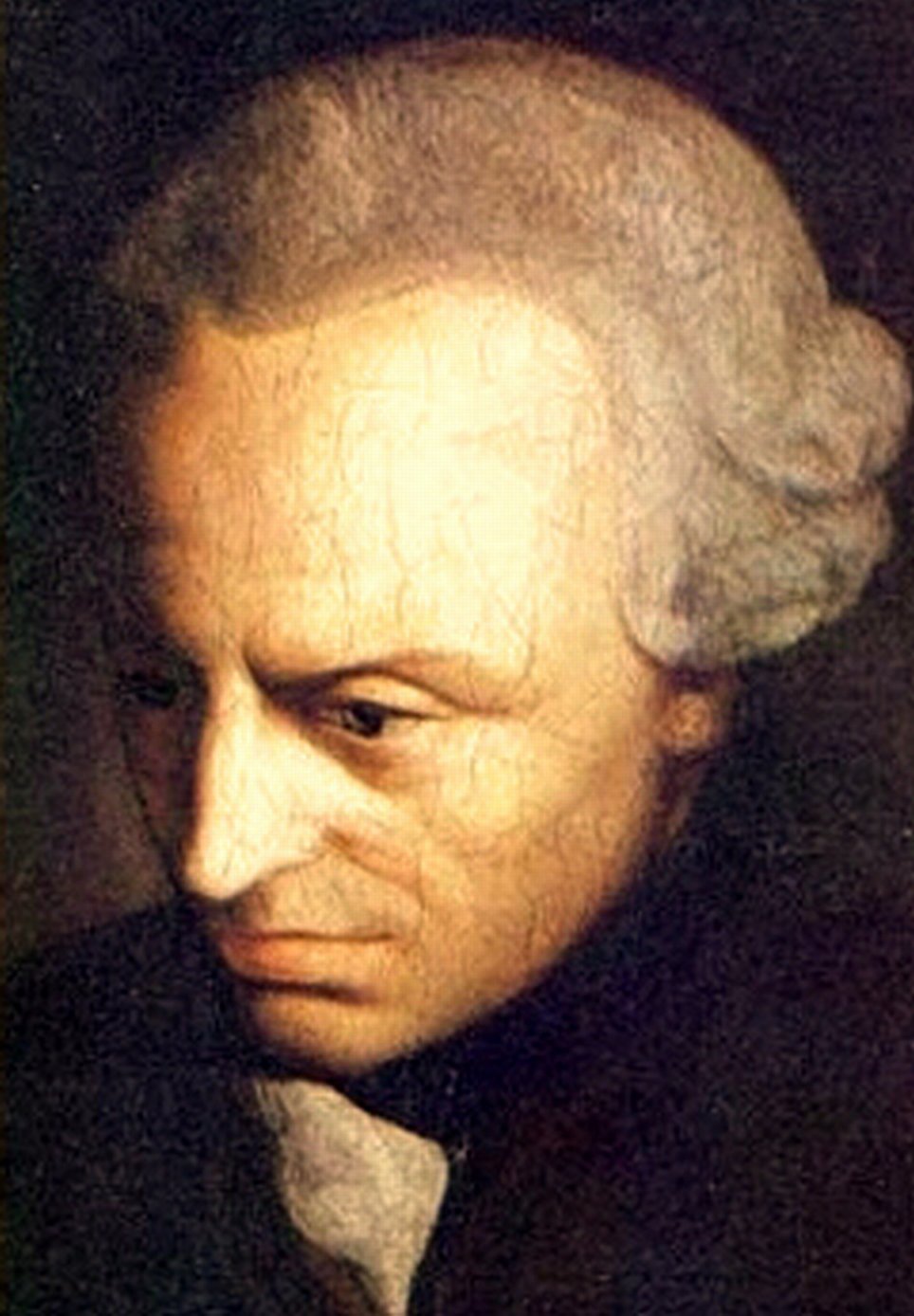
In 1781 a fifty-seven-year-old professor in the Prussian port of Königsberg, a man so regular in his habits that neighbors were said to set their clocks by his afternoon walk, published a book that had taken him more than a decade of near-silence to write. It was titled Critik der reinen Vernunft, the Critique of Pure Reason, and it ran to over eight hundred dense pages in a private vocabulary of its own. The first reviews were bewildered. One early notice so misread it that Kant felt compelled to write a shorter book just to explain the long one, and within six years he rewrote large parts of the Critique itself. The book that nobody could follow went on to become the hinge of modern philosophy.
The problem Kant was attacking is easy to feel and hard to fix. Mathematics and the new physics had become engines of agreement: prove a theorem or run an experiment, and competent people converge. , the inquiry into God, the soul, free will, and the ultimate nature of the world, had become an engine of disagreement, a field where every position had a respectable defender and nothing was ever settled. Kant called this field, in J.M.D. Meiklejohn's 1855 translation, the arena of endless contests. Why, he asked, does one kind of thinking advance while the other only wars with itself?
His answer required reversing the most natural assumption anyone makes about knowledge. It seems obvious that to know something is for the mind to conform to the object, to copy a world that is already there. Kant proposed the opposite. Suppose the object has to conform to the mind, suppose that the deepest structure of any world we could ever experience, its space, its time, its causal order, is contributed by the knower rather than found in the thing. He compared the move to Copernicus, who explained the motions of the heavens by supposing that the spectator, not the stars, does the turning. The whole Critique is the working-out of that one suggestion and everything it forces.
What it forces is double-edged, and that is the drama of the book. If the mind supplies the framework, then the framework is guaranteed: the laws science finds in nature are secure, because they are laws the mind itself lays down. But the same stroke walls off the old prizes. Reason can know the world only as it appears under the mind's own forms, never as it is in itself, so the grand metaphysical questions, whether God exists, whether the soul is immortal, whether the universe had a beginning, fall outside the only territory where knowing is possible. Kant ends by taking apart the classic proofs of God one by one. He does it not as an unbeliever but, in his own framing, to clear the ground: in Meiklejohn's translation, to abolish knowledge in order to make room for belief.
The break
The picture Kant inherited came in two rival packages, and he thought both were stuck for the same reason. The rationalists, in the line of Descartes, Spinoza, and Leibniz, held that pure reason, working from clear concepts alone, could reach substantial truths about God, the soul, and the structure of reality. The empiricists, Hume chief among them, answered that all our material comes from the senses, so reason has nothing to work on but experience and can never deliver necessary, universal truths at all. Both sides agreed on the underlying model: knowing is the mind taking in or matching a world that is simply there, independent of the knower, waiting to be copied.
Hume pushed that model to a breaking point Kant could not unsee. Cause and effect is the test case. We say the fire necessarily warms the hand, the cause necessitating the effect. But, Hume argued, no amount of watching fires warm hands ever shows us the necessity; all experience delivers is one event followed by another, again and again. The necessary connection is not in the world we observe. By Hume's own account it is something the mind adds out of habit, and so our most basic principle of natural science, that every event has a cause, looks like a custom rather than a truth. Kant later said, in the Prolegomena he wrote to explain the Critique, that recalling Hume's problem was what first broke his dogmatic slumber. (The famous phrase about waking from a dogmatic slumber is from that 1783 book, not from the Critique itself.)
Kant's break is to keep Hume's challenge and refuse Hume's conclusion by changing the model of knowledge. Yes, the necessity is not read off the world. No, that does not make it a mere habit. The necessity is contributed by the knower, built into the very equipment with which any experience is had at all. Cause and effect is not a pattern we notice in objects; it is a rule the understanding must impose for there to be objects of experience in the first place. In Meiklejohn's translation Kant proposes the reversal directly: it has hitherto been assumed that our cognition must conform to the objects, and he asks instead what follows if the objects must conform to our cognition. Necessity returns, but only inside the bubble of experience the mind itself shapes.
The cost of the rescue is the wall. If the mind's forms make experience possible, then they apply only to experience, to the world as it appears, and not one inch beyond. The world as it is in itself, apart from how we are built to receive it, drops out of reach. So the same reversal that secures Newton's physics destroys the old metaphysics, which had always tried to use reason's tools out past every possible experience, to prove things about God and the soul and the whole. After Kant, those are not hard questions awaiting a cleverer argument. They are questions the human mind is structurally unequipped to answer, and the proper work of metaphysics becomes the survey of its own limits.
Chapter 1
The scandal: why metaphysics never advances
"Time was, when she was the queen of all the sciences... Now, it is the fashion of the time to heap contempt and scorn upon her."
The Critique opens with an embarrassment. Two sciences, mathematics and natural philosophy (physics), had become models of secure progress, fields where a result once proved stays proved and the next worker builds on the last. Metaphysics, the inquiry into what lies beyond experience, God, the soul, freedom, the ultimate nature of things, had managed nothing of the kind. It was, in Meiklejohn's translation, the arena of endless contests, a battlefield where positions were won and lost forever without any of them ever being secured. Kant gives it a mournful image: metaphysics was once the queen of all the sciences, and now sits forlorn and scorned, like Hecuba fallen from a throne.
The puzzle is not that metaphysics is hard. Plenty of sciences are hard and still advance. The puzzle is that it does not converge at all. In geometry, a proof ends an argument. In metaphysics, every argument breeds its equally clever opposite, and the dispute simply renews. Kant's diagnosis is that the discipline had never asked the prior question: what is the human mind actually equipped to know, and how far does that equipment reach? It had charged straight at God and the cosmos without first auditing the instrument doing the charging. He calls that uncritical confidence dogmatism, the assumption that one can do metaphysics without first criticizing the faculty of reason itself.
So the book's title is also its method. A critique, for Kant, is not an attack and not a book of doctrines about reality. It is a tribunal in which reason puts itself on trial to determine its own limits: what can pure reason (reason working independently of experience) legitimately know, and where does it overreach? The aim is not to add another system to the pile but to settle, once and for all, which questions are answerable and which are forever closed. If that audit can be done, metaphysics might finally find the secure path the other sciences already walk, even if the path leads somewhere humbler than its old practitioners hoped.
Underneath the audit sits a debt Kant openly acknowledged, to Hume. Hume had shown that our idea of causal necessity, the bedrock of physics, cannot be derived from experience: we see one event follow another, never the must that binds them. If Hume was right, then the principle that every event has a cause is not knowledge at all, just an ingrained expectation, and the whole edifice of science rests on sand. Kant took that threat to be perfectly real and refused its conclusion. The Critique is, at bottom, the long answer to a single question Hume forced him to face: how can the mind possess truths that are necessary and universal and yet genuinely about the world?
Chapter 2
The synthetic a priori: the question the whole book answers
"How are synthetical propositions à priori possible?"
To state his real question, Kant first draws two distinctions that, crossed together, are the grid of the entire book. The first sorts judgments by where they get their warrant. A judgment is a priori if it can be known independently of experience, by thought alone, and carries necessity and universality with it; it is a posteriori if it depends on experience, on going and looking. "All bodies are heavy" is a posteriori, learned by hefting things. A claim that something must be so, always and everywhere, cannot have been gathered by looking, because looking only ever shows what happens to be so, so far. Necessity is the fingerprint of the a priori.
The second distinction sorts judgments by what they do. A judgment is analytic when the predicate is already contained in the subject, so that denying it is a contradiction; it merely unpacks a concept. Kant's own example, in Meiklejohn's translation: "All bodies are extended." Being extended (taking up space) is already part of what body means, so the judgment explains nothing new, it only analyses. A judgment is synthetic when the predicate adds something not contained in the subject, genuinely extending knowledge. "All bachelors are unmarried" is analytic, true by the meaning of the words and empty of new information. "The cat is on the mat" is synthetic, and only checking can settle it.
Cross the two distinctions and three of the four boxes are unremarkable. Analytic a priori: true by meaning, known by thought (all bachelors are unmarried). Synthetic a posteriori: informative, known by looking (the cat is on the mat). Analytic a posteriori is empty, since meaning-truths never need checking. Everything hangs on the fourth box, the synthetic a priori: a judgment that genuinely extends knowledge, yet is known with necessity, independently of experience. If such judgments exist, then the mind reaches substantial, world-involving truths that no amount of looking could have supplied, and Hume's challenge is answered.
Kant's claim is that they not only exist but are the backbone of mathematics and physics. His key example is "7 + 5 = 12." It looks like mere , but he argues it is synthetic: analyse the concept the sum of 7 and 5 as long as anyone likes, and 12 never turns up sitting inside it. As Meiklejohn renders the argument, the conception of twelve is by no means obtained by merely cogitating the union of seven and five; the mind has to go beyond the concepts and actually count, calling in, in Kant's homely example, the five fingers of the hand. The result is necessary and known in advance of any particular experience, yet it adds something. Geometry is the same: that a straight line is the shortest between two points is no mere definition but a synthetic truth that intuition has to supply. So the formal sciences are stacked with judgments that are both ampliative and a priori.
That turns the vague worry about metaphysics into one sharp, answerable question, the question Meiklejohn translates as the grand problem of the whole inquiry: how are synthetical propositions a priori possible? How can the mind possibly know, in advance and with necessity, truths that go beyond mere definitions and reach out into the world? Everything in the Critique is built to answer it, and the answer, once given, will say not only how such knowledge is possible but exactly how far it can stretch, which turns out to be the undoing of old metaphysics.
Chapter 3
The Copernican turn, and the forms of intuition
"It has hitherto been assumed that our cognition must conform to the objects... Let us then make the experiment whether we may not be more successful in metaphysics, if we assume that the objects must conform to our cognition."
Kant's solution is a single reversal, and he knows it is the most important move in the book. The natural assumption is that knowledge works by the mind conforming to objects: the world is fixed and ready, and to know is to mirror it. But on that assumption, he points out, a priori knowledge of objects is a mystery, for how could the mind know in advance, by pure thought, how a wholly independent world is going to turn out? So he proposes the experiment of reversing it: assume that the objects must conform to our cognition. He likens it to Copernicus, who could not make the heavens come out right while the spectator stood still and the stars revolved, and so tried supposing that the spectator moves. The reframing is the same kind: stop assuming the knower passively orbits a fixed world, and see what follows if the knower's own structure is doing the turning.
On the new assumption, a priori knowledge stops being a mystery. If the mind contributes the basic form of any possible experience, then it can know that form in advance, because it is reading off its own contribution, not predicting an alien world. The synthetic a priori becomes possible exactly because the framework of experience is supplied by us. The catch, stated up front and never softened, is that this guarantee covers only objects as they appear to us, structured by our equipment, and tells us nothing about objects as they are in themselves. The reversal buys certainty about appearances at the price of access to reality in itself.
The first installment, in the part Kant calls the Transcendental Aesthetic (his term for the study of sensibility, the mind's capacity to receive), concerns space and time. Common sense treats them as the largest things out there, a vast empty container the universe sits in. Kant argues they are not things at all, nor properties of things, but the two forms of intuition: the built-in ways the mind must arrange whatever it receives. We cannot represent any outer object except as somewhere in space, nor any experience at all except as somewhere in time, and we cannot imagine space or time themselves away. They are the prior conditions of experience, supplied by the subject, not lessons taught by it.
This is what explains the riddle of geometry from Chapter 2. If space were an external thing we learn about by looking, geometry would be a posteriori and never certain, just a record of how space has happened to behave so far. But if space is the form our own sensibility imposes on everything outer, then we can know its structure in advance, with necessity, because we are describing the lens, not the landscape. Geometry is synthetic a priori because it unfolds the a priori form of intuition that the mind itself brings to every outer experience. The same holds for arithmetic and time. The strange necessity of mathematics is the mind recognizing its own handiwork.
The plain version is this. A person wearing tinted glasses that can never come off sees everything tinted, guaranteed, in advance: that is knowledge of the glasses, certain and a priori, but it says nothing about the true colors of the things behind them. Space and time, for Kant, are glasses of exactly that kind, fused to the mind. They make mathematics necessarily true of everything we can experience, and they make the things in themselves, behind the glasses, permanently invisible.
Chapter 4
The categories, and the wall: appearances and the thing-in-itself
"Thoughts without content are void; intuitions without conceptions, blind."
Space and time deliver raw material, a stream of sensory intuition arranged in space and time, but raw material is not yet knowledge of objects. To have a world rather than a blur, the mind must also think what it receives, organizing the flood into things that have properties, persist, and cause one another. That work belongs to the second faculty, the understanding, and Kant states the partnership in the line that anchors the whole logic: thoughts without content are void, intuitions without conceptions, blind. Concepts with nothing to apply to are empty; sensations with no concepts to organize them are a meaningless smear. Knowledge requires both at once, sense feeding the understanding, the understanding shaping the sense.
The understanding does its shaping with a fixed set of a priori concepts Kant calls the categories, the pure concepts of the understanding. They are not learned from experience; they are the rules the mind must use to turn intuition into the experience of objects. The list includes substance (the concept of a thing that persists while its states change) and, most consequentially, causality (the concept that states follow one another by rule). These are the deep grammar of any possible experience. We do not find substances and causes in the world the way we find rivers; we bring them, and only because we bring them is there a structured world to find anything in.
Proving that those mind-made concepts genuinely apply to the world is the hardest stretch of the book, the part Kant named the Transcendental Deduction, and the part he rewrote most heavily for the second edition because no one could follow the first. Stripped of its machinery, the argument runs like this. Experience is not a slideshow of disconnected flashes; it is the experience of one continuous self, able to recognize that this thought and that thought are both mine. For scattered intuitions to add up to a single unified consciousness like that, they have to be bound together by rules, and the categories just are those binding rules. So any experience that could count as mine at all is already an experience of objects ordered by substance and cause. The categories must apply to everything we can experience, because without them there would be no unified experience to speak of.
Here Kant's answer to Hume lands. Hume was right that causal necessity is not found in the objects, out there to be observed. He was wrong that it is therefore a mere habit of association. Causality is an a priori category, a rule the understanding must impose for there to be objective experience in the first place. So the principle that every event has a cause is not a custom and not a guess; it is a condition of having a world at all, and that is why it holds necessarily and universally, for every object of possible experience. Hume's threat is answered, but at Hume's own price extended: the guarantee covers only the world of experience.
Which forces the Critique's most famous and most disorienting distinction. Everything the mind can know is a phenomenon, an appearance: an object as it shows up once filtered through space, time, and the categories, structured through and through by us. What things are apart from all that filtering, in themselves, Kant calls the noumenon, the thing-in-itself, and it is by definition unknowable, because to know it we would have to apply the very forms (space, time, cause) that only ever yield appearances. There is a real world independent of us; Kant is no fantasist who thinks minds invent rocks. But the rock we know is the rock-as-it-appears. The rock-in-itself stands behind a wall we built and cannot see over. This is what transcendental idealism means, and why "" here is so misleading: not that nothing is real but ideas, but that the form of the known world is the mind's contribution, with the in-itself sealed off beyond it.
Chapter 5
The Dialectic: reason oversteps, and the proofs of God collapse
"Being is evidently not a real predicate, that is, a conception of something which is added to the conception of some other thing."
The understanding behaves itself as long as it stays inside experience, applying its categories to what the senses deliver. But reason has a deeper drive: it wants completeness, the whole chain of causes, the final ground, the totality. Chasing that, it reaches for the unconditioned, for things no experience could ever contain, the soul as a simple substance, the universe as a finished whole, God as the ground of everything. The final part of the book, the Transcendental Dialectic, is Kant's diagnosis of what happens when reason takes its experience-bound tools and uses them out where no experience can check them. The result is not knowledge but a set of unavoidable illusions, and Kant's job is to expose each one.
When reason reasons about the soul, it falls into what Kant calls the paralogisms, fallacies that look airtight. From the bare fact that all my thoughts are accompanied by a thinking "I," the old metaphysics concluded that this I is a substance, simple, and therefore immortal. Kant's exposure: the "I think" is only the formal unity that any experience must have to be one experience, not the observation of a thing. Treating the logical subject of thought as if it were a known object, a soul-substance, smuggles the categories out past experience, where they prove nothing. We never encounter the soul as an object; we have only the form of self-awareness, which cannot tell us whether anything persists.
When reason reasons about the universe as a whole, it falls into the antinomies, pairs of arguments that contradict each other and seem equally valid. The first pair is the clearest. The thesis proves the world has a beginning in time: if it did not, then an infinite series of past states would have had to elapse to reach now, and an infinite series can never be completed, so there must have been a first moment. The antithesis proves the world has no beginning: a beginning means an empty time before the world, but an empty time gives no reason for the world to start at one moment rather than another, so it cannot have started at all. Both proofs are rigorous. Both cannot be true. The contradiction is the alarm: it shows that the whole world-as-completed-totality is not a possible object of experience at all, and reason is misfiring by treating it as one.
When reason reasons about God, it leans on three classic proofs, and Kant takes apart all three, reserving his sharpest stroke for the ontological argument, the attempt of Anselm and after him Descartes to prove God exists from the mere concept of God: God is the most perfect being, existence is a perfection, so a God who lacked existence would not be most perfect, therefore God must exist. Kant's refutation is one clean blade, in Meiklejohn's translation: being is evidently not a real predicate. Existence adds nothing to the content of a concept. His example is a hundred dollars: a hundred real dollars contain not one cent more, as a concept, than a hundred merely possible ones; saying they exist does not enrich the concept, it only posits that something answers to it. So existence is never something a definition can contain. No concept, however complete, includes the existence of the thing it describes, and the ontological argument was always pretending otherwise.
The other two proofs fall in turn, and they fall back onto the first. The cosmological proof (everything contingent needs a cause, so there must be a necessary being) and the physico-theological proof (the design of nature points to a designer) both, Kant argues, end up needing to identify their necessary or designing being with the all-perfect God, and that final step is the ontological argument again, smuggled in, so they inherit its fatal flaw. The verdict of the Dialectic is total: the soul, the cosmos-as-whole, and God cannot be objects of knowledge, because every road to them runs the mind's tools off the edge of possible experience. Metaphysics of the old kind, the science that claimed to prove such things, is impossible. What survives is metaphysics as critique: not a doctrine of what lies beyond experience, but a precise chart of why reason cannot go there, and exactly where the border runs.
Chapter 6
Reception and afterlife: the loose end everyone pulled
"I must, therefore, abolish knowledge, to make room for belief."
The first edition of 1781 mostly bewildered its readers. The most notorious early review, by Christian Garve as cut down and altered by J.G. Feder, dismissed the book as a kind of transcendental idealism no different in spirit from Berkeley's, the view that nothing exists but minds and ideas. Kant was stung enough to do two things. He wrote a shorter, plainer book, the Prolegomena to Any Future Metaphysics (1783), to lay out the argument in a more digestible order. And in 1787 he issued a substantially revised second edition of the Critique itself, rewriting whole stretches, above all the Transcendental Deduction, and adding a sharp Refutation of Idealism precisely to fend off the charge that he had dissolved the world into a dream.
Part of the difficulty was that the book's verdict cut against what people wanted from philosophy, and Kant said so plainly. He had taken apart the proofs of God, the soul, and immortality, but he insisted he had not done it to destroy faith. In Meiklejohn's translation: he had to abolish knowledge in order to make room for belief. The point was that as long as metaphysics claimed to prove God and the soul, it left them hostage to refutation; by showing that such matters lie outside the reach of theoretical knowledge altogether, Kant meant to put them beyond the reach of disproof as well, and to relocate them where he thought they belonged, in the domain of moral faith he would develop in his later ethical works.
Within a generation the Critique had become the unavoidable starting point for serious philosophy in the German lands, and the agenda for the next forty years was set by one feature of it that Kant's successors found intolerable. The thing-in-itself, the real-but-unknowable world behind appearances, looked to them like a loose thread. If we can know nothing whatever about it, not even that it exists, why keep it at all? And if it causes our sensations, as Kant sometimes implied, has he not applied the category of cause beyond experience, breaking his own rule?
Pulling that thread is essentially what German Idealism is. Fichte cut the thing-in-itself away entirely, trying to derive the whole of experience from the activity of the knowing self alone. Schelling reworked the relation of mind and nature so that neither was the unknowable ground of the other. And Hegel made the boldest move, denying that there is any fixed limit to knowledge at all and recasting Kant's wall between appearance and the in-itself as a stage that thought passes through and overcomes. ("Idealism" in all of this does not mean having ideals; it means the view that reality is fundamentally structured by thought, that the world we have is shaped through and through by the knowing mind, the position Kant launched and they radicalized.)
Whether one keeps the thing-in-itself or follows the idealists in dropping it, the frame is Kant's. After 1781 the question in theoretical philosophy was no longer the old one, what is reality made of, answered by gazing outward, but a new one, what does the mind contribute to anything it can know, answered by turning the inquiry back on the knower. That turn is why the Critique of Pure Reason, for all that its first readers could not parse it, is the book modern philosophy keeps returning to. It did not settle the great metaphysical questions. It changed, permanently, what kind of thing a philosopher takes those questions to be.