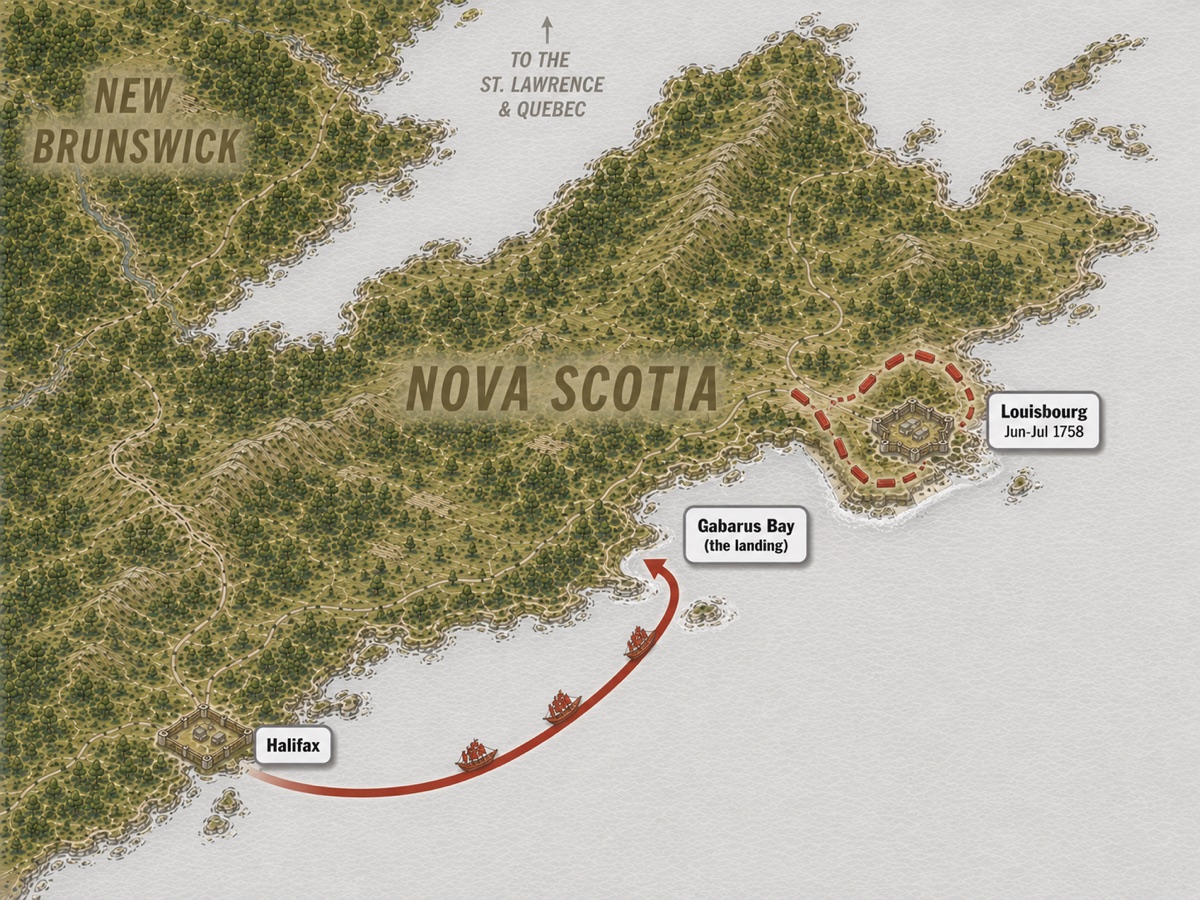
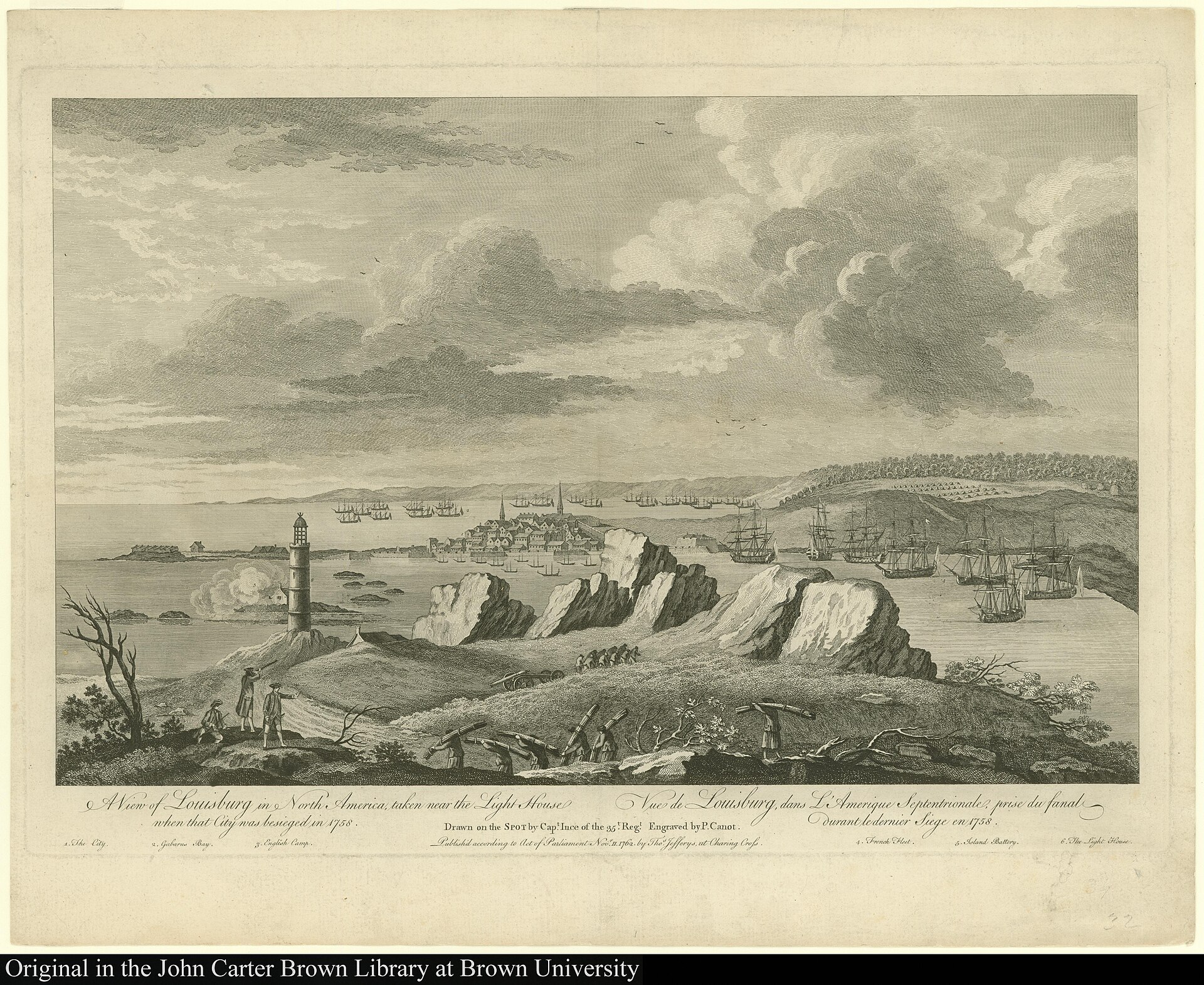
On the rocky southeast shore of Cape Breton Island, where the cold Atlantic breaks against Nova Scotia, the French had built the strongest place in their North American empire. They called it Louisbourg, a walled town and naval base on Île Royale (the French name for Cape Breton), and it sat across the throat of the continent. Behind it, past the Gulf of St. Lawrence, lay the St. Lawrence River, the one great water road into the heart of New France (French Canada). Quebec, the capital, sat far up that river. Montreal sat farther still. To sail a fleet against them, you first had to get past Louisbourg. That is why the British called it the Gibraltar of the North. It was the lock on the door, and whoever held it held the way in.
For Britain, by 1758, getting in was the whole point. The man driving the war from London, Secretary of State William Pitt, had a plan for that summer: three blows against New France at once. One army would push west to take Fort Duquesne at the Ohio forks. A second would drive up the Lake Champlain corridor at Fort Carillon (also called Ticonderoga). And the third, the one that mattered for everything that came after, would cross the ocean and take Louisbourg. Take the fortress, and the St. Lawrence opened. With the river open, a fleet could be sent against Quebec itself the following year. Carillon would fail bloodily that summer. Louisbourg and Fort Duquesne would not.
The war storyPitt’s three coordinated blows of 1758There was history pressing on all of this, and it was personal for the colonists. Louisbourg had been taken before. In 1745, during an earlier war, a force of New England colonists, farmers and fishermen and tradesmen, not professional soldiers, had sailed up from Boston under William Pepperrell (colonial American), a Maine merchant, with Royal Navy ships in support, and against the odds they had besieged the great French fortress and forced it to surrender after about seven weeks. It was the proudest feat of arms the colonies had ever managed. And then, in 1748, the war in Europe ended, and at the negotiating table in the Treaty of Aix-la-Chapelle, Britain simply gave Louisbourg back to France in exchange for territory elsewhere. The colonists who had bled to take it watched their prize handed back to the enemy by diplomats across an ocean. It left a lasting bitterness toward how London ran its empire. So when the British came again in 1758, they were not just attacking a fortress. They were taking back something they had won and lost once already.