On the British side of the war for North America, two armies took the field, and they could not stand each other. One had crossed an ocean to fight. The other had been raised, farm by farm and town by town, out of the colonies themselves. They wore the same king's cause on their coats and despised almost everything about how the other man soldiered. They fought side by side for nine years, insulted each other the whole way, and what the colonists carried home from that experience helped teach a generation how to make the Revolution.
Three kinds of soldier took that field, not two, and a newcomer needs all three.
The British regulars were full-time professional soldiers of the standing British Army (the permanent, long-service force the Crown kept under arms in peace and war alike). They had been drilled for years in rigid discipline and in European linear tactics, meaning lines of men standing shoulder to shoulder in the open, firing massed volleys on command. They were shipped across the Atlantic to win a war in country none of them had ever seen.
The provincials were something newer and stranger to a British officer's eye. A provincial regiment was raised by a colony's own assembly (its elected legislature) for a single campaign season, then disbanded. The men were full-time soldiers while they served, paid and fed by the province, but they had signed on for a set stretch of months and a set list of terms, and not one day or one duty more. Assemblies filled the ranks with bounties (cash inducements to enlist), with quotas drawn off the militia rolls, and, when volunteers ran short, with the draft.
Behind the provincials stood the oldest institution of all, the militia: the able-bodied free men of a town, enrolled for local defense, part-time citizen-soldiers who turned out in an emergency and went home after. Service in the militia had long been treated as a privilege of the settled and the propertied. Provincial regiments were drawn from those same rolls, but they were a different animal: full-time, paid, and bound by contract for one campaign.
That word, contract, is the whole story.
Off the fieldThe Ohio Country & the Ohio CompanyThe rawest wound was rank
The first thing that went wrong between the two armies had nothing to do with the woods or the French. It was rank.
On 21 November 1754, King George II issued a decree settling the rank of military officers serving in North America, and its effect was brutally simple. A provincial officer of any rank stood below any officer who held the King's regular commission (the royal appointment that makes a man an officer). A colonial colonel, the senior man of his whole regiment, was outranked in the field by a British captain young enough to be his son. Whatever a province voted you, whatever your neighbors had elected you to lead, the moment a regular appeared you took his orders.
For a man who had risked his life for the rank, the insult was unbearable. George Washington learned it first and learned it hardest. In 1754 he was the young commander of the Virginia Regiment, a colonel by his colony's commission. Then Governor Robert Dinwiddie moved to break the regiment into independent companies under captains, which would have knocked Washington from colonel down to captain even if the Crown handed him a regular commission to go with it. Washington resigned rather than swallow it. The disparity between a captaincy and his former rank, he wrote, was "too great to expect any real satisfaction or enjoyment in a Corps, where I once did, or thought I had a right to, command."
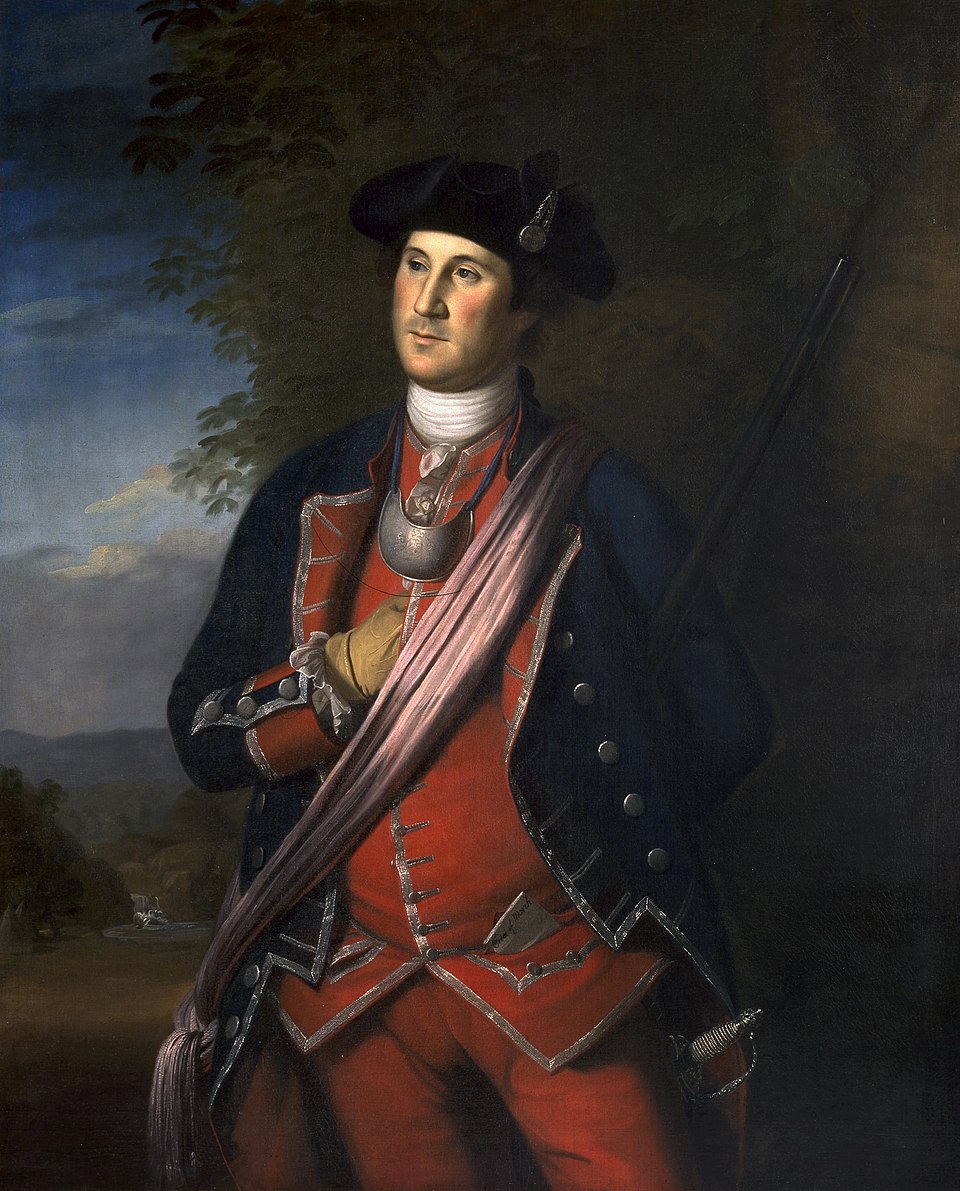
"I think, the disparity between the present offer of a Company, and my former Rank, too great to expect any real satisfaction or enjoyment in a Corps, where I once did, or thought I had a right to, command." — George Washington, 1754
The following year he wanted back in so badly that he found a workaround that cost him his pay and kept his pride. Rather than serve under a rank he found degrading, he joined the expedition of Major General Edward Braddock as an unpaid volunteer aide-de-camp (a senior officer's personal staff assistant), a position outside the regular rank ladder, so that no junior royal officer could give him orders. He would soldier for nothing before he would soldier as an inferior.
What the British thought of the provincials
The contempt ran downhill, and the British commanders did not hide it.
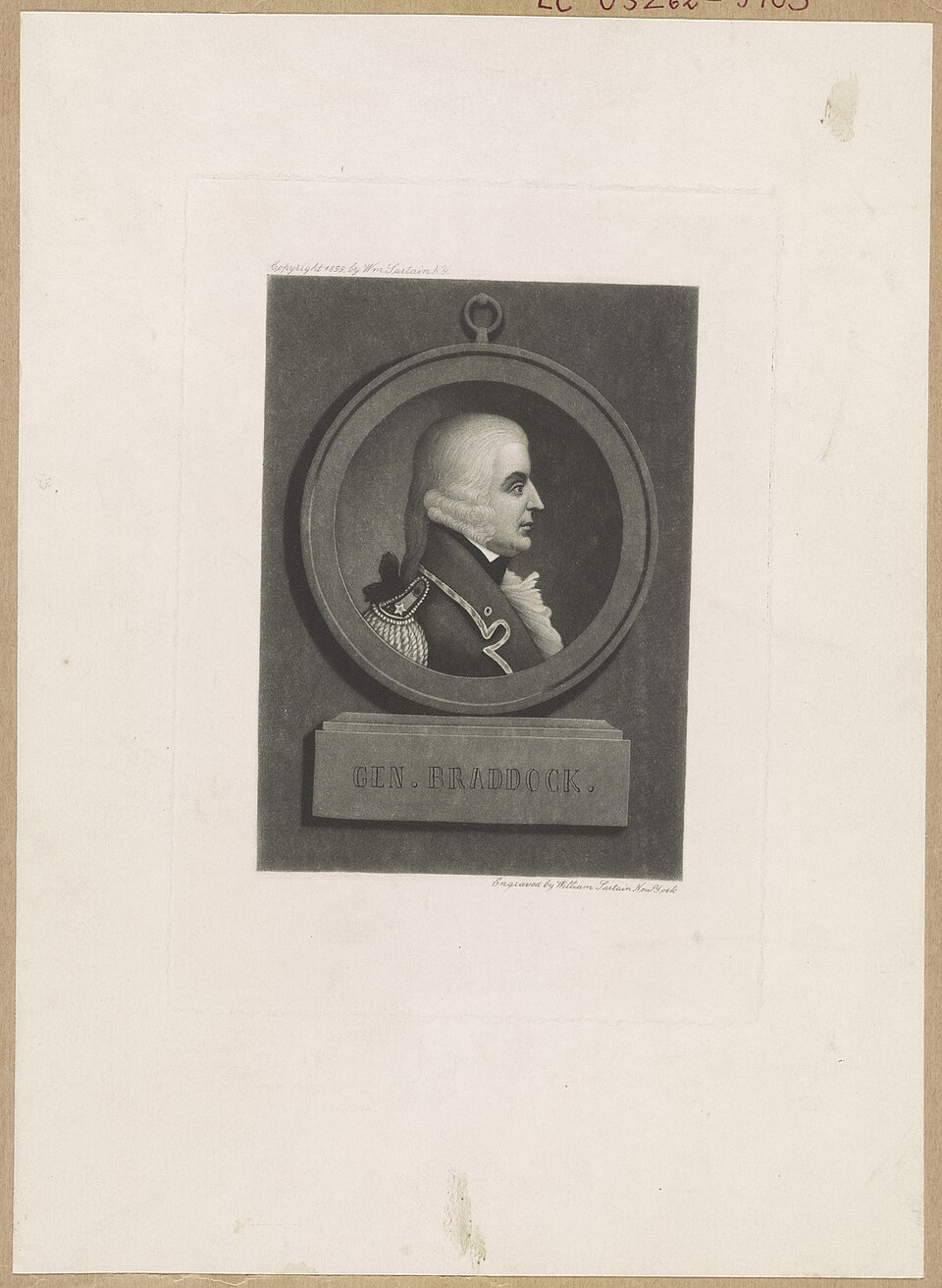
Major General Edward Braddock set the tone in 1755. He thought little of the colonials and less of the Native scouts a man would need to fight in the forest, and he marched toward the French stronghold of Fort Duquesne (where Pittsburgh now stands) with only eight Mingo guides. He meant to fight as gentlemen fought in Europe, in tight ranks in the open, and he waved off Washington's warning that the French and their Native allies would not oblige him by standing in a line to be shot at. Benjamin Franklin, who supplied the wagons for the march, reportedly came away remembering Braddock's flat dismissal of both the Americans and the Native warriors who might have saved him. His contempt for both the colonials and the Native scouts cost him at the Monongahela.
The next commander made the contempt a policy. John Campbell, the Earl of Loudoun, arrived on 23 July 1756 as commander-in-chief in North America, with regulars including the 35th and 42nd Foot and roughly 7,000 provincials from New England and New York under his command. He decided almost at once that the colonists were untrustworthy and ungrateful, incapable of sacrifice, and he set about reforms meant to lessen his reliance on Americans altogether. When the colonial assemblies refused, through the summer of 1756, to house his troops properly, his answer was to threaten to take quarters (house his soldiers) by force.
What galled Loudoun most was that the colonists talked back, and talked in the language of rights. They had assumed to themselves, he complained, "what they call Rights and Priviledges, totaly unknown in the Mother Country." The trouble, he noticed, did not come from the bottom: it "seems not to come from the lower People, but from the leading People." He was watching a political culture he did not recognize and calling it insolence.
"they have assumed to themselves, what they call Rights and Priviledges, totaly unknown in the Mother Country." — the Earl of Loudoun, quoted in Fred Anderson, Crucible of War
James Wolfe, who would take Quebec in 1759, capped the line of disdain. He held the colonials and especially their rangers in open contempt, and is remembered for dismissing the American soldiers as the worst in the universe.
To the regular officer's eye the provincial was dirty, idle, undisciplined, and apt to bolt. He was not wrong that the provincials would not behave like regulars. He was wrong about why.
What the provincials thought of the British
The provincials returned the contempt with interest, and they had their reasons.
First was the lash. Discipline in the regular army was enforced on a man's bare back with a cat o' nine tails (a whip of nine knotted cords), and the sentences were savage: from 25 lashes up to 500 for ordinary offenses, and as many as 1,000 stripes for mutiny or desertion, the punishment carried out in public so the rest of the men would watch and learn. A New England farmer who had enlisted as a free man, alongside neighbors who had elected his officers, found this almost beyond belief. Private Gibson Clough, a soldier from Salem, Massachusetts, kept a journal and recorded what he saw in his own garrison: one man whipped thirty stripes for disobedience, another sentence of a thousand lashes, others of five hundred each, an artilleryman given two hundred.
Then there was the work. Provincials resented being used as laborers and teamsters, set to digging and hauling and driving wagons rather than soldiering, treated as cheap muscle by officers who looked down on them.
But underneath the floggings and the fatigue duty lay something the British genuinely could not parse. To a New England soldier, his enlistment was a contract, to be kept to the letter by both sides. He had signed up for specific months, specific pay, specific rations and equipment, and a specific date he would be sent home. This was not greed or cowardice. It grew out of the region's Puritan covenant tradition, the idea that a binding agreement freely entered defines what each party owes the other. Provincial regiments were, in one historian's phrase, ordinary farmers led by neighbors, with almost no social distance between the man giving the order and the man taking it. You could not flog such an army into obedience without destroying the very bonds that had raised it.
So when an officer broke the terms, the men acted. They went home, or they refused duty, and to them this was not mutiny but the plain enforcement of an agreement. The British, who expected a soldier to belong to the King for as long as the King wanted him, saw only mutiny and lawlessness. The same act meant rights to one side and crime to the other. They were not arguing about discipline. They were arguing about what a man was.
Clough put the whole grievance into one line. The provincials, he wrote, were treated as something less than the free Englishmen they were born: "although we be Englishmen born, we are debarred Englishmen's liberty," and the regulars were "but little better than slaves to their officers."
"although we be Englishmen born, we are debarred Englishmen's liberty." — Private Gibson Clough, 1759
The mutiny that was really a lawsuit
The whole collision played out in one episode, on a cold headland in Nova Scotia in the autumn of 1759.
That autumn, Massachusetts men were garrisoning Louisbourg, the captured French fortress on Cape Breton Island. They had enlisted for a fixed term. Clough recorded that he had signed on for six months under a proclamation of Massachusetts governor Thomas Pownall, to be dismissed by the first of November or sooner if the King's service allowed. (Another account puts the term at eight months; the men themselves reckoned by Clough's six.) When the date came, the British commander refused to let them go and kept them on for another stretch, into the winter.
On 1 November 1759 the regiment was ordered out for duty, and the men, as Clough wrote, "all swore that we would not do no more duty here." Their term was up; the contract was finished; they were done. The next day every one of them was marched to the guardhouse for refusing duty. They answered not with violence but with a petition, a "round robin" signed in a circle so no name headed the list, demanding their release on the terms they had been promised. To the officers this was mutiny, a capital crime. To the men it was a demand that a bargain be honored.
It ended in compromise. On 3 November the authorities forgave the so-called mutiny; a detachment of 140 men shipped for Boston, and the rest were ordered to stay one more month. Through that unwanted winter the province dangled a bounty of four pounds for each man who stayed, and Clough, still stuck on the rock in January 1760, could only write, "God only knows who will see the end."
No one was hanged and no fort was lost. What had happened was that a body of soldiers treated their service as a contract, enforced it by collective refusal, and made the army negotiate. They were rehearsing, without knowing it, a habit of mind their grandsons would not have to be taught.
The third army, the one that actually worked in the woods
While the regulars and the provincials despised each other, a third way of war was the only one that reliably worked in the American forest, and it belonged first to the Native nations whose woods these were.
The British colonists named this conflict the French and Indian War, after the enemies they pictured, a name that framed the war from one porch. But the Native nations were never simply the enemy, and never simply anyone's tool. They had their own country to defend, their own borders, their own calculations, and they used the rivalry between France and Britain as leverage to protect land and independence that both empires wanted. Native warriors fought on the French side, on the British side, and above all for themselves.
That European tactics could not survive in the forest was proven in a single afternoon. On 9 July 1755, about ten miles east of present-day Pittsburgh, Braddock's flying column (a fast-moving advance force) of roughly 1,300 regulars and provincials ran into a French and Native force near the Monongahela River. The opposing force, under Captain Daniel Liénard de Beaujeu, was 891 strong: 108 French marine troops, 146 Canadian militia, and 637 Native warriors from the Ottawa, Ojibwa, Potawatomi, Abenaki, Lenni Lenape (also called Delaware), and Huron nations, led in part by men such as Shingas and the French-Ojibwa officer Charles Michel Mouet de Langlade. (Some accounts place the Ottawa leader Pontiac there as well; others doubt it.) Beaujeu was killed almost at once. It did not matter. His warriors fought from cover, from behind every tree, while Braddock held his men in their tight road column, a packed target that could see almost no one to shoot back at. The result was a slaughter.
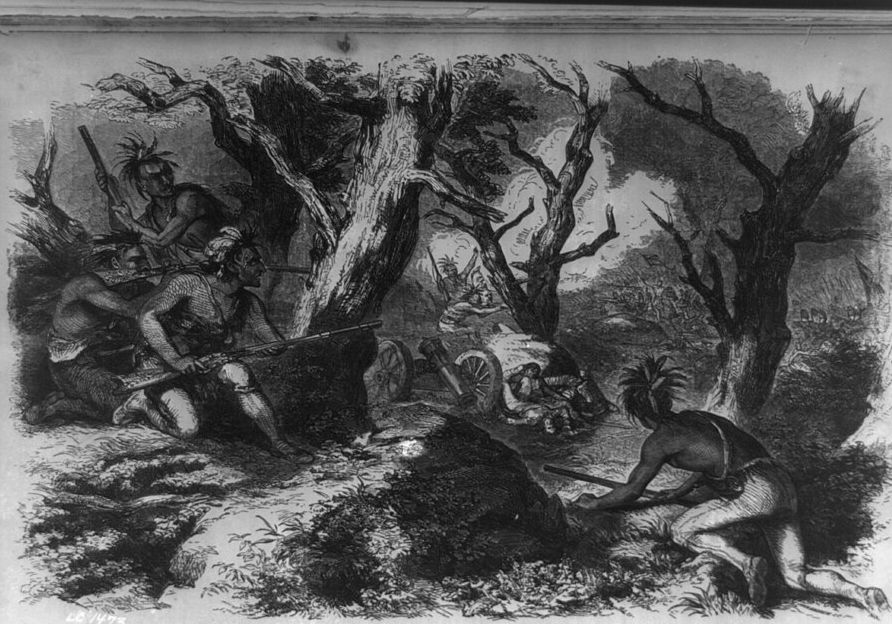
The British lost 457 killed and more than 450 wounded; of 86 officers, 26 were killed and 37 wounded. The French and Native force lost 39 killed and 57 wounded. The backwoodsmen had warned exactly this would happen. Washington, the unpaid volunteer who had begged to come, found fault with the regulars, restored what order he could, and formed the rear guard that covered the survivors' retreat.
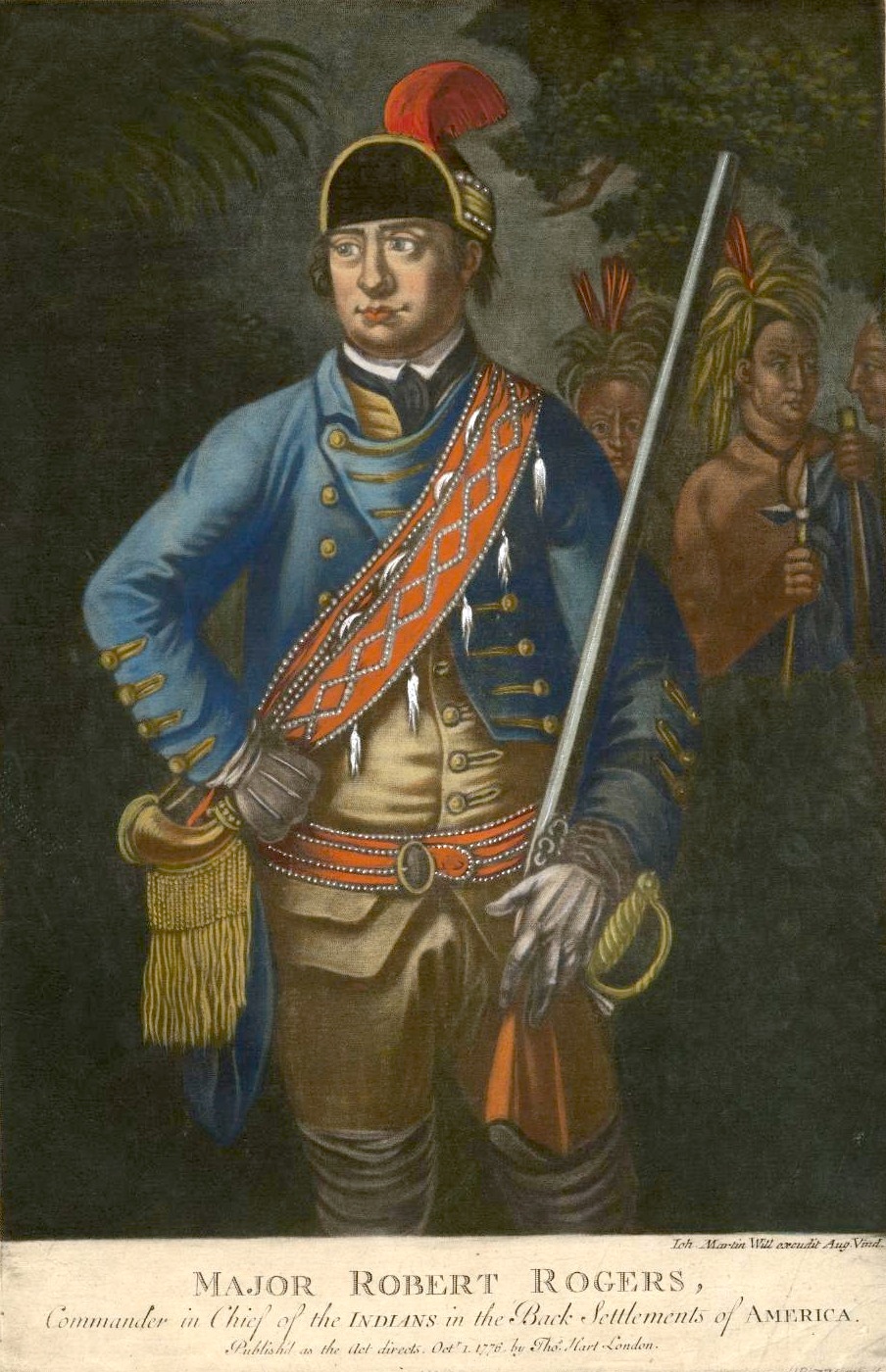
The war storyThe MonongahelaSome colonists tried to fight the way the country demanded. In 1755 Robert Rogers of New Hampshire raised the ranger companies that bore his name, independent units for long-range patrol, scouting, ambush, and raiding. They marched on snowshoes, moved in silence, used cover, and struck from hiding, methods drawn largely from Native woodland warfare. Rogers wrote them down as his 28 Rules of Ranging, the first written code of these tactics, and trained both regular and provincial officers in them. The rangers were exactly the kind of soldier the forest rewarded, and Wolfe despised them all the same. Their war was not gentle: in 1759 Rogers led a destructive raid on the Abenaki village of Saint-François (Odanak), a reminder that the people on the receiving end of this woodland war were communities of families, not scenery.
The British could not win without Native allies, and the man who knew it best was Sir William Johnson, an Irish immigrant who had settled in the Mohawk Valley in 1738, learned the Mohawk language and customs, and became the Crown's Superintendent of Indian Affairs. His job was to win over the Iroquois Confederacy, the powerful league also called the Six Nations or Haudenosaunee, which had been trying to stay neutral between the empires. The Mohawk leaned most toward Britain, and their elder statesman Hendrick, known in his own language as Theyanoguin, brought warriors to the cause; at the Battle of Lake George in 1755, Johnson and Hendrick mustered some 200 Mohawks alongside about 1,500 colonial troops, and Hendrick was killed in the fighting.
But the Confederacy was no one's instrument. It was divided, and it knew its own interests. French Jesuit missionaries had been working among the Seneca and Onondaga for years, and those nations leaned toward France. The Six Nations as a whole played the longer game, weighing land, leverage, and survival, and bending toward neutrality whenever they could, because the one certainty was that both empires wanted what the Confederacy stood on. They were principals in this war, not auxiliaries to it.
The bargain changes
For four years the colonists had served under contempt, under the lash, under officers who outranked their best men on a technicality. Then the man running the war from London changed the terms.
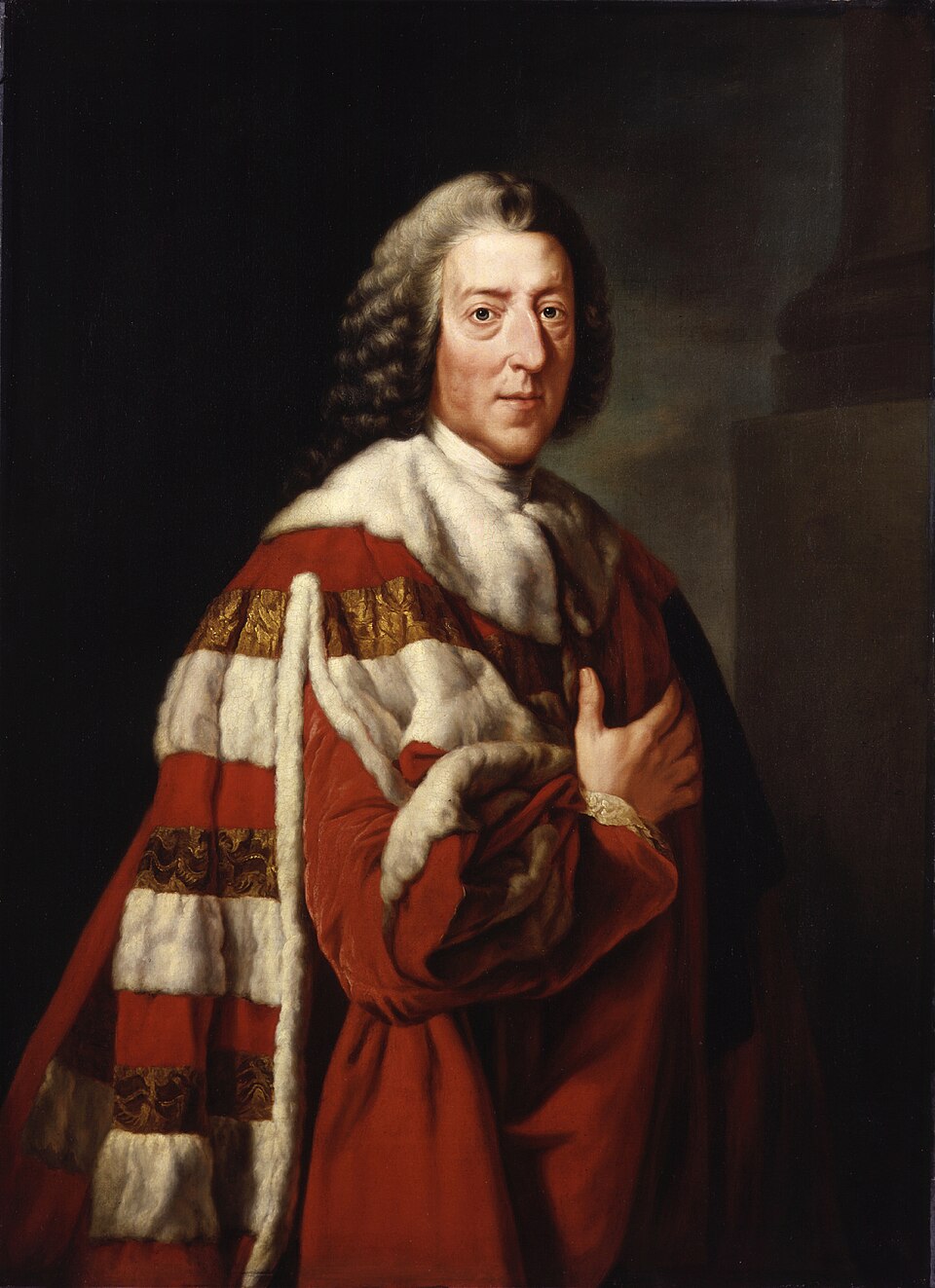
From late 1757 into 1758, Secretary of State William Pitt the Elder, the minister now directing Britain's whole war effort, rewrote the bargain with the colonies. He promised to reimburse the colonial governments for the money they spent raising troops, and he began treating the colonies not as subordinates to be commanded but as allies to be courted. He also raised the standing of provincial officers, easing the rank humiliation that had festered since 1754: a warrant of 30 December 1757 lifted provincial generals and colonels to rank "next after" the regular colonels who had once outranked them all. And he opened what amounted to an open purse.
The colonies answered the way they never had under threats. Manpower poured in, the provincial regiments swelling once again off the same militia rolls the colonies had drawn on from the start. With those ranks full, the British turned to the conquest of Canada itself: Louisbourg fell in 1758, Quebec in 1759, Montreal in 1760. Pitt had discovered that the colonists would not be driven but could be persuaded, that they would spend their sons freely once they were treated as partners rather than as inferiors. It was a lesson London would forget with stunning speed.
There was a bill coming due for all that lavish spending, and where Britain would later try to collect it set the empire on the road to its own undoing.
Off the fieldWar Finance & the Road to TaxationWhat they carried home
The war ended in 1763 with France driven from the mainland and Britain master of the continent east of the Mississippi. It was a triumph, and for the Native nations who had fought to hold a balance between two empires it was a catastrophe. The whole contest had been, at bottom, a war over their land, and now there was no second empire to play against the first. The British colonists who had named the war for their "Indian" enemies pushed west onto the country those nations had defended, and the dispossession that followed was the war's truest result.
For the colonists themselves, the experience had been enormous and personal. This was a mass event, not a spectator's war: in Massachusetts alone, by the historian Fred Anderson's research, more than 30 percent of all military-age men served at least one tour. Across the colonies tens of thousands took the field over the nine years. And most of those who died did not die in battle. They died in the camps, of smallpox, of dysentery, of the louse-borne "camp fever" the surgeons called typhus, the diseases that always raced through crowded, filthy, eighteenth-century armies. Far more provincials were buried from sickness than ever fell to a French musket.
The survivors came home carrying two convictions, and both would matter enormously a decade later. The first was bitter: the British regulars, and the officers who led them, treated colonial Americans as inferiors, as second-class subjects who could be flogged and outranked and worked like teamsters and held past their terms. The second was the opposite of bitter: that they themselves, ordinary farmers led by their neighbors, could raise armies, lead them, supply them, and hold them together by agreement rather than the lash.
A generation of the men who would fight the Revolution learned their soldiering in this war, Washington above all. They had seen what the King's army thought of them, and they had learned what they could do without it. The contempt and the confidence went home together, and they kept.