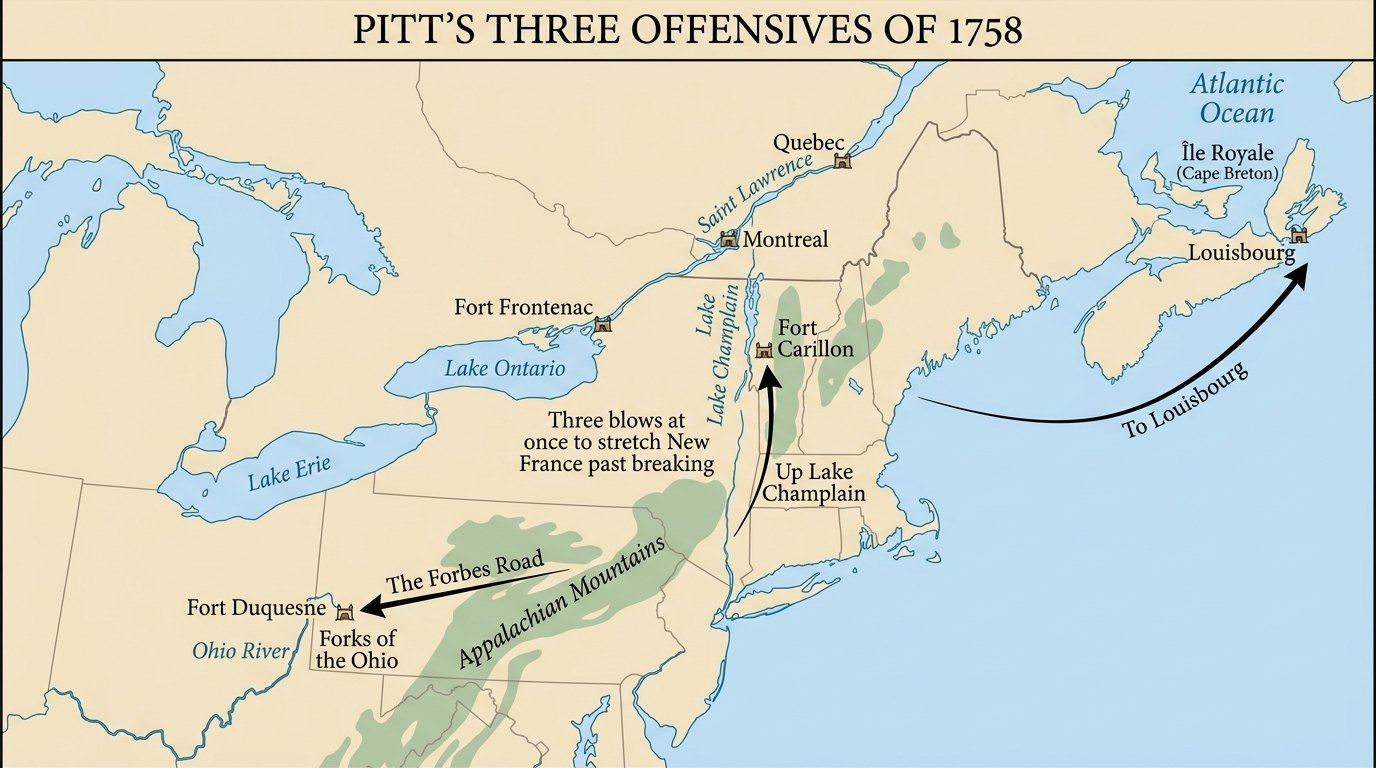
Britain had just won the greatest victory in its history. France was driven off the North American continent, and a coast-to-interior empire stretched out where French forts had stood a few years before. And then the bill came due.
The war that finally pulled the colonies onto the same side, against France, produced the one thing that turned them against Britain itself: a tax bill. The fight over who would pay for the last war became the opening fight of the next one. Both fuses, the one that burned toward the Native nations of the interior and the one that burned toward revolution, run back to a single number. The cost of winning.
The cost of winning
Wars are paid for largely on credit. A government at war borrows what it needs by selling bonds (promises to lenders to repay the money later, with interest), and the interest, the yearly fee for borrowing, becomes a fixed bill that comes due whether or not the fighting has stopped. That bill is the national debt, and Britain's national debt roughly doubled over the course of the war, climbing from about £75 million when the fighting began in 1756 to somewhere around £130 million by 1763, a figure most often cited at £132.6 million.
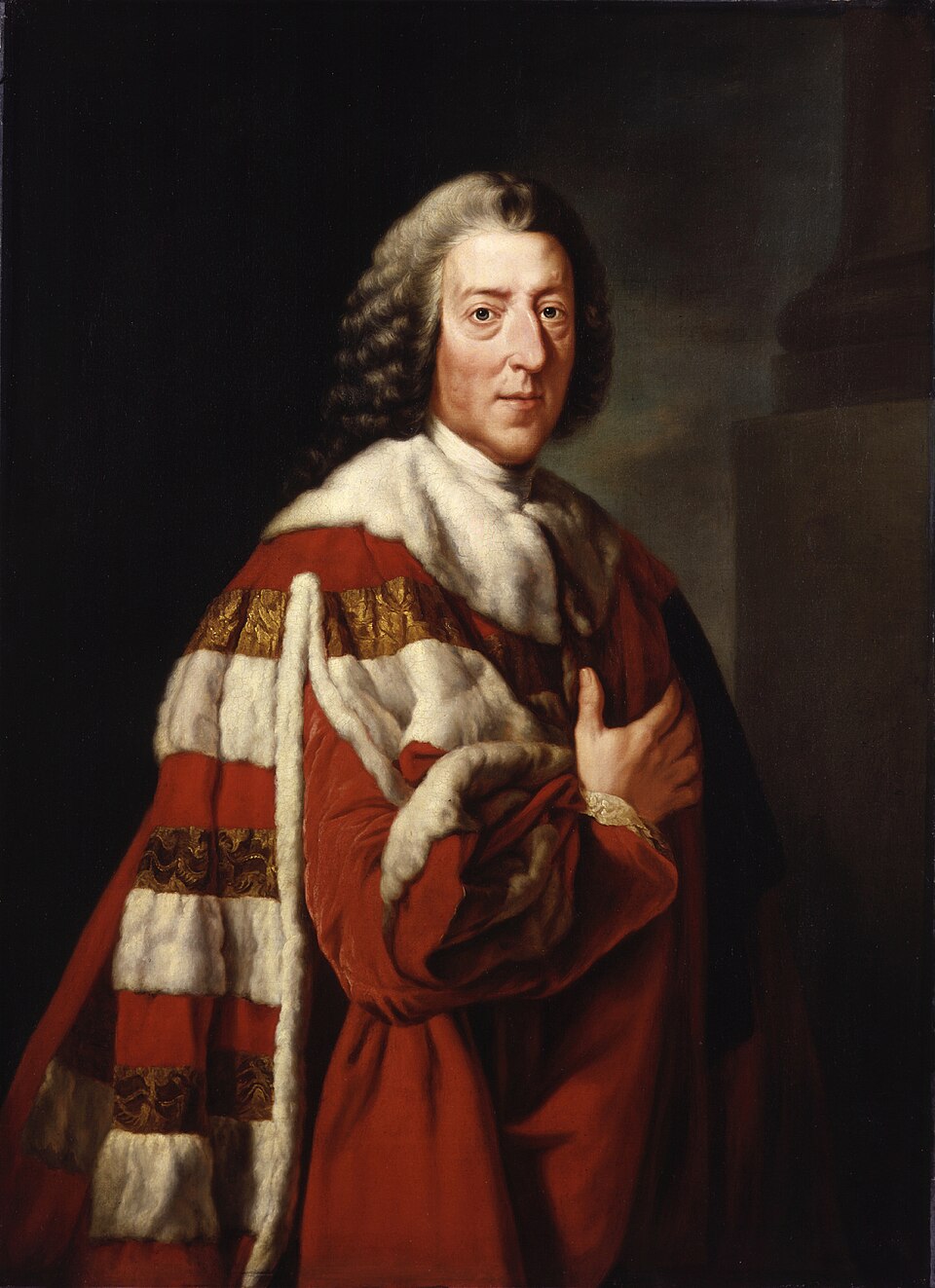
The number itself is hard to feel. What made it bite was the interest. Servicing the debt, just paying the yearly fee on all that borrowing, swallowed an enormous share of the entire national budget after the war, by some accounts more than half of it. A government can win a war and still spend the peace cornered by its own creditors, and that is roughly where Britain found itself.
Worse, the spending did not stop when the shooting did. There was now an empire to hold.
An army that wouldn't go home
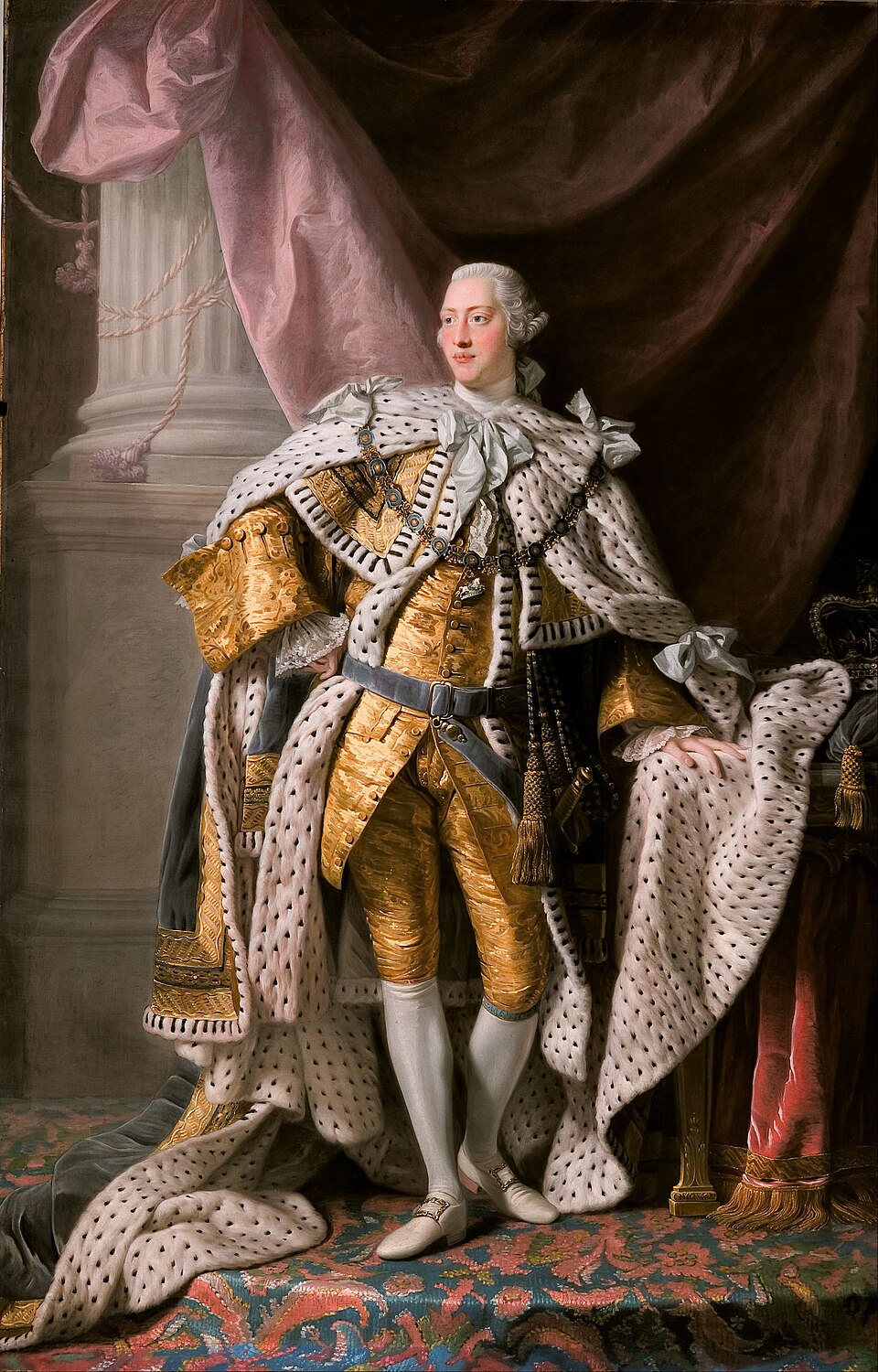
Conquering territory is one thing. Keeping it is another, and the interior Britain had just taken from France was not empty. It was Native land, full of nations with their own armies, their own diplomacy, and no intention of being inherited like furniture. To hold it, the Bute ministry, the government of the day, decided in early 1763 to keep a peacetime standing army of about 10,000 regulars (full-time professional soldiers) stationed in North America.
That decision was made before anyone in London knew what was coming. It cost money, somewhere in the range of a few hundred thousand pounds a year, with the figure tied to the planning most often given as roughly £200,000 annually. And it cost something harder to price. To many colonists a standing army kept up in peacetime was not protection but a warning. In the British political tradition they had grown up on, a peacetime army was the classic instrument of tyranny, the thing kings used to overawe a free people. Now there was one camped among them, and they had not asked for it.
Two years later Parliament handed the colonists the bill for housing that army. The Quartering Act of 1765, given royal assent (the king signing a bill into law) on 15 May 1765, passed in the same session as the Stamp Act, required the colonial assemblies to provide and pay for the barracks, food, and supplies of the British regulars stationed in their colony. The upkeep of the standing army now landed directly on colonial purses, by the act of a Parliament the colonists did not elect, which fused the old fear of a standing army to the newer grievance of being taxed without consent. To the colonists a forced levy to house and feed the King's soldiers looked like a tax in disguise, no different in principle from the Stamp Act. The act required quartering in barracks, public houses, and empty buildings, not in occupied private homes, and its most explosive enforcement would come later, in 1767. But the principle stung at once, and it echoes a decade on in the Declaration of Independence's charge against the King, "for quartering large bodies of armed troops among us."
The army's whole reason for being sat on top of an active war, and the people that war was actually against are not a backdrop to this story. They are one of its two endings.
The people the army was for
Even as London was drawing up garrison budgets, the interior erupted. In the spring of 1763 a broad, loosely coordinated resistance of Native nations rose against the new British presence, the conflict the British called Pontiac's War (April 1763 to July 1766). It stretched across the Great Lakes (the Odawa, Ojibwe, Potawatomi, and Wyandot), the Ohio Country (the Lenape, Shawnee, Seneca, and Mingo), and the Illinois Country (the Miami, Kickapoo, Wea, Mascouten, and Piankashaw). These were allied communities acting in concert, not one confederacy under a single commander.
They fought for their own aims, not anyone else's. With the French gone, the careful diplomacy that had kept the interior balanced was gone too. General Jeffery Amherst had cut off the customary gifts of powder and goods that the French had always provided and that Native nations understood as the necessary courtesy of diplomacy, not charity. Cutting them off read as contempt, even as a prelude to war. Settlers were already pushing onto Native land. The nations of the interior rose to halt that encroachment and to force the British back to honest terms of trade, a war to defend their sovereignty, fought on their own account.
The Odawa war leader Pontiac became its most prominent figure, laying siege to Fort Detroit from May 1763 with several hundred warriors, a siege that held for roughly six months. The resistance drew much of its fire from Neolin, "the Delaware Prophet," a Lenape spiritual leader who taught that the Master of Life was displeased that Native peoples had taken up the white men's bad habits, their goods and their alcohol, and that they should return to older ways and push the British back off their land.
The cost was real and ran in every direction. Eight British forts fell between mid-May and mid-June of 1763; Forts Pitt and Detroit held. Roughly 400 British soldiers were killed, and an estimated 2,000 settlers were killed or captured along the frontier (figures that are estimates, and vary). Historians now read the war not as a Native defeat but as a stalemate, and one of its direct results was that London tried to buy quiet by drawing a line.
Off the fieldThe Treaty of Paris & the Proclamation LineThat line, the Royal Proclamation of 1763, ran along the crest of the Appalachian Mountains and reserved the country beyond it as Indian territory, forbidding colonial settlement and private land purchase to the west of it. On paper it protected Native land. In practice it protected it only briefly and only in theory; colonists ignored the line almost immediately, and it was steadily eroded. But it did two things at once that mattered enormously. It told land-hungry colonists that the west they thought they had just helped win was now closed to them. And it confirmed, to a Treasury already drowning in debt, that holding the conquest would mean keeping that expensive army in the field.
Off the fieldPontiac's War & the Aftermath for Native NationsSo the standing army the debt could barely afford, the Native war it was actually fighting, and the Proclamation Line that enraged the colonists were a single knot. All of it was downstream of the conquest. Now London had to find the money.
Why not just tax England?
The obvious place to raise money was at home. The trouble was that the British public was already among the most heavily taxed populations in Europe, and London had just learned the hard way what happened when you asked them for more.
In 1763 Lord Bute's ministry passed the Cyder Act, a tax of four shillings on every hogshead (a large barrel) of cider made. Cider was brewed at home all over the west of England, so to collect the tax the act handed excise officers (the government's tax collectors) sweeping powers, including the power to search private homes without a warrant. That was the part that detonated. It was not merely a money grab; it was the government letting itself into the kitchen. Riots broke out across the cider counties, the outrage cut across every class, and Bute was hanged in effigy (burning or hanging a dummy or likeness of a person rather than the person himself). His successor, George Grenville, shoved the cider tax through and beat back a repeal motion in February 1764.
The lesson Grenville took from the wreckage was simple. He could not squeeze more out of Britain without the country coming apart. So he looked across the Atlantic, to the people he believed had gotten the most out of the war and paid the least for it.
Grenville's reasoning
George Grenville took over as head of the Treasury and prime minister in April 1763, and his logic was, on its own terms, almost reasonable. The colonists were the war's chief beneficiaries; France had been swept off their continent. The army being kept in America was being kept for their defense. So they should help pay for it.
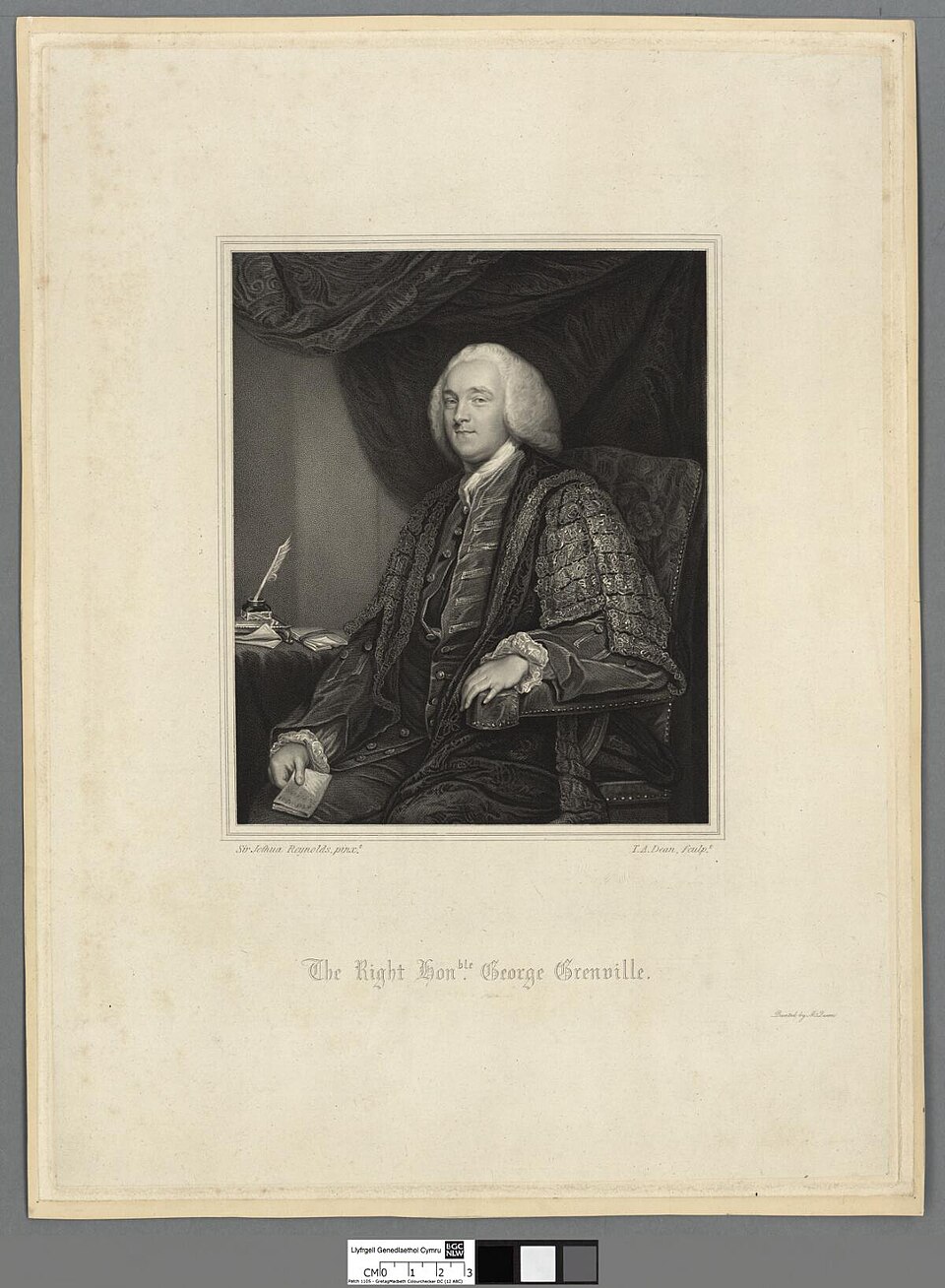
He was not asking them to retire the national debt, or even to cover its interest. He wanted only a partial contribution toward the cost of their own garrison. The army ran somewhere around £200,000 a year; his whole American revenue program was projected to raise only about £78,000 to £79,000 of it. A share, not the whole bill.
But underneath the arithmetic sat a fault line he either did not see or did not weigh. The colonies elected no members to Parliament. Not one. Grenville was preparing to tax people who had no vote in the body taxing them, and that was the exact nerve the colonists would press until it broke.
"it is just and necessary that a revenue should be raised … for defraying the expenses of defending, protecting, and securing" the colonies. — preamble to the Sugar Act, 1764
The first reach into colonial pockets
Grenville moved in 1764. The Sugar Act, passed on 5 April, looked at first like a gift. It actually lowered the duty on foreign molasses (the thick syrup left over from refining sugar, the raw material of the colonies' rum trade) from six pence a gallon down to three. The old six-pence duty, set back in 1733, had been so steep that colonial merchants simply smuggled around it, and almost nobody collected it. That was the whole trick. The lower three-pence rate was meant to be genuinely enforced and genuinely collected. A duty colonists had laughed off became, at half the rate, a real tax.
And it was a tax for money, not for trade. Earlier duties existed to steer commerce, to nudge merchants toward British goods. The Sugar Act said outright in its preamble that its purpose was revenue, to help pay for defending the colonies. That was new. For the first time, Parliament was reaching into colonial pockets simply to take money out.
To make the collection stick, the act buried merchants in paperwork, demanding detailed cargo manifests, and expanded the customs officers' powers. Most galling of all, it sent accused smugglers to be tried in vice-admiralty courts, run by a single Crown-appointed judge with no local jury, where the accused was effectively presumed guilty, instead of before colonial juries, who had a comfortable habit of acquitting their neighbors.
Two weeks later came the squeeze from the other side. The Currency Act, given royal assent on 19 April 1764 and in force that September, did not ban colonial paper money outright, but it forbade the colonies from making any future paper money legal tender (currency a creditor is legally required to accept as payment) for debts public or private. It extended to all the North American colonies a restriction that had previously bound only New England.
The cruelty of the timing was that gold and silver coin, hard money, was chronically scarce in the colonies. Paper money was how a coin-starved economy did business. Strangle paper money's standing as legal tender, and you tighten an economy that had little hard coin to begin with, at the precise moment Britain was getting ready to demand payment in exactly that scarce coin.
The Stamp Act
Then, on 22 March 1765, Parliament passed the act that turned a grievance into a movement. The Stamp Act was the first direct internal tax Parliament had ever laid on the colonies, and that distinction was the heart of the quarrel.
Every earlier duty had been external, a tax on goods crossing a border, collected at the port, the kind of thing colonists had grudgingly accepted as part of regulating trade. The stamp tax was internal: a tax on ordinary transactions happening entirely inside a colony, with nothing crossing any border at all. It required a purchased, embossed government stamp on newspapers, pamphlets, legal documents, magazines, playing cards, dice, and a long list of other papers used in daily life. It landed on lawyers, printers, merchants, and tavern-keepers all at once, which meant it landed on exactly the people most able to make noise about it, and on ordinary colonists every time they reached for a sheet of paper.
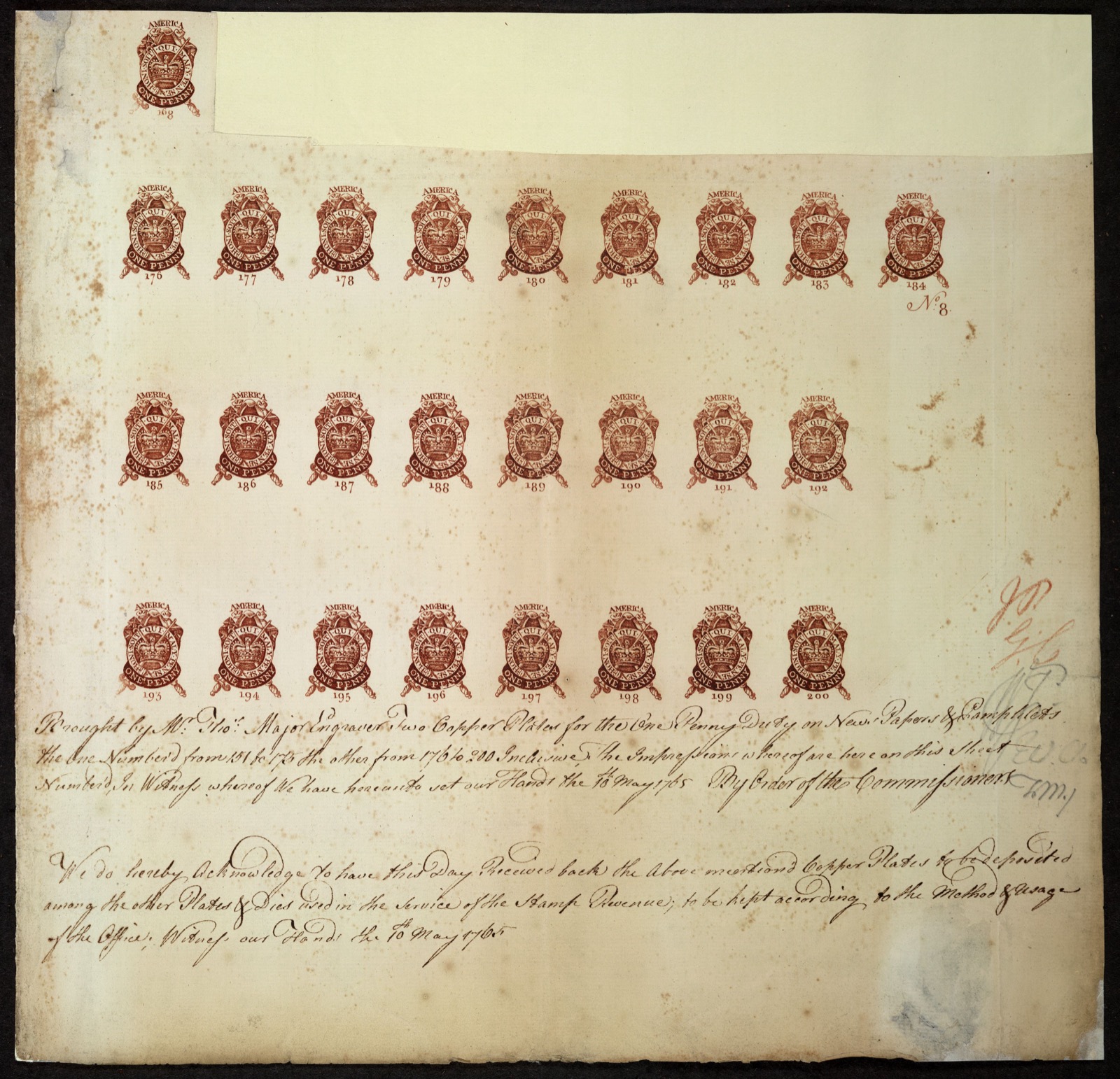
And the duty had to be paid in specie, in gold and silver coin, the very hard money the Currency Act had just made scarcer. The two acts caught the colonies in a vise: pay a new tax, in the one currency we have just helped drain out of your economy.
No taxation without representation
The colonists answered with a principle, not just a complaint. A free people, they held, can be taxed only by a body they have voted for. They elected no one to Parliament, so Parliament had no right to tax them; only their own elected colonial assemblies could. To be taxed by a legislature you cannot vote in was, in their eyes, to have your property taken without your consent, which was no better than theft. That distilled idea, the cry that taxation without representation was no legitimate taxation at all, became the rallying conviction of the age.
The sturdiest early statement of it had come the year before, in 1764, from the Massachusetts lawyer James Otis Jr., in a pamphlet called The Rights of the British Colonies Asserted and Proved.
"The very act of taxing, exercised over those who are not represented, appears to me to be depriving them of one of their most essential rights." — James Otis Jr., 1764
Britain had an answer ready, and it was called virtual representation. The colonists, the argument ran, were represented in Parliament the same way most Britons were, since the great majority of people in Britain could not vote either, yet were held to be represented by Parliament as a whole. The writer Samuel Johnson put it plainly: the colonists were "represented by the same virtual representation as the greater part of England." The colonists thought this was sophistry, a clever evasion dressed up as a principle, and dismissed it.
The colonies answer
The response was not just argument. It was organized, and it was effective.
In October 1765, twenty-seven delegates from nine colonies gathered in New York City for the Stamp Act Congress, the first time the colonies had come together to confront London with one voice. They issued a Declaration of Rights and Grievances laying down the bedrock claim that taxes could be imposed only "with their own consent, given personally, or by their representatives." James Otis was among the delegates and helped draft the address to the House of Commons.
"The only Representatives of the People of these Colonies, are Persons chosen therein by themselves, and that no Taxes ever have been, or can be Constitutionally imposed on them, but by their respective Legislature[s]." — Declaration of Rights and Grievances, 1765
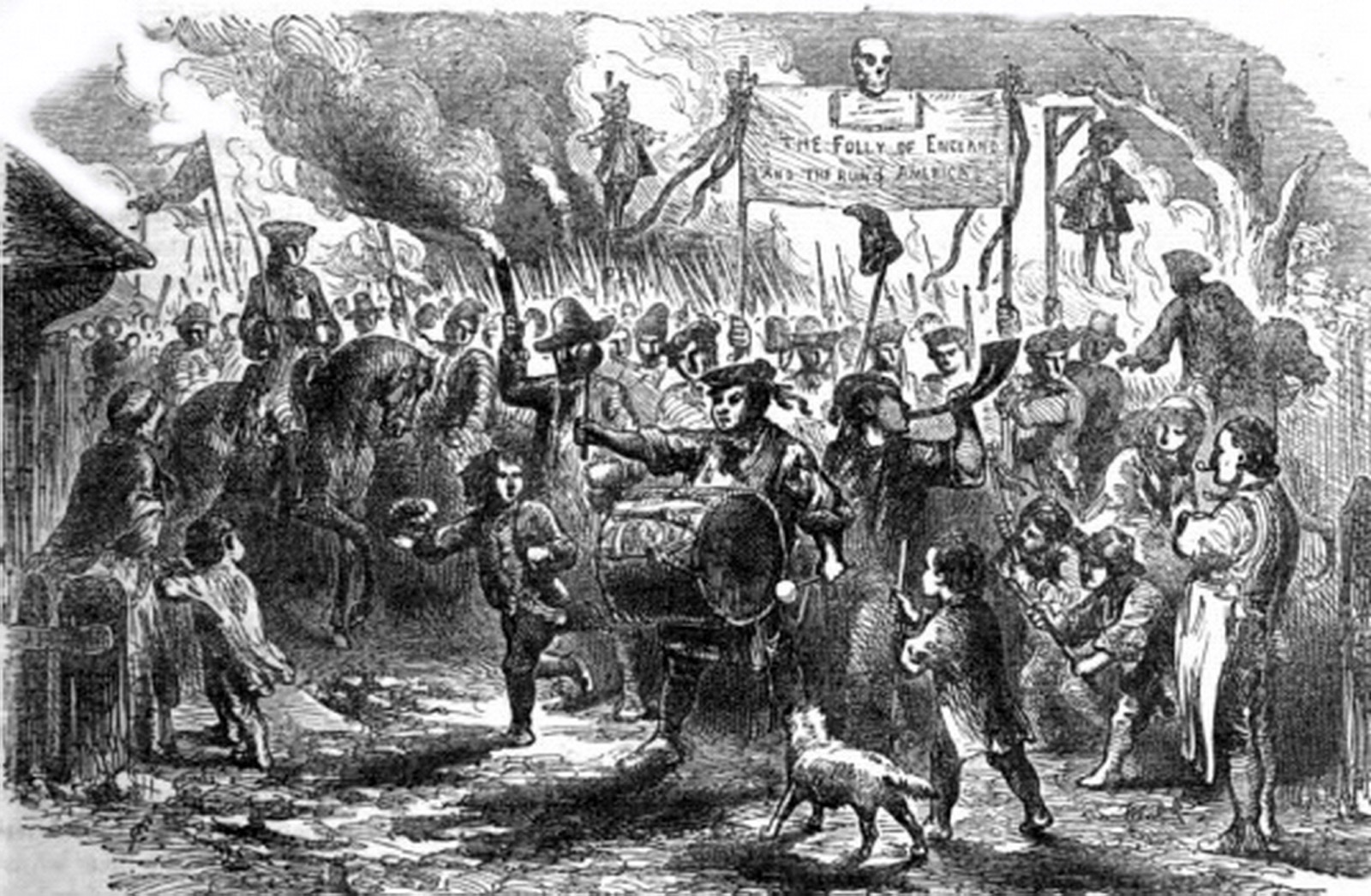
While the delegates argued the law, others made the law impossible to enforce. The Sons of Liberty, networks of organized protest and intimidation, went after the men appointed to sell the stamps. In Boston on 14 August 1765, the Massachusetts stamp distributor Andrew Oliver was hanged in effigy and his property attacked; he resigned. By 16 November, twelve stamp distributors had quit under pressure. Colonial merchants piled on with non-importation agreements, refusing to buy British goods, which turned British merchants into a lobby for repeal back home. By the day the Stamp Act took effect, 1 November 1765, it was a dead letter. There was almost nobody left willing to hand out a stamp.
Repeal, and the principle Britain kept
By early 1766, with American trade strangled and British merchants howling, London looked for a way out. On 13 February 1766, Benjamin Franklin was examined before the House of Commons, answering 174 questions over roughly four hours, and he handed Parliament the distinction the colonists had been making all along.
"I had never heard any objection to the right of laying duties to regulate commerce; but a right to lay internal taxes was never supposed to be in parliament, as we are not represented there." — Benjamin Franklin, Examination before the House of Commons, 1766
Asked what was now the pride of Americans, Franklin gave an answer that was half joke and half threat: "To wear their old cloaths over again, till they can make new ones." A people willing to dress in rags rather than buy British is a people you cannot tax by force.
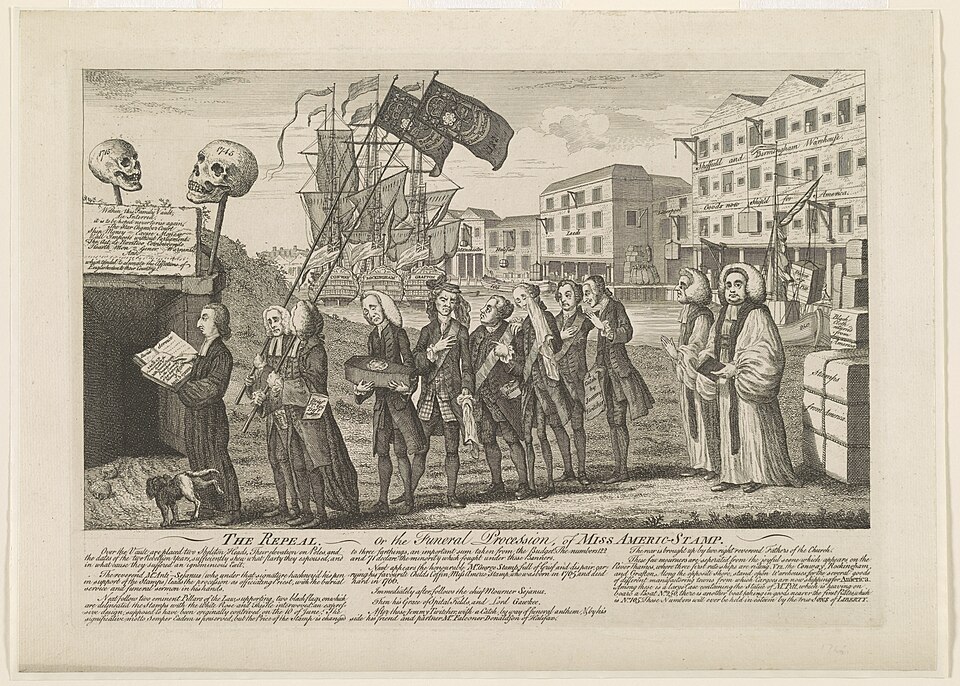
Parliament gave in. The Stamp Act was repealed, with royal assent on 18 March 1766. But on that very same day, unwilling to look like it had been beaten by its own colonies, Parliament passed the Declaratory Act, which gave up the tax while keeping the principle. It asserted that Parliament had the power to make laws binding the colonies "in all cases whatsoever."
That phrase settled nothing. Britain had surrendered the money and clung to the claim, which meant the next reach into colonial pockets, the Townshend duties of 1767, was already coming. The quarrel was not over. It had only been postponed.
One victory, two fuses
One war debt lit two fuses at the same time. One burned west, toward the Native nations: the standing army and the Proclamation Line, the attempt to hold a conquest that was a catastrophe for the nations of the interior, whose land the whole contest had ultimately been about and whose "protected" territory was overrun anyway. The other burned east, toward the colonists: the Sugar, Currency, and Stamp Acts, the bill for that same army, handed to people who had no vote in the hand that wrote it.
The very name "French and Indian War" is the British colonists' name, given for their enemies, as if the Native nations were simply on the other side. In truth they fought on every side, and most of all for themselves, and they paid the steepest price of anyone for a victory that was never theirs to win.
A decade before the Stamp Act, Benjamin Franklin had stood at Albany and proposed that the colonies bind themselves together under one government for their common defense, and had drawn his famous severed-snake cartoon to shame them into it. They had refused. The colonies would not unite to fight the war.
Off the fieldThe Albany Congress & the Plan of UnionA decade later that same idea came back, this time in anger, and it stuck. The colonies that would not gather to fight France gathered readily enough to resist the tax for it, at the Stamp Act Congress, and then, in 1774, at the First Continental Congress. The union Britain could not coax out of them for the war, they built against the bill for it. The fight over who would pay for the last war had set the colonies squarely on the road to the next one, against Britain itself.