In 1763 two pieces of paper rearranged the map of North America. One was a treaty signed in Paris by men who had never set foot on the land they were trading. The other was a royal proclamation that drew a line down a mountain range and told the colonists they could not cross it. Between them, those two documents handed Britain the eastern half of a continent, erased France from the mainland, and made a promise to the Native nations who lived on most of the ground in question. The nations whose homelands were being signed back and forth were not in the room for any of it.
A World War That Outlived Its North American Front
The fighting in the woods of North America had a bigger name in the rest of the world. To the British colonists it was the French and Indian War, named for the enemies they faced, the French and their Native allies. To everyone else it was one front of the Seven Years' War, a global conflict that raged in the Caribbean, in India, in the Philippines, in West Africa, and across Europe. North America was just the corner of it that happened to be on fire in the colonists' own backyard.
By the standards of that war, the North American front had already been settled. Quebec fell in 1759, Montreal in 1760, and with them New France, France's whole mainland empire, was effectively conquered. But a world war does not stop because one of its theatres goes quiet. The powers kept fighting for two more years, on oceans and continents an ocean away, until everyone involved was exhausted and broke.
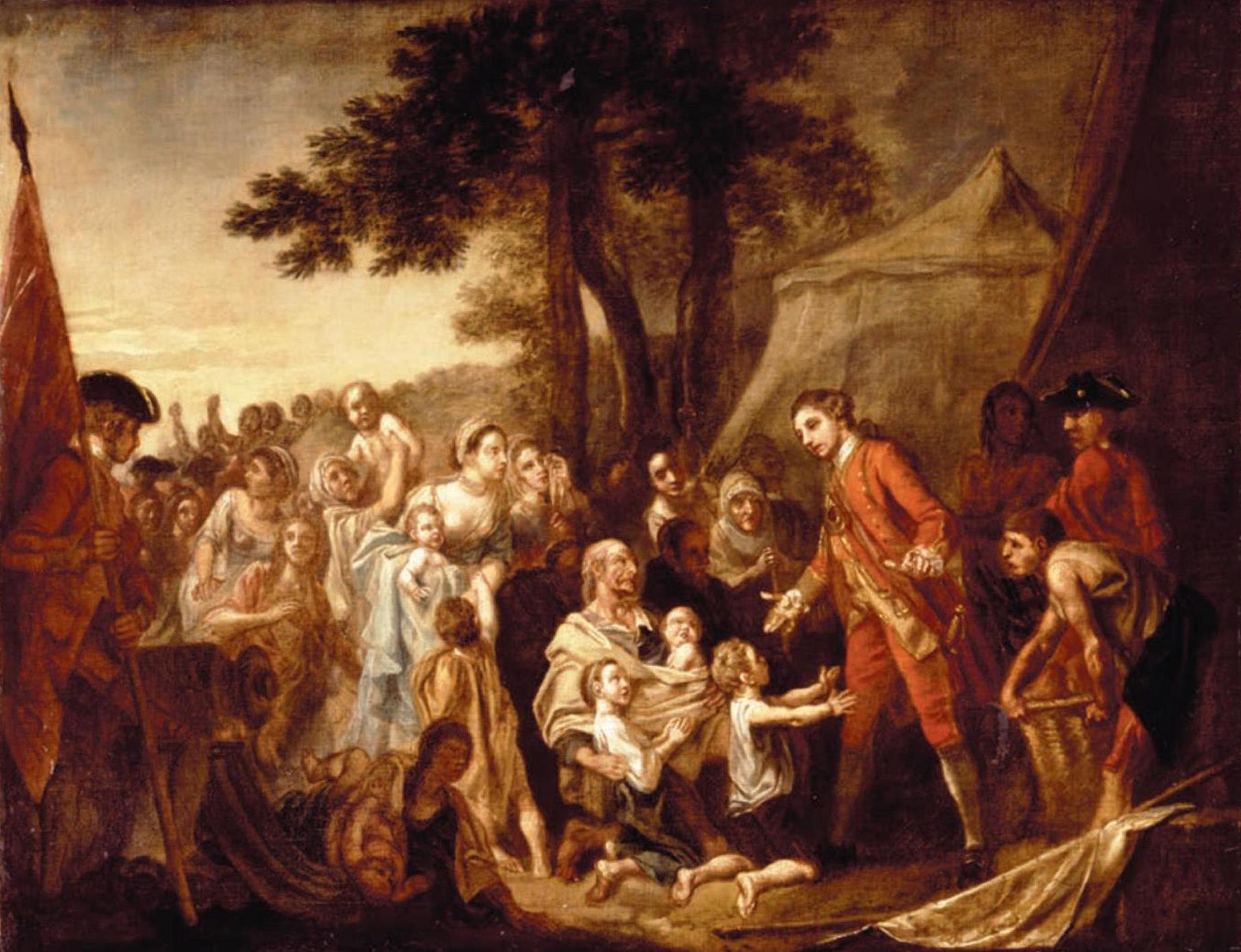
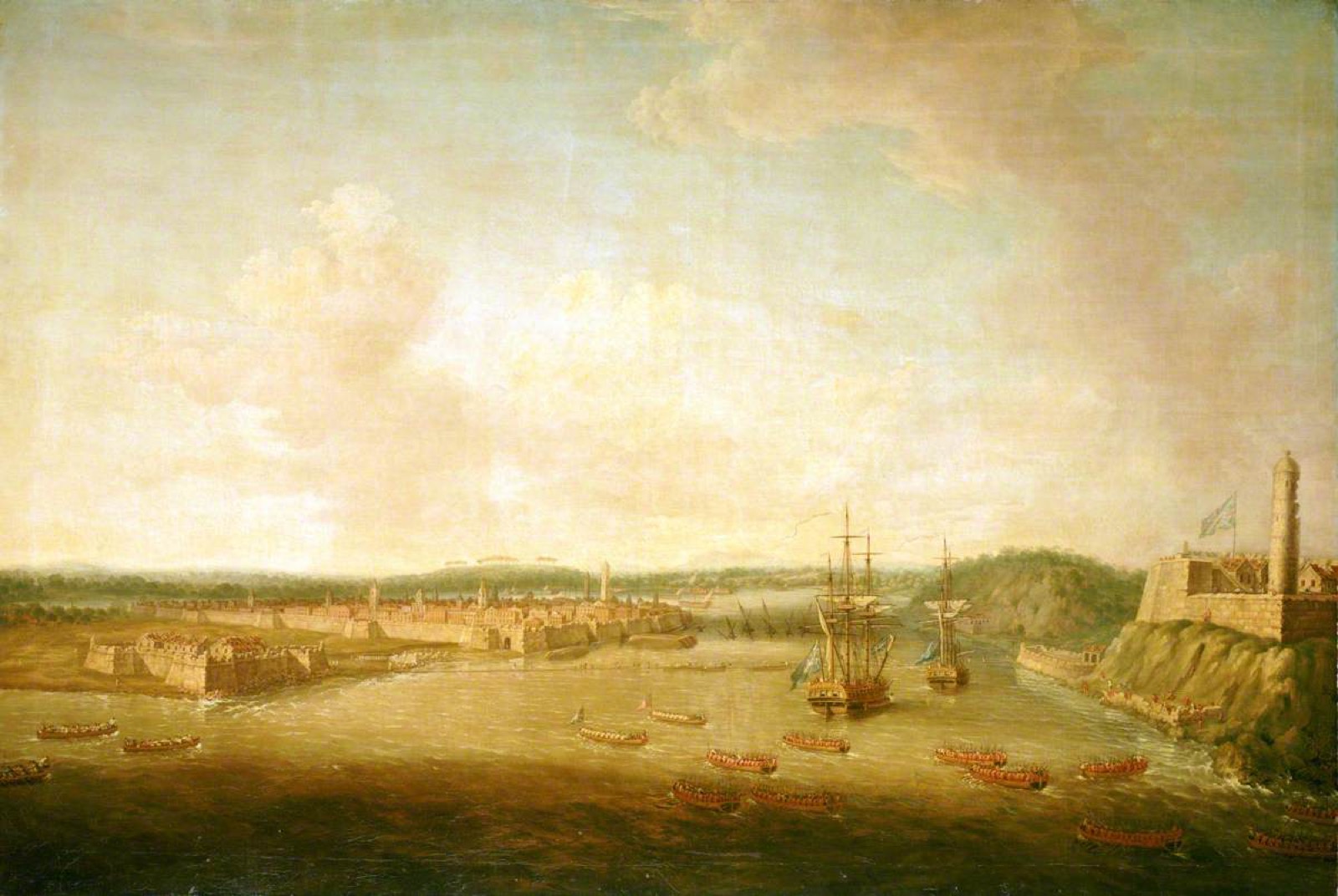
Spain made things worse for itself by jumping in late. In August 1761 Spain signed the Third Family Compact with France, an alliance between the two Bourbon monarchies (Spain and France were ruled by branches of the same royal family, the Bourbons). Spain then embargoed British trade, seized British goods, and threw out British merchants, and Britain declared war on Spain on 4 January 1762. It was a costly bet. In August 1762 a British expedition captured Havana, the great port of Spanish Cuba. About a month later another British force took Manila in the Philippines. Spain had entered the war to help France and instead lost two of its richest colonial cities to the British navy.
So when the diplomats finally sat down, Britain held nearly every good card. Over the course of the war it had taken Canada, the sugar islands of Guadeloupe and Martinique, Dominica, Pondicherry (France's main trading post in India), Senegal in West Africa, and Havana and Manila from Spain. The only question left was how much of that haul Britain would keep.
The Treaty of Paris, 10 February 1763
The peace was signed in Paris on 10 February 1763, between Great Britain, France, and Spain, with Portugal, Britain's ally, in agreement. The man steering the French side overall was the foreign minister, Étienne-François, Duc de Choiseul, who would shape the bargaining over which colonies France gave up and which it fought to keep. The signatories were grandees with long names: for Britain, John Russell, 4th Duke of Bedford; for France, Choiseul's cousin César Gabriel de Choiseul, Duke of Praslin; and for Spain, Jerónimo Grimaldi (Spanish).
The heart of it was a single enormous transfer. France gave up Canada with all its dependencies, and all of its territory east of the Mississippi River, to Britain. The treaty fixed the new border as a line "drawn along the middle of the River Mississippi, from its source to the river Iberville." From the Atlantic seaboard to that river, the whole interior was now nominally British.
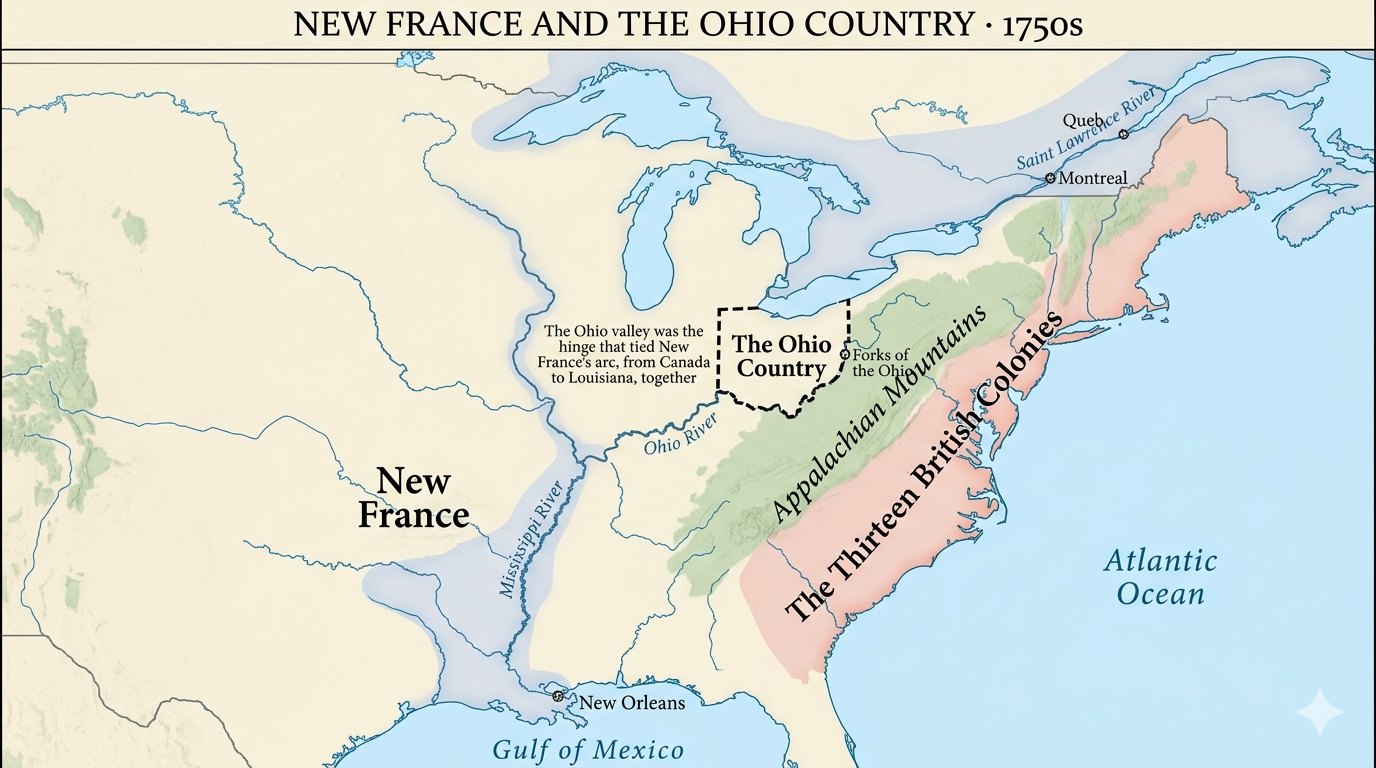
There was one strange exception written into the text. The treaty said "the town of New Orleans and the island in which it is situated, which shall remain to France." On paper, France kept its city at the mouth of the great river. In reality, France had already given it away. A few months earlier, in the secret Treaty of Fontainebleau of November 1762, France had quietly handed Louisiana, meaning everything west of the Mississippi, plus New Orleans itself, to Spain. So the New Orleans the Paris treaty left "to France" was already promised elsewhere. France was not keeping a foothold on the mainland. It was leaving entirely, just through two different doors. (Spain would not actually take physical possession of New Orleans until 1769.)
Spain had its own trade to make. To get Havana and Manila back, Spain handed Britain "Florida, with Fort St. Augustin, and the Bay of Pensacola, as well as all that Spain possesses on the continent of North America." Cuba and the Philippines went home to Spain; Florida became British.
France did not leave the table empty-handed. It kept what it valued most: the wealthy Caribbean sugar islands of Guadeloupe and Martinique, along with Saint Lucia and Gorée in West Africa. It kept its trading posts in India, Chandernagore and Pondicherry, though stripped of the right to fortify them. And it kept its Newfoundland fishing rights and the small islands of Saint Pierre and Miquelon as a base for the fishery. France had lost a continent and held on to its sugar and its cod.
One more clause mattered for the people now living under a new flag. Britain agreed, in the treaty's own words, "to grant the liberty of the Catholick religion to the inhabitants of Canada," and gave French inhabitants eighteen months to leave if they chose. Protestant Britain had just inherited a large French Catholic population, and it had to promise not to persecute them.
A Few Acres of Snow
Here is the part that sounds invented and is not: in London, serious people argued that Britain should give Canada back and keep a sugar island instead.
The logic was money. Britain had captured both Canada and Guadeloupe, a small French island in the Caribbean, and it planned to return some conquests at the peace to avoid provoking France into an immediate revenge war. The question was which to keep. Guadeloupe was producing something on the order of £6 million a year in sugar. By some accounts that one island grew more sugar than all of Britain's existing Caribbean colonies put together. Canada, against that, looked to many like a frozen near-wilderness whose chief exports were codfish and beaver pelts.
The most quotable sneer came from France. The writer Voltaire, in his novel Candide (published in 1759), had a character dismiss the whole war as a squabble in which the two nations "are at war about a few acres of snow somewhere around Canada, and... are spending on this beautiful war more than all Canada is worth." In the original French it was even crisper: quelques arpents de neige, a few acres of snow.
"...at war about a few acres of snow somewhere around Canada, and... are spending on this beautiful war more than all Canada is worth." — Voltaire, Candide (1759)
Britain kept Canada anyway, and handed Guadeloupe back to France. The reasoning was strategic rather than commercial. Holding Canada removed the French military threat from the back door of the Thirteen Colonies and locked up the continental interior. A sugar island, however rich, would have left Britain tangled up with a still-dangerous French Caribbean. Choiseul, on the French side, was perfectly happy with the swap: he would rather have the defensible, profitable islands than keep pouring money into Canada. Whether the sugar was "really" worth more than half a continent was argued then and is argued now. What is not in doubt is that some of the sharpest minds in London genuinely thought a Caribbean island might be the better prize than all of New France.
Master of the East
When the ink dried, Britain was the dominant power in North America east of the Mississippi, and New France was finished as a force on the continent. The French threat that had hung over the colonies for generations was simply gone.
That was a triumph, and it was also a problem. Britain now had to govern an empire far larger and far stranger than the one it started the war with. There was the French Catholic population of Canada, which is why the treaty bothered to guarantee their religion. There were the new Floridas in the south. Britain had won an enormous, diverse, hard-to-administer expanse, and it had won it on borrowed money. The war had been ruinously expensive, financed on debt, and the Crown would soon go looking for ways to recoup the cost and to manage its vast new frontier on the cheap.
That search would not end well. The U.S. State Department's own history puts the long fuse plainly: the treaty "ultimately encouraged dissension between Anglo-American colonists and the British Government because their interests in North America no longer coincided." The victory that removed France from the colonists' backs also removed the reason they had needed Britain so badly. But that is a story for later, on the road to revolution.
A Line Down the Mountains
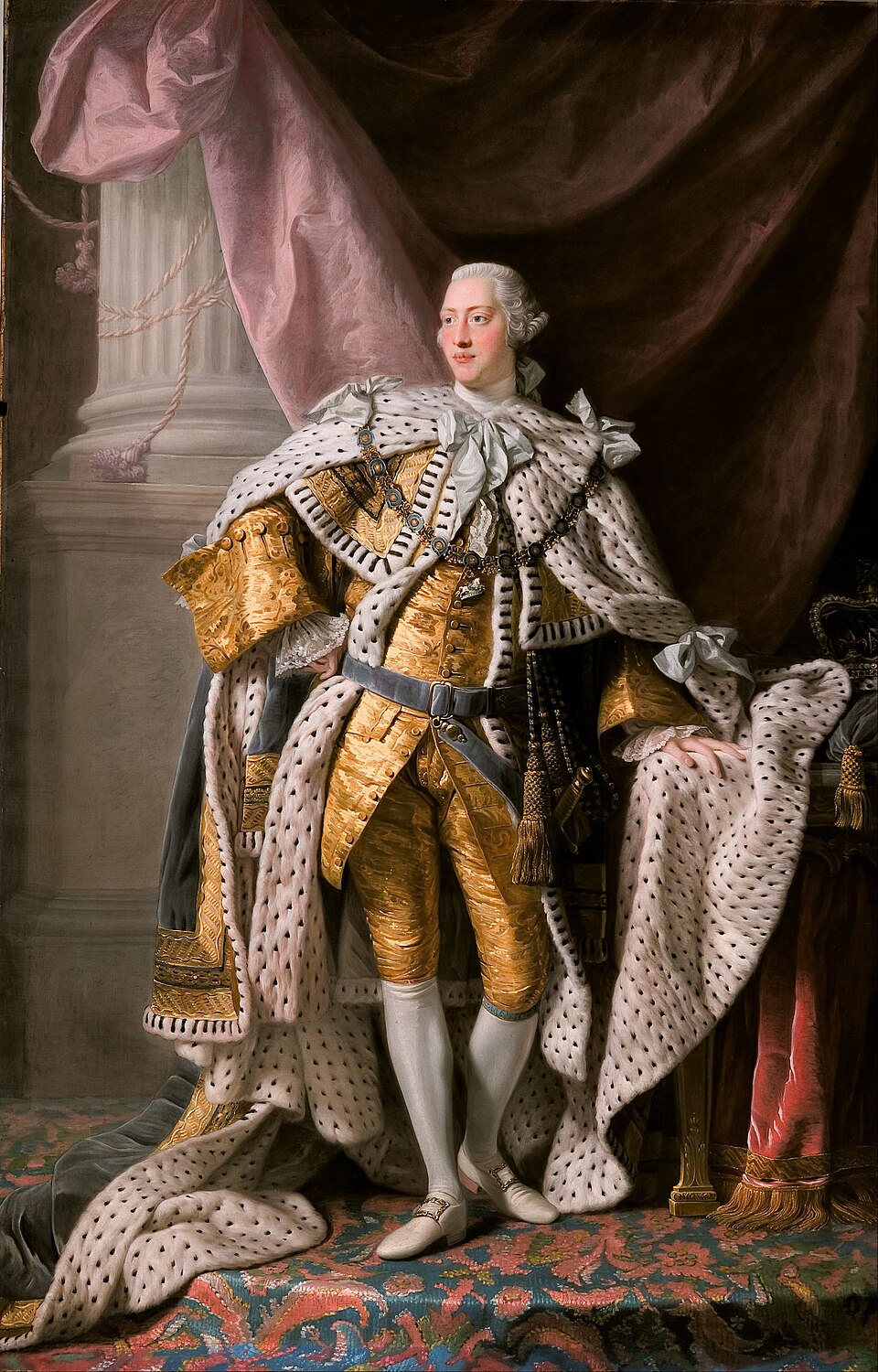
That same year, the second piece of paper appeared. On 7 October 1763, King George III issued the Royal Proclamation of 1763, and it drew a line.
The line ran roughly along the crest of the Appalachian Mountains, the long ridge that separated the settled colonies on the Atlantic coast from the interior, following the high ground from Georgia in the south up through the colonies. Everything west of that crest was closed to colonial settlement. In the Proclamation's own language, the Crown would "reserve under our Sovereignty, Protection, and Dominion, for the use of the said Indians, all the Lands and Territories" beyond the new provinces. The West was reserved for the Native nations.
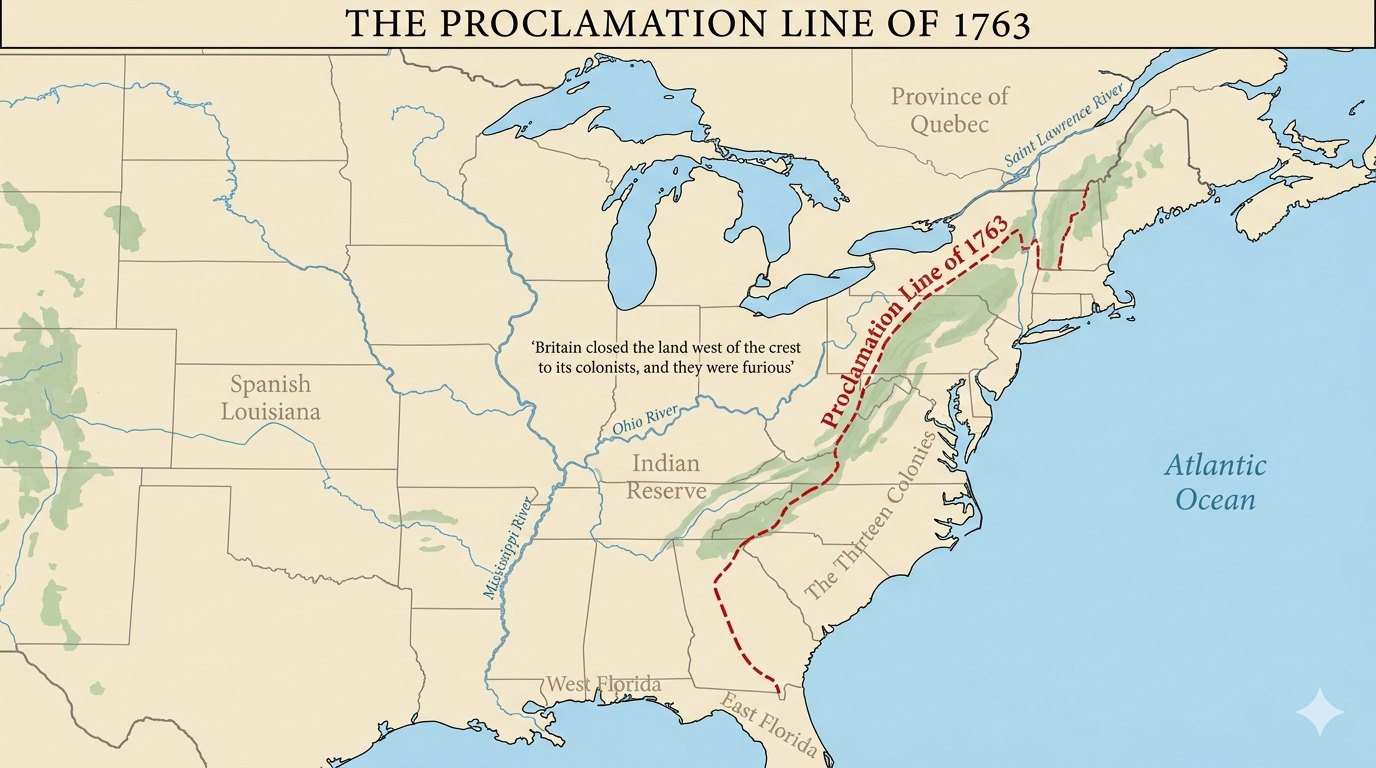
It went further than just drawing a boundary. The Proclamation forbade colonial governors from granting any land beyond their borders, and it forbade private individuals from buying land directly from Native peoples at all. If Native land was to change hands, the Proclamation said, "the same shall be Purchased only for Us, in our Name, at some public Meeting or Assembly of the said Indians." Only the Crown could buy, and only in the open, at a formal council. A frontier speculator could no longer ride west, find a chief, and trade rum for a valley.
The same document organized the new winnings into governments: the Province of Quebec to the north, East Florida and West Florida to the south, and Grenada down in the ceded Caribbean islands.
Why the Line Was Drawn
The Crown did not draw the line out of tenderness. It drew it for two practical reasons, and both were about keeping order.
The first reason was on fire as the Proclamation was being written. In the spring of 1763, Native nations of the Great Lakes and the Ohio Country had risen against the British in a war that would seize nine British forts across the region. London had already been working toward a western boundary as part of reorganizing its enlarged empire after the treaty; news of the uprising hastened the Proclamation out the door. It was, in part, the Crown's attempt to reassure those nations that British settlers would not be allowed to flood onto their lands now that the French were gone. A promise of protection was cheaper than another war.
Off the fieldThe Ohio Country & the Ohio CompanyThe second reason was control. The Crown, not land companies and not individual colonies, would decide the pace of westward expansion, who bought what, and how the profit was shared. A frontier managed from London was a frontier that could be taxed, ordered, and kept from sparking expensive wars.
There was something genuinely new in the Proclamation, too. It was the first time British colonial law had formally acknowledged that Native nations held title to their land, that the ground was theirs until they gave it up to the Crown by treaty. That recognition still echoes; Canada's Constitution Act of 1982 names the Royal Proclamation as a foundation of Aboriginal rights. But historians have long argued over what it really meant. The scholar Colin Calloway notes that "scholars disagree on whether the proclamation recognized or undermined tribal sovereignty." It is best read as a recognition that was real on paper and undercut almost the moment the ink dried.
The Line Nobody Obeyed
The colonists who heard about the line were furious, and the angriest of all were the ones who had fought the war partly to win the very land it now closed off.
Land speculators (men who bought up large tracts hoping to resell them at a profit) had spent years and money on western claims that the Proclamation suddenly walled off. Veterans had been promised grants of frontier land for their service. Land companies like the Ohio Company held paper claims west of the new line. To all of them, a king across the ocean had just told them that the prize they had bled for was off-limits.
George Washington was one of those men, and he is the clearest window into how the colonial gentry actually treated the line. Washington had been promised land bounties for his service in the war, and he regarded the Proclamation not as law to be obeyed but as a temporary inconvenience to be quietly worked around. In a private letter to his land agent William Crawford on 17 September 1767, he said so in plain words. The Proclamation, he wrote, was nothing more than "a temporary expedien[t] to quiet the Minds of the Indians & must fall of course in a few years." Anyone "who neglects the present oppertunity of hunting ou[t] good Lands... will never regain it." And he wanted it kept quiet: Crawford should "keep this whole matter a profound Secret," scouting the best western land "under the pretence of hunting other Game."
"I can never look upon that Proclamation in any other light... than as a temporary expedien[t] to quiet the Minds of the Indians & must fall of course in a few years." — George Washington to William Crawford, 17 September 1767
If a man as prominent as Washington was already scheming to grab western land while pretending to hunt, the line stood no chance. Settlers crossed it almost at once. The Crown had neither the troops nor the will to police a frontier hundreds of miles long, running the length of a mountain range. Within a few years the boundary was being formally shoved westward anyway, by a string of new treaties (Fort Stanwix and Hard Labour in 1768, Lochaber in 1770) that opened still more Native land to purchase. The line of 1763 lasted, in any real sense, hardly any time at all.
And it became one more grievance. To colonists, the Proclamation was proof that the empire they had just fought for would now box them in for its own convenience. Their interests and London's had begun to pull apart, and the line was a visible, infuriating sign of it. The same victory that removed the French would, within a dozen years, help push the colonies toward a war against Britain itself.
A Promise Drawn on a Map
Step back from the diplomats and the speculators, and one fact sits underneath the whole year. The land being traded in Paris and fenced off in the Proclamation belonged to people who were party to none of it.
When the European powers carved up North America in the Treaty of Paris, they did not consult a single Native leader. They did not weigh Native interests. A continent's worth of homeland east of the Mississippi was transferred from one empire to another by men sitting in a palace an ocean away, with no Native nation present and none consenting. It was the same silence that had run through the whole war: French agents had buried lead plates along the Ohio River claiming the country for their king, British officials had signed royal grants to the same ground, and through all of it the people who actually lived there were treated as a detail on someone else's map.
They were not absent from the land, only from the table. The homelands being "transferred" belonged to nations with deep roots in the Great Lakes and the Ohio Country: the Odawa (Ottawa), the Ojibwe, the Potawatomi, the Wyandot, the Shawnee, the Lenape (also called the Delaware), the Mingo, the Miami, and others. These were not bystanders to the great-power war. They had spent it pursuing their own aims, playing France and Britain against each other to protect their land and their independence, fighting for themselves rather than for either crown. The war the British colonists named for "the Indians" was, for those nations, a fight over who would get to keep living where they had always lived.
And in the spring of 1763, with the French gone and British settlers and traders pressing in, many of those same nations rose against the British, under the leadership of the Odawa war leader Pontiac, whose name in his own language was Obwandiyag. That rising, which took nine British forts, was part of the immediate pressure behind the Proclamation. The Crown had already been moving toward a western boundary as it reorganized its swollen empire; the uprising accelerated that policy into print, and made the grand promise to protect Native land at least in part an answer to a war then raging on the ground.
Off the fieldPontiac's War & the Aftermath for Native NationsSo the Proclamation Line was a real promise, and that is exactly what makes it a tragedy rather than a footnote. The West was reserved for Native nations in October 1763. By the late 1760s it was being taken from them, by settlers who crossed the line, by speculators like Washington who openly called it a passing expedient sure to "fall... in a few years," and by the Crown's own treaties pushing the boundary west. The empire that drew the line could not, and would not, hold to it.
The two documents of 1763 had given Britain a continent and the Native nations a promise. One of those would last. The other was already being broken as the ink dried.