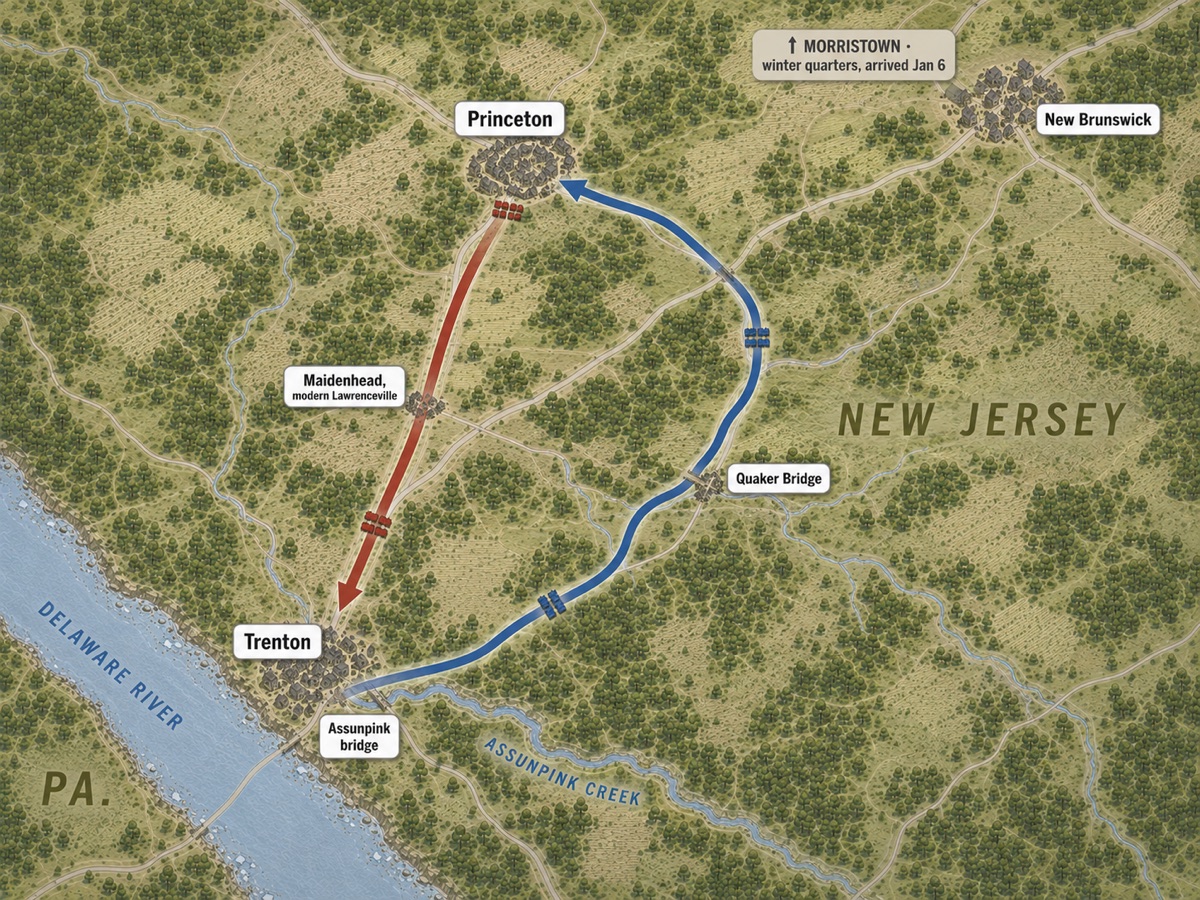
On the evening of January 2, 1777, the American Revolution had been squeezed into one low ridge of ground beside a creek in New Jersey. George Washington's Continental Army (the rebels' regular army, as opposed to the part-time militia) stood on the high ground south of Assunpink Creek, the stream that runs into the Delaware River (the wide river dividing New Jersey from Pennsylvania) at the south edge of Trenton, and across the creek sat a British army under Lieutenant General Charles, Earl Cornwallis, about 5,500 strong, with the river at Washington's back and no good way out. A week earlier this would have seemed an impossible place for the Americans to be, because a week earlier the war had looked over. Washington had spent the fall of 1776 losing New York and retreating across New Jersey, and in December he had privately written, "I think the game is pretty near up." Then, at Christmas, he had crossed the icy Delaware from the Pennsylvania side, where his army had been camped, and on the morning of December 26 destroyed the garrison (the force stationed to hold a town) of Hessians (German professional soldiers hired by Britain) at Trenton, taking some 900 prisoners. He had pulled back across the river with his prizes, then crossed again in the last days of December and concentrated at Trenton, daring the British to come and do something about it.
The war storyThe 1776 collapse and the ten days that answered it: the war for the NorthThe army that made the dare was held together with paper and promises. The enlistments of most of Washington's Continentals expired on December 31, and on the 30th and 31st he had persuaded the bulk of them to stay six more weeks for a ten-dollar bounty (a cash bonus for staying). Cornwallis, for his part, had been about to go home: his baggage was aboard ship for England when the news from Trenton canceled his leave. On January 2 he marched from Princeton, about 11 miles up the Post Road (the main highway between New York and Philadelphia), to finish the rebellion. He left roughly 1,200 men at Princeton under Lieutenant Colonel Charles Mawhood and dropped another 1,500 under Brigadier Alexander Leslie at Maidenhead (modern Lawrenceville), halfway down the road. Counting everything in the area he had about 8,000 men. Getting the rest of them to Trenton took all day, because Colonel Edward Hand's Pennsylvania riflemen and supporting troops fought the column down the whole road, at Five Mile Run, at Shabakunk Creek, at Stockton Hollow, delaying so stubbornly that the British several times deployed into full battle line believing they had met the main American army. Cornwallis's vanguard (the leading troops of his column) reached Trenton at dusk.
What followed at twilight settled nothing and cost plenty. Three times the British assaulted the narrow bridge over the Assunpink, and they probed the fords (the shallow crossing places) too; three times massed American cannon and musket fire threw them back. One American soldier remembered what the bridge looked like when it was over.
The bridge looked red as blood, with their killed and wounded
Cornwallis called it off as darkness fell. His staff argued about it: Sir William Erskine reportedly urged an immediate night attack, while General James Grant argued the rebels were trapped and the exhausted troops needed rest. Cornwallis chose morning. Tradition has him saying, "We've got the old fox safe now. We'll go over and bag him in the morning." Erskine, in the same tradition, warned that if Washington was the general he took him to be, he would not be there in the morning. No January 1777 document records either line; enjoy it as the legend it is. What is certain is the decision itself. The British army bedded down for the night within sight of the American campfires, intending to finish the job at daylight.
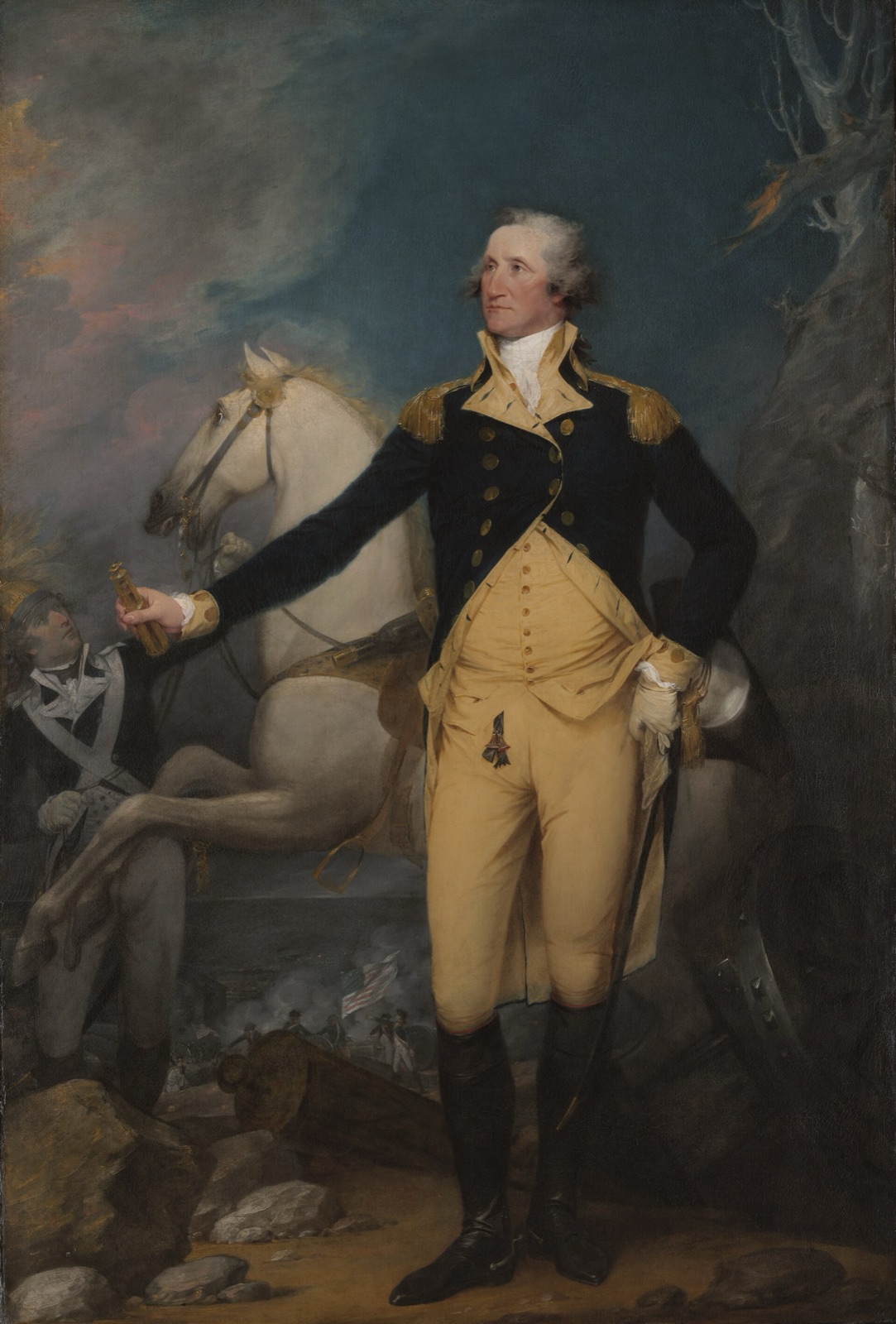
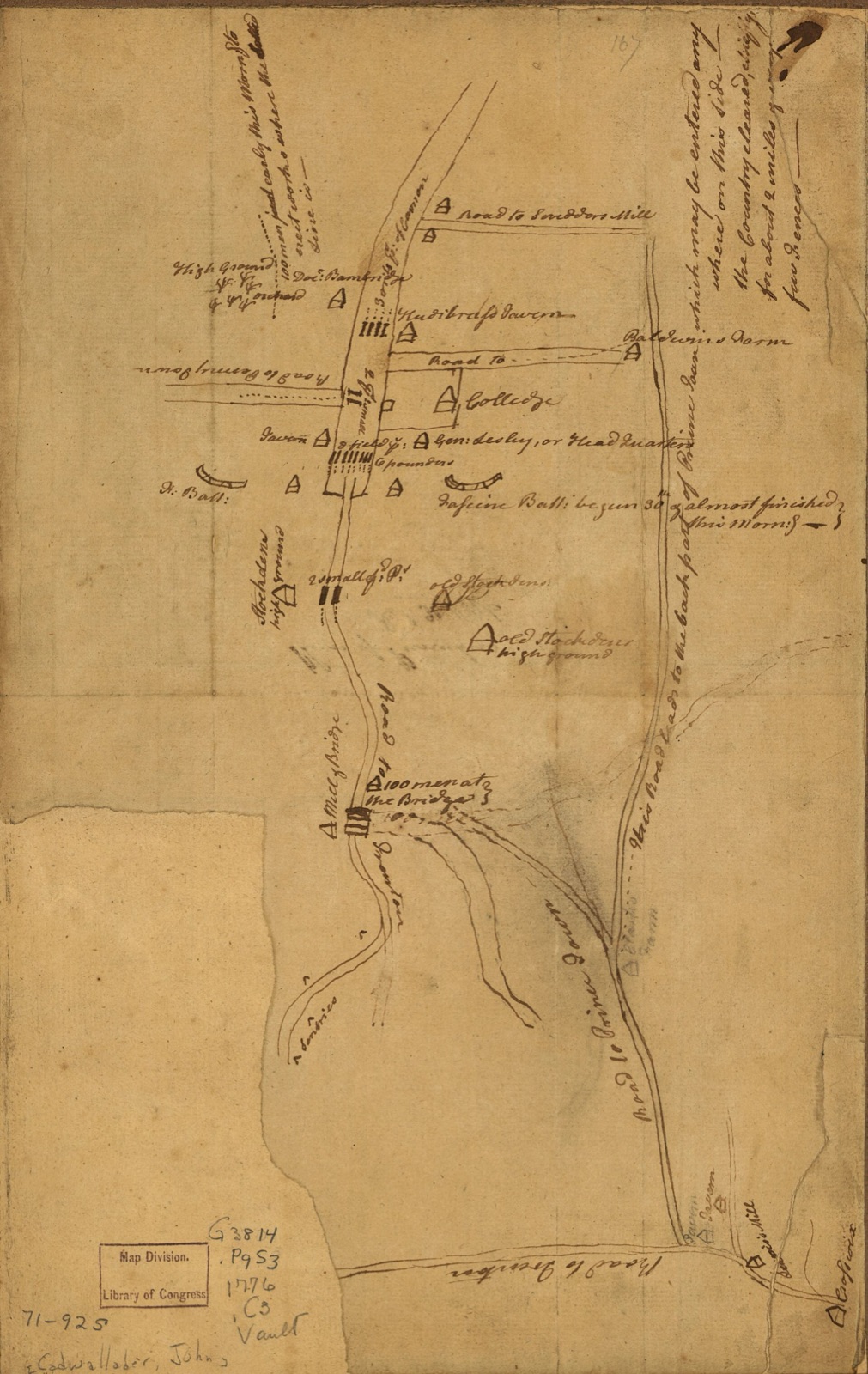
Across the creek, Washington held a council of war (a formal meeting of his senior officers to decide the army's next move), and the council refused both obvious options. Retreating down the Delaware meant being caught and ground up on the march. Standing and fighting meant risking the army, and therefore the Revolution, on one defensive battle against a superior force with a river at its back. The third option was the kind no textbook recommends: leave in the night, by back roads, around the flank of the army that had them trapped, and strike the British rear at Princeton, where Mawhood's garrison and the army's stores sat nearly unguarded, with the British pay chest (£70,000 of it) at New Brunswick beyond. Washington had help picturing the target: in late December, Brigadier General John Cadwalader had sent him a sketch map of Princeton's defenses drawn from the report of a spy, showing a back way into town. Writing three days later to John Hancock (the president of Congress), Washington explained the thinking in his own words: the move "would avoid the appearance of a retreat … whilst we might by a fortunate stroke withdraw Genl Howe from Trenton and give some reputation to our Arms." (Genl Howe was General William Howe, the British commander in chief in America and Cornwallis's superior; to Washington, the army at Trenton was Howe's army.)
The execution was a piece of theater. The baggage was sent quietly south to Burlington (a town down the Delaware). Four to five hundred men stayed behind to tend the campfires, and they kept them blazing all night, digging noisily with picks and shovels within earshot of the British sentries, patrolling the bank, doing everything an army settling in to fight at dawn would do. The wheels of the cannon were wrapped in cloth and rags to muffle them on the frozen road. Around midnight, or a little after, the rest of the army filed off silently to the east, then swung north on the new-cut Quaker Bridge Road, twelve to fourteen miles of icy, stump-strewn track through the woods. The weather, which had been the army's enemy all winter, finally took its side: a hard freeze that evening turned the previous day's bottomless mud into firm ground, and without it the guns could not have moved at all.
Imagine being one of the men in that column. No talking, no lights; hour after hour of frozen track in the dark, stumbling over stumps you cannot see, the cannon rolling beside you strangely quiet on their rag-wrapped wheels. Behind you, over your shoulder, the glow of your own campfires on the horizon, burning for an audience of British sentries. Every barking farm dog along the road could be the end of the army; at one point, in one account, a cry that Hessians had them surrounded sent a militia unit briefly clawing at panic in the dark. And the column walked on, mile after frozen mile, toward the rear of the army that thought it had them trapped. It was never discovered. When the sky began to lighten on January 3, the British army at the Assunpink was facing a line of burning campfires with nobody behind them, and the Continental Army was nearly at Princeton, twelve miles to the northeast, behind everything Cornwallis had.