The Corps of Light Infantry was the instrument the plan needed, and it had been built for exactly this. Light infantry were fast, agile soldiers trained to fight in open formation and move at speed, rather than in the tight shoulder-to-shoulder line, and this corps was the pick of them: re-formed for the 1779 campaign from the picked light companies of the Continental line, young, vetted soldiers drilled to the new standard Baron von Steuben had written into the army the winter before at Valley Forge. A silent night bayonet assault is the single hardest thing the eighteenth-century manual asks of infantry, and this was the corps assembled to do it, in four regiments under Brigadier General Anthony Wayne (American). The first job was simply to arrive unseen. On the afternoon of July 15 the corps set out from Sandy Beach, near Fort Montgomery, about 13 miles north of the point, and marched single file by rough inland tracks behind the Dunderberg, a mountain that screened the route. To keep word from running ahead, Wayne had detachments detain the male inhabitants along the road. No soldier was told the objective until the column halted at Springsteel's farm, about a mile and a half west of the point, in the evening.
Off the fieldHow a starving camp at Valley Forge built the army that could do thisThe order that made the whole thing possible was also the one that put every man on a knife-edge: the two assault columns would go in with their muskets unloaded. Going at a fortified garrison in the dark with an empty weapon is a thing soldiers have to be talked into, because the bayonet is all they have until they are inside the works. But the logic was exact. A single nervous shot in the dark would wake the garrison and throw the surprise away, so the columns carried cold steel and nothing else, and men who fired or even shouted were threatened with death.
Around that one constraint the plan was a piece of clockwork. Three pieces of the corps would do three different things. Two columns would make the real attack, both unloaded and with bayonets fixed, one hooking around the southern flank across the flooded sand flats with Wayne himself, one hooking north along the river under Colonel Richard Butler (American). The one exception to the silence was the center. Major Hardy Murfree's (American) two North Carolina companies, the only men in the corps with loaded muskets, would open a noisy fire at the causeway in the middle, to make Johnson think the attack was coming there and pull his reserve the wrong way. Ahead of each assault column went a leading party, the van, with Lieutenant Colonel François-Louis de Fleury (American), the French volunteer engineer, at the head of the south column's; and ahead of each van went a forlorn hope, the term for a volunteer advance party the army regarded as almost certainly lost, twenty men whose axemen had to hack lanes through the two belts of abatis under fire before the column could follow. For recognition in the dark, each soldier wore a scrap of white paper in his hat, and the watchword, the prearranged shout that would tell every man in the dark that the fort was taken and the killing should stop, was "The fort's our own!"
The columns moved out from the farm around half past eleven, into a dark, windy night. The weather did them an unplanned favor: it had pushed the Vulture and the gunboat off their close stations, so the river approaches were clear. Then the plan met the ground. The south column hit water deeper than anyone had expected, two to four feet over the flooded flats, and lost time wading it. British pickets fired the alarm, the works opened up with cannon and musketry on both flanks, and Murfree's companies began blazing away at the center exactly as ordered. It worked: Johnson took several companies of the 17th Foot, a large part of his infantry, down toward the noise at the causeway, and the diversion swallowed his reserve at the moment the flanks were coming in.
The forlorn hopes went into the abatis with their axes. The work was murderous; one of the twenty-man parties lost most of its men cutting the lanes. But the columns never stopped, because they could not stop to fire, and they went over the works with the bayonet. Fleury was first into the fort and struck the British colors with his own hand; the order of the men behind him was settled afterward, because Wayne had posted cash rewards for the first five inside. Near the inner abatis a musket ball grazed Anthony Wayne across the head and knocked him down, stunned and bloodied. Tradition has him gasping to be carried into the fort to die at the head of his column; what the record shows is that minutes later he was inside it. This was the man who had been bayoneted in the dark at Paoli two years before, his old enemies in front of him now, and he came up the rock with a bandaged head. The two columns met at the summit, the watchword went up, and the resistance came apart. From the first contact to the works being taken was about twenty-five minutes.
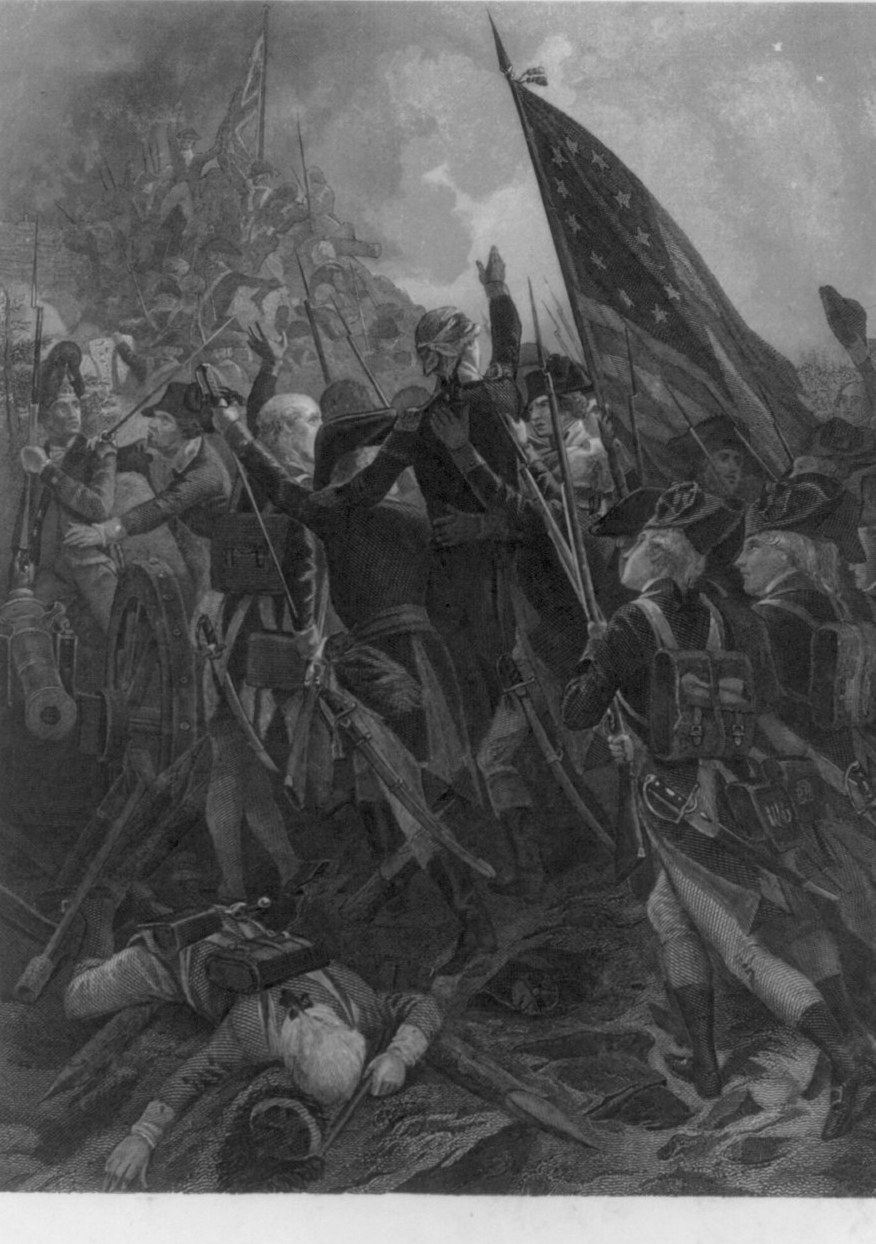
What happened in those last minutes is the part worth slowing down for. The garrison asked quarter, and got it. These were men who had it in their power, and arguably by the brutal customs of storming a defended work at night the license, to give none. Two years before, Wayne's own division had been surprised in the dark and bayoneted at Paoli, in Pennsylvania, an attack Americans called a massacre, and there had been a second such affair at Old Tappan since. The men with the bayonets in their hands had Paoli in their memory. They used the bayonet, because that was the order and the only way in; and when the garrison cried for mercy, they stopped. They killed about twenty of the garrison and took something like five hundred prisoners, the wounded among them, collected and treated.
The fort & Garrison with Colo. Johnston are ours—Our Officers & men behaved like men who are determined to be free.
That was Wayne's whole dispatch to Washington, written from inside the captured works at two o'clock in the morning. He dated it "Stoney Point, 16th July 1779, 2 OClock A.M." in his own hand, and spelled both the place and his prisoner the way they sounded to him: "Stoney" for Stony, "Johnston" for Johnson. Across the river the other half of the night failed: General Robert Howe (American) was supposed to move on Verplanck's Point at the same time, but his orders and his siege guns went astray, the British garrison there held, reinforcements came up from New York, and Howe withdrew. King's Ferry's east bank stayed British. But the rock the British had called impregnable was taken, in the dark, in under half an hour, with unloaded muskets.