In the last week of April 1778 a fast packet ship came up the Delaware with news that changed the war more than any battle had. France had signed a treaty of alliance with the United States. The men who heard it first at Valley Forge could not have known what it set in motion, and that is the truth of the three years that followed: everything came uncoupled and started moving at the same time, in directions no one could see it whole, or what the other strands were doing. The British army would walk out of the capital it had bled to take. The last great battle in the north would be fought in killing heat the same summer a French battle fleet appeared off the coast. The Royal Navy would start doing arithmetic about sugar islands while the money died in American pockets. The war's whole weight would slide south through Savannah and Charleston and a place called the Waxhaws, the army would freeze and mutiny in a New Jersey hollow, and the best fighting general the cause ever produced would put West Point up for sale. None of it ran in sequence. It ran in a braid, and the men living inside it mostly could not feel the other strands pulling.
Spring 1778, everything changes at once
France and the United States had signed two treaties in Paris on February 6, 1778: a Treaty of Amity and Commerce and a Treaty of Alliance, the second one operative if and when Britain and France went to war, which they did within months. The news reached Washington at Valley Forge at the very end of April. Congress ratified both treaties on May 4, and on May 6 the freezing, drilled, half-starved army that had survived the winter celebrated with a feu de joie. A "joy fire" is a running fire of muskets, touched off down the whole line in sequence so the sound rolled from one end of the camp to the other, and the men sent it up with cannon salutes and cheers for the King of France.
What the alliance meant can be said in one breath. France brought a real navy, the one thing the Revolution could never build for itself, plus money, arms, and eventually an army. And that changed the question Britain was answering. Britain's problem was no longer thirteen rebellious colonies on a far coast. Its problem was France, and from 1779 Spain, and from late 1780 the Dutch, which meant the English Channel and the threat of invasion, the fortress of Gibraltar, the rich sugar islands of the West Indies, and India. The American war became one front in a world war, and not obviously the most important front. That single fact governs the next three years.
Off the fieldThe French allianceLondon moved first, and it moved twice in the same season. Parliament, shaken by the surrender of an entire British army at Saratoga the autumn before and racing the French news across the ocean, sent over the Carlisle Commission in 1778 to offer the Americans almost everything they had demanded back in 1775: repeal of the offending acts, no taxation by Parliament, everything short of independence. It was three years too late. Congress refused to talk on any basis but independence or British withdrawal, and the commission sailed home a failure by year's end. The empire that would not bend in 1775 now could not buy back what it had lost.
The other change was at the top of the British army in America. Sir William Howe, who had commanded there since 1775, had asked to be relieved back in October 1777; Sir Henry Clinton was named his successor on February 4, 1778, and took command at Philadelphia in May. Howe's officers threw him a farewell in the occupied city on May 18 called the Mischianza, an extravagant mock-medieval tournament with costumed knights jousting, a regatta, and fireworks. It was a staggering celebration for a general going home with the war unwon. He sailed for England a week later.
Clinton's orders ended the whole Philadelphia experiment. With France in the war, the ministry's instructions required him to peel off about 5,000 men for an expedition against the French island of St. Lucia in the West Indies and about 3,000 more for Florida, to abandon Philadelphia, and to hold New York, with authorization to evacuate even New York for Halifax if it came to that. So the army that had spent the bloody campaign of 1777 capturing the rebel capital marched out of it on June 18, 1778, without a shot fired: somewhere around 10,000 to 11,000 troops crossing New Jersey with a baggage train commonly described as stretching about twelve miles. Some 3,000 Philadelphia Loyalists went with the fleet rather than be left to face their neighbors. Congress was back in the city within days.
June 28, 1778, Monmouth
Washington came out of Valley Forge after Clinton's column with an army the winter had remade. The new discipline, drilled into the men through that brutal season, is the institution chapter's story; what matters here is that the army that marched in pursuit could do things the army of 1776 could not.
His council of war split over whether to force a battle at all. Major General Charles Lee, the army's senior major general, freshly exchanged after sixteen months as a British prisoner and openly skeptical that Americans could ever stand against British regulars in the open field, argued against a general action. He declined command of the advance force when it was small, then claimed it by seniority when it grew to four or five thousand men.
The battle came on June 28, 1778, at Monmouth Court House near Freehold, New Jersey, in heat commonly given as near or above 100 degrees. Men on both sides died of it, dropping in the ranks without a wound on them. Lee's advance force, the cream of the Continentals (the long-service regulars, as against the short-term state militia who filled out an American army), engaged Clinton's rearguard and then, when British reinforcements wheeled around and came back at it, fell into a disordered, largely unordered retreat. Washington, riding forward to the sound of the guns, met the retreating columns coming the other way.
The confrontation that followed has been wrapped in legend for two centuries, and the legend needs scraping off. The famous version, Washington swearing until the leaves shook on the trees and cursing Lee off the field, rests on secondhand recollections written down decades later; the most quoted swearing account traces to General Charles Scott, who was not even present at the meeting. The careful modern study concludes Washington was furious but almost certainly not profane. He demanded an explanation, in words the court record renders as something close to "I desire to know, sir, what is the reason, whence arises this disorder and confusion?" He got a stammering answer. And he did not strip Lee on the spot; Lee was handed a delaying position minutes later. The documented temperature is exactly that: hot, controlled, decisive.
Washington rallied a line on the high ground at the hedgerow and Perrine's Ridge, and through the long afternoon the rebuilt Continental line did the thing it had never done before. It maneuvered under fire, dueled artillery, and threw back attacks by the British army's best troops, and it stood toe to toe until dark. That was the winter's payoff made visible. Clinton broke contact in the night and completed his march to Sandy Hook, where the army crossed to New York by sea. Tactically the day was a draw, but Washington's army held the field at the end of it, and an army that holds the field gets to call the result its own. Each side lost something over 350 men, with dozens of those deaths on both sides owed not to fire but to the heat. The water-carrier legend that grew out of this field belongs to the women's chapter, not here.
The BattlesMonmouth: the full battle storyOff the fieldWomen of the revolution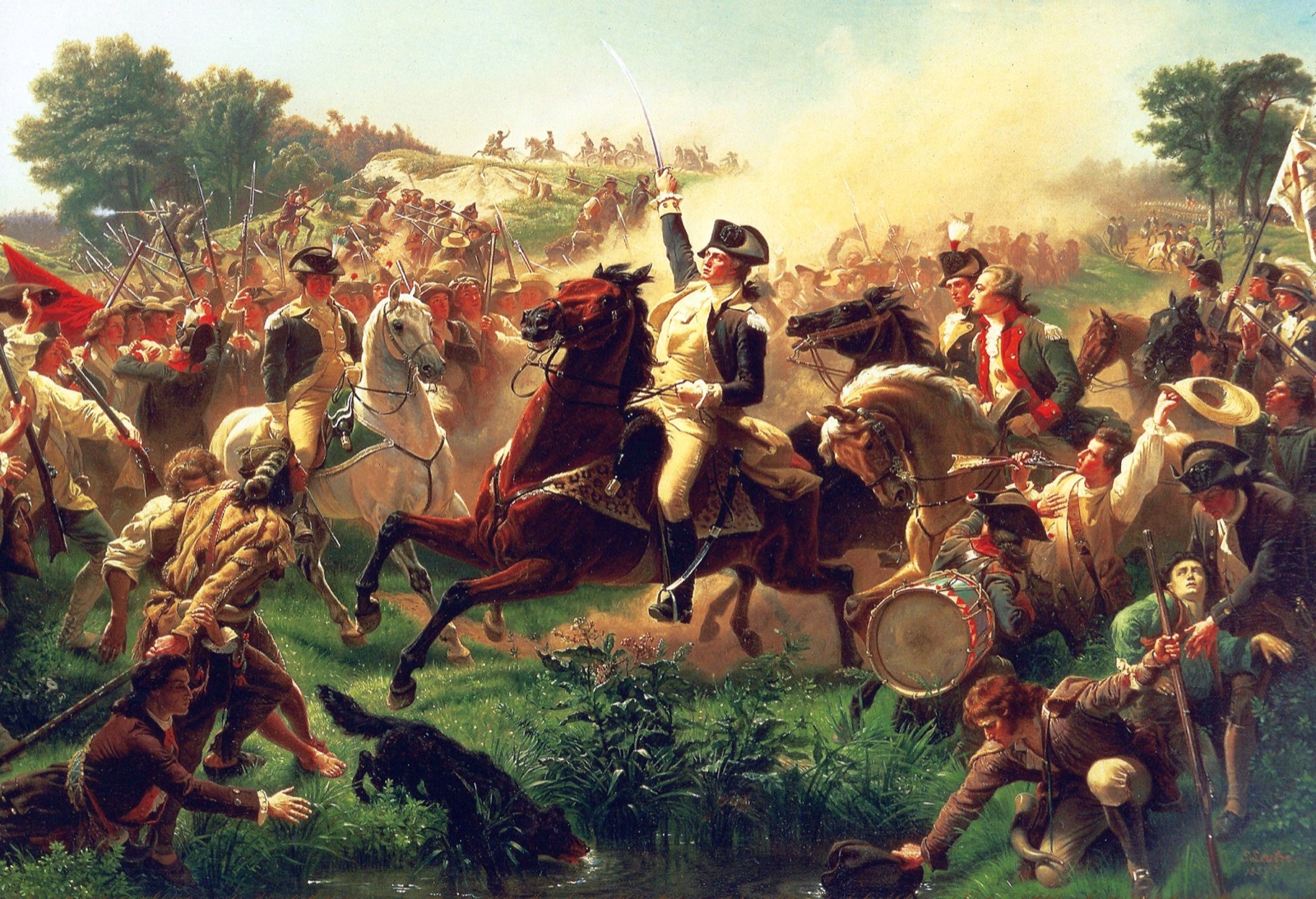
Lee, his honor stung, fired off two insolent letters and demanded a court-martial, a formal military trial of an officer by a panel of his fellow officers, and got one. He was charged with disobedience of orders, with misbehavior before the enemy in an "unnecessary, disorderly, and shameful retreat," and with disrespect to the commander-in-chief, and convicted on all three, the court softening "shameful." He was suspended from command for a year, and in 1780 Congress dismissed him outright after yet another insulting letter. Modern scholarship has partly rehabilitated him: many historians now judge the retreat itself a defensible, even army-saving withdrawal by an exposed advance force facing Clinton's counterstroke, and read the verdict as substantially political, since the army could keep Lee or Washington but not both. His battlefield decision was far better than the legend made it; his conduct afterward was genuinely insubordinate and destroyed him.
Monmouth was the last great battle in the north. For the rest of the war the two main armies would sit watching each other around New York while the war was decided everywhere else. That is the hinge this whole chapter turns on.
The BattlesStony Point: the full battle storyThe center of gravity leaves
The same summer that French fleet appeared, the strategic ground shifted under both sides, quietly and permanently. With France in the war, the Royal Navy could no longer pour itself onto the American coast. It had to cover home waters against invasion, and a combined French and Spanish armada actually entered the Channel in 1779. It had to relieve Gibraltar, the rock fortress at the mouth of the Mediterranean, besieged from 1779. And above all it had to hold the West Indies, where the sugar islands were among the most valuable real estate in the entire empire and a single fleet action could decide a war in an afternoon. The standard accounting is blunt: after 1778 the thirteen colonies were no longer Britain's first strategic priority. Home defense and the sugar islands came first.
The BattlesBonhomme Richard vs Serapis: the full battle storyThe West Indies front opened at once. The roughly 5,000 men Clinton had detached took St. Lucia in December 1778 and held it against the French fleet and a counter-landing, and for the rest of the war islands changed hands, Dominica and Grenada and St. Vincent passing to France, in a theater Americans rarely saw but which governed when French ships could come north at all. The same navy that decides whether Washington can ever trap a British army is, in any given month, off Martinique chasing sugar. Every French appearance on the American coast was a loan against the Caribbean calendar, and the fleets ran north only in hurricane season, roughly July through October.
The war goes south
That loan came due twice in these years, and both times it came up short. The French admiral, the comte d'Estaing, arrived from Toulon in July 1778 with twelve ships of the line, the alliance's first physical payoff. The first joint operation, against British-held Newport, Rhode Island, in August, simply collapsed: d'Estaing sailed out to fight a British fleet, a two-day storm scattered and damaged both fleets before they could engage, and he took his ships to Boston for repairs over furious American protest, leaving an American army exposed to fight a creditable rear-guard action and withdraw. The first test of the alliance ended in bruised feelings and nothing gained.
The second time it came due, it shaped the southern war directly, so it belongs here. But first the theory that sent the army south, because the theory had an engine. London believed the southern colonies were thick with Loyalists who would rise the moment a British army arrived, hold reconquered ground behind it, and free up regulars for the world war. The flaw, which would take two years to surface, was that "holding ground" meant protecting those Loyalists from their rebel neighbors forever. For a Loyalist family in the Carolina backcountry that distinction barely existed: the army came, held the towns, and the rebel raiders came back the moment it moved on. But on paper it was elegant, and it set the army moving south.
It opened cleanly. On December 29, 1778, Lieutenant Colonel Archibald Campbell, detached from New York with around 3,000 to 3,500 men, took Savannah, Georgia, nearly bloodlessly after an enslaved man led a column along a path through the swamp that flanked the small American garrison. Georgia's royal government was restored, the only state brought fully back under the Crown. The next autumn d'Estaing came back north from the Caribbean, in October 1779, with about 4,000 troops to retake Savannah alongside an American southern army. After a siege, the allied assault of October 9, 1779, on the Spring Hill redoubt was a bloody repulse, with allied losses commonly given somewhere between 800 and over a thousand against a few dozen on the British side. Casimir Pulaski, the Polish cavalry commander serving the American cause, was mortally wounded; d'Estaing himself was wounded twice; and the fleet sailed for France, leaving the southern port city of Charleston uncovered for 1780. Twice the alliance's promise was made visible, a French battle fleet riding off the American coast, and twice it went unredeemed.
The BattlesSavannah: the full battle storyThen Clinton came south himself, sailing from New York in late December 1779 with about 8,700 men, reinforced toward 13,000 or 14,000, and laid siege to Charleston by land and sea. Major General Benjamin Lincoln, sealed inside the city with the civil government pressing him to defend it, surrendered on May 12, 1780: about 5,500 men, the standard figure though sources range from 5,000 to 6,000, perhaps half of them Continentals, along with the city, its ships, and hundreds of guns. It was the largest American surrender of the war, often called the worst American capitulation until Bataan in 1942. The defeated men were granted parole, a sworn promise to go home and not take up arms again in exchange for their freedom. Clinton sailed back to New York, expecting a French expedition northward, and left Lord Cornwallis about 8,300 men to hold and extend the conquest.
The BattlesCharleston: the full battle storyThen, on June 3, 1780, Clinton issued the proclamation that undid his own victory. It tore up the paroles: every man who had sworn to sit the war out was now required to take an active oath to the Crown and turn out to fight for it, so a promise kept turned into a trap, and neutrals became enemies at a stroke. One day earlier and an ocean away, on June 2, London had begun to burn. The same world war was pressing on both ends of the empire in the same week, though the home-front fire is a thread the next section picks up; here the point is the local one, that the proclamation made every Carolinian who had laid down his arms choose a side again.
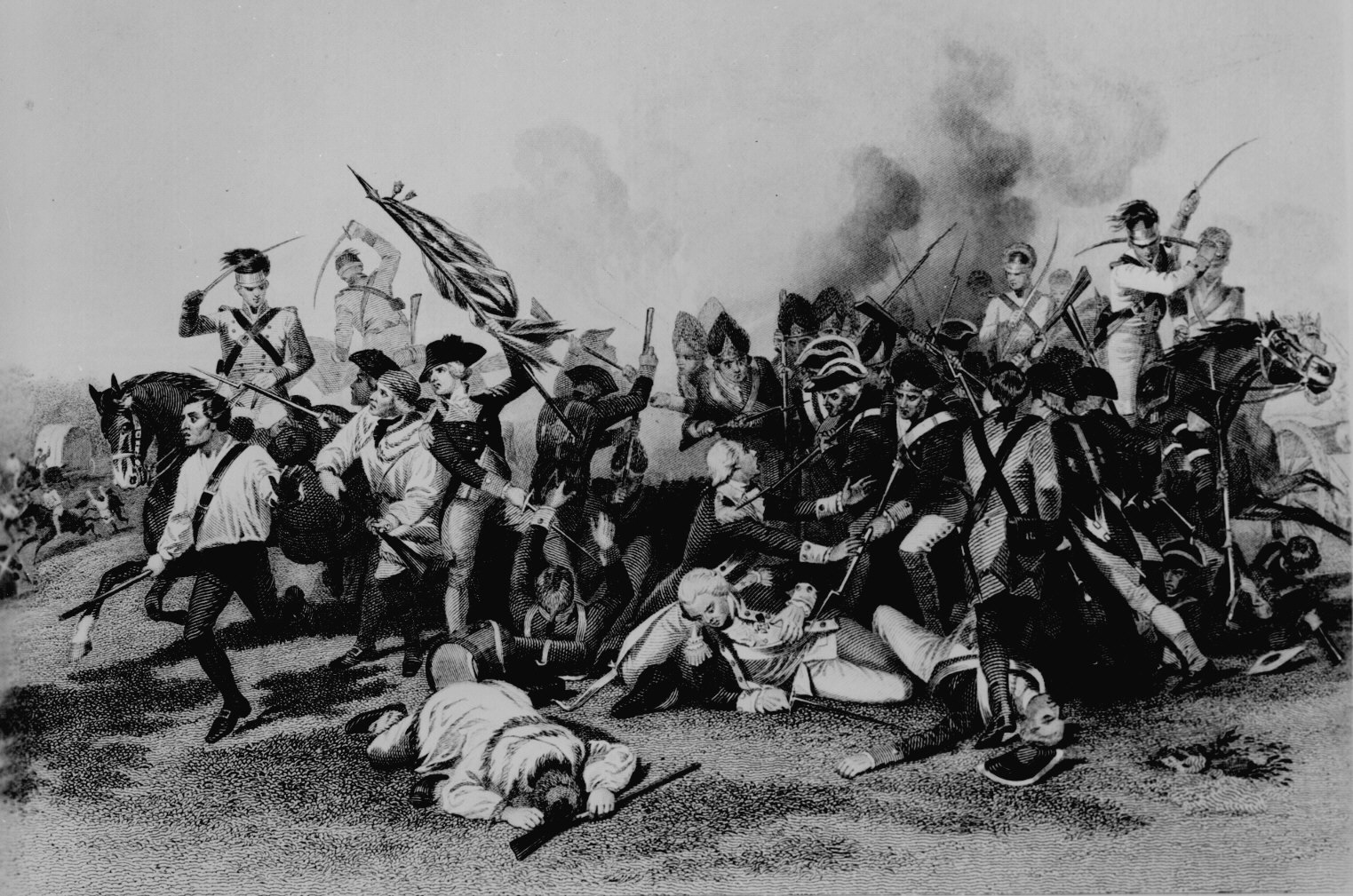
The conquest spread by the sword. On May 29, 1780, in the Waxhaws settlements near the North Carolina line, Lieutenant Colonel Banastre Tarleton's British Legion, about 270 men, most of them Loyalist provincials, came off a forced ride of more than a hundred miles and caught Colonel Abraham Buford's 350 to 420 Virginia Continentals, the last organized American force in South Carolina. In the smoke, the killing continued after resistance had stopped. Tarleton's horse went down, and by his own later account the report that he had been killed "stimulated the soldiers to a vindictive asperity not easily restrained." The Legion kept killing after the white flag was up, leaving roughly 113 dead and 150 wounded, most too badly cut to be moved, against a handful of its own losses. Whether this was massacre by intent or a command breakdown after Tarleton fell is genuinely argued by historians. What is certain is the wound evidence, men with multiple saber and bayonet wounds, and what the story became: "Tarleton's quarter," meaning no quarter at all, kill them where they stand, a backcountry battle cry that fed the partisan war for the rest of the conflict.
Congress had a man it wanted to send south, over Washington's own preference for Nathanael Greene: Horatio Gates, the celebrated victor of Saratoga. Near Camden, South Carolina, before dawn on August 16, 1780, Gates's half-starved army, roughly 3,000 to 4,000 fit for duty and about two-thirds untried militia, collided with Cornwallis. At first light the Virginia and North Carolina militia on the American left broke at the first British volley and bayonet charge, many without firing a shot, and ran. The Continentals under Major General Johann de Kalb, the Bavarian-born veteran who had crossed the ocean with Lafayette, stood almost alone and were destroyed. De Kalb, unhorsed and fighting on foot, took some eleven wounds and died three days later. American losses are chaotic in the surviving returns, commonly put at 600 to 900 killed and wounded with another thousand captured; the army effectively ceased to exist. Gates, the fifty-three-year-old hero of Saratoga, was swept off the field in the militia rout and kept riding. He reached Charlotte that night, about 60 miles, and Hillsborough, roughly 180 miles, in three days. Alexander Hamilton's contemporary jeer fixed it for history: he marveled that a general could put 180 miles between himself and his army in three and a half days, an admirable credit, he wrote, to the activity of a man at his time of life. It ended Gates's career.
The Battles · SoonCamden: the full battle storyStated plainly, with no melodrama: within three months the southern army surrendered at Charleston, the army sent to replace it was annihilated at Camden, South Carolina was garrisoned, and Georgia was royal again.
The frontier, the same seasons
On July 3, 1778, five days after the heat broke over Monmouth, the war opened a second front a long way west of it. In the Wyoming Valley of Pennsylvania, Loyalist rangers and their Seneca and other Iroquois allies destroyed the valley's militia and burned the settlements, and atrocity stories, some true and some embroidered, ran through the American press for months. While Washington's main army sat down to watch New York, the frontier kept burning on its own clock and to its own logic, and the full story of it, what the raids answered and who the nations were and what came after, belongs to its own chapter. On November 11, 1778, at Cherry Valley in New York, a Loyalist and Iroquois force overran the settlement and killed noncombatants along with the garrison's soldiers.
Off the fieldNative nationsThe answer came in 1779. In late summer Washington sent Major General John Sullivan with somewhere between 3,200 and 4,500 men into Haudenosaunee country, the homeland of the Iroquois Confederacy, with orders that are the documented voice of it.
The immediate objects are the total destruction and devastation of their settlements and the capture of as many prisoners of every age and sex as possible. — George Washington to Maj. Gen. John Sullivan, 1779
Sullivan's columns burned about forty towns with their orchards and their stored winter corn the same season Savannah's assault was failing far to the south, and thousands of Haudenosaunee wintered as refugees at British Niagara. The raids on the frontier did not stop. (Off to the west the same winters, George Rogers Clark waded about 170 men through the flooded Illinois country to retake the British post at Vincennes in February 1779, a tiny action that cast a long shadow over the map at the war's end.)
The BattlesVincennes: the full battle storyThe home front nearly breaks
Underneath the campaigns, the thing that nearly ended the Revolution in these years was not a battle. It was arithmetic. The Continental dollar, near par with silver in 1776, fell to about forty paper dollars to one in hard coin by early 1780, and on March 18, 1780, Congress itself ratified the collapse, officially revaluing the currency at forty to one and writing off roughly $200 million at face value. A dollar's wages now bought a few cents of bread. By 1781 the paper passed at more than a hundred to one and then stopped passing at all. The mechanism fits in a sentence: Congress had no power to tax, so it printed money; the states printed more; and the army was paid in paper that melted in the soldiers' pockets before they could spend it. Washington named the disease himself.
A waggon load of money will scarcely purchase a waggon load of provision. — George Washington to John Jay, 1779
The main army spent the winter of 1779 to 1780 at Jockey Hollow near Morristown, New Jersey, through what the records call the Hard Winter, by the standard accounts the coldest winter in recorded 18th-century northeastern America. More than two dozen snowstorms came down on the camp, and the salt water froze so hard that New York Harbor could be crossed on the ice with heavy loads. Supply failed for weeks at a stretch, snow-buried roads on top of a dead currency, and by Washington's account the men at the worst of it ate every kind of horse food but hay. It was hungrier and colder than Valley Forge, and far less famous. The hunger had a breaking point. At dusk on May 25, 1780, regiments of the Connecticut Line paraded under arms without orders, months unpaid and days without meat, threatening to march home or take food at bayonet point, and respected officers and Pennsylvania troops talked them down, with the punishment kept light because every officer present knew the grievance was just. The institution bent that night without quite breaking.
And then, the same season, the other capital burned. London's worst riots of the century began on June 2, 1780, when Lord George Gordon, a member of Parliament who led the Protestant Association, marched it against the Catholic Relief Act of 1778, a measure that had eased some anti-Catholic laws partly to widen recruiting for the world war. The march swelled into nearly a week of burning. The mob broke open and torched Newgate Prison, destroyed Catholic chapels and houses, and attacked the Bank of England, and the army put it down only by firing into the crowds, leaving around 300 dead and some 200 wounded, with a couple dozen more later hanged. That fire began one day before Clinton's parole proclamation tore through the Carolinas, the two ends of the empire convulsing within a day of each other: in the same weeks that London celebrated the fall of Charleston, the capital of the empire was burning from the inside. The strain of fighting a world war was showing on both home fronts at once.
September 1780, Arnold
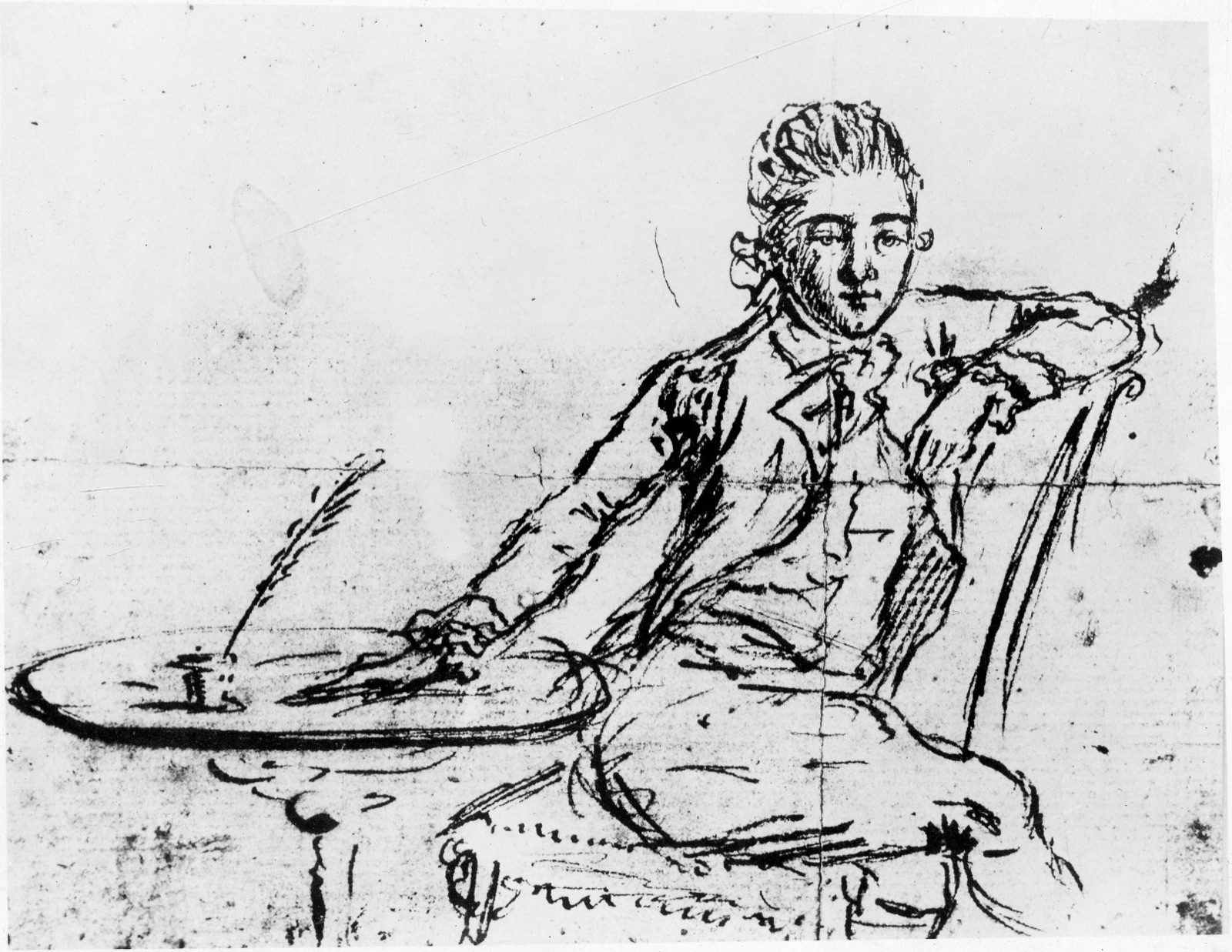
While London burned and the southern army died, the war's strangest blow was being prepared quietly on the Hudson. It is worth being precise about who Benedict Arnold was by 1780, because the whole weight of the story sits on it. He was arguably the best fighting general the cause had: Ticonderoga, the brutal march through the Maine wilderness to Quebec, the naval fight at Valcour Island that bought a year of time, Ridgefield, and Saratoga twice over, the second time storming forward against orders with his leg shattered at the very moment of victory. And he had been burned again and again. In February 1777 Congress promoted five junior brigadiers to major general over his head; he kept resigning and kept being talked back into the service. As military governor of occupied Philadelphia from June 1778 he lived far beyond his means, married Peggy Shippen in April 1779, when she was eighteen and he thirty-eight and her family leaned neutral to Loyalist, was court-martialed over money-making schemes, and in April 1780 received a formal reprimand from Washington, mild in its wording and wounding to a man like Arnold. Deeply in debt, convinced the Revolution had fallen into the hands of smaller men, and professing outrage at the French alliance, he had a ledger of grievances, every item of it in the record. The arithmetic he drew from it was his own.
The correspondence had been running a long time. Arnold opened a ciphered channel to the British in May 1779, through Major John André, the senior British staff officer who ran Clinton's intelligence and who had known Peggy Shippen socially during the Philadelphia occupation, and the two sides haggled for sixteen months over price and product. Some of the correspondence moved through Peggy Shippen's circle and her hands; after the war the Crown paid her a pension of £350 a year; and contemporaries, Washington and Hamilton among them, believed her wholly innocent. How much she initiated or steered is still argued, and there it has to rest. Arnold asked £20,000 for West Point and its garrison. What he ultimately got was £6,315, less than a third of what he had asked, plus a pension of about £360 a year and a brigadier general's commission in the British army.
On August 3, 1780, after angling for it for months while pleading his ruined leg, Arnold received command of West Point, the fortress that held the chokepoint on the Hudson River, the corridor that could cut New England off from the rest of the colonies. He set about quietly running it down, dispersing the garrison, neglecting repairs, and leaving the weak links weak in the great iron chain strung across the river to bar enemy ships, all while feeding André its particulars.
The plot unraveled on a clock that can be followed almost hour by hour. On the night of September 21 into the 22nd, André came up the Hudson aboard the sloop-of-war HMS Vulture and met Arnold on the west bank below Stony Point, the only time the two men met face to face; the talk ran past dawn. That morning American shore guns drove the Vulture downriver and stranded André, who now had to go back overland: in civilian clothes, under the name "John Anderson," carrying six papers in Arnold's own handwriting hidden in his stockings beneath his boots, with Arnold's pass in his pocket. Each of those choices, the clothes, the alias, the hidden papers, turned a uniformed staff officer into a spy under the laws of war.
On the morning of September 23, near Tarrytown, three armed Westchester militiamen, John Paulding, Isaac Van Wart, and David Williams, stopped him. André misread them badly, declared himself a British officer, and was searched to the boots; the papers came out. By their own later accounts he offered them his horse, his watch, and his money to let him go, and they refused and brought him in. In the affair's black-comic stroke, the duty officer they handed him to sent word to Arnold himself that "John Anderson" had been taken, and only one suspicious major's instinct kept the prisoner held while the captured papers went on separately toward Washington. Congress voted the three captors medals and pensions; whether they were patriot sentinels or road bandits who would have robbed any traveler was argued even at the time, and need not be resolved here.
The letter announcing André's capture reached Arnold on the morning of September 25, at breakfast in the house he used as headquarters across the river from West Point, with Washington's aides already at the table and Washington himself due within the hour. Arnold went upstairs and told Peggy, came down, rode to the river, and had his barge crew row him downstream to the waiting Vulture, clearing the trap by something like an hour. Washington arrived, toured West Point puzzled by its disarray, and understood only that afternoon, when the papers caught up with him. That same day, from the deck of the Vulture, Arnold wrote Washington a letter asking protection for his wife, and in it left the best answer there is to any temptation to climb inside his head.
The same principle of Love to my Country Actuates my present Conduct. — Benedict Arnold to George Washington, from HMS Vulture, 1780
The famous outburst attached to that morning, "Arnold has betrayed us, whom can we trust now?", comes down from Lafayette's recollection set down much later and canonized by biographers since; Hamilton, writing that same week, described Washington taking the news with outward composure. While Washington was in the house, Peggy Shippen Arnold raved that there was a hot iron on her head and that Washington meant to kill her child, and Hamilton and Washington, fully persuaded of her innocence, treated her with elaborate gentleness and passed her through the lines to Philadelphia. Whether that scene was breakdown or performance is exactly the part the evidence will not settle.
André's end came quickly and is where the romance began. A board of fourteen general officers, Greene presiding, with Lafayette and Steuben among the members, examined him at Tappan, New York, on September 29. On his own candid written account, conceding the clothes and the alias under no coercion at all, the board found him a spy and condemned him to death. Clinton's effort to save him failed, because Washington's unstated but unmistakable price was Arnold for André, and that was a price Clinton could not pay without ensuring no defector ever came over again. André asked to be shot as a soldier rather than hanged as a spy; the request was refused, since hanging was the legal death of a spy and to shoot him would concede he was not one, and by most accounts Washington never answered the letter, sparing himself the written no. On October 2, 1780, at Tappan, André walked out composed and flinched only at the sight of the gibbet. By the accounts of those present, including the army surgeon James Thacher, he helped fix the noose himself and asked the crowd to bear witness that he met his fate like a brave man. The American officers who had guarded him wrote of him afterward with open grief, and Hamilton, who thought him a spy who deserved to hang, wrote that never perhaps did any man suffer death with more justice, or deserve it less.
That grief was real, on both sides, and it is also exactly where the romanticizing of the doomed gallant officer began, set against the gross traitor who lived. The grief is a fact and belongs in the record; the romance is a historiographical fact to be named, not a register to write in. André was a professional intelligence officer running the largest betrayal of the war, and the board's law was sound. Britain would eventually put a monument to him in Westminster Abbey and move his remains there in 1821. Arnold got honors from no one.
In the end West Point never changed hands, the exposure set off a spasm of loyalty-testing politics through the army, and the Revolution acquired its permanent word for traitor.
October 7, 1780, Kings Mountain
The last beat of the year is the one that turned the southern war, though almost no one could see it as a turn at the time. As Cornwallis pushed up into North Carolina, screening his left was Major Patrick Ferguson with about a thousand Loyalist provincials and militia, and the thing to hold onto is that Ferguson was the only British soldier on the field. Every other man, on both sides, was American. Ferguson had threatened, by the account the frontier acted on, to march over the mountains and lay the settlements waste with fire and sword, and the threat summoned exactly what it named: roughly a thousand "over-mountain men," frontier riflemen from what is now Tennessee, Virginia, and the Carolinas, ran him down at Kings Mountain, South Carolina, on October 7, 1780. The fight lasted about an hour up the wooded slopes. Ferguson was shot dead and his command annihilated, with the killing carried on after some Loyalists tried to surrender, "Tarleton's quarter" shouted as men were cut down, and nine prisoners hanged days afterward. The Waxhaws had come home.
The Battles · SoonKings Mountain: the full battle storyOff the fieldA civil war among themselvesThe consequence was the whole point. Cornwallis halted his invasion of North Carolina and fell back to winter in South Carolina, and the Loyalist-manpower theory, the engine of the entire southern strategy, died on that hill. Backcountry Loyalists never again rallied in force to a British column. Clinton would later call the battle the first link in a chain of evils that ended in the loss of America. The story of Kings Mountain, neighbors killing neighbors by name, belongs to the chapter on the war within the war; the spine takes only the hinge.
The end of 1780
Set the ledger down without violins. The money stood at forty to one and falling. The main army was unpaid and had already mutinied once. The southern army had been destroyed twice in a single summer, Georgia was royal again, South Carolina was garrisoned, the alliance was two failed expeditions old, and the hero of Saratoga was a brigadier general in a red coat recruiting a Loyalist legion in New York. In May, Washington had written it as plainly as it can be written.
We have almost ceased to hope. — George Washington to Joseph Reed, 1780
And yet the pieces of the recovery were already on the board, where a reader can see them and almost no one then could. On July 10 and 11, 1780, the comte de Rochambeau, the French general sent to fight alongside the Americans, had landed about 5,500 French regulars at Newport, Rhode Island, with a French squadron: a French army wintering on American soil, blockaded and idle for now, but there. In October, Washington at last got the choice Congress had denied him before Camden: he named Nathanael Greene to take the southern command, and Greene reached the beaten remnant at Charlotte at the start of December, roughly 2,300 men on the rolls and about 1,500 fit to fight. Kings Mountain had already broken the southern theory, and Daniel Morgan was riding with Greene. What any of them would do with what they had is the next chapter's story.
So the year closes on a freeze-frame. A French army sat frozen at Newport. A beaten remnant gathered at Charlotte under a new general. A traitor in a red coat walked free in New York. The money lay dead in the soldiers' pockets. The war looked, at the close of 1780, like a thing being lost at home, and it was already turning in places no one could yet see.