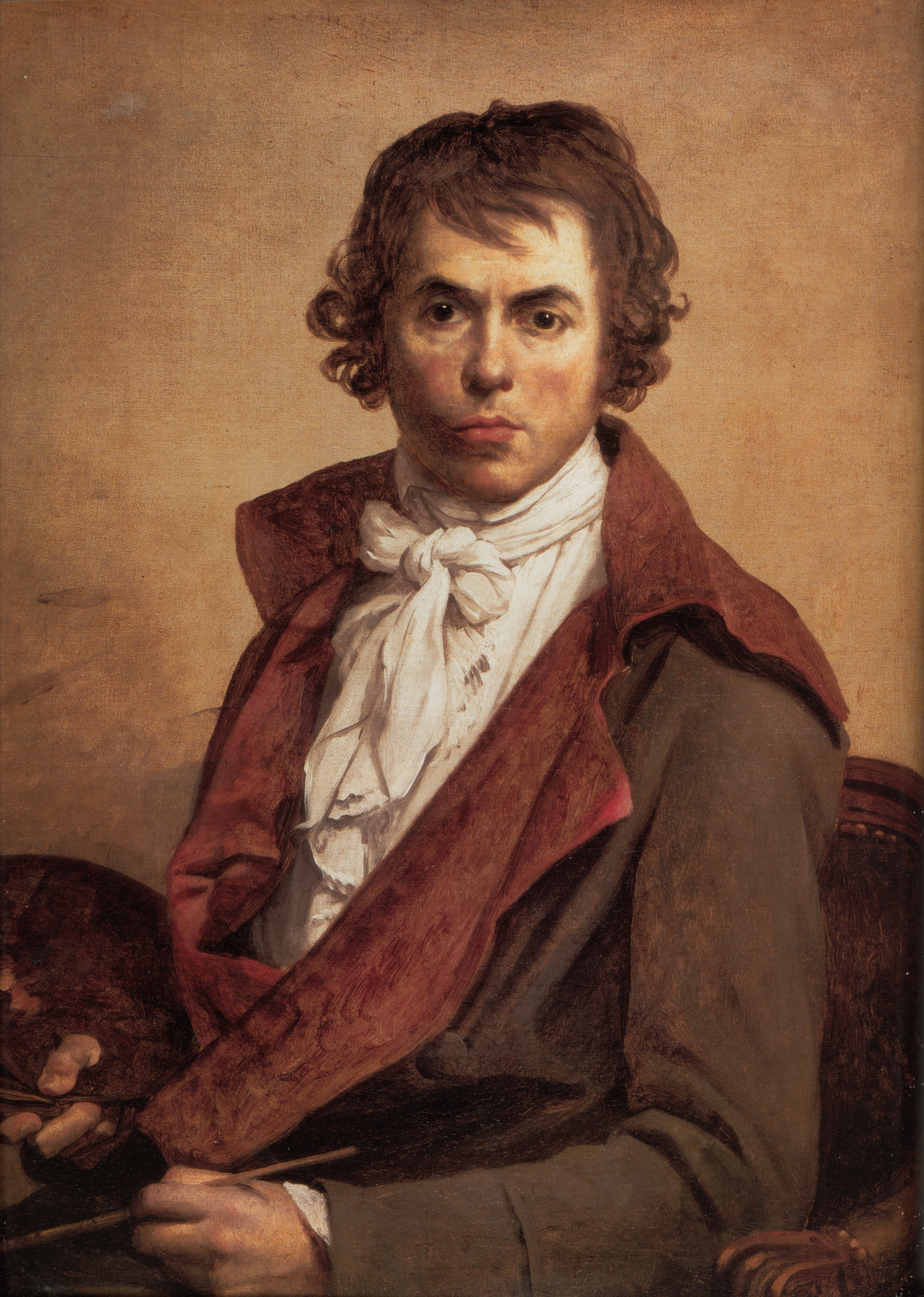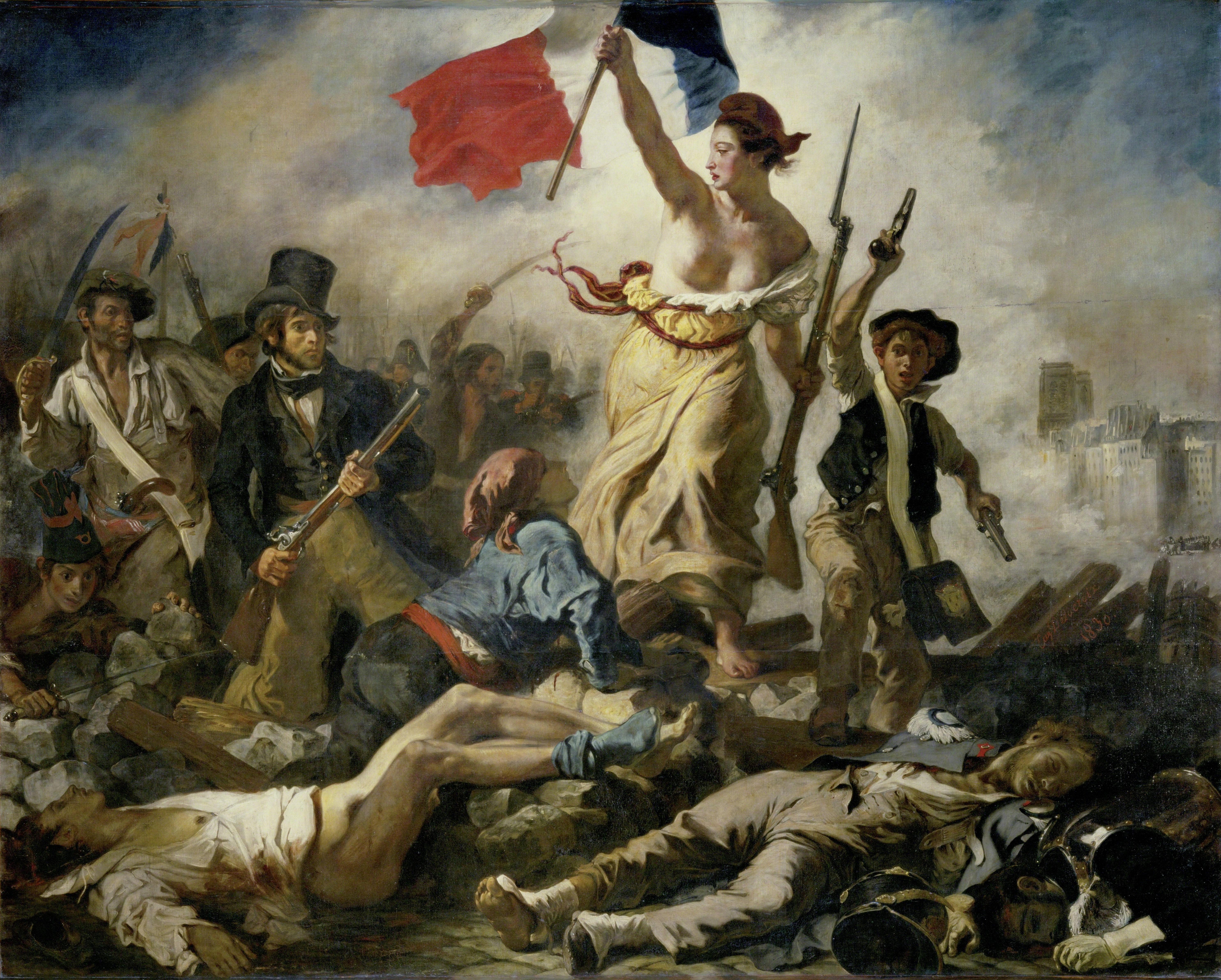
A single century, told as one argument with two answers. First Neoclassicism answers Rococo frivolity with classical restraint, line, and civic virtue, rising with the Enlightenment and the dug-up Roman cities. Then Romanticism revolts against the cold of reason itself, for emotion, color, and the sublime. The twist: the two do not take turns. They overlap and fight, all of it riding one continuous political earthquake from the French Revolution through Napoleon to 1830.
The era break is a two-step change. Before it, mid-century elite painting was Rococo (light, ornamental, aristocratic, made for private pleasure): Boucher’s pink mythologies, Fragonard’s Swing. Beautiful, weightless, and about nothing more than delight.
First, Neoclassicism makes painting sober and severe. Out go the boudoir and the pastel; in come Greek and Roman heroes, clean hard contour (line over color), smooth finish, and subjects chosen for a moral lesson. David’s Oath of the Horatii puts grim civic duty where Fragonard had put a swing. Art becomes ethics, and then the official image of a Revolution.
Then Romanticism breaks again, this time against the coldness of reason itself. Painting gets loud, agitated, and emotional: color over line, turbulent brushwork, and subjects of terror and grandeur, a firing squad, a raft of corpses, a barricade, a lone man before an infinite fog. The two answers overlap and fight rather than succeed each other, which is exactly why the era is one argument, Reason against Feeling, and not a tidy timeline.