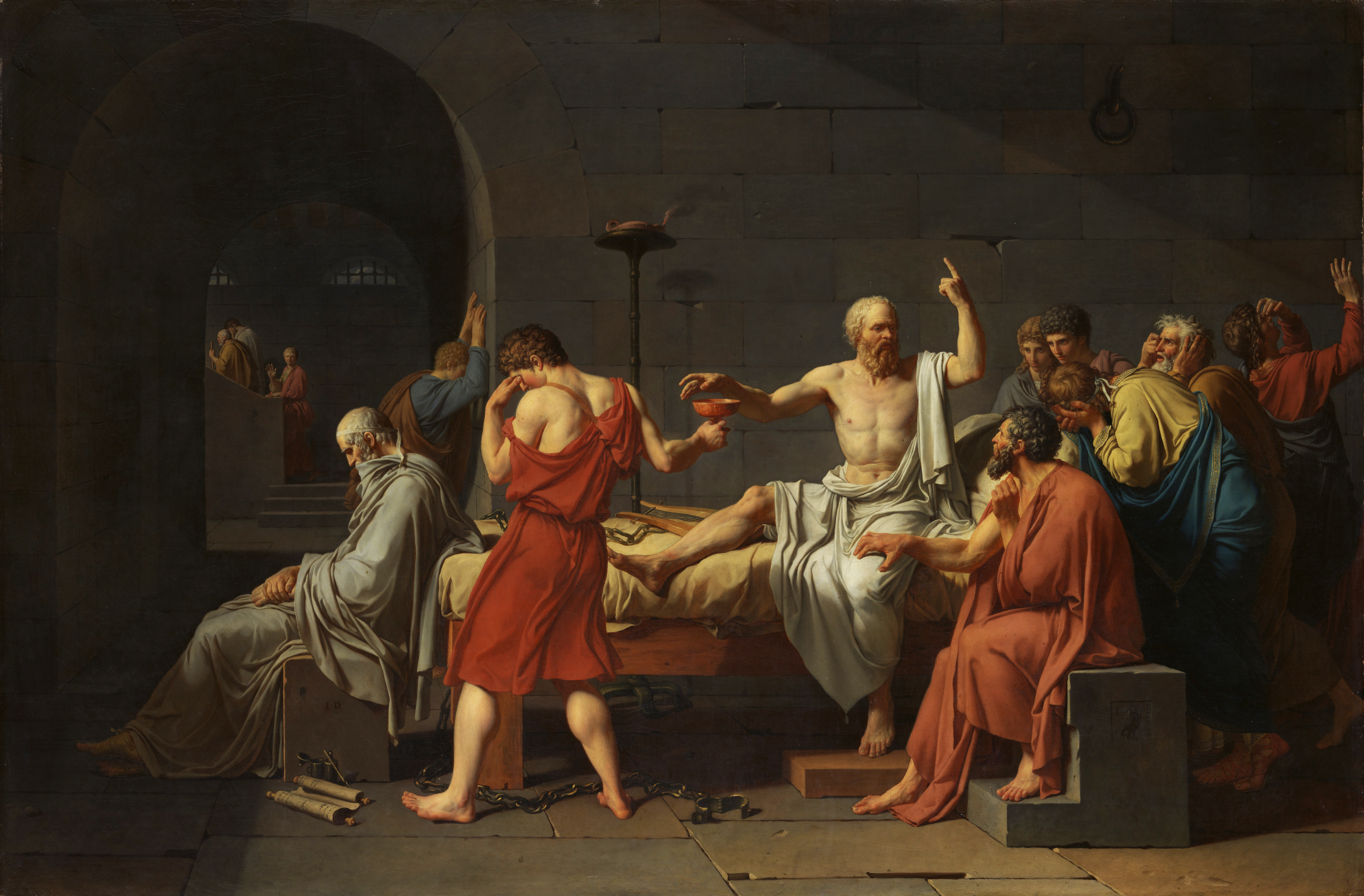
There is a kind of thinker the histories file under no movement, because each one refused to belong to anything, including the company of the others. Socrates left no writing and started no school; what survives of him is a portrait drawn by a student. Arthur Schopenhauer worked out a complete philosophy of the world while Germany worshipped a rival he despised, and waited three decades for a single reader to notice. Karl Marx turned philosophy against itself, declaring that the point was never to understand the world but to change it, and was buried in a foreign country he had fled to. Friedrich Nietzsche wrote in a prose so charged that it could be quoted by anyone for anything, went mad at forty-four, and had his work seized and edited by a sister who pointed it at causes he had spent his life attacking. Four men, four solitudes, no shared creed.
What links them is not a position but a posture, the closest thing this group has to a doctrine. An independent, in the sense used here, is a philosopher who refuses the system: who works against the grain of the reigning consensus rather than inside it, who builds no school and joins none, who is typically unread or reviled while alive, and whose ideas detonate only later, often in hands he would not have chosen. The independent is defined by a relationship to the crowd. Where a school says here is the shared edifice, add a stone, the independent says the edifice itself is the problem, and stands outside it, frequently alone, usually at a price.
This is a genuinely different way for a mind to operate, and it cuts against how philosophy mostly works. The discipline runs on accumulation. Plato founds the Academy and Aristotle the Lyceum; the Stoics and Epicureans pass their systems down through generations of scholarchs; the medieval schoolmen build cathedral upon cathedral of argument; Kant's critical philosophy spawns an entire idealist movement that treats his system as the ground to be developed. Progress, on this picture, is collaborative and cumulative, and a thinker proves himself by extending the structure he inherited. The independents reject the whole frame. They do not want to add to the cathedral. They want to ask, in front of everyone, whether anyone has ever checked that it is standing on anything at all.
They are walked here as a constellation, not a lineage. A lineage is a line of descent, master to pupil, where the later figure carries forward the earlier one's program. These four did not do that. Only one real teacher-and-heir link runs among them, from Schopenhauer to Nietzsche, and even that one is a son who turned on the father. The rest is resemblance, not inheritance: four separate refusals of four versions of the same comfortable consensus, four hammers swung at the same wall from different angles. Reading them together is not tracing a school's growth. It is recognizing a recurring human type, the one philosophy keeps producing and keeps failing to domesticate, and asking why the type matters out of all proportion to its numbers.
The break
The dominant self-image of Western philosophy, for most of its history, has been architectural and collective. A founder lays a foundation; successors raise the walls. Plato's Academy and Aristotle's Lyceum outlived their founders by centuries as working institutions. The Stoa passed its doctrine down a documented line of heads of school. Medieval philosophy was literally scholastic, the work of the schools, a vast cooperative enterprise of masters and disciples refining a shared body of argument over generations. Even the great modern revolutionaries thought of themselves as builders: Descartes wanted to lay a new foundation, but a foundation, on which others would build, and they did. The implicit promise is that philosophy progresses the way a science does, by accumulation, each generation standing on the last, and that to think well is to find one's place in that structure and contribute a course of stone.
On this model the individual thinker is, in a sense, replaceable, and that is not an insult but the point. The truth is supposed to be public and impersonal; if Leibniz had not found the calculus Newton would have, and if one Stoic had not formulated a doctrine another would have. The system is what matters, not the man, and a philosophy that could not be detached from its author, taught to students, and carried on without him would seem for that very reason defective, more a personality than a position. Hegel, the towering presence the nineteenth-century independents all defined themselves against, made this explicit: his System claimed to be the rational structure of reality itself coming to consciousness, a total edifice in which every previous philosophy found its assigned place, and the individual thinker was merely the vessel through which the universal Spirit thought. The single person, on the grandest version of the building model, all but disappears into the building.
The independents break this in two. They deny that the consensus everyone is busy extending deserves the trust it is given, and they put the single, finite, mortal individual back at the dead center of the matter. For Socrates the question is not how to add to received wisdom but how this person, here, should live, and the method is to take the confident experts apart one by one until the shared edifice of Athenian certainty lies in pieces. For Schopenhauer the optimistic system of his age is a lie told over a foundation of blind suffering, and no amount of building on it makes it true. For Marx the whole tradition of interpreting the world is itself an evasion, a way of leaving the world's actual misery untouched. For Nietzsche the entire structure of European values rests on a faith that has quietly died, and pretending otherwise is the disaster. In every case the move is the same: step outside the building, refuse the collaborative promise, and stake everything on what one person can see when he stops agreeing. The truth, on this telling, is not a cathedral one helps raise. It is what one person finds on walking out of it alone.
Chapter 1
The anti-tradition
"I am that gadfly which God has attached to the state, and all day long and in all places am always fastening upon you, arousing and persuading and reproaching you."
A school of philosophy is, before it is anything else, a thing one can join. It has a founder, a body of doctrine, a method of instruction, and a line of succession, and its health is measured by how well the next generation carries the first one's work forward. The Stoics had a continuous head of school for centuries; the medieval universities turned the refinement of inherited argument into a profession; Kant's critical turn (Chapter on the idealists) produced, within a generation, a whole movement of philosophers treating his system as the ground to be built on. This is the normal shape of the discipline, and on its own terms it works. Ideas get tested, corrected, and passed down, and the structure grows.
The independents are the thinkers this shape cannot hold. The label is not a movement they belonged to, since they belonged to nothing; it names a recurring type, the philosopher who works against the consensus instead of within it. Four marks define the type, and the four figures walked here display all of them. First, the refusal of the system: each rejects not just particular conclusions of the reigning philosophy but its claim to be a system one should join and extend. Second, working against the grain of the age: each sets himself in direct opposition to what the educated people around him take for settled, the optimism, the religion, the politics, the philosophy in the ascendant. Third, neglect or hostility in their own lifetime: each was, while alive, unread, ignored, mocked, or prosecuted, the recognition arriving late or after death. Fourth, delayed detonation: the ideas land not on contemporaries but on a later world, often with a force the author could not have predicted and would not always have welcomed.
Socrates supplies the founding image, and it is an image of the type in its purest form. He had a word for what he did to Athens. The city, he told the jury that would condemn him, was like a large and well-bred horse grown sluggish from its size and needing to be stirred into life; and he was the gadfly, the stinging fly God had fastened on it, settling on the city all day long to rouse and reproach it. "I am that gadfly which God has attached to the state." A gadfly is not a member of the herd improving the herd from within. It is an irritant from outside, and the fate of a gadfly is fixed: sooner or later the animal swats it. Socrates said as much to the jurors, and then they proved him right. The independent is the gadfly, and the gadfly's relationship to the body it torments is the relationship every figure in this group has to the consensus of his time.
The cost is built into the role, which is the second thing the type reliably shows. To stand outside the agreement everyone else is inside is to forfeit the things belonging inside it: the audience, the recognition, the safety, sometimes the life. Socrates was executed. Schopenhauer spent the productive decades of his life as a man with a finished philosophy and no readers, supporting himself on inherited money because the universities had no use for him. Marx was expelled from one country after another and died stateless. Nietzsche sold his books in the hundreds, broke with nearly everyone, and ended in an asylum. None of this is incidental. A thinker who is celebrated, salaried, and surrounded by disciples is, almost by definition, inside the consensus rather than against it, and the independents earn their independence by paying for it. The neglect is not a failure of the work. It is the predictable result of the stance.
And yet the detonation is the part that justifies attending to them at all. An idea that wins no contemporaries can look, at the time, like a simple defeat, and to the men themselves it often did. But the long record runs the other way. Socrates wrote nothing and founded nothing, and out of his single example came three incompatible philosophical traditions and, through one of them, much of Western . Schopenhauer's ignored pessimism captured the young Nietzsche and ran on into Freud and a century of art. Marx's exile years produced the most consequential body of social thought of the modern age. Nietzsche's unread provocations became, posthumously, one of the deepest currents in twentieth-century thought. The pattern is too consistent to be accident. The thinkers who refused the building, it turns out, are the ones whose work most reliably reshaped where the building went next, and the four chapters that follow take them one at a time before asking, at the end, why that should be so.
Chapter 2
Socrates: the gadfly who wrote nothing
"...daily to discourse about virtue, and of those other things about which you hear me examining myself and others, is the greatest good of man, and...the unexamined life is not worth living."
Socrates Socrates is the founding independent, and the strangeness of his position can be stated in a single fact: he wrote nothing. He left no book, no treatise, no school manual, nothing a successor could refine. What survives is secondhand, chiefly the dialogues of his pupil Plato, in which Socrates is the central speaker, so that separating the historical man from Plato's literary use of him is a problem scholars have never fully solved. The figure available is the early Plato's Socrates: a man who walks the public spaces of Athens around 410 BC, falls into conversation with whoever is confident about something important, and asks questions until the confidence collapses. He claims no doctrine of his own. He says, repeatedly, that he knows nothing worth knowing, and that this is the one respect in which he is wiser than the people he questions, who do not know that they do not know.
His method was a kind of demolition, and it made him enemies the way a wrecking ball makes enemies. The technique, later called the elenchus (from the Greek for cross-examination or refutation), works by asking a confident person to define the thing he is confident about: what is courage, what is piety, what is justice. The expert offers a definition; Socrates draws out what else the man believes; and then he shows, by the man's own admissions, that the definition contradicts those other beliefs and cannot stand. He does this not to install a better definition of his own, for in the early dialogues he almost never supplies one, but simply to bring the man to aporia (a state of acknowledged perplexity, having discovered that he did not, after all, know what he was sure he knew). A general turns out unable to say what courage is. A priest on his way to prosecute his own father cannot say what piety is. The performance is devastating, and Socrates performed it in public, on the most respected men in the city, in front of an audience of delighted young aristocrats.
Behind the questioning was a conviction about what a human life is for, and it is the most important thing he is reported to have held. The point of all this stripping-away was not cleverness but care of the soul. A person's most precious possession, Socrates argued, is not his body or his property or his reputation but the state of his soul, the inner self that is improved by virtue and ruined by vice, and the great mistake nearly everyone makes is to lavish attention on the outer things while leaving the soul untended. The task of philosophy, on this view, is to put that right, to turn a person's care toward the one thing that actually determines whether his life goes well. Hence his refusal, at his trial, to promise the jury he would stop: he would go on, he said, exhorting everyone he met to care first and chiefly for the improvement of the soul, since to him the unexamined life was not worth living. A life lived on unchecked assumptions, never held up to scrutiny, is for that reason not a fully human life at all.
In 399 BC the consensus he had spent decades stinging finally swatted him. Athens, a democracy traumatized by losing a long war and by the treason of men who had been seen in Socrates' company, put him on trial on charges of impiety and corrupting the young. The deeper offense was harder to name in a courtroom: that he had made a career of exposing the city's confident men as not knowing what they claimed, and had trained a generation of its sharpest youths to do the same. He could have softened his defense and very likely lived; instead he used it to restate his mission and effectively dared the jury to stop him. They voted to convict, then voted, more heavily, for death. He declined a planned escape on the ground that a citizen who had accepted a city's protection for seventy years could not justly break its laws the moment they turned against him, and he drank the hemlock calmly, reproaching his weeping friends for behaving like children. The man who wrote nothing and founded nothing had given the anti-tradition its founding act: the individual who will not stop examining, against the whole weight of his city, and who pays with his life.
What he did not do is as defining as what he did. He left no system precisely because his philosophy was an activity, not a body of results, a way of living under permanent self-examination rather than a set of doctrines to be transmitted. That is why his afterlife splintered instead of descending in a line. Out of the one teacher came three philosophies that could not agree: the Cynics, who took his indifference to wealth and reputation to a deliberate extreme; the Cyrenaics, who decided the good was pleasure; and Plato's Academy, which built the soaring of the Forms that the historical Socrates would likely not have recognized. One man, examined into immortality, fathered movements that contradicted each other, because what he handed down was not an answer but a question and an example. It is the first and clearest demonstration of the independent's strange power: the less a thinker nails down, the more widely he detonates.
Chapter 3
Schopenhauer: shouting into the empty hall
"The world is my idea:"—this is a truth which holds good for everything that lives and knows, though man alone can bring it into reflective and abstract consciousness.
Arthur Schopenhauer (1788 to 1860) is the independent as embittered solitary, the man with a finished philosophy and no audience. He had built a complete system of the world by 1819, in The World as Will and Idea, while still in his twenties, and he was certain it was the truth that Kant had pointed toward and missed. The German universities, meanwhile, were entranced by Hegel, whose vast optimistic system Schopenhauer regarded as charlatanry dressed in impenetrable jargon. In 1820, lecturing in Berlin, Schopenhauer made a famous and disastrous gesture: he deliberately scheduled his own lectures at the very hour Hegel gave his, as if to force students to choose. They chose Hegel. Schopenhauer lectured to a nearly empty room and soon gave up academic life altogether. For roughly thirty years he wrote on, in private, ignored, convinced of his own importance and confirmed in it by no one, until a late book of essays finally, in the 1850s, made him famous in the last decade of his life.
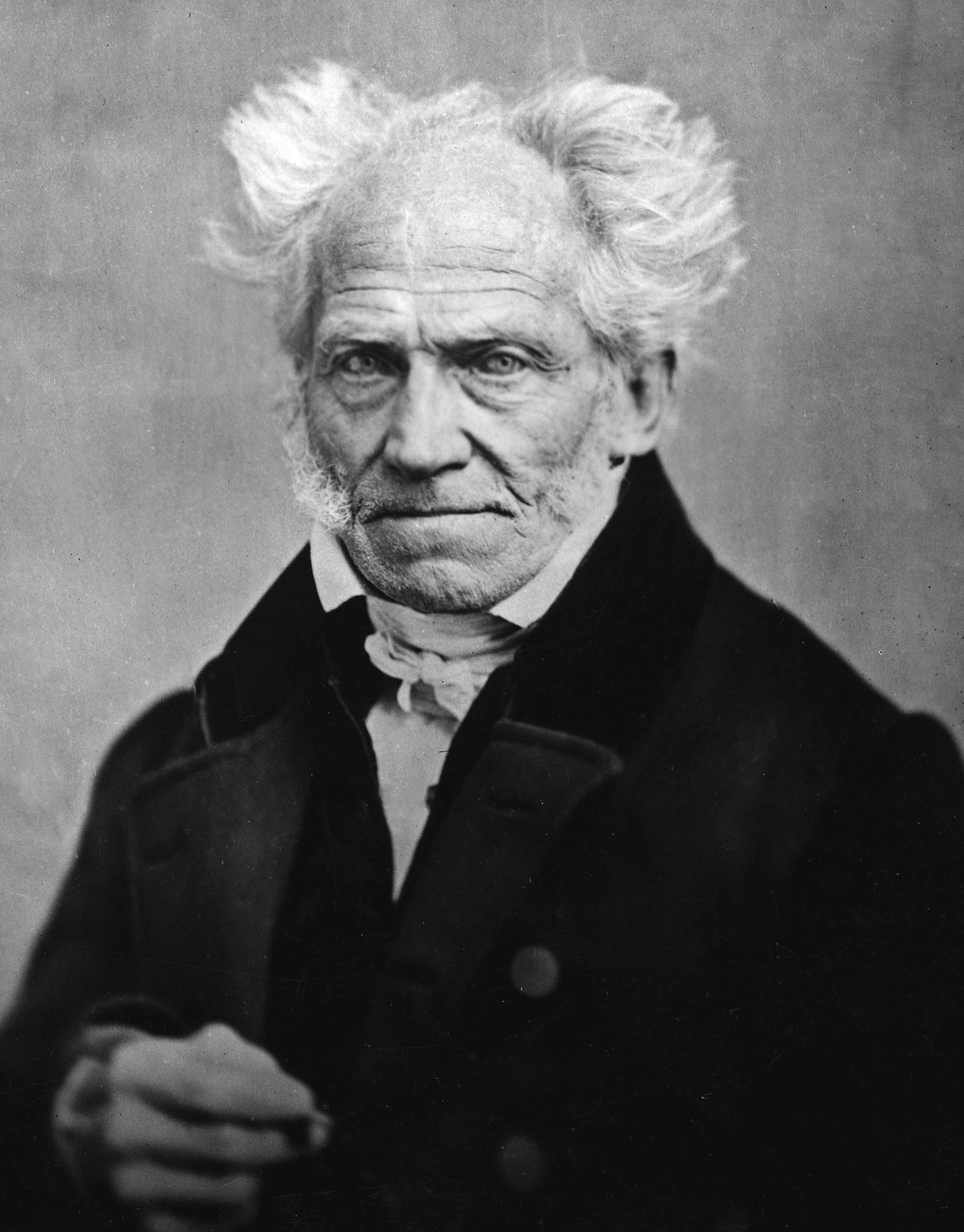
The philosophy itself is the most thoroughly pessimistic in the Western canon, and it begins from Kant. Schopenhauer accepted Kant's division of reality into appearance and the thing in itself: the world as we know it, ordered in space and time and cause, is only the world as it appears to a knowing mind, our representation of it, never reality as it is in itself. "The world is my idea," his book opens, meaning that everything I encounter is an object for me, a perception in my consciousness, and not the thing as it stands behind that veil. So far this is Kant. Schopenhauer's break is his claim to know what the thing in itself actually is, the reality behind the veil that Kant said we could never reach. We have, he argued, one inside route to it: each of us knows himself not only from the outside, as a body among bodies, but from the inside, as will, as striving and desiring and driving. Generalized, that inner acquaintance is the key to everything. The reality behind all appearances is Will (a single, blind, purposeless striving that drives through all things, the inner nature of the rock's fall and the plant's growth and the animal's hunger and the human's desire alike), and it wants nothing in particular and everything in general, ceaselessly, forever.
From that single thesis the pessimism follows with grim , and Schopenhauer drives it home without flinching. If the inner nature of everything is striving, and striving is by definition a lack, a reaching for something not yet possessed, then existence is at its root a condition of want, and want is suffering. "All willing arises from want, therefore from deficiency, and therefore from suffering." Satisfy a desire and it dies, leaving either a new desire or, worse, nothing, the empty ache of boredom; so a human life, he wrote, swings like a pendulum backwards and forwards between pain and ennui, between the suffering of unsatisfied wanting and the dreariness of having nothing left to want. There is no final satisfaction available, because the Will has no goal it could reach; it simply wills, and we are its instruments, and the happiness we chase is at best a brief absence of pain before the next lack opens. This is the steelman of pessimism at full strength: not a mood, but a conclusion, drawn rigorously from a thesis about what reality fundamentally is.
What saves the system from being a counsel of pure despair is its account of the exits, and here Schopenhauer's debt to Indian thought is real and explicit rather than decorative. He had read early Latin translations of the Upanishads and what was then available of Buddhism, and he recognized in them a structure close to his own: a world of suffering generated by craving, and a release found in the quieting of the will to live. He named three routes by which a person can, partly and temporarily, step out of the Will's grip. The first is aesthetic contemplation: in the disinterested experience of art and beauty, above all music, the mind loses itself in the object and for a moment stops willing, stops wanting, and the suffering lifts. The second is compassion, the recognition, through another's pain, that the same single Will suffers in all of us, which dissolves the boundary between self and other and is the true ground of ethics. The third and deepest is asceticism, the saint's deliberate denial of the will to live, the quieting of desire itself toward a state he was willing to call, borrowing the word, a kind of nothingness that is also a peace. The blind Will drives the world into suffering; the only freedom is to turn against it and, in rare moments, to will no more.
Schopenhauer founded no school, and would have scorned the idea, but his single most consequential reader was a student who found a battered copy of his book in a shop and was, in his own account, seized by it. That reader was Nietzsche, and the relationship between them is the one true line of descent in this whole constellation, which makes it worth being exact about its shape. Nietzsche took from Schopenhauer the central picture, that beneath the calm surface of the world drives a blind striving force, and the seriousness of the question it raised, that if life is fundamentally suffering, the value of existence itself is in doubt. Then he inverted nearly every answer. Where Schopenhauer said the striving was a curse to be quieted, Nietzsche would say it was the very thing to be affirmed; where Schopenhauer counseled turning away from life, Nietzsche would demand a yes to it. The pessimist shouting into the empty Berlin hall had no disciples. He had one heir, and the heir spent his life arguing with him.
Chapter 4
Marx: change the world
"The philosophers have only interpreted the world, in various ways; the point is to change it."
Karl Marx (1818 to 1883) is the independent who turned philosophy against philosophy, and the place to take him is at the altitude of his thought rather than the altitude of the states that later flew his name. What the twentieth century built in his name, the one-party regimes, the planned economies, the gulags, came after his death and was assembled and curated by others; much of his most philosophical work was not even published until decades after he died. The figure who concerns the anti-tradition is the one who, in eleven brief theses scribbled in a notebook in 1845, delivered the most quoted sentence in modern philosophy and aimed it like a charge at the entire discipline. "The philosophers have only interpreted the world, in various ways; the point is to change it." The whole long enterprise of understanding reality, he was saying, had become a way of leaving reality exactly as it was, a sophisticated form of acquiescence, and a thought that did not issue in changing the world's actual conditions was, for all its subtlety, a failure.
The target of that charge was the system Marx had been trained in, which is the same system Schopenhauer scheduled his lectures against: the philosophy of Hegel. Hegel had taught that history is the progressive self-development of Spirit, of mind or reason, working itself out through the centuries toward freedom, so that the engine of historical change is fundamentally ideas unfolding by their own logic. Marx, as he put it, found this philosophy standing on its head and set out to turn it right side up. He kept Hegel's great insight, that history moves by an internal dynamic of conflict and is going somewhere, and inverted its content. The motor of history is not Spirit thinking but human beings producing: the way a society organizes the material business of feeding, clothing, and housing itself, the forces and relations of production, is the real foundation, and the ideas, laws, religion, and philosophy are a superstructure raised on top of it. This is historical (the view that the economic organization of material life is the base that shapes a society's politics, law, and ideas, rather than the reverse). It is not the consciousness of human beings that determines their existence, on this account, but their social existence that determines their consciousness.
At its philosophical core, before any politics, sits a diagnosis of what industrial life does to a human being, and it is the part of Marx that most clearly belongs to the tradition of thinking about the human condition. The concept is alienation: the condition of a worker under industrial capitalism who is cut off from his own activity and its products. Consider a man who spends his days assembling an object he did not design, will never own, and cannot afford, for a wage, on a schedule and by a method set entirely by someone else. The product of his labor confronts him as something alien, the property of another, used to direct him; his own work, which ought to be the expression of his powers, becomes a mere means to a wage, something he does only to survive and escapes the moment the whistle blows; he is set against his fellow workers as competitors; and he is estranged from what Marx thought distinctive about human beings, that they freely and consciously shape the world together. Labor, the activity that should most express what a person is, is turned by the system into the activity in which he least belongs to himself. The misery here is not poverty alone. It is a kind of self-loss built into the arrangement of work.
The same penetrating eye produced his strangest and most philosophical idea, the one that shows the critic of religion turning his tools on the economy itself. Marx had called religion the opium of the people, and the full sentence is a diagnosis, not a sneer: religious suffering is at once the expression of real suffering and a protest against it, the sigh of the oppressed creature, the heart of a heartless world, the opium of the people, a consolation manufactured by a world that gives people nothing else to console them. Then he found the same illusion operating where no one expected it, in the market. He called it commodity fetishism (the way a commodity, a mere product of human labor, comes to seem to possess value as a natural property of its own, as if the worth were a quality of the thing rather than a frozen residue of the human work and social relations that made it). A commodity, he wrote, appears at first a trivial, obvious thing, and turns out on analysis to abound in metaphysical subtleties and theological niceties: people make things, and then the things, with their prices and markets, come to rule the people who made them, the relations among human beings appearing in the disguised form of relations among objects. The religious illusion he had exposed, a human creation worshipped as an independent power, he now found lodged at the heart of economic life itself.
Marx founded no school in the philosopher's sense, and on his own principles could not have wanted one, since the kind of thinking he prized was supposed to dissolve into changing the world rather than crystallize into a doctrine for seminar rooms. He worked in exile and in the reading room of the British Museum, supported for years by his collaborator Friedrich Engels, who deserves naming as a genuine partner rather than a benefactor: Engels co-wrote the Communist Manifesto (its 1888 English translation opens with the line that the history of all hitherto existing society is the history of class struggles), edited the later volumes of Capital from Marx's notes after his death, and shaped the public form of the whole body of work. The detonation, when it came, was the largest of any thinker in this group and the one that traveled furthest from its author's hands. A philosophy whose founding demand was to stop interpreting and start changing duly changed the world, on a scale and by means its author never saw and that no honest reading can simply lay at his door. The independent who declared the point was to change the world is the one whose afterlife most violently proves how far an idea can detonate beyond the man who lit it.
Chapter 5
Nietzsche: the dynamite
"The most important of more recent events—that 'God is dead,' that the belief in the Christian God has become unworthy of belief—already begins to cast its first shadows over Europe."
Friedrich Nietzsche (1844 to 1900) is the independent in his most extreme form, and he knew it; he called himself not a man but dynamite. He had been a prodigy, a professor of classical philology at Basel at twenty-four, before he abandoned the academic career, broke with his early hero the composer Richard Wagner, and spent a wandering decade in boarding houses writing books that sold in the hundreds. He founded no school, took no disciples, and wrote in aphorisms and explosions rather than systems, partly on principle: the systematizers, he thought, were the ones who had lost their nerve, dressing a personal need for certainty as the structure of the world. His prose is the most quotable in philosophy, which became, after his collapse, a catastrophe, because a sentence detached from its argument can be made to mean almost anything, and his were. He worked in near-total obscurity, went irreversibly mad at forty-four, and was famous within a decade of a breakdown from which he never recovered.
His most famous pronouncement is the most misunderstood. When Nietzsche wrote that God is dead, he was not boasting and not celebrating; he was reporting a catastrophe and dreading its consequences. The line belongs to a parable in which a madman runs into a marketplace at dawn with a lantern, crying that he seeks God, and is laughed at by the unbelievers standing around; he rounds on them and tells them the thing they have not grasped, that they themselves have killed God, and asks how they will console themselves, the murderers of all murderers, and who will wipe the blood from them. The death of God is not the cheerful retirement of a superstition. It is the collapse of the entire foundation on which European morality, meaning, and value had rested, and the people who have done the killing, the comfortable secular Europeans who no longer really believe, have not begun to feel the ground go. The most important of recent events, he wrote in The Gay Science, that the belief in the Christian God has become unworthy of belief, was only beginning to cast its first shadows; the news, in the parable's terms, had not yet arrived. The crisis he named is (the condition in which the highest values devalue themselves, leaving no ground for meaning or morality, so that the question why becomes unanswerable). Naming it was a warning, not a triumph.
What he proposed against it was not a return to the dead God but a task, and the task was to take responsibility for values that no longer came from heaven. If there is no divine order writing the worth of things into the universe, then the inherited table of values, the whole moral scheme that European civilization had received as absolute, is exposed as a human creation with a human history, and it can be examined, traced to its sources, and judged. This is what he called the revaluation of all values (the project of subjecting the received moral categories of good and evil to genuine criticism, asking where they came from, whose interests they served, and whether they serve or stunt human life, rather than accepting them as eternal). His most provocative figure for the kind of human who could undertake this, the Übermensch (rendered into English as overman or superman, an existential ideal of a person who creates his own values out of the wreckage of the old ones and affirms his life wholly), is the most abused idea he had. It is not a master race or a biological program or a strongman crushing the weak; it names a stance toward existence, self-overcoming and the wholehearted affirmation of one's own life, offered as what a human being might become once the heavens are empty. "I teach you the Superman," his Zarathustra announces. "Man is something that is to be surpassed." The thing to be surpassed is the human as he stands, dependent on a faith that has died, not some race of others.
The deepest test he set for that affirmation is a thought experiment, and it shows how far his answer was from the strongman misreading. Suppose, he wrote, a demon crept into a person's loneliest loneliness and told him that he would live this same life over again, every pain and every joy and every thought and sigh, in the same order, eternally, with nothing new ever in it. The news might crush him, or he might receive it as the most divine thing he ever heard. This is eternal recurrence, and Nietzsche's interest is not whether it is literally true but what it measures: it is a test of whether a person can affirm his life so completely that he would will its endless repetition, want it exactly as it was, nothing subtracted, nothing redeemed by a heaven elsewhere. The answer he hoped for he called amor fati, the love of one's fate, the active embrace of one's life in its entirety rather than the resigned endurance of it. It is the precise inversion of Schopenhauer, whose final counsel was to deny the will to live; Nietzsche, having inherited the same dark picture of existence as blind striving, demands instead the largest possible yes to it. The dynamite was never only destructive. The demolition of the old values was in service of a fierce affirmation of this life, the only one there is.
His detonation came after the explosion of his own mind, and it is impossible to tell honestly without the part that went wrong. Through his eleven silent years of madness, his sister Elisabeth Förster-Nietzsche took control of his manuscripts and his reputation. She had married a prominent antisemitic agitator, causes her brother had openly despised, and she edited his legacy toward her own commitments: most damagingly, she assembled a book called The Will to Power out of selected and rearranged fragments from his notebooks and presented it as his crowning systematic work, though he had planned and abandoned such a project and never wrote that book. Decades later the German fascist movement drew on this curated, distorted Nietzsche, and Hitler was photographed at the Nietzsche archive; what can be documented is the effect of Elisabeth's stewardship, a body of work bent toward a politics its author had attacked, leaving the question of her deepest intent where the evidence leaves it. The honest record cuts the other way: Nietzsche wrote with contempt of the antisemites of his day and of German nationalism, and called himself a good European. The man who became posthumous ammunition for a movement he would have loathed is the sharpest possible illustration of the independent's peril, that an idea detonating after its author's death lands wherever later hands aim it, and the author, silent or dead, cannot say no.
Chapter 6
Why the outsiders shape what comes next
"All that is solid melts into air, all that is holy is profaned, and man is at last compelled to face with sober senses his real conditions of life, and his relations with his kind."
There is a fifth figure who belongs to this temperament without quite fitting the chapter list, and naming him completes the picture. Søren Kierkegaard (1813 to 1855), writing in Copenhagen in the same decades, set himself against the same towering enemy as Schopenhauer and Marx, the system of Hegel, and from the same point of attack: that a grand impersonal structure claiming to contain all of reality had no room for the one thing that actually matters, the existing, choosing, suffering single individual. Against Hegel's universal Spirit he insisted on the solitary person standing before God and his own freedom, unable to be dissolved into any system, facing choices that no logic could make for him. He wrote under a crowd of invented pseudonyms, attacked the official Christianity of his own country, was mocked by the popular press, and died at forty-two largely unheeded, to detonate in the next century as a founder of . His words cannot be quoted here directly, because the good English translations of his Danish remain under copyright, and that enforced silence is oddly fitting for a thinker who held that the deepest truths are precisely the ones a person cannot receive secondhand but must live through alone. He is the constellation's fifth point, the same refusal in a religious key.
Set the five side by side and the resemblances are unmistakable, but they are resemblances of stance, not links of descent, which is why they read as a constellation rather than a school. Only one real teacher-and-heir bond runs among them, Schopenhauer to Nietzsche, and it is a bond of inheritance-and-revolt, the son taking the father's picture of the world and reversing its conclusion. Three of them, Schopenhauer and Marx and Kierkegaard, swung at the very same wall, Hegel's all-encompassing System, from three unconnected directions: the pessimist who said the System gilded a reality of blind suffering, the materialist who said it had history exactly upside down, the Christian who said it had abolished the individual it claimed to explain. Socrates, two millennia earlier, had run the original version of the move against the confident consensus of Athens. They did not form a line. They formed a recurring pattern, the same human type striking the same kind of target across centuries and in different keys, which is why they illuminate each other without ever having built anything together.
The shared move underneath all of it is a refusal of the comfortable agreement of the age, and each took a hammer to a different comfort. Socrates hammered the Athenian certainty that the respected men knew what virtue was. Schopenhauer hammered the cheerful optimism of his century, its faith that the world was fundamentally rational and good. Marx hammered the assumption that the social order was natural and fixed, and that the work of thought was to understand it rather than overturn it. Nietzsche hammered the deepest comfort of all, the belief that values were anchored in something beyond the human, that the moral universe had a floor. Kierkegaard hammered the smug Christendom that had turned the hardest thing in the world, faith, into a respectable social membership. In every case a consensus that the educated took for the solid ground of things was struck, and found hollow, and the striker stood outside the agreement to swing. Marx's own line for what such a moment feels like fits the whole group: all that is solid melts into air, all that is holy is profaned, and people are compelled at last to face their real conditions with sober senses.
Why, then, do the outsiders so reliably shape what comes next, more than the patient builders inside the consensus? The reason lies in what a consensus is. A reigning system is, almost by definition, the set of assumptions a culture has stopped examining, and the thinkers working inside it, however brilliant, are extending premises they have agreed in advance not to question. The independent is the one positioned to see those premises as premises, because he is standing outside them, and to put the unaskable question: not how to build further on the foundation, but whether the foundation is there at all. That question is invisible from inside and devastating once asked, and it is the kind of question that redirects a tradition rather than incrementing it. The builders raise the next course of stone. The outsider asks whether the ground will hold, and when the ground turns out not to hold, it is his question, not the next course of stone, that determines what gets built afterward.
This is the deep paradox of the anti-tradition, and it is also its justification. The men who founded no school and joined none, who were ignored or reviled or executed, who left questions instead of systems and examples instead of doctrines, turn out to be the ones a later world cannot stop arguing with. Socrates wrote nothing and seeded most of Western ethics. Schopenhauer lectured to an empty room and his pessimism ran on through Nietzsche into the modern understanding of the unconscious mind and of art. Marx wrote in exile and remade the politics of half the planet, for good and for terrible ill. Nietzsche went mad unread and became one of the inescapable voices of the century after his. Kierkegaard died mocked and fathered a philosophy of existence. The school-builders gave the discipline its continuity, its accumulated structure, its working memory, and that is no small thing. But it was the outsiders, standing alone against the agreement of their age and paying for it, who kept asking whether the structure was standing on anything, and it is their questions, again and again, that turned out to decide where everything went next.